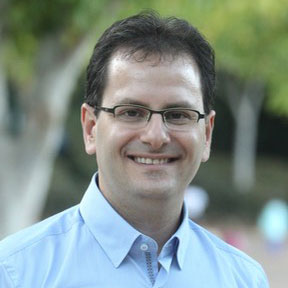
Shahal Ilani

Krill Prize 2014
Weizman Institute

Dr. Shahal Ilani (ד”ר שחל אילני)

Research Interests:
Quantum Nanoelectronics

Quantum design in carbon nanotubes – Carbon nanotube, a long molecule made entirely of carbon atoms, is one of the most remarkable condensed matter systems given to us by nature. Contrary to conventional metals and semiconductors, nanotubes grow virtually free of structural defects, making them a perfect solid for studying fundamental concepts in quantum mechanics. A nanotube suspended over a “piano” of electrical gates could be the cleanest solid-state approach to localize and control individual electrons, thus forming a powerful lab for studying the physics of electrons, spins, and nano-mechanics in one-dimension. However, so far it was impossible to make such an electronic device without damaging the pristine nature of the nanotube, leaving their huge potential for performing fundamental physics experiments largely unrealized.

In the last few years my group has developed a conceptually new approach for device fabrication that overcomes this barrier. Our approach relies on accurate nano-assembly of pristine nanotubes on electrical circuits of unlimited complexity. With this technique we routinely create devices that are far more complex and clean than was possible so far, enabling us to realize condensed matter experiments that were unimaginable few years ago.

Electronic Phases in One-Dimension – A major thrust of our studies focuses on quantum phases of electrons in one-dimension. We demonstrated that with an array of gates we can virtually shape the wavefunctions of electrons along the axis of a suspended nanotube. We further realized the simplest system in which Coulomb interactions make a dramatic appearance, that of two electrons on a “string”. We showed that the two electrons form a strongly-correlated Wigner-molecule, the simplest manifestation of the quantum crystal of electrons predicted by Eugene Wigner eighty years ago. Currently we study a variety of other canonical phases: Mott insulators in artificially-engineered potential lattices that should exhibit quasiparticles with a fractional charge, Luttinger liquids in which electrons decompose into spin and charge bosonic excitations, and coupled nanotube systems that are predicted to exhibit exciton superfluidity.

Nano-Electro-Mechanics –Suspended nanotubes are also an interesting nano-mechanical system, particularly because their small size means that their mechanical motion is on the verge of being quantum mechanical. Using our devices we can engineer unique nano-mechanical systems in which we fully tailor the coupling between electrons and phonons, by controlling how the electronic system looks in real-space. This coupling is the main ingredient of fundamental physical phenomena such as superconductivity and ferroelectricity, and its arbitrary control on the nanoscale allow us to realize bottom-up these phenomena in very interesting regimes that are unattainable in bulk materials found in nature.

Novel scan probes – A large research activity in our lab is devoted to real-space imaging of correlated one- and two- dimensional systems on the nanoscale. Here we also use nanotubes, but this time playing the role of an ultra-sensitive potential detector. We developed a nanotube based scanning single-electron-transistor capable of measuring a tiny fraction of the electronic charge with nanometric resolution, and we utilize this unique tool to unravel the microscopic physics governing quantum system that were otherwise probed only by macroscopic means.

Complex oxide interfaces – A rich playground for studying correlated electron phenomena has emerged recently with the discovery of a conducting two-dimensional electron system at the interface between two oxide insulators. The experiments that we performed on this system has shown that the large set of emergent phenomena, observed previously in these system, are related to a universal band transition, they further unraveled that this system exhibits a gate-tunable magnetic ground state, and finally, using our nanotube-based scanning single-electron-transistor, discovered the existence of striped domain order with important consequences on the physics of the two-dimensional electrons.

Roie Yerushalmi

Krill Prize 2014
Hebrew Univ.

Dr. Roie Yerushalmi (ד”ר רועי ירושלמי)

Research Interests:
Molecular design of hybrid nanometric building blocks

My research focus at the interface of chemistry and materials science, combining the expertise I gained in my PhD studies and in my post-doctoral research. My main research interests relate to nanostructured materials and surface chemistry at nanoscale interfaces. My goal as independent researcher is to advance our understanding of chemical reactivity and physical processes at nanostructured interfaces. The laboratory that I have formed provide a comprehensive and synergistic research environment combining the various research disciplines in order to open new avenues for the basic understanding of chemical and physical processes at nanostructure interfaces. We study the emerging complexity of interacting nanostructure-molecular hybrids at various scales.  In addition to funding from the ISF, MOST, and Academia Sinica, I received the Career Development Award by the Human Frontier Science Program Organization and the young investigator ERC starting grant from the EU, for “Large Scale Architectures with Nanometric Structured Interfaces for Charge Separation, Transport and Interception”.

The research performed in my lab integrates concepts and methods gained during my accumulated research experience into the systematic study of nanostructures at interfaces by implementing leading edge  spectroscopic, synthetic, and assembly techniques in an innovative way.

Design of hybrid nanometric structures and study of their photocatalytic activity

We presented for the first time the transformation of organic-inorganic hybrid layers formed by solvent-free Molecular Layer Deposition to highly active photocatalytic films. We presented the formation of  thin films as well as formation of highly controlled nanotube structures using nanowire templates. The new hybrid materials show unique photocatalytic properties as well as unique physical properties that are now being further studied in the context of direct water splitting. One of the unique properties of the active layers is molecular level permeability that is playing a major role in the adsorption of molecules to the whole film volume rather surface are alone, adsorption of dopants and control of the electronic structure of the films, and formation of new class of noble metal-metal oxide hetero structures. These results are now being summarized in several manuscripts, including the report of direct photocatalytic formation of hydrogen peroxide without the use of sacrificial compounds.

Controlled doping of nanostructures

We developed a new approach we termed Monolayer Contact Doping, for the introduction of dopant atoms into nanostructures. A unique feature of the MLCD method is that the monolayer used for doping is formed on a separate substrate (donor substrate) that is distinct from the interface intended for doping (acceptor substrate). Surface contact doping of Si wafers and silicon nanowires is demonstrated and characterized. Using Kelvin probe force microscopy (KPFM) we were able to demonstrate the highly uniform longitudinal distribution of dopant atoms using MLCD in comparison with in situ doped nanowires (by CVD). This achievement relies on the extensive development of wide range of metal oxide surface chemistries and new doping methodologies for the nanometric scale.

Tuning of semiconductor electronic properties by molecular design of interface properties

By systematic study of oxide surface chemistry and development of non-covalent metal oxide surface modification approach we were able to gain new understanding of the tuning mechanism of the electronic structure of the silicon/silicon dioxide/molecular layer interfaces.

The general and facile non-covalent surface modification approach developed in my group relying on polar head group interactions with the polar surface groups of the oxide interface enabled us to systematically study the role of molecular polarizability in addition to the well established role of molecular dipole at the interface. We present a model that extends the Helmholtz ideal capacitor model to include the role of molecular polarizability in tuning the electronic structure of molecule-semiconductor interfaces. The insights obtained in this study have wide implications for an array of fields ranging from fundamental physical understanding of the electronic structure to opening future possibilities for new sensing mechanisms and identification of molecules based on the fine electronic structure properties.


Daniel Podolsky

Krill Prize 2014
Technion

Ass.Prof. Daniel Podolsky (פופ”מ דניאל פודולסקי)

Research Interests:
Quantum mechanics of interacing electrons and atoms

My research spans a number of topics that are currently at the forefront of
condensed matter physics research. These include the theoretical exploration of the
Higgs mode in condensed matter and ultracold atomic systems, the proposal of
methods to induce topological properties by the use of light, and the study of
statistical mechanics systems out of equilibrium.
One of the main goals of condensed matter physics is to understand the collective
excitations that emerge from the interactions between the fundamental degrees of
freedom of a system. Recently, there has been broad interest in understanding the
Higgs mode, a collective excitation associated with oscillations in the amplitude of the
order parameter. This mode is a direct analogue of the Higgs particle of the Standard
Model, recently detected at the Large Hadron Collider. However, unlike the Higgs
particle, the Higgs mode in condensed matter makes its appearance at much lower
energies. It appears in a wide variety of systems, including superconductors, charge
density waves, magnets, and superfluids near the Mott transition. The Higgs mode
teaches us essential information about the dynamics underlying these systems.
In recent work with A. Auerbach and D. P. Arovas, I predicted that the Higgs mode is
a sharp excitation in two dimensional systems, and proposed a method for its
detection. This went against the common lore at the time, which held that the mode is
too short-lived to be meaningfully defined. Our prediction was confirmed within a few
months in experiments on cold bosonic gases, where the mode was clearly seen for
the first time in a two dimensional system. Following this success, I have been
studying various aspects of the Higgs mode, such as demonstrating that the mode
survives as a sharp excitation even when the system is close to being disordered at a
quantum phase transition, and studying its properties in antiferromagnets and
superconductors.
A second area of current research involves the study of light-induced topological
phases of matter. Topological insulators have attracted great interest in the
community due to their striking properties, such as conduction that occurs only at
their surfaces. Together with the group of M. Segev, I used the ideas predicted by the
theory of topological insulators to develop a photonic system with robust optical
waves that move in one direction, bypassing obstacles and imperfections that lie in
their way. In separate work together with my student Y. Tenenbaum Katan, I have
shown that light-induced topological phases can be manipulated in ways leading to
great potential for applications.
Finally, I am currently studying the statistical mechanics of out-of-equilibrium
systems. In an ongoing collaboration with G. Bunin and Y. Kafri, we are exploring the
large deviation function of systems that carry currents. A number of surprising
properties that are uniquely non-equilibrium arise in this case, such as long-range
correlations that are induced by the currents themselves. I am currently studying how
these effects manifest themselves in superconductors and in open quantum systems.

Amir Yehudayoff

Krill Prize 2014
Technion

Ass.Prof. Amir Yehudayoff (פרופ”מ אמיר יהודיוף)

Research Interests:
Combinatorics and theory of computing

Theoretical aspects of computing have deep and beautiful connections to many
areas of mathematics and science in general. I am interested in improving our
understanding of these connections and in finding and exploring new ones. Here
are several examples of research projects I am part of.
Computational complexity theory studies the amount of resources that are needed to
perform a given task. A simple example is the communication complexity model
defined by Yao, which has found numerous applications since its introduction. In this
model, there are two players usually called Alice and Bob. Alice gets an input x, Bob
gets an input y and their goal is to compute a common function f(x,y) while
communicating the minimal amount possible. We have been studying efficient
compression of communication protocols, and searching for more connections with
other known complexity measures.
Another goal of complexity theory is efficient constructions of useful combinatorial
objects. A good example of such objects are expander graphs, which are highly
connected graphs of constant degree. Expanders have many applications, for example,
in coding theory and derandomization. A basic question that I am interested in is
“how simple can expander graphs be?” We have showed that there are monotone
expanders (that are simple due to the monotonicity restriction), and we are studying
the question of whether expanders can be defined by simple maps (e.g., that are close
to one-dimensional affine).
We are also looking for clean mathematical frameworks that model scientific
endeavours. Two examples of such frameworks from my recent work are: (a) The
restriction access model that relates to learning theory and provides a clean
framework to study non-black-box access to computational processes. (b) The
population recovery model that concerns recovery of information from partial (noisy
or lossy) data. In both of these models, we have found new algorithms that will
hopefully be used in practice or influence the way similar tasks are approached in the
future.
Another related area that is fascinating to me is the behaviour of random processes
and objects. It is a well-known phenomenon that random objects exhibit a typical
Behavior. In complexity theory, e.g., a random function is typically difficult to
compute. We have been studying several random systems and helped to describe
some of the typical behaviors of these system. Two recent examples are the behavior
of random Lipschitz functions on expander graphs and trees, and the behavior of the
cover time of trees (which is a generalisation of the “coupon collector” problem).

Niv Papo

Krill Prize 2014
Ben Gurion University

Dr. Niv Papo (ד”ר ניב פפו)
Research Interests:
Multifunctional Cancer Therapeutics

Evolution has generated the great diversity of proteins with all different functions required
for the processes of life primarily by using the natural twenty amino acids. Despite all
efforts to fully understand the nature of proteins, we are still far from being able to create
completely new proteins with desired structure and function simply by rational design. By
utilizing state-of-the-art yeast surface display (YSD) directed evolution technology it is
now possible to generate protein variants with new functions.

These desired functions could for example be improvements in protein physico-chemical
properties (i.e. expression, solubility and stability) or modifications in substrate affinity and specificity. These optimized functions can be used for a variety of applications. For
medical diagnostics, high binding affinities, selectivity, and exceptional thermal, chemical, and protease stability play a major role. In vivo pharmacokinetic characteristics like serum stability, tissue penetration, blood clearance, and target retention are mostly important for therapeutic applications. All these parameters can now be optimized by modern evolution strategies. The main topics in my lab include:

i. Analysing proein interaction interfaces – We are developing a YSD compatible method
for protein scanning, to provide a high-throughput alternative to traditional alanine
scanning for mapping of the binding energy contributions of residues in protein-protein
interfaces. For that, we are using a binomial mutagenesis approach (with binomial
degenerate codons) that utilizes yeast-displayed protein scaffold libraries in which each
site within the protein scaffold is allowed to vary as only the wild-type or a single
substitution to alanine. Following YSD-based affinity selection to a specific target, a
statistical analysis of the high affinity variant pool is then being used to assess the
functional (binding) contributions of individual side chains in the scaffold.

ii. Molecular imaging – Cancer treatment is currently shifting towards more personalized
approaches which require knowledge about differences in expression patterns of cancer
markers. We are using the evolved affinity proteins as in vivo imaging agents to detect
and identify these markers. To evaluate these proteins as molecular imaging agents, we
are site-specifically attaching a fluorescent probe or radiolabel to a free Cys or N termini
and use optical and positron emission tomography (PET) imaging, respectively, to
measure their tumor uptake and biodistribution in different cancer models. We are also

using affinity proteins not only for cancer detection but also to follow treatment, which for
example is necessary in case of radiotherapy. We are also using the protein scaffolds as
platforms for integrating cancer imaging and therapy by using a bi- or trifunctional scaffold coupled to effector compounds (such as small-molecule toxins and radioactive isotopes) and an optical (or radiolabeled) probe.

iii. Cancer Therapy – The therapeutic effect of alternative scaffolds is obtained by blocking and antagonizing cancer-related molecular targets. In addition, fusions with cytokines or toxins, which are very difficult to produce with antibodies, provide affinity proteins with effector functions. Cytokine fusions activate the function of cytotoxic cells at a tumor site, whereas toxin fusions have a direct killing effect. Cysteine-free scaffolds thus offer the additional advantage that unique cysteines can be introduced by protein engineering, allowing convenient site-directed coupling of effector compounds, such as small-molecule toxins and radioactive isotopes. Bivalency enhances the affinity of traditional antibodies to surface-bound antigens and their Fc region increases their in vivo half-life. Bi- or oligovalency is achieved in the alternative scaffolds, either by making an oligomer genetically as a head-to-tail fusion protein, by Fc-fusions or by fusing other
oligomerization domains to the protein.