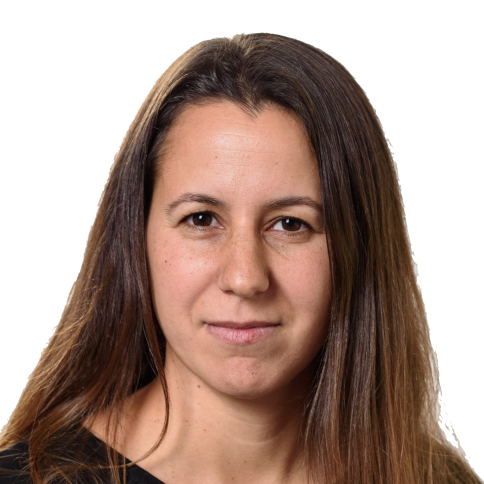
Nitzan Gonen

Krill Prize 2023
Bar-Ilan University

Nitzan Gonen


Affiliation at the time of the award:

Bar Ilan University

Faculty of Life Sciences, Center for Nanotechnology


Award citation:

“for original contributions in the study of the molecular mechanisms that mediate the determination of embryo’s sex in mammals, and future development of artificial testicles for sperm production under laboratory conditions”.


The field of embryo sex, male or female, has fascinated humanity for generations. The sex of the embryo in mammals is determined on the basis of the sex chromosomes: the embryo carrying XY chromosomes will develop as a male while the embryo carrying XX chromosomes will develop female. While most of the time the distinction between female and male is easy and clear, many applicants get the gender determination procedure wrong, meaning that there are people who are XY but female, and people who are XX but male. Hundreds of genes are known to be involved in the process of sex determination and the transformation of the primary gonads into testicles or ovaries. Mutations in many of these genes cause a syndrome called DSD – disorders of sex development, which is characterized by a mismatch between the sex chromosomes, the gonads and the sex anatomy. One in every 4,000 babies are born with DSD, and all of them are infertile. Despite many years of research, more than 50% of sex reversal cases have not been genetically diagnosed .
Using innovative genomic methods, in Dr. Gonen’s laboratory, they investigate the involvement of elements in the genome that do not code for genes but are involved in the process and can provide a basic explanation (in cases that have not been explained to date) for deciding whether testicles or ovaries will develop. Also in the laboratory, embryonic stem cells are used in an attempt to create An artificial testicle that will serve as a research and treatment model for cases of gender determination problems and infertility, and in the hope that in the future a path will be broken to create artificial sperm that will allow infertile people to give birth to a biological child.

Viviane Slon

Krill Prize 2023
Tel-Aviv University

Viviane Slon 


Affiliation at the time of the award:

Tel Aviv University

The Sackler Faculty of Medicine,

Department of Anatomy and Anthropology


Award citation:

“for her contributions in the development of research methods and tools in the study of the genome of ancient humans and the evolution of the human genome”.


Sequencing the DNA of ancient humans is an important tool for researching the genetic history of humanity and for understanding who were the people who lived in the world in prehistoric times. What was the social organization in their communities? What was their interaction system with the environment? But it is actually rare to find prehistoric human remains.

Another promising way to investigate the past is the extraction of DNA from sediments (particle sediments), such as soil accumulated in a cave, since at any archaeological site sediments may represent thousands of years of human presence in a place. Dr. Slon’s research deals with improving the methods for collecting sediment samples from archaeological sites and the methods required to process the genetic data – with the aim of studying the genome of ancient humans in new ways. The study of ancient DNA from sediments may become a standard procedure in every archaeological dig, which will open new avenues for researching our history and the evolution of the genome.

Yotam Drier

Krill Prize 2023
The Hebrew University

Yotam Drier


Affiliation at the time of the award:

The Hebrew University of Jerusalem

Faculty of Medicine, Department of Immunology and Cancer Research


Award citation:

“for original contributions in the field of cancer research and their combination with the development of new algorithms for data analysis, the development of new experimental methods and the prediction of relevant changes”.


Cells tightly regulate the levels of each gene, and dysregulation can lead to diseases such as cancer. Dysregulation can be caused by genetic alterations, epigenetic alterations (chemical modifications on the DNA), or changes in chromosomal folding. Our chromosomes are extremely long linear DNA molecules, folded neatly into the cell nucleus, and this structure is important for proper gene regulation. While the role of genetic alterations in genes in disease is well understood, much less is known about epigenetic and structural alterations

In Dr. Dreyer’s laboratory, they aim to fill this knowledge gap by studying these alterations in multiple cancer types and a few genetic diseases. They combine experimental techniques to systematically characterize epigenomes and chromosomal folding, computational algorithms to integrate these data and predict events that drive disease, and experimental validation of these predictions.

Ido Goldstein

Krill Prize 2023
The Hebrew University

Ido Goldstein


Affiliation at the time of the award:

The Hebrew University of Jerusalem

The Robert H. Smith Faculty of Food and Environmental Agriculture

The Institute of Biochemistry, Food Sciences and Nutrition


Award citation:

“for unique contributions to the study of the genetics of hunger and to understanding the dynamics of fasting and its breaking and its consequences in metabolic diseases such as diabetes and obesity”.


In Dr. Goldstein’s laboratory, the body’s reaction to fasting is studied. During fasting, a series of processes are activated in the liver to provide energy to the rest of the body’s organs. The supply of energy occurs thanks to the production of fuel (such as glucose) by the liver. The production of fuel in the liver is made possible thanks to thousands of genes that are activated during fasting and drive complex metabolic processes.

Thanks to these changes in gene expression, we are able to survive prolonged fasting of up to two months! On the other hand, if these processes take place without control, the liver will produce fuel even in states of satiety, and this situation may cause the development of diseases such as diabetes (a disease in which increased and uncontrolled production of glucose occurs). Dr. Goldstein uses advanced techniques of molecular biology, metabolism and genome-wide sequencing to study the complex networks of gene expression that enable the body’s response to fasting.

Shay Moran

Krill Prize 2023
Technion

Shay Tamar


Affiliation at the time of the award:

Technion

Faculty of Mathematics


Award citation:

“for unique contributions in machine learning research and generalization theory”.


Machine learning, better known to most of us as Artificial Intelligence – AI is applied in a wide variety of fields – starting with engineering challenges such as autonomous components and ending with social political fields that include sensitive personal data such as the management and accessibility of information on social networks such as Facebook or Twitter.

Dr. Moran’s research focuses on one of the most important branches of machine learning, which is called generalization theory and aims to quantitatively understand how machine learning generalizes from the individual to the general. This branch has made a significant contribution to the revolutionary technological breakthroughs that the field has experienced in recent years.

The latest breakthroughs in generalization theory demonstrate phenomenas that cannot be explained using previous techniques and sometimes even contradict classical principles in learning and statistics. The latest breakthroughs in generalization theory demonstrate phenomena that cannot be explained using previous techniques and sometimes even contradict classical principles in learning and statistics. One of the main reasons for this is that the classical generalization theory is based on definitions that focus on the worst case, and is therefore too pessimistic. This means that in practical machine learning problems the input usually does not fit the worst case, and experiments show that it is often possible to successfully learn based on training on far fewer examples than the number required by the predictions of the classical theory. Dr. Moran’s research aims to develop generalization theories that complement classical theory and enable more accurately model modern learning tasks, including tasks involving sensitive data.

Aviv Tamar

Krill Prize 2023
Technion

Aviv Tamar


Affiliation at the time of the award:

Technion

Faculty of Electrical and Computer Engineering named after Viterbi


Award citation:

“for the development of algorithms for automatic robotic learning using reinforcements”.


A robot that washes the dishes in the sink for you, folds the laundry and takes the dog out for a walk, this is not a dream – in a laboratory for robotic learning, Dr. Aviv Tamar investigates how machines can learn to perform tasks automatically by “reinforcement learning”. His research might have a great impact on our lives in the coming decade.

Dr. Tamar’s research deals with teaching robots how to learn and act in human natural environments. That is, how robots can learn new tasks quickly and using prior knowledge, and how can they learn about the physical world through playing with their surroundings.

To achieve these goals, Dr. Tamar’s research group develops fundamental learning algorithms that uses a technique called reinforcement learning. In the laboratory, these algorithms are applied to a variety of robotic tasks, including motion planning, object manipulation, and assembly.
One of Dr. Tamar’s main contributions is in the development of algorithms that allow robots to explore their environment automatically, making their learning in new tasks simpler and faster. Through research collaborations, Dr. Tamar’s lab team is working to discover how to use reinforcement learning to solve Real-world problems outside of robotics, including improving Internet performance and strengthening blockchain security.

Leeat Keren

Krill Prize 2023
Weizmann

Leeat Keren


Affiliation at the time of the award:

Weizmann Institute of science

Faculty of Biology, Department of Molecular Biology of the Cell


Award citation:

“for the development of innovative technologies for molecular imaging and for revealing the defense mechanisms of cancer tumor cells against an immune response, with the aim of developing innovative treatments for cancer”.


The development of cancer is a complex process that depends on the interrelationships between the individual cells of the tumor, the cells around it and the immune system – which can act both to promote and to suppress the invasion and development of the tumor. All participants are thought to be important in tumor biology, yet their interactions and relative contributions are largely unknown.

In Dr. Keren’s laboratory, they study the way in which different cells of the tumor and the immune system communicate as a system to collectively define the development of cancer and results as a response to treatment. For this purpose, Dr. Keren’s laboratory develops innovative technologies to perform complex imaging, which provides unparalleled molecular observation both on the tumor and on immune cells. In the laboratory, samples are taken from patients to identify mechanisms that help the tumor cells to successfully escape the immune response, and also develop innovative treatments in order to direct the power of the immune system against cancer.

Ely Kovetz

Krill Prize 2022
Ben-Gurion University

Although a widely accepted cosmological model has been established and has withstood multiple observational tests over the last two decades, there remains a series of unanswered questions regarding the fundamental properties of our Universe, such as what is dark matter? What is dark energy? And what drives the period of cosmic inflation at the nexus of the big-bang?

Kovetz’s research focuses on phenomenology in cosmology and stretches between two focal points. One is the development of models to address these fundamental questions and determine if they have potential observable signatures. The other is to confront the flood of data from a host of ambitious observational campaigns targeting the deep Universe using modern analytic, simulation and statistical methods to look for evidence in support or against the different theoretical models.

Sivan Refaely-Abramson

Krill Prize 2022
Weizmann Institute of Science

Understanding the energetics and dynamics of excited states formed by light-matter interactions is essential for applications across optoelectronics and photophysics. In systems of reduced dimensionality, strongly-bound particles named excitons serve as the main energy carriers, with long diffusion and relaxation lifetimes. As exciton dynamics are coupled to optical selection rules that stem from the atomic structure, enhanced exciton transport efficiency
can be achieved through local structural modifications, such as atomic impurities, interface design, and crystal fluctuations. Yet current theories lack a predictive description of the underlying interactions due to such structural modifications, highlighting the need for new tools that can capture these complex exciton dynamics.
Taking advantage of ever-growing computational frontiers, our research group aims to derive and apply new theoretical approaches, based on the predictive many-body perturbation theory, to compute exciton dynamics as a function of structural complexity in realistic materials. We explore and examine our approaches on emerging excitonic systems of reduced dimensionality, e.g., organic molecular crystals, layered transition metal dichalcogenides, and two-dimensional hybrid perovskites. We are particularly interested in studying the effect of atomic defects, heterostructure compositions, and lattice fluctuations on the mechanisms dominating exciton relaxation and diffusion and their resulting mobility and lifetime.
Rafaely’s research is thus focused on gaining a comprehensive and predictive understanding of the underlying physics dominating complex excited-state phenomena in materials of emerging interest via front-line computations. As such, Rafaely’s Lab aim at offering novel and tunable design principles for optimized functionality in applications ranging from efficient conversion and storage of sunlight energy to intelligent design of quantum emitters and materials-based quantum computing.

Moran Yassour

Krill Prize 2022
The Hebrew University of Jerusalem

In the Yassour lab, we study the infant gut microbiome, its maternal origins, its natural history in the first few years of life, and its impact on pediatric health. Our research is based on establishing diverse human cohorts, longitudinally sampling newborns, infants, and children (and often their mothers as well) and profiling their microbial communities. We combine multiple DNA sequencing technologies with cutting-edge computational methods to better characterize the dynamics of these microbial communities and to identify the microbial hosts of genes of interest, such as antibiotic resistance and carbohydrate-utilizing genes. This combined approach coupled with unique human cohorts, helps us understand the mother-to-child vertical transmission of bacteria, and its impact on pediatric health.