Richard Zare

Wolf Prize Laureate in Chemistry 2005

Richard N. Zare


Affiliation at the time of the award:

Stanford University, USA


Award citation:

“for his ingenious applications of laser techniques, for identifying complex mechanisms in molecules, and their use in analytical chemistry”.


Prize share:

None


In making seminal contributions to the theory and practice of both physical and analytical chemistry, Professor Zare has profoundly influenced developments in these two areas of science. He is an outstanding spokesman for science. In addition to his eminent contributions, he has worked relentlessly and successfully for chemistry on the national and international stage.

Zare’s highly productive scientific career has been built around two recurrent themes: the use of lasers for probing details of how electrons distribute themselves within atoms and molecules, and hence dictate their chemical properties; and the application of high resolution and ultra-sensitive physical techniques, to both biochemical, and chemical analysis. A fundamental understanding of electronic configurations in molecules, led to pioneering work in chemical dynamics and energy-induced molecular fragmentations. Zare’s inventions and discoveries have generated an impressive collection of new spectroscopic tools, for scientific communities investigating chemical dynamics and studying biochemical processes. His research also initiated the development of a series of novel techniques in applied physical chemistry. These techniques have become indispensable to progress in chemical and biochemical analysis, particularly in relation to detection at the single-molecule, area-selective, and sub-cellular levels.

Zare’s seminal contributions include the angular analysis of photodissociation fragments, laser-induced fluorescence and chemiluminescence, to probe internal state distributions, multiphoton ionization in molecular beams, and two-step laser mass spectrometry. A major thrust of his research has been the use of photochemical techniques to select reactants, enhance specific reactions, and probe chemical processes at the single-molecule level. Of particular importance, is the fact that laser-induced fluorescence, led to the use of lasers as detectors in capillary electrophoresis, and subsequently in numerous biological systems, where Zare, for example, coupled laser fluorescence with the detection of molecules in mammalian cells.

He has pursued the themes of very efficient separation and ultra-sensitive detection, to their chemical limit, namely the single molecule. He has also demonstrated that, at sufficiently high levels of power, he could carry out optical trapping of single molecules – once again demonstrating the ultimate limit of this technique in chemistry.

There is no doubt that Zare has taken chemistry to its limits, in more ways than one.
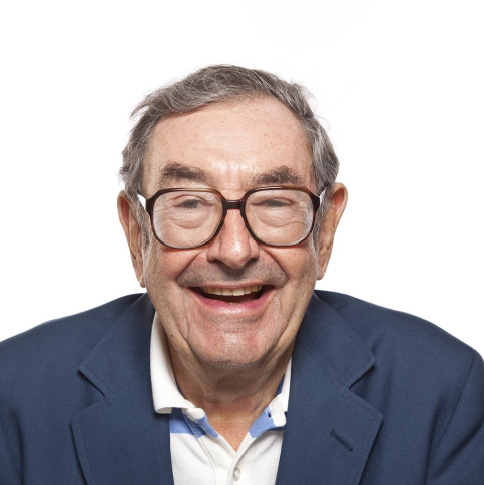
Harry B. Gray

Wolf Prize Laureate in Chemistry 2004

Harry B. Gray


Affiliation at the time of the award:

California Institute of Technology, USA


Award citation:

“for pioneering work in bio-inorganic chemistry, unravelling novel principles of structure and long-range electron transfer in proteins”.


Prize share:

None


A pioneer of bio-inorganic chemistry, Professor Harry Gray has made a critical contribution to our understanding of electron transfer in proteins and their folding.

To work its decipherable miracles, to effect change, and to create complexity and difference, life needs electrons, ions, atoms, and energy. From these, it constructs molecules of defined shapes and precise functions. The critical role of inorganic chemistry in these processes was recognized only recently.

In biological systems, inorganic components are essential. In hemoglobin, out of a total 9,072 atoms, there are only four iron atoms. These, however, play a critical role. Similarly, minute amounts of zinc, magnesium, calcium, copper and manganese, as well as other metal ions, play critical roles. When nature needs to accomplish a task that requires electron transfer, or where big energy jumps are essential, this is made possible by metal ion chemistry. From hemoglobin to chlorophyll, from zinc fingers to respiration, one finds important bio-inorganic chemistry in the service of life. Electron transfer reactions in proteins provide the basis for energy production and much of the intermediary metabolism in cells of all living organisms and plants. Until Gray’s work, little was known about the chemical factors, which govern electron transfer in biological systems.

Gray has made seminal contributions to the understanding of chemical bonding of metal complexes, mechanisms of inorganic reactions, spectroscopy and magneto-chemistry of inorganic compounds. His study of the first trigonal prismatic complexes is one such example. Through these achievements alone, coupled with a vivacious, interactive personality (that has also served him well as he brought, with enthusiasm, chemistry to the general public), he has established himself as one of the world’s leading chemists.

But Harry Gray’s most significant work lies at the interface between chemistry and biology. As a pioneer of the important and thriving field of bio-inorganic chemistry, he has made many key contributions, the most important of which is the development of fundamental understanding of electron transfer in biological systems, at the atomic level.

Harry Gray has developed methods for binding electron transfer-active metal complexes to the surface of proteins and has prepared proteins (variants of myoglobin and cytochromes) in which ruthenium complexes, amenable to activation by light, were placed at defined locations. Using these systems, he reported the first measurement of an electron transfer rate between two sites located at a fixed known distance in a protein; and has. systematically investigated the distance dependence of long range protein electron transfer and its free energy dependence. Gray has experimentally established, the mechanism of tunnelling as the transport of holes through the protein’s covalent bonds. He has demonstrated that electron transfer in proteins can occur with significant rates between centers separated by distances of up to 20 Ångströms. Gray’s work has provided insight into how the electron transfer rate depends on the separation of the redox centers and on the composition of the intervening material. Further, using laser-induced electron transfer as a tool, he has developed a method for triggering protein folding by light, enabling the study of early events of protein folding, which is central to protein structure and function. Gray’s work on electron transfer in biomolecules, is a striking demonstration of the power of modern physical tools and inorganic chemistry, applied to a critical biological problem. Ingenious chemistry, meticulously executed, has given us real understanding, for the first time, of biological processes of great significance for life.

Ryoji Noyori

Wolf Prize Laureate in Chemistry 2001

Ryoji Noyori


Affiliation at the time of the award:

Nagoya University, Japan


Award citation:

“for their pioneering, creative and crucial work in developing asymmetric catalysis for the synthesis of chiral molecules, greatly increasing humankind’s ability to create new products of fundamental and practical importance”.


Prize share:

Ryoji Noyori

Henri B. Kagan

K. Barry Sharpless


Professors H. B. Kagan, R. Noyori and K. B. Sharpless, have independently made great advances in developing the ability to synthesize chiral molecules. They pioneered the use of chiral molecular metal complexes as catalysts in asymmetric synthesis. Minute amounts of such catalysts can enable the production of large amounts of desired products of controlled handedness. These catalysts can perform various molecular transformations in an asymmetric fashion, such as reduction, oxidation and isomerization, leading to a variety of useful chiral products.

The chiral synthetic advances made by these three scientists, working on three different continents but pursuing the same significant goals, are critical to pharmaceutical manufacturing and the preparation of a very large number of molecules of controlled handedness. Their pioneering work has revolutionized our understanding of asymmetric catalysis and provided the means for efficient industrial and laboratory preparations of important pharmaceutical products and fine chemicals needed for daily life.

The first example of asymmetric catalysis (cyclopropanation) by a well-defined metal (copper) complex was reported by Noyori in 1966. Although only a low enantiomeric excess was obtained, the result stimulated further research. In 1971, Kagan reported a breakthrough in catalytic enantioselectivity. Using a C2- symmetric ligand (DIOP) for the first time, he obtained a very high enantiomeric excess in alkene hydrogenation, catalyzed by a rhodium complex. Kagan´s work had a strong influence on the course of research in the field of asymmetric catalysis, leading to the development of a variety of C2 -symmetric ligands and stimulating the study of several important reactions, such as asymmetric hydrogenation, hydroformylation, hydrosilylation and allylic alkylation. In 1980, Noyori reported asymmetric catalysis, by complexes of a new diphosphine ligand, BINAP. Catalysis by ruthenium and rhodium complexes of this ligand, resulted in spectacular laboratory and commercial applications, in asymmetric hydrogenation and isomerization. In the same year, Sharpless reported a breakthrough in the important field of asymmetric oxidation. His general method for the highly enantioselective epoxidation of allylic alcohols catalyzed by a titanium complex, is of broad scope and is used routinely in synthesis. More recently, Sharpless developed another highly useful synthetic methodology, the asymmetric dihydroxylation of alkenes, catalyzed by an osmium complex.

K. Barry Sharpless

Wolf Prize Laureate in Chemistry 2001

K. Barry Sharpless


Affiliation at the time of the award:

Scripps Research Institute, USA


Award citation:

“for their pioneering, creative and crucial work in developing asymmetric catalysis for the synthesis of chiral molecules, greatly increasing humankind´s ability to create new products of fundamental and practical importance”.


Prize share:

K. Barry Sharpless

Henri B. Kagan

Ryoji Noyori


Professors H. B. Kagan, R. Noyori and K. B. Sharpless, have independently made great advances in developing the ability to synthesize chiral molecules. They pioneered the use of chiral molecular metal complexes as catalysts in asymmetric synthesis. Minute amounts of such catalysts can enable the production of large amounts of desired products of controlled handedness. These catalysts can perform various molecular transformations in an asymmetric fashion, such as reduction, oxidation and isomerization, leading to a variety of useful chiral products.

The chiral synthetic advances made by these three scientists, working on three different continents but pursuing the same significant goals, are critical to pharmaceutical manufacturing and the preparation of a very large number of molecules of controlled handedness. Their pioneering work has revolutionized our understanding of asymmetric catalysis and provided the means for efficient industrial and laboratory preparations of important pharmaceutical products and fine chemicals needed for daily life.

The first example of asymmetric catalysis (cyclopropanation) by a well-defined metal (copper) complex was reported by Noyori in 1966. Although only a low enantiomeric excess was obtained, the result stimulated further research. In 1971, Kagan reported a breakthrough in catalytic enantioselectivity. Using a C2- symmetric ligand (DIOP) for the first time, he obtained a very high enantiomeric excess in alkene hydrogenation, catalyzed by a rhodium complex. Kagan’s work had a strong influence on the course of research in the field of asymmetric catalysis, leading to the development of a variety of C2 -symmetric ligands and stimulating the study of several important reactions, such as asymmetric hydrogenation, hydroformylation, hydrosilylation and allylic alkylation. In 1980, Noyori reported asymmetric catalysis, by complexes of a new diphosphine ligand, BINAP. Catalysis by ruthenium and rhodium complexes of this ligand, resulted in spectacular laboratory and commercial applications, in asymmetric hydrogenation and isomerization. In the same year, Sharpless reported a breakthrough in the important field of asymmetric oxidation. His general method for the highly enantioselective epoxidation of allylic alcohols catalyzed by a titanium complex, is of broad scope and is used routinely in synthesis. More recently, Sharpless developed another highly useful synthetic methodology, the asymmetric dihydroxylation of alkenes, catalyzed by an osmium complex.

Henri B. Kagan

Wolf Prize Laureate in Chemistry 2001

Henri B. Kagan


Affiliation at the time of the award:

University of Paris-South, France


Award citation:

“for their pioneering, creative and crucial work in developing asymmetric catalysis for the synthesis of chiral molecules, greatly increasing humankind’s ability to create new products of fundamental and practical importance”.


Prize share:

Henri B. Kagan

Ryoji Noyori

K. Barry Sharpless


Henri Boris Kagan was born in 1930 in Boulogne-Billancourt, near Paris, to Alexandre Kagan, an engineer, and Adeline, née Celniker. His childhood unfolded against the backdrop of the Second World War: during the war, the Kagan family found refuge in a village in southern France, where they lived under assumed names. After the war, Kagan resumed his education, but his path to science was far from predetermined. He later recalled that he was not considered a particularly good student in his early school years and initially followed a literary track, which did not suit him. A move to the sciences changed his direction, awakening a growing interest in mathematics, physics, and chemistry. He was especially fascinated by experiments that brought classroom science to life, and on weekends he regularly visited the Palais de la Découverte in Paris, where subjects ranging from nuclear physics to astronomy captured his imagination. At first, Kagan envisioned becoming an engineer and working in industry; only later did he choose chemistry—a decision that would set him on the path to an extraordinary scientific career.

Professors H. B. Kagan, R. Noyori and K. B. Sharpless, have independently made great advances in developing the ability to synthesize chiral molecules. They pioneered the use of chiral molecular metal complexes as catalysts in asymmetric synthesis. Minute amounts of such catalysts can enable the production of large amounts of desired products of controlled handedness. These catalysts can perform various molecular transformations in an asymmetric fashion, such as reduction, oxidation and isomerization, leading to a variety of useful chiral products.

The chiral synthetic advances made by these three scientists, working on three different continents but pursuing the same significant goals, are critical to pharmaceutical manufacturing and the preparation of a very large number of molecules of controlled handedness. Their pioneering work has revolutionized our understanding of asymmetric catalysis and provided the means for efficient industrial and laboratory preparations of important pharmaceutical products and fine chemicals needed for daily life.

The first example of asymmetric catalysis (cyclopropanation) by a well-defined metal (copper) complex was reported by Noyori in 1966. Although only a low enantiomeric excess was obtained, the result stimulated further research. In 1971, Kagan reported a breakthrough in catalytic enantioselectivity. Using a C2- symmetric ligand (DIOP) for the first time, he obtained a very high enantiomeric excess in alkene hydrogenation, catalyzed by a rhodium complex. Kagan´s work had a strong influence on the course of research in the field of asymmetric catalysis, leading to the development of a variety of C2 -symmetric ligands and stimulating the study of several important reactions, such as asymmetric hydrogenation, hydroformylation, hydrosilylation and allylic alkylation. In 1980, Noyori reported asymmetric catalysis, by complexes of a new diphosphine ligand, BINAP. Catalysis by ruthenium and rhodium complexes of this ligand, resulted in spectacular laboratory and commercial applications, in asymmetric hydrogenation and isomerization. In the same year, Sharpless reported a breakthrough in the important field of asymmetric oxidation. His general method for the highly enantioselective epoxidation of allylic alcohols catalyzed by a titanium complex, is of broad scope and is used routinely in synthesis. More recently, Sharpless developed another highly useful synthetic methodology, the asymmetric dihydroxylation of alkenes, catalyzed by an osmium complex.

F. Albert Cotton

Wolf Prize Laureate in Chemistry 2000

F. Albert Cotton


Affiliation at the time of the award:

Texas A&M University, USA


Award citation:

“for opening up an entirely new phase of transition metal chemistry based on pairs and clusters of metal atoms directly linked by single or multiple bonds”.


Prize share:

None


Professor F. Albert Cotton has been investigating transition metal compounds with metal-metal bonds from the mid-1960’s. The importance of bonding interactions in chemistry is paramount. Through elegant and novel synthesis, detailed characterization via X-ray diffraction and other spectroscopic techniques coupled with theoretical calculation and insights for over 30 years, he has elucidated the exact nature of metal-metal bonds, with special emphasis on metal-metal multiple bonds, including unique quadruple bonds. Cotton’s model for metal-metal bonding serves to describe the chemistry of dinuclear complexes throughout the periodic table and offers a unified, rational understanding of binuclear and multinuclear metal complexes. The implications and impact of this extensive body of results in biochemistry, catalysis and material science, go beyond the inherent importance and novelty of metal-metal bonding itself. Cotton’s accomplishments contribute to the understanding of metal functions in biological systems, particularly enzymes essential for all living organisms. They provide an insight to catalytic systems of great industrial importance.

Cotton has also played a key role in establishing the fluxional nature of many organometallic complexes now taken for granted. He has also set the stage for modern metal cluster chemistry. His work is cited in all text books and monographs in inorganic chemistry. Moreover, Cotton has authored, or co-authored, the most influential and widely used text books in inorganic chemistry. He is the preeminent inorganic chemist in the world. Through his research and text books he has changed the practice of inorganic chemistry and left an indelible mark on chemistry as a whole.

Raymond U. Lemieux

Wolf Prize Laureate in Chemistry 1999

Raymond U. Lemieux


Affiliation at the time of the award:

University of Alberta, Canada


Award citation:

“for his fundamental and seminal contributions to the study and synthesis of oligosaccharides and to the elucidation of their role in molecular recognition in biological systems”.


Prize share:

None


Professor Raymond U. Lemieux’s seminal contributions to the chemistry of carbohydrates, stretching over close to half a century, have led to a transformation of the discipline. this study is now universally recognized as being of immense importance in chemistry and biology. Lemieux has had an exceptional ability to focus quickly and clearly on the basic questions, in an area whose critical biological significance he addressed before others, and to produce original conceptual frameworks and experimental tools to deal with them. This ability and his many achievements have provided the pillars upon which present-day oligosaccharide chemistry and biochemistry now rest.

Inter alia, Lemieux pioneered many methodologies and concepts, which have become “tools of the trade” in areas far beyond those of his original innovations. These include:

  • The introduction of NMR as a tool for the determination of anomeric stereochemistry of oligosaccharides; his experimental work was the basis for the famous Karplus correlations.
  • His discovery and formulation of the endo- and exo-anomeric effects and their importance in influencing the relative stabilities and reactivities of anomeric structures. Although the anomeric effect was originally identified in pyranoid rings, its relevance to conformational analysis of geminally hetero-atom substituted carbon chains was immediately obvious.
  • His development of synthetic methods for assembly of ligosaccharides under stereochemical control at the anomeric carbon, which laid the foundation for the work of many others who followed his innovations.
  • His landmark synthetic work on human blood group antigenic determinants, which became possible as a result of his work on stereochemical control, and its subsequent medical applications.
  • His immensely important work in establishing the central role of carbohydrate structures in molecular recognition in biological systems and the essential role of (solvent) water in the energetics of oligosaccharide-protein interactions.

Gerhard Ertl

Wolf Prize Laureate in Chemistry 1998

Gerhard Ertl


Affiliation at the time of the award:

Fritz-Haber Institute, Germany


Award citation:

“for their outstanding contributions to the field of the surface science in general, and for their elucidation of fundamental mechanisms of heterogeneous catalytic reactions at single crystal surfaces in particular”.


Prize share:

Gerhard Ertl 

Gabor A. Somorjai


Gerhard Ertl (born in 1936, Germany) studied physics from 1955 to 1957, then continued under the guidance of his thesis advisor, Heinz Gerischer, to receive his doctorate from the Technical University of Munich in 1965. During the 1970s and 1980s, he held visiting professorships at esteemed institutions such as the California Institute of Technology (1976–1977), the University of Wisconsin-Milwaukee (1979), and the University of California, Berkeley (1981–1982). In 1986, he became the director of the MPG’s Fritz Haber Institute.

Professors Gerhard Ertl and Gabor A. Somorjai have laid the foundation of our present conceptual understanding of the processes of chemical change in molecules adsorbed on single crystal metal surfaces; their work has provided a new perspective to our understanding of heterogeneous catalysis. They have developed and applied sophisticated new analytical tools for determining molecular structure at metal surfaces, and the atomic structure of the metals themselves. With these tools in hand they have been able to characterize the changes in surface structure which may accompany molecular adsorption, and even changes which occur during chemical reaction, and to correlate catalytic activity with the character of the surface structure. Among their many fundamental contributions we highlight particularly, the following:

Gerhard Ertl has determined the detailed mechanisms at the molecular level, of the catalytic synthesis of ammonia over iron and the catalytic oxidation of carbon monoxide over palladium. During these very careful studies he discovered the important phenomenon of oscillatory reactions on platinum surfaces and, using photoelectron microscopy, was able to image for the first time, the oscillating changes in surface structure and coverage that occur during reaction. His work has been especially distinguished by his ability to design experiments which identify and isolate the key parameters which control chemical reactivity at catalytic surfaces.


Gabor A. Somorjai

Wolf Prize Laureate in Chemistry 1998

Gabor A. Somorjai


Affiliation at the time of the award:

University of California, USA


Award citation:

“for their outstanding contributions to the field of the surface science in general, and for their elucidation of fundamental mechanisms of heterogeneous catalytic reactions at single crystal surfaces in particular”.


Prize share:

Gabor A. Somorjai

Gerhard Ertl 


Gabor A. Somorjai (born in 1935, Hungary) pursued chemical engineering studies at the Budapest University of Technology and Economics in 1956. Later, he enrolled in graduate studies at Berkeley, where he earned his doctorate in 1960. After a brief period on IBM’s research staff in Yorktown Heights, New York, he returned to Berkeley as an assistant professor in 1964.

Professors Gerhard Ertl and Gabor A. Somorjai have laid the foundation of our present conceptual understanding of the processes of chemical change in molecules adsorbed on single crystal metal surfaces; their work has provided a new perspective to our understanding of heterogeneous catalysis. They have developed and applied sophisticated new analytical tools for determining molecular structure at metal surfaces, and the atomic structure of the metals themselves. With these tools in hand they have been able to characterize the changes in surface structure which may accompany molecular adsorption, and even changes which occur during chemical reaction, and to correlate catalytic activity with the character of the surface structure. Among their many fundamental contributions we highlight particularly, the following:

Gabor A. Somorjai has pioneered the application of low energy electron diffraction (LEED) in surface crystallography and recognized the crucial importance of steps, kinks and terraces in heterogeneously catalyzed reactions, for example, hydrocarbon conversion over platinum and ammonia synthesis over iron and rhenium. He has explored the properties of metal surfaces reconstructed by adsorbed molecules and recognized the important role that surface reconstruction plays in heterogeneous catalysis. He has applied scanning tunneling microscopy (STM) and sum frequency generation (SFG) to molecular surface characterization under “practical conditions”, i.e. at high pressures rather than ultra-high vacuum. He has had the courage to tackle complex problems and the personality to promote the field of surface science among the wider community.

Samuel J. Danishefsky

Wolf Prize Laureate in Chemistry 1995/6

Samuel J. Danishefsky


Affiliation at the time of the award:

Memorial Sloan-Kettering Cancer Center, USA

Columbia University, USA


Award citation:

“for designing and developing novel chemical reactions which have opened new avenues to the synthesis of the synthesis of complex molecules, particularly polysaccharides and many other biologically and medicinally important compounds.”


Prize share:

Samuel J. Danishefsky

Gilbert Stork 


Samuel J. Danishefsky (born in 1936, USA) completed his B.S. at Yeshiva University in 1956. He earned his Ph.D. in chemistry from Harvard University in 1962 under the guidance of Peter Yates, along with a National Institutes of Health postdoctoral fellowship at Columbia University with Gilbert Stork. After his doctoral studies, he became a professor at the University of Pittsburgh, where he achieved the rank of University Professor and taught until 1979. Subsequently, from 1979 to 1993, he held a professorship at Yale University, rising to the position of Sterling Professor of Chemistry. Concurrently, Danishefsky served at Memorial Sloan-Kettering Cancer Center from 1991, initially as the director of the Laboratory for Cancer Research Bioorganic Chemistry and later as the chair from 1993. In 1993, he accepted a professorial appointment at Columbia University, currently dividing his time between Columbia and Sloan-Kettering.

Over almost five decades, Professor Gilbert Stork has changed the face of organic chemistry , and organic synthesis in particular. Stork´s contributions to the development of theories of stereoelectronic control over chemical reactions, include the SN2´ reaction, polyene cyclizations, alkylation reactions with enolates and enolate equivalents, reactions involving enamines and metalloenamines, the paradigm of trapping kinetic enolates, and various annulation reactions. Stork´s pioneering studies into free radical cyclizations have been recognized as one of the most powerful and concise strategies for assembling polycyclic natural products. Once considered the least tractable of synthetic intermediates, free radical chemistry is now routinely practiced in synthetic laboratories throughout the world.

Professor Samuel J. Danishefsky has developed a number of new concepts in organic reactivity, thoroughly investigated the relevant stereochemical and mechanistic issues and subsequently provided new solutions to demanding problems in natural product synthesis. Examples include his polyannulating reagents in steroid synthesis, his now routinely employed dienes for Diels-Alder and hetero-Diels-Alder reactions, and more recently, his use of glycals for the synthesis of oligosaccharides. The capacity that these methodologies bring to the synthesis of complex structures which bear multiple asymmetric centers is a major triumph in chemistry.

The synthesis of complex polysaccharides has been one of the long-standing problems in synthesis. Such compounds play a crucial role in many biologically important phenomena, including cell adhesion, enzyme inhibition, determination of blood groups, immune response and cancer. Polysaccharides represent one of the three most important classes of biopolymers. While the synthesis of the other two – polynucleotides and polypeptides – has reached a satisfactory level of maturity with an immense impact on the study of biology and on medicine, the synthesis of polysaccharides has remained a formidable challenge.

In 1993 Danishefsky announced a highly efficient synthesis of oligosaccharides on a polymer support using same of the mutually developed tools. More recently, he has extended the method to the solid-phase synthesis of glycopeptides. This work has brought us to the threshold of a new era where complex carbohydrates can be assembled with an unprecedented selectivity and efficiency. Some of these fully synthetic compounds, such as the human breast cancer tumor antigen, are now being evaluated with respect to anticancer vaccines.

The influence of this mentor/disciple couple on several generations of chemists in organic synthesis and related bioorganic areas has been immense. Their noncompromising commitment to academic excellence has produced hundreds of top-class organic chemists, many of which are now university professors and key scientists in the chemical and bio-medical industries around the world.