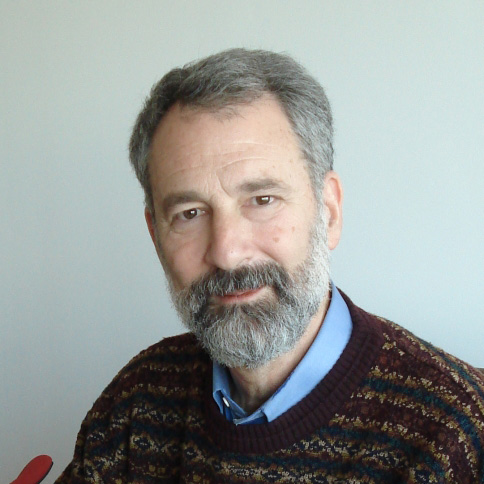
Vladimir Drinfeld

Wolf Prize Laureate in Mathematics 2018

Vladimir Drinfeld


Affiliation at the time of the award:

University of Chicago, USA


Award citation:

“for their ground-breaking work in algebraic geometry (a field that integrates abstract algebra with geometry), in mathematical physics and in presentation theory, a field which helps to understand complex algebraic structures”.


Prize Share:

Vladimir Drinfeld

Alexander Beilinson 


An “algebraic structure” is a set of objects, including the actions that can be performed on those objectas, that obey certain axioms. One of the roles of modern algebra is to research, in the most general and abstract way possible, the properties of various algebraic structures (including their objects), many of which are amazingly complicated.

Vladimir Drinfeld, born in Kharkov, Ukraine (1954), represented the USSR at the International Mathematical Olympiad at the age of 15 and won a gold medal. In the same year he also began his studies at the University of Moscow. Since the eighties he has been considered one of the world’s leading mathematicians. In 1990 he won the prestigious Fields Medal and in 2008 was elected to the National Academy of Sciences (USA). Drinfeld has contributed greatly to various branches of pure mathematics, mainly algebraic geometry, arithmetic geometry and the theory of representation – as well as mathematical physics. The mathematical objects named after him – the “Drinfeld Modules”, the “Drinfeld Chtoucas”, the “Drinfeld Upper Half Plane”, the “Drinfeld Associator”, and so many others that one of his endorsers jokingly said, “one could think that “Drinfeld” was an adjective, not the name of a person”.

In the seventies, Drinfeld began his work on the aforementioned “Langlands Program”, the ambitious program that aimed at unifying the fields of mathematics. This program was proposed by the American-Canadian mathematician Robert Langlands (winner of the Wolf Prize in 1996) and discovered for the first-time tight and direct links between different branches of mathematics. Numbers theory (the field based on arithmetic, “sums”), algebraic representation theory and another field called “automorphic forms”, (which is related to harmonic analysis and assists, for example, in the physical study of waves and frequencies). By means of a new geometrical object he developed, which is now called “Drinfeld Chtoucas”, Drinfeld succeeded in proving some of the connections that had been indicated by the Langlands Program. In the eighties he invented the concept of algebraic “Quantum Group”, which led to a profusion of developments and innovations not only in pure mathematics but also in mathematical physics (for example in statistical mechanics).

Drinfeld and Beilinson, together created a geometric model of algebraic theory that plays a key role in both field theory and physical string theory, thereby further strengthening the connections between abstract modern mathematics and physics. In 2004 they jointly published their work in a book that describes important algebraic structures used in quantum field theory, which is the theoretical basis for the particle physics of today. This publication has since become the basic reference book on this complex subject.

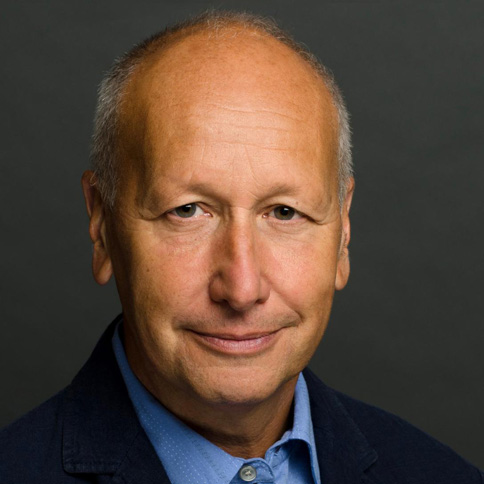
Alexander Beilinson

Wolf Prize Laureate in Mathematics 2018

Alexander Beilinson


Affiliation at the time of the award:

University of Chicago, USA


Award citation:

“for their ground-breaking work in algebraic geometry (a field that integrates abstract algebra with geometry), in mathematical physics and in presentation theory, a field which helps to understand complex algebraic structures”.


Prize Share:

Alexander Beilinson 

Vladimir Drinfeld


An “algebraic structure” is a set of objects, including the actions that can be performed on those objectas, that obey certain axioms. One of the roles of modern algebra is to research, in the most general and abstract way possible, the properties of various algebraic structures (including their objects), many of which are amazingly complicated

Alexander Beilinson was born in Moscow (1957), won the Ostrowski Prize (together with a colleague) in 1999, for extraordinary achievements in mathematics, and in 2017 he was elected to the National Academy of Sciences of the United States. His outstanding achievements include proofs of the Kashdan-Lustig and Jantzen conjectures, which play a key role in the representation theory, the development of important conjectures (“Beilinson’s Conjectures”) in algebraic geometry, and a significant contribution to the interface between geometry and mathematical physics. The joint work of Beilinson and Vladimir Drinfeld on the Langlands Program – a woven fabric of theorems and conjectures designed to link key areas of mathematics – has led to impressive progress in implementing the program in important areas of physics, such as quantum field theory and string theory.

Drinfeld and Beilinson, together created a geometric model of algebraic theory that plays a key role in both field theory and physical string theory, thereby further strengthening the connections between abstract modern mathematics and physics. In 2004 they jointly published their work in a book that describes important algebraic structures used in quantum field theory, which is the theoretical basis for the particle physics of today. This publication has since become the basic reference book on this complex subject.

Richard Schoen

Wolf Prize Laureate in Mathematics 2017

Richard Schoen


Affiliation at the time of the award:

University of California, USA


Award citation:

“for their striking contributions to analysis and geometry”.


Prize share:

Richard Schoen

Charles Fefferman 


Richard Schoen (born in 1950) is one of the most recognized and outstanding mathematicians of our time. In the early years of his research career, he co-founded the then-new mathematical research field- geometric analysis. Since then, his vision, his insight, and his technical power led him to break countless barriers, open up numerous new research directions, and elevate our understanding of mathematical structure. Schoen is a leader in geometric analysis and its application to algebra, geometry, topology, differential equations, and mathematical physics.

Schoen’s fundamental contributions in several areas of geometric analysis fall into two main categories:

(a) the study of conformal geometry and scalar curvature, including applications to classical general relativity.

(b) the theory of minimal surfaces and harmonic maps, particularly the regularity theory of those.

The proof by Schoen (together with S.T. Yau) that energy is positive in General Relativity is a remarkable result, many people have tried to prove it without success, for half a century since Einstein invented his theory. What makes the problem so remarkable is that it is a fundamental statement, without which Einstein’s theory of Gravity would presumably not make much sense (at least from a quantum point of view), yet it is completely unclear why it is true. Neither Einstein nor any of his successors for half a century were able to clarify this. The theorem of Schoen and Yau is an unusual example in which a deep and rigorous mathematical theorem sheds light in an essential way on a central theory of modern physics.

Richard Schoen is awarded the Wolf Prize for being a pioneer and a driving force in geometric analysis. His work on the regularity of harmonic maps and minimal surfaces had a lasting impact on the field. His solution of the Yamabe problem is based on the discovery of a deep connection to general relativity. Through his work on geometric analysis, Schoen has contributed greatly to our understanding of the interrelation between partial differential equations and differential geometry. Many of the techniques he developed continue to influence the advance of non-linear analysis.

Charles Fefferman

Wolf Prize Laureate in Mathematics 2017

Charles Fefferman


Affiliation at the time of the award:

Princeton University, USA


Award citation:

“for their striking contributions to analysis and geometry”.


Prize share:

Charles Fefferman 

Richard Schoen


Charles Fefferman (born in 1949) evidenced an affinity for mathematics at an early age. As a 9-year-old in suburban Maryland, his interest in science fiction and rocketry led to a study of physics, and with it the desire to master the mathematics necessary to understand the physics textbooks he read. At age 12, he was being tutored by professors at the University of Maryland, where he matriculated at 14. He graduated in 1966 at the age of 17 with bachelor’s degrees in both mathematics and physics, earned with the highest distinction, having already published a paper on symbolic logic.

Fefferman earned his doctorate in mathematics in 1969 at Princeton University, supervised by Elias M. Stein, for a thesis entitled Inequalities for Strongly Regular Convolution Operators. After serving as a lecturer at Princeton for the 1969-1970 academic year, he took a position at the University of Chicago; one year later, in 1971, he was promoted to full professor there, making him the youngest full professor in the United States. In 1973 Fefferman returned to Princeton as a full professor, and was appointed the Herbert E. Jones ’43 Professor. He served as Chair of the Mathematics Department from 1999 to 2002.

Fefferman has been a dominant figure in analysis in the last 40 years, having made dramatic advances in a number of major new directions. It is no exaggeration to say that he is the most influential analyst of his generation. His major achievements include:

  1. He revolutionized our understanding of fundamental parts or real analysis by proving the duality of BMO with Hardy space H¹, whose results nowadays have innumerable applications.
  2. Fefferman made the first major breakthroughs in the areas related to Bochner-Riesz summability and restriction theorems, in finding a counter-example for the disc multiplier, and proving the first important positive results in this area.
  3. Fefferman’s study of the Bergman kernel and mapping properties of strongly pseudo-convex domains is a landmark in the field of several complex variables and has also opened the way for important geometric consequences.
  4. Fefferman obtained among the best results in the theory of pseudo-differential operators in the last 40 years:
    • Resolving with Beals a fundamental open problem of local stability.
    • Obtaining with Phong the optimal results for positive operators and sharp Garding inequalities.
    • Achieving the decisive results for second-order non-negative sub-elliptic operators.
  5. In the last ten years he has obtained dramatic breakthroughs and important generalizations in the area of the Whitney extension problem. This fundamental work is contained in a series of works beginning with five papers in the Annals of Mathematics from 2005 to 2009, and including more recently collaborations with B. Klartag, A. Israel, and K. Luli. It deals with the general problem of given a set E in Rn and a function f0 on E, when (and how) does it extend to a function f on Rn that belongs to a given Banach space X of “smooth” functions (e.g. when X = Ck).

Charles Fefferman is awarded the Wolf Prize for making major contributions to several fields, including several complex variables, partial differential equations and subelliptic problems. He introduced new fundamental techniques into harmonic analysis and explored their application to a wide range of fields including fluid dynamics, spectral geometry and mathematical physics. This had a major impact on regularity questions for classical equations such as the Navier-Stokes equation and the Euler equation. He solved major problems related to the fine structure of solutions to partial differential equations.

James G. Arthur

Wolf Prize Laureate in Mathematics 2015

James G. Arthur


Affiliation at the time of the award:

University of Toronto, Canada


Award citation:

“for his monumental work on the trace formula and his fundamental contributions to the theory of automorphic representations of reductive groups”.


Prize share:

None


Arthur’s development of the trace formula for reductive groups is a monumental mathematical achievement. It generalizes the Selberg trace formula for SL(2) from 1956. In his work, Arthur introduced many major tools in non-commutative harmonic analysis on general reductive groups. Building on the work of Langlands, Shelstad, Kottwitz, Waldspurger and others, Arthur obtained the trace formula in stable form. Using the Fundamental Lemma proved by Ngo, Arthur’s work culminated in his description, as envisioned by Langlands, of the structure of automorphic representations of classical groups (symplectic groups and quasi-split special orthogonal groups). Some of the highlights are the functoriality associated to the standard representation, the multiplicity formulas in the discrete spectrum, the classification of the expected counter-examples to the generalized Ramanujan conjecture, and the description of local L-packets and global A-packets. Arthur’s work had an enormous impact. For example, it had been a central tool in Lafforgue’s proof of the Langlands correspondence for function fields. Recently it has been used by Clozel, Harris, Taylor and others in constructing Galois representations associated to automorphic forms via p-adic methods. Arthur’s ideas, achievements and the techniques he introduced will have many more deep applications in the theory of automorphic representations, and the study of locally symmetric spaces. Arthur’s work is a mathematical landmark that will inspire future generations of mathematicians.

Peter Sarnak

Wolf Prize Laureate in Mathematics 2014

Peter Sarnak


Award citation:

“for deep contributions to Analysis, Number Theory, Geometry, and Combinatorics “.


Affiliation at the time of the award:

The Institute for Advanced Study

Princeton University, NJ, USA


Prize share:

None


Prof. Sarnak is a mathematician of an extremely broad spectrum with a far-reaching vision. He has impacted the development of several mathematical fields, often by uncovering deep and unsuspected connections. In analysis, he investigated eigenfunctions of quantum mechanical Hamiltonians which correspond to chaotic classical dynamical systems in a series of fundamental papers. He formulated and supported the “Quantum Unique Ergodicity Conjecture” asserting that all eigenfunctions of the Laplacian on negatively curved manifolds are uniformly distributed in phase space. Sarnak’s introduction of tools from number theory into this domain allowed him to obtain results which had seemed out of reach and paved the way for much further progress, in particular the recent works of E. Lindenstrauss and N. Anantharaman. In his work on L-functions (jointly with Z. Rudnick) the relationship of contemporary research on automorphic forms to random matrix theory and the Riemann hypothesis is brought to a new level by the computation of higher correlation functions of the Riemann zeros. This is a major step forward in the exploration of the link between random matrix theory and the statistical properties of zeros of the Riemann zeta function going back to H. Montgomery and A. Odlyzko. In 1999 it culminates in the fundamental work, jointly with N. Katz, on the statistical properties of low-lying zeros of families of L-functions. Sarnak’s work (with A. Lubotzky and R. Philips) on Ramanujan graphs had a huge impact on combinatorics and computer science. Here again he used deep results in number theory to make surprising and important advances in another discipline.

By his insights and his readiness to share ideas he has inspired the work of students and fellow researchers in many areas of mathematics

Michael Artin

Wolf Prize Laureate in Mathematics 2013

Michael Artin


Affiliation at the time of the award:

M.I.T, USA


Award citation:

“for fundamental contributions to algebraic geometry, both commutative and non-commutative”.


Prize share:

Michael Artin

George D. Mostow 


Michael Artin is one of the main architects of modern algebraic geometry. His fundamental contributions encompass a bewildering number of areas in this field.
To begin with, the theory of étale cohomology was introduced by Michael Artin jointly with Alexander Grothendieck. Their vision resulted in the creation of one of the essential tools of modern algebraic geometry.

In a remarkable and fundamental paper, Artin and Swinnerton-Dyer prove the Shafarevich-Tate conjecture for a K3 surface which is a pencil of elliptic curves over a finite field. In a very original paper Artin and Swinerton-Dyer proved the conjecture for an elliptic K3 surface.

He also collaborated with Barry Mazur to define étale homotopy- another important tool in algebraic geometry- and more generally to apply ideas from algebraic geometry to the study of diffeomorphisms of compact manifold.

We owe to Michael Artin, in large part, also the introduction of algebraic spaces and algebraic stacks. These objects form the correct category in which to perform most algebro-geometrical constructions, and this category is ubiquitous in the theory of moduli and in modern intersection theory. Artin discovered a simple set of conditions for a functor to be represented by an algebraic space. His ”Approximation Theorem” and his ”Existence Theorem” are the starting points of the modern study of moduli problems Artin’s contributions to the theory of surface singularities are of fundamental importance. In this theory he introduced several concepts that immediately became seminal to the field, such as the concepts of rational singularity and of fundamental cycle.

In yet another example of the sheer originality of his thinking, Artin broadened his reach to lay rigorous foundations to deformation theory. This is one of the main tools of classical algebraic geometry, which is the basis of the local theory of moduli of algebraic varieties.

Finally, his contribution to non-commutative algebra has been enormous. The entire subject changed after Artin’s introduction of algebro-geometrical methods in this field. His characterization of Azumaya algebras in terms of polynomial identities, which is the content of the Artin-Procesi theorem, is one of the cornerstones in non-commutative algebra. The Artin-Stafford theorem stating that every integral projective curve is commutative is one of the most important achievements in non-commutative algebraic geometry.

Artin’s mathematical accomplishments are astonishing for their depth and their scope . He is one of the great geometers of the 20th century.

George D. Mostow

Wolf Prize Laureate in Mathematics 2013

George D. Mostow


Affiliation at the time of the award:

Yale University, USA


Award citation:

“for fundamental and pioneering contribution to geometry and Lie group theory”.


Prize share:

George D. Mostow 

Michael Artin


George D. Mostow made a fundamental and pioneering contribution to geometry and Lie group theory. His most celebrated accomplishment in this fields is the discovery of the completely new rigidity phenomenon in geometry, the Strong Rigidity Theorems. These theorems are some of the greatest achievements in mathematics in the second half of the 20th century. This established a deep connection between continuous and discrete groups, or equivalently, a remarkable connection between topology and geometry. Mostow’s rigidity methods and techniques opened a floodgate of investigations and results in many related areas of mathematics. Mostow’s emphasis on the “action at infinity” has been developed by many mathematicians in a variety of directions. It had a huge impact in geometric group theory, in the study of Kleinian groups and of low dimensional topology , in work connecting ergodic theory and Lie groups. Mostow’s contribution to mathematics is not limited to strong rigidity theorems. His work on Lie groups and their discrete subgroups which was done during 1948-1965 was very influential. Mostow’s work on examples of nonarithmetic lattices in two and three dimensional complex hyperbolic spaces (partially in collaboration with P. Delinge) is brilliant and lead to many important developments in mathematics. In Mostow’s work one finds a stunning display of a variety of mathematical disciplines. Few mathematicians can compete with the breadth, depth, and originality of his works.

Michael Aschbacher

Wolf Prize Laureate in Mathematics 2012

Michael Aschbacher


Affiliation at the time of the award:

California Institute of Technology, USA


Award citation:

“for being a principal architect of the classification of finite simple groups. His impact on the theory of finite is extraordinary in its depth, breadth and beauty”. 


Prize share:

Michael Aschbacher

Luis Caffarelli 


Michael Aschbacher And John Thompson (wolf prize Laureate of 1992) are the two great modern masters of the theory of finite groups, in an era that brought to fruition a line of research going back to Galois in the 1830’s. The breadth and depth of Aschbacher’s understanding of finite groups in general, and finite simple groups in particular, and the power he brought to bear on their analysis, are astonishing.

Aschbacher astounded the finite group theory community with a series of papers that raised the classification project for finite simple groups from a distant dream to the reality it is today.

In a series of papers in the 1970’s Aschbacher developed the theory of standard components and tightly embedded subgroups, and brought the theory of groups of odd characteristic type close to the completion.

Turning next to groups of characteristic type, Aschbacher handled all of the most difficult cases, notably the Thin Group case, the p-Uniqueness Case, and finally the Quasithin Case. This last result, contained in two massive monographs written jointly with S.D Smith, completed the classification of finite simple groups. In the process, he significantly advanced the theories of GF(2) representations, Thompson factorization, and pushing- up.

Also worthy of mention are Aschbacher’s work on maximal subgroups of finite simple groups, his joint work with Y.Segev on the uniqueness of the sporadic groups, and his joint work with S.D. Smith on the Quillen conjecture.


Luis Caffarelli

Wolf Prize Laureate in Mathematics 2012

Luis Caffarelli


Affiliation at the time of the award:

University of Texas, USA


Award citation:

“for outstanding, visionary, original and fundamental work on partial differential equations, in particular on regularity for elliptic and parabolic equations, free boundary problems and fluid mechanics”.


Prize share:

Luis Caffarelli 

Michael Aschbacher


Luis Caffarelli has repeatedly made very deep breakthroughs. His early work on free boundary problems was the first place where his extraordinary talent and intuition began to show. Free boundary problems are about finding both the solutions to an equation and the region where the equation holds. In a series of pioneering papers, Caffarelli put forward a novel methodology which eventually leads, after several truly amazing technical estimates that step by step to improve the regularity of the solutions and the boundary, to full regularity under very mild assumptions. Although the theory is complicated the arguments are elementary and full of beautiful geometric intuition and mastery of analytic technique.

A second fundamental contribution by Cafarelli is the study of fully nonlinear elliptic partial differential equations (including the famous Monge-Ampere equation), which he revolutionized. The upshot is that, although the equations are nonlinear, they behave for purposes of regularity as if they were linear. (Work of Nirenberg, Spruck, Evans, Krylov and others also played a significant role here.)

Another fundamental contribution by Cafarelli is his joint work with Kohn and Nirenberg on partial regularity of solutions of the incompressible Navier-Stokes equation in 3 space dimensions. Although the full regularity of solutions is still unknown and likely very hard, Caffarelli-Kohn-Nirenberg showed that the singular set must have parabolic Hausdorff dimension strictly less than one. In particular, singular fibers cannot occur (V.Scheffer also deserves partial credit).

Prof. Caffarelli has also produced deep work on homogenization and on equations with nonlocal dissipation. The list could be continued. Caffarelli is the world’s leading expert on regularity of solutions of partial differential equations.