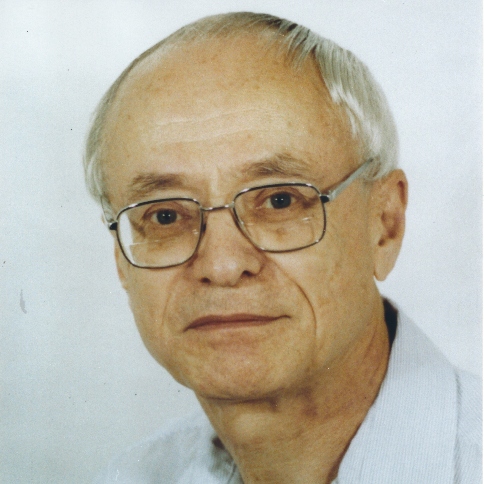
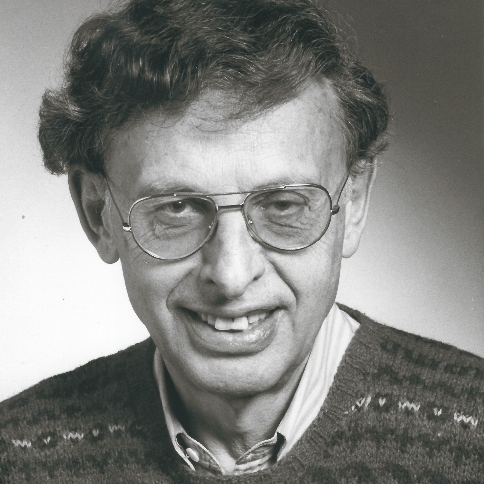
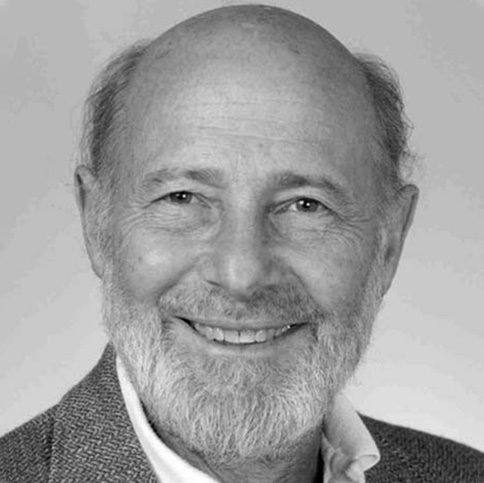
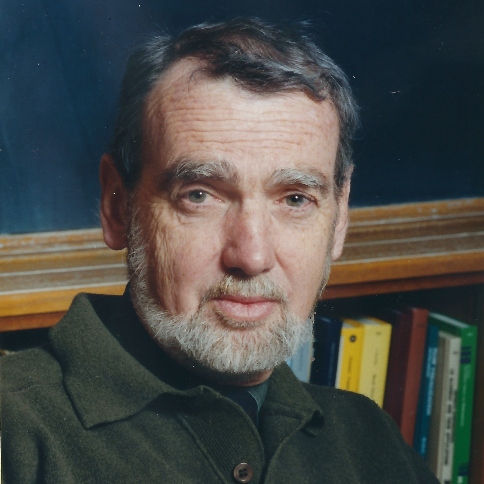
John Tate

Wolf Prize Laureate in Mathematics 2002/3

John T. Tate


Affiliation at the time of the award:

University of Texas, USA


Award citation:

“for his creation of fundamental concepts in algebraic number theory”. 


Prize share:

John T. Tate 

Mikio Sato


For over a quarter of a century, Professor John Tate’s ideas have dominated the development of arithmetic algebraic geometry. Tate has introduced path breaking techniques and concepts, that initiated many theories which are very much alive today. These include Fourier analysis on local fields and adele rings, Galois cohomology, the theory of rigid analytic varieties, and p-divisible groups and p-adic Hodge decompositions, to name but a few. Tate has been an inspiration to all those working on number theory. Numerous notions bear his name: Tate cohomology of a finite group, Tate module of an abelian variety, Tate-Shafarevitch group, Lubin-Tate groups, Neron-Tate heights, Tate motives, the Sato-Tate conjecture, Tate twist, Tate elliptic curve, and others. John Tate is a revered name in algebraic number theory.

Vladimir Arnold

Wolf Prize Laureate in Mathematics 2001

Vladimir I. Arnold


Affiliation at the time of the award:

Steklov Mathematical Institute, Russia

Universite Paris-Dauphine, France


Award citation:

“for his deep and influential work in a multitude of areas of mathematics, including dynamical systems, differential equations, and singularity theory”.


Prize share:

Vladimir I. Arnold

Saharon Shelah 


Professor Vladimir I. Arnold, a renaissance mathematician, has made significant contributions to an astounding number of different mathematical disciplines. His many research papers, books and lectures, plus his enormous erudition and enthusiasm, have had a profound influence on an entire generation of mathematicians.

Arnold’s Ph.D. thesis contained a solution to Hilbert’s 13th problem. His work on Hamiltonian dynamics, in particular as co-creator of the KAM (Kolmogorov-Arnold-Moser) theory and as the discoverer of “Arnold’s diffusion”, made him world-famous at an early age. Arnold’s contributions to the theory of singularities, which complements Thom’s catastrophe theory, has transformed this field. He has also made innumerable and fundamental contributions to the theory of differential equations, symplectic geometry, real algebraic geometry, the calculus of variations, hydrodynamics, and magneto-hydrodynamics, often discovering links between problems in diverse areas.

Saharon Shelah

Wolf Prize Laureate in Mathematics 2001

Saharon Shelah


Affiliation at the time of the award:

Hebrew University of Jerusalem, Israel


Award citation:

“for his many fundamental contributions to mathematical logic and set theory, and their applications within other parts of mathematics”.


Prize share:

Saharon Shelah 

Vladimir I. Arnold


Professor Saharon Shelah is a leading mathematician in the foundations of mathematics and mathematical logic. His staggering output, of 700 papers and half a dozen monographs, includes the creation of several entirely new theories that changed the course of model theory and modern set theory, as well as providing the tools to settle old problems from many other branches of mathematics, including group theory, topology, measure theory, Banach spaces, and combinatorics.

Shelah created a number of subfields of set theory, most notably the theory of proper forcing and the theory of possible cofinalities, a remarkable refinement of the notion of cardinality, which led to the proofs of definite statements in areas previously considered far beyond the limits of undecidability. Shelah’s work on set theoretic algebra and its applications showed that dozens of areas of algebra involve phenomena that are not controlled by universally-recognized axioms of set theory (independence phenomena). In model theory he carried through a monumental program of deep structural analysis known as “stability theory” which now dominates a large part of the field.

Raoul Bott

Wolf Prize Laureate in Mathematics 2000

Raoul Bott


Affiliation at the time of the award:

Harvard University, USA


Award citation:

“for his deep discoveries in topology and differential geometry and their applications to Lie groups, differential operators and mathematical physics”.


Prize share:

Raoul Bott

Jean-Pierre Serre


Professor Raoul Bott has been one of the leading figures in differential geometry, particularly in its links with topology and Lie groups. Through his publications, his students, and his personal qualities, he has significantly influenced the mathematics of our times.

His first major contribution was the application of Morse theory to the topology of Lie groups and homogeneous spaces, culminating in the famous “periodicity theorems” for the stable homotopy of the classical groups. This result provided the foundation for the development of K-theory, to which he also contributed greatly, in particular through his joint work with Atiyah on the index theory of differential operators and its applications to equivariant topology. He obtained seminal results in the theory of foliations. His later work, on Yang-Mills theory, moduli spaces of vector bundles, and elliptic genera, has been marked by a combination of the same geometric insight, coupled with new points of view coming from mathematical physics.

Jean-Pierre Serre

Wolf Prize Laureate in Mathematics 2000

Jean-Pierre Serre


Affiliation at the time of the award:

College de France, France


Award citation:

“for his many fundamental contributions to topology, algebraic geometry, algebra, and number theory and for his inspirational lectures and writing”.


Prize share:

Jean-Pierre Serre

Raoul Bott


Professor Jean-Pierre Serre is a mathematician of enormous versatility, who has had a huge influence on an astonishingly wide range of subjects.

Serre’s initial work in algebraic topology and complex geometry made him the youngest recipient ever of the Fields Medal in 1954. His application of algebraic methods to infinite dimensional spaces was to become a major theme in all modern geometry. He transformed algebraic geometry and commutative algebra, through use of sheaf-theoretical and homological methods, constructed the first sheaf cohomology in characteristic p, created modern geometric class field theory, and made major contributions to Galois cohomology and to the theory of arithmetic groups. In number theory, Serre’s influence is inestimable. He introduced the notion of l-adic representations, gave spectacular applications to elliptic curves, abelian varieties, and the theory of modular forms. His conjecture about the modularity of Galois representations was a key step toward the eventual proof of Fermat´s Last Theorem.

Through his lectures, books, courses, each of which is a gem of mathematical exposition and clarity, Serre has inspired generations of mathematicians.

Laszlo Lovasz

Wolf Prize Laureate in Mathematics 1999

Laszlo Lovasz


Affiliation at the time of the award:

Yale University, USA

Eotvos University, Hungary


Award citation:

“for his outstanding contributions to combinatorics, theoretical computer science and combinatorial optimization”.


Prize share:

Laszlo Lovasz

Elias M. Stein 


Professor Laszlo Lovasz has obtained ground breaking results in discrete mathematics which have had very significant applications to other areas of pure and applied mathematics as well as to theoretical computer science. He solved several outstanding problems including the perfect graph conjecture, Kneser’s conjecture and the determination of the Shannon capacity of the pentagon, by introducing deep mathematical methods relying on geometric, polyhedral and topological techniques. His algorithmic ideas, including applications of the ellipsoid method in combinatorial optimization, the lattice basis reduction algorithm, the matroid parity algorithm and the improved procedures for volume computation, all had profound influence on theoretical computer science. He also contributed to the PCP characterization of NP land its connection to the hardness of approximation. His “Local Lemma” is one of the main early results in the development of the probabilistic method. His comprehensive books and fascinating lectures have stimulated mathematical research around the world.


Elias M. Stein

Wolf Prize Laureate in Mathematics 1999

Elias M. Stein


Affiliation at the time of the award:

Princeton University, USA


Award citation:

“for his contributions to classical and ‘Euclidean’ Fourier analysis and for his exceptional impact on a new generation of analysts through his eloquent teaching and writing.”


Prize share:

Elias M. Stein 

Laszlo Lovasz


Professor Elias M. Stein has made fundamental contributions in mathematical analysis understood in a very broad sense. He developed (jointly with G. Weiss and C. Fefferman) the theory of Hardy spaces in several complex variables; in particular he emphasized the role of duality between the Hardy spaces and the BMO spaces introduced earlier by F. John and L. Nirenberg. In the representation theory of Lie groups he discovered, with R. Kunze, the so-called “Kunze-Stein” phenomenon, classical by now, on the existence of certain families of unitary representations of the group SL (2,R). He also made a profound contribution to the problem of several complex variables. He is one of the creators of Euclidean Fourier Analysis, has shaped classical analysis by recognizing the role of singular integrals, Radon transforms and maximal operators obtained by integration on lower dimensional manifolds in Euclidean spaces. The clarity of his expository monographs and the contributions of his numerous outstanding students have had a deep impact on the development of the field.

Yakov G. Sinai

Wolf Prize Laureate in Mathematics 1996/7

Yakov G. Sinai


Affiliation at the time of the award:

Princeton University, USA

Landau Institute of Theoretical Physics, Russia


Award citation:

“for his fundamental contributions to mathematically rigorous methods in statistical mechanics and the ergodic theory of dynamical systems and their applications in physics”.


Prize share:

Yakov G. Sinai 

Joseph B. Keller


Professor Yakov G. Sinai brings to bear on the problems of mathematical physics the powerful tools of dynamical systems and probability theory, often developing new tools for this purpose. He is generally recognized as the world leader in the mathematics of statistical physics. Working in the tradition of the Kolmogorov school, he first formulated the rigorous definition of the invariant entropy for an arbitrary measure-preserving map. His subsequent work covers areas from the ergodicity of the motion of billiards to spectral properties of quasi-periodic Schrödinger operators. Statistical mechanics is one of the most active and rewarding areas of modern mathematics and Yakov Sinai is its recognized leader today.

Joseph B. Keller

Wolf Prize Laureate in Mathematics 1996/7

Joseph B. Keller


Affiliation at the time of the award:

Stanford University, USA


Award citation:

“for his profound and innovative contributions, in particular to electromagnetic, optical, acoustic wave propagation and to fluid, solid, quantum and statistical mechanics”.


Prize share:

Joseph B. Keller

Yakov G. Sinai 


Professor Joseph B. Keller is a preeminent applied mathematician in the classical tradition. He has brought a deep understanding of physics and a superb skill at asymptotics to an astonishing range of problems; these include reflection, scattering and diffraction of waves, whether acoustic, electro-magnetic, elastic or fluid. His outstanding contributions cover problems in mechanics, quantum mechanics, thermo-dynamics, statistical mechanics, and include the so-called Keller-Maslov index, the Keller-Rubinov formula for forward scattering and pioneering work on random media. He is really the model of what a mathematician interested in a wide variety of physical phenomena can and should be.


Robert P. Langlands

Wolf Prize Laureate in Mathematics 1995/6

Robert P. Langlands


Affiliation at the time of the award:

Institute for Advanced Study, USA


Award citation:

“for his path-blazing work and extraordinary insight in the fields of number theory, automorphic forms and group representation”.


Prize share:

Robert P. Langlands

Andrew J. Wiles 


Professors Langlands and Wiles share the Wolf Prize for their ground-breaking research in modern number theory which has led to the solution of long standing problems as well as defining important new directions.

Robert P. Langlands has shaped the modern theory of automorphic forms including ground-breaking works on: Eisenstein series, group representations, L-functions and the Artin conjectures, principle of functoriality, and the formulation of the far-reaching Langlands program. His contributions and insights provide a basis and an inspiration for present and future researchers in these fields.