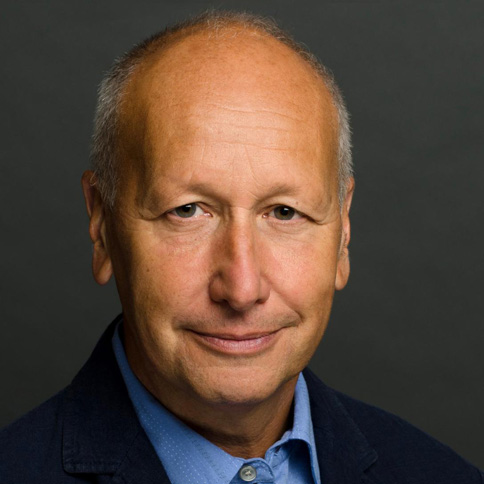
Simon Rattle

Wolf Prize Laureate in Music 2012

Sir Simon Denis Rattle


Award citation:

“for being a leading international figure among the conductors of our time. His worldwide reputation as a perfectionist in performing a wide range of musical works is highly appreciated by those who played under his baton, as well as various audiences around the world”.


Prize share:

Simon Rattle

Placido Domingo


Simon Rattle (born in 1955, in Liverpool) is a British-German conductor, best noted for his work with the City of Birmingham Symphony Orchestra, Berlin Philharmonic, and London Symphony Orchestra, and with the orchestral works of Mahler, Beethoven, and Sibelius. Rattle has in fact conducted a wide range of repertoire, showing a particular affinity for adventurous orchestral work from the 20th century – by composers such as Bartók, Stravinsky and Szymanowski.

As a child, Rattle learned the piano and violin and played percussion for the Merseyside Youth Orchestra. At 16 years old, in 1971, he entered the Royal Academy of Music.

In 1974, he was made assistant conductor of the Bournemouth Symphony Orchestra. He joined the Glyndebourne music staff at the age of 20 in 1975. He went on to conduct over 200 performances of 13 different operas at Glyndebourne and on tour during the subsequent 28 years.

At the age of 21, in 1976, Rattle made his first Prom at the Royal Albert Hall, conducting the London Sinfonietta in August 1976, with a programme including the première of Harrison Birtwistle’s Meridian and Arnold Schoenberg’s First Chamber Symphony.

In 1977, he became assistant conductor of the Royal Liverpool Philharmonic.

From 1980 to 1998, Rattle was Principal Conductor and Artistic Adviser of the City of Birmingham Symphony Orchestra and was appointed Music Director in 1990. He moved to Berlin in 2002 and held the positions of Artistic Director and Chief Conductor of the Berliner Philharmoniker.

Ronald M. Evans

Wolf Prize Laureate in Medicine 2012

Ronald M. Evans


Affiliation at the time of the award:

The Salk Institute, USA


Award citation:

“for discovering the gene superfamily encoding nuclear receptors and elucidating the mechanism of action of this class of receptors”.


Prize share:

None


Dr. Ronald M. Evans (born in 1949, USA) is best known for his discovery of the superfamily of genes encoding nuclear receptors and for the elucidation of their universal mechanism of action, a process of controlled gene expression that governs how lipophilich hormones, vitamins and drugs regulate diverse developmental and metabolic pathways.

Ron Evans establishes the mechanism by which hormones signal through the nucleus to regulate gene expression, thereby controlling physiology. This was achieved by cloning and characterizing the first nuclear receptor, the glucocorticoid receptor, which produced a blueprint for understanding all nuclear receptors subsequently discovered. Evans went on to mineralocorticoid, thyroid and retinoic acid (Vitamin A) receptors, providing a unifying mechanism by which chemically distinct hormones precisely control a series of genetic switches. Discovery of this superfamily redefined endocrine physiology based on knowledge of receptor structure and function, leading to the prediction of the existence of as yet undiscovered hormonal signaling pathways and the discovery of the first orphan receptor. This led to the development of a technology platform known as “reverse endocrinology”, which then ked Evans to the discovery of the first orphan hormone. Reverse endocrinology helped to launch the rapid evolution of entirely new branches of endocrine physiology and to identify novel molecular targets for therapy.

In summary, Evan’s discoveries on the nuclear hormone receptors define a unitary signaling pathway and a central paradigm for the control of eukaryotic expression. His work establishes a transcriptional basis to physiology and has led to the discovery of completely unrecognized physiologic pathways as well a new generation of drugs for the treatment of cancer, metabolic disease and muscular dystrophies.

A. Paul Alivisatos

Wolf Prize Laureate in Chemistry 2012

A. Paul Alivisatos


Affiliation at the time of the award:

Lawrence Berkley National Lab, Berkley, USA


Award citation:

“for developing the colloidal inorganic nanocrystal as a building block of nanoscience making fundamental contributions to controlling the synthesis of these particles, to measuring and understanding their physical properties, and to utilizing their unique properties for applications ranging from light generation and harvesting to biological imaging.”


Prize share:

A. Paul Alivisatos 

Charles M. Lieber


Prof. Paul Alivisatos (born 1959, USA) has developed the colloidal inorganic nanocrystal as a building block of nanoscience making fundamental contributions to controlling the synthesis of these particles, to measuring and understanding their physical properties, and to utilizing their unique properties for applications ranging from light generation and harvesting to biological imaging.

He and his coworkers have developed methods for synthesizing nanocrystals and have elucidated the principles and scaling laws that underlie their development, so that high quality, defect-free colloidal inorganic nanoparticles of defined size and shape can now be made routinely in many laboratories around the world. He has shown how to prepare branched and hollow nanoparticles.

His colloidal nanocrystals have allowed him to study fundamental physics and chemistry of these “artificial atoms” in the novel and important size range between molecules and continuous solids. He has contributed to the spectroscopy of nanocrystals in the time domain and to the study of such photophysical phenomena as electron relaxation, electron-vibration coupling, single-photon emission, and single-electron charging. He has led in studying such phenomena as size dependent melting and pressure induced solid-solid phase transitions and in creating “artificial molecules”, where small numbers of colloidal nanoparticles are joined together into specific arrangements with controlled symmetry and connectivity.

He has demonstrated applications of inorganic nanocrystals in solid state lighting and in solar cells, and has developed methods for biological imaging, such as his “Plasmon ruler”‘ which measures the relative motion of two nanocrystals, joined by DNA or peptides.

Michael Aschbacher

Wolf Prize Laureate in Mathematics 2012

Michael Aschbacher


Affiliation at the time of the award:

California Institute of Technology, USA


Award citation:

“for being a principal architect of the classification of finite simple groups. His impact on the theory of finite is extraordinary in its depth, breadth and beauty”. 


Prize share:

Michael Aschbacher

Luis Caffarelli 


Michael Aschbacher And John Thompson (wolf prize Laureate of 1992) are the two great modern masters of the theory of finite groups, in an era that brought to fruition a line of research going back to Galois in the 1830’s. The breadth and depth of Aschbacher’s understanding of finite groups in general, and finite simple groups in particular, and the power he brought to bear on their analysis, are astonishing.

Aschbacher astounded the finite group theory community with a series of papers that raised the classification project for finite simple groups from a distant dream to the reality it is today.

In a series of papers in the 1970’s Aschbacher developed the theory of standard components and tightly embedded subgroups, and brought the theory of groups of odd characteristic type close to the completion.

Turning next to groups of characteristic type, Aschbacher handled all of the most difficult cases, notably the Thin Group case, the p-Uniqueness Case, and finally the Quasithin Case. This last result, contained in two massive monographs written jointly with S.D Smith, completed the classification of finite simple groups. In the process, he significantly advanced the theories of GF(2) representations, Thompson factorization, and pushing- up.

Also worthy of mention are Aschbacher’s work on maximal subgroups of finite simple groups, his joint work with Y.Segev on the uniqueness of the sporadic groups, and his joint work with S.D. Smith on the Quillen conjecture.


Placido Domingo

Wolf Prize Laureate in Music 2012

Placido Domingo


Award citation:

“for being one of the greatest legendary tennors of all times, instrumental in giving many young artists encouragement and showing devotion to humanitarion causes”.


Prize share:

Placido Domingo

Simon Rattle


Maestro Placido Domingo of the Washington and Los Angeles Opera Houses, USA – Placido Domingo is one of the greatest tenors of all times. He has appeared in leading roles in 128 operas in around the world. His repertoire encompasses works from the early 18th century to Wagner and contemporary operas. Since the beginning of his career, Placido Domingo has also exhibited devotion to Israel and to various humanitarian causes. He has been especially active in encouraging young artists, and has shown much initiative as the ambassador of Hear the World, an organization that raises awareness about the importance of hearing and educates the public about the consequences of hearing loss. Placido Domingo is a tenor famous for his powerful, multicolored voice that retains its purity and clarity at all registers.

Notably, at the beginning of this career, Domingo appeared with the Israeli opera between 1962 and 1965. The award to Domingo is the first time the Wolf Foundation has awarded a prize to a vocal artist.

Luis Caffarelli

Wolf Prize Laureate in Mathematics 2012

Luis Caffarelli


Affiliation at the time of the award:

University of Texas, USA


Award citation:

“for outstanding, visionary, original and fundamental work on partial differential equations, in particular on regularity for elliptic and parabolic equations, free boundary problems and fluid mechanics”.


Prize share:

Luis Caffarelli 

Michael Aschbacher


Luis Caffarelli has repeatedly made very deep breakthroughs. His early work on free boundary problems was the first place where his extraordinary talent and intuition began to show. Free boundary problems are about finding both the solutions to an equation and the region where the equation holds. In a series of pioneering papers, Caffarelli put forward a novel methodology which eventually leads, after several truly amazing technical estimates that step by step to improve the regularity of the solutions and the boundary, to full regularity under very mild assumptions. Although the theory is complicated the arguments are elementary and full of beautiful geometric intuition and mastery of analytic technique.

A second fundamental contribution by Cafarelli is the study of fully nonlinear elliptic partial differential equations (including the famous Monge-Ampere equation), which he revolutionized. The upshot is that, although the equations are nonlinear, they behave for purposes of regularity as if they were linear. (Work of Nirenberg, Spruck, Evans, Krylov and others also played a significant role here.)

Another fundamental contribution by Cafarelli is his joint work with Kohn and Nirenberg on partial regularity of solutions of the incompressible Navier-Stokes equation in 3 space dimensions. Although the full regularity of solutions is still unknown and likely very hard, Caffarelli-Kohn-Nirenberg showed that the singular set must have parabolic Hausdorff dimension strictly less than one. In particular, singular fibers cannot occur (V.Scheffer also deserves partial credit).

Prof. Caffarelli has also produced deep work on homogenization and on equations with nonlocal dissipation. The list could be continued. Caffarelli is the world’s leading expert on regularity of solutions of partial differential equations.

Jacob Bekenstein

Wolf Prize Laureate in Physics 2012

Jacob Bekenstein


Affiliation at the time of the award:

The Hebrew University of Jerusalem, Israel


Award citation:

“for his work on astronomical super-massive objects called ‘black holes’ that showed they can possess a statistical-thermodynamic property called entropy even though the internal dynamics could not be known. This work created an entire field of black hole dynamics which has become a cornerstone in the important theoretical physics areas of quantum gravity and strings”.


Prize share:

None


The most important discovery of Prof. Bekenstein (born 1947, Mexico) is his realization that black holes have a temperature and carry entropy proportional to the area of their event horizon. This has sparked the creation of an entire field devoted to the study of black hole thermodynamics where the theories of quantum mechanics, general relativity and statistical mechanics are deeply intertwined. This has led to advances in quantum gravity and string theory. He also demonstrated that it is not possible for an observer to measure anything about the black hole except their total mass, angular momentum and electromagnetic charge. This discovery led to the current description of black holes as very simple objects and provides constraints on theories that modify general relativity. These seminal advances have been used by many others and continue to have vast influence in cosmology and theoretical physics.

Professor Bekenstein discovered that a black hole possesses entropy, whose value is proportional to its surface area. Therefore it also has a characteristic temperature. This has led to a new understanding of black holes, but also to an interesting new question, namely, how do these new properties originate? Many research groups are now studying this question, the answer to which will necessitate an understanding of the microscopic structure and dynamics of the black hole.

Charles M. Lieber

Wolf Prize Laureate in Chemistry 2012

Charles M. Lieber


Affiliation at the time of the award:

Harvard Univerity, USA


Award citation:

“for developing new methods to control the shape and heterostructure of nanowires, for characterizing their physical properties, and for demonstrating their potential applications”.


Prize share:

Charles M. Lieber

A. Paul Alivisatos 


Prof. Lieber has introduced new paradigms in the growth of a broad range of nanometer diameter wires and heterostructures. His contributions have provided a comprehensive tool box for systematic growth of materials heterostructures and devices, with the demonstrated potential for contributions to areas ranging from computing and Communications to biology and medicine.

The most significant breakthrough made by Lieber was his creation of a general method for the synthesis of single crystal semiconductor nanowires based on the nanocluster-catalyzed growth model. This work provided the intellectual underpinnings for the predictable growth of nanowires of virtually all main group materials in the periodic table, and enabled Lieber to demonstrate control of electronic properties through doping and size limits with molecular-scale nanowires. He proposed and demonstrated a general concept for the growth of nanoscale axial heterostructures, nanowire-nanotube heterojunctions and the growth nanowire superlattices with novel photonic and electronic properties. In addition, Lieber pioneer the concept of both radial core-shell structures, and three-dimensionally-branched nanowires.

In addition to his rich contributions to the characterization of carbon nanotubes with STM and AFM, Lieber has made pioneering contributions illuminating the electrical, optical and optoelectronic properties of semiconductor nanowires, and has demonstrated unique ballistic and quantum transport in specifically designed core/shell nanowires.

By combining his advances in controlled synthesis and understanding physical properties of nanowires Lieber has provided seminal examples of nanotechnologies. He has exploited semiconductor nanowire building blocks to fashion an array of nanoscale functional electronic and optoelectronic devices, including the first p-n diode junctions, active bipolar transistors, field-effect transistor, complementary inverters, point-like nanoscale light-emitting diodes, and electrically-driven single nanowire lasers.

Prof. Lieber has made seminal advances at the interface between nanoelectronics and biological systems. He recognized the duality of chemical/biological and electronic signaling at the nanoscale to demonstrate the first direct electrical detection of proteins, and pushed this concept to the level with selective electrical sensing of individual viruses, and ultrahigh sensitivity detection of cancer markers.

He has pioneered the usage of nanodevices to record electrical activity from cultured neurons and cardiac cells as well as tissue samples, demonstrating unprecedented spatial and temporal resolution for fundamental neurobiology and medicine.

Stuart A. Rice

Wolf Prize Laureate in Chemistry 2011

Stuart A. Rice


Affiliation at the time of the award:

University of Chicago, USA


Award citation:

“For exploring the nature of organic solids and their energy profiles, structure and dynamics and for creating new ways to make organic materials, ranging from polymers, to organic-based devices that capture energy from the sun, and light our way in the dark. The researchers have been responsible for groundbreaking conceptual and experimental advances that have helped to create the research field of organic materials”.


Prize share:

Stuart A. Rice

Krzysztof Matyjaszewski 

Ching Tang


From wood to walrus tusks, and from amber to sugar, solid materials based on organic molecules are part of the natural world. The interest of the chemical community in such materials goes back to the days of the alchemists. However, the creation of new organic materials, the discovery of their properties, and then the development of new devices based on organic materials, has been one of the great chapters in the annals of chemistry over the past two centuries.

Professor Stuart A. Rice (born 1932, USA) has influenced the course of virtually every aspect of contemporary physical chemistry, and has shaped its directions broadly and powerfully. He has been a leader in most thematic areas of chemical physics. Rice´s great advances in organic solids led directly to his distinctive later work on the dynamics of single molecules and on phase transition behavior. This, in turn, led to his epoch-making research on the photonic control of chemical reactions. Rice´s original and pioneering investigations (both theoretical and experimental) into the properties of organic solids helped to define and to characterize a panoply of behaviors, and to conceptualize and formulate a coherent set of concepts, such as exciton behaviors, radiationless transitions, light absorption and emission in organic crystals, charge transport, intramolecular vibrational relaxation, exciton fission and fusion, exchange forces in excitons, and dynamics of triplet excitons in solids.


Shinya Yamanaka

Wolf Prize Laureate in Medicine 2011

Shinya Yamanaka


Affiliation at the time of the award:

The J. David Gladstone Institutes, USA

Kyoto University, Japan


Award citation:

“for the generation of induced pluripotent stem cells (iPS cells) from skin cells”.


Prize share:

Shinya Yamanaka

Rudolf Jaenisch 


Professor Shinya Yamanaka (born 1962, Japan) In a series of amazing experiments, conducted in 2006, while working at Kyoto University in Japan, Prof. Yamanaka showed that when introduced into mouse skin cells, there are four genes that can reprogram these cells into ES-like induced pluripotent stem (iPS) cells, capable of generating cells of ectodermal, endodermal and mesodermal lineages. It was soon shown that these four factors can also convert human fibroblasts to iPS cells. Shortly thereafter, many laboratories reproduced this finding, including the generation of iPS cells from patients. This discovery has also solved a critical political and ethical problem, as it reduces the need to use human oocytes for stem-cell research. Although the therapeutic potential of Dr. Yamanaka’s discovery has not yet been realized, his work has spurred many scientists worldwide to work in the area of regenerative medicine.

Collectively, the groundbreaking contributions by Dr. Yamanka and Dr. Jaenisch form the basis for work on regenerative medicine currently performed in hundreds of laboratories around the world.