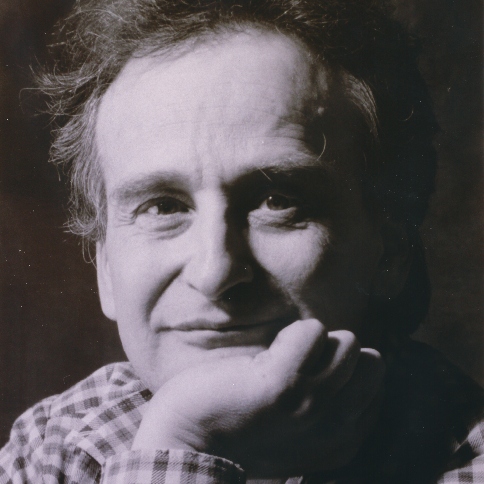
Bertrand Halperin

Wolf Prize Laureate in Physics 2002/3

Bertrand I. Halperin


Affiliation at the time of the award:

Harvard University, USA


Award citation:

“for key insights into the broad range of condensed matter physics: Leggett on superfluidity of the light helium isotope and macroscopic quantum phenomena; and Halperin on two- dimensional melting, disordered systems and strongly interacting electrons.”


Prize share:

Bertrand I. Halperin

Anthony J. Leggett 


The 2002/3 Wolf Prize for Physics is awarded to Professors Bertrand I. Halperin and Anthony J. Leggett for their seminal contributions to the broad range of structures and processes met in condensed forms of matter, a field of study in which understanding of subtle quantum phenomena paves the way to the solid state devices of tomorrow.

Halperin and Leggett have provided a better understanding of the macroscopic properties of materials which rely on non-intuitive quantum effects and interactions, that determine the properties of different states of matter and transitions between them. The theoretical works of both recipients have always been accompanied by experimentation and have had a significant impact on understanding numerous physical phenomena.

Halperin is distinguished for his analyses of dynamic critical phenomena, liquid crystal phases which appear in two-dimensional melting, electric conduction in disordered systems, and strongly interacting electrons in intense magnetic fields, when electrons are confined to moving in two dimensions, or nanostructures patterned in semiconductors.

Anthony J. Leggett

Wolf Prize Laureate in Physics 2002/3

Anthony J. Leggett


Affiliation at the time of the award:

University of Illinois, USA


Award citation:

“for key insights into the broad range of condensed matter physics: Leggett on superfluidity of the light helium isotope and macroscopic quantum phenomena; and Halperin on two- dimensional melting, disordered systems and strongly interacting electrons”.


Prize share:

Anthony J. Leggett 

Bertrand I. Halperin


The 2002/3 Wolf Prize for Physics is awarded to Professors Bertrand I. Halperin and Anthony J. Leggett for their seminal contributions to the broad range of structures and processes met in condensed forms of matter, a field of study in which understanding of subtle quantum phenomena paves the way to the solid state devices of tomorrow.

Halperin and Leggett have provided a better understanding of the macroscopic properties of materials which rely on non-intuitive quantum effects and interactions, that determine the properties of different states of matter and transitions between them. The theoretical works of both recipients have always been accompanied by experimentation and have had a significant impact on understanding numerous physical phenomena.

Leggett is recognized for his theory of the superfluidity (frictionless flow) of the light helium isotope at very low temperatures, for his exploration of macroscopic quantum coherence and for his contribution to the study of dissipation processes in quantum systems that cannot be ignored in practical applications.

Mario R. Capecchi

Wolf Prize Laureate in Medicine 2002/3

Mario R. Capecchi


Affiliation at the time of the award:

University of Utah, USA


Award citation:

“for their contribution to the development of gene-targeting, enabling elucidation of gene function in mice”.


Prize share:

Mario R. Capecchi 

Oliver Smithies

Ralph L. Brinster


Mario R. Capecchi and Oliver Smithies developed the use of homologous recombination for the targeted mutation of chosen genes in mammalian cells. Subsequent to spending years developing the approach, these two scientists independently demonstrated that that their methods could be used to introduce mutations into multi-potential mouse embryonic stem cells. The technology they invented offers a means for creating strains of mice with mutations in virtually any gene. Such mutant mouse models have since been generated by countless groups worldwide, with the aim of studying gene functions in vivo and making animal models of human diseases, ranging from immunological, neurological, and cardiovascular diseases, to cancer.

Mikio Sato

Wolf Prize Laureate in Mathematics 2002/3

Mikio Sato


Affiliation at the time of the award:

Research Institute for Mathematical Sciences, Kyoto University, Japan


Award citation:

“for his creation of ‘algebraic analysis’, including hyperfunction and microfunction theory ,holonomic quantum field theory, and a unified theory of soliton equations.”


Prize share:

Mikio Sato

John T. Tate 


Professor Mikio Sato’s vision of “algebraic analysis” and mathematical physics initiated several fundamental branches of mathematics. Sato created the theory of hyperfunctions and invented microlocal analysis, that allowed for a description of the structure of singularities of (hyper) functions on cotangent bundles. Hyperfunctions, together with integral Fourier operators, have become a major tool in linear partial differential equations. Along with his students, Sato developed holonomic quantum field theory, providing a far-reaching extension of the mathematical formalism underlying the two-dimensional Ising model and introduced along the way the famous tau functions. Sato provided a unified geometric description of soliton equations in the context of tau functions and infinite dimensional Grassmann manifolds. This was extended by his followers to other classes of equations, including self dual Yang-Mills and Einstein equations.

Sato has generously shared his ideas with young mathematicians and has created a flourishing school of algebraic analysis in Japan.


John Tate

Wolf Prize Laureate in Mathematics 2002/3

John T. Tate


Affiliation at the time of the award:

University of Texas, USA


Award citation:

“for his creation of fundamental concepts in algebraic number theory”. 


Prize share:

John T. Tate 

Mikio Sato


For over a quarter of a century, Professor John Tate’s ideas have dominated the development of arithmetic algebraic geometry. Tate has introduced path breaking techniques and concepts, that initiated many theories which are very much alive today. These include Fourier analysis on local fields and adele rings, Galois cohomology, the theory of rigid analytic varieties, and p-divisible groups and p-adic Hodge decompositions, to name but a few. Tate has been an inspiration to all those working on number theory. Numerous notions bear his name: Tate cohomology of a finite group, Tate module of an abelian variety, Tate-Shafarevitch group, Lubin-Tate groups, Neron-Tate heights, Tate motives, the Sato-Tate conjecture, Tate twist, Tate elliptic curve, and others. John Tate is a revered name in algebraic number theory.

Fuller W. Bazer

Wolf Prize Laureate in Agriculture 2002/3

Fuller W. Bazer


Affiliation at the time of the award:

Texas A&M University, USA


Award citation:

“for discoveries of Interferon-t and other pregnancy-associated proteins, which clarified the biological mystery of signaling between embryo and mother to maintain pregnancy, with profound effects on the efficiency of animal production systems, as well as human health and well-being”.


Prize share:

Fuller W. Bazer 

R. Michael Roberts


Professors Fuller W. Bazer and R. Michael Roberts are co-recipients of the Wolf Foundation Prize, in recognition of their seminal contributions in clarifying the biological mystery of embryo-maternal signaling, that leads to the maintenance of pregnancy and to the survival of the embryo in livestock species. While it has long been known that chemical communication between embryo and mother was essential for a successful pregnancy in mammals, little was known about the details of the process, before these two scientists began a collaboration to elucidate on these relationships.

After a period of intensive joint efforts, lasting 16 years, each has continued to make important independent contributions, at Texas A&M University and at the University of Missouri-Columbia. Among his key discoveries, Bazer isolated a uterine protein called uteroferrin and identified that it is a hematopoietic growth factor that influences the survival of the neonate and may be useful in treating diseases, such as leukemia and osteoporosis. Roberts determined that uteroferrin was identical to a class of tartrate-resistant acid phosphatases (TRAPs), subsequently purified, sequenced and cloned in humans. This has led to the screening of postmenopausal women for TRAP, elevated in association with osteoporosis. Bazer determined that estrogen in pigs and interferon-t in ruminant species, are the signals for pregnancy maintenance. The ability of interferon-t to suppress transcription of the estrogen receptor gene, provides a model for potential treatment of estrogen-dependent tumors. Roberts cloned, identified, and characterized the temporal expression of trophoblast interferon-t in sheep and cattle. His studies related to differential transcriptional regulation of interferon-t by ETS-2 and Oct-4 transcription factors, has led to the identification of a putative developmental switch that may lead to the formation of trophectoderm in early embryo development. Roberts has identified at least 100 expressed genes for pregnancy-associated proteins in the aspartyl proteinase gene family, some of which hold promise as a basis for an accurate and sensitive pregnancy test. Robert’s research on sexual dimorphism in embryos has led to the discovery that the mother’s diet (e.g., fat) close to the time of conception, may play a role in selecting the offspring’s sex.

The Wolf Foundation Prize Co-Awardees have created each a legacy of trained scientists, that are playing leadership roles in both agriculture and biomedicine. F.W. Bazer and R. Michael Roberts exemplify how devotion to basic research in agriculture can lead to practical outcomes that impact both animal production, as well as human health and well-being.

R. Michael Roberts

Wolf Prize Laureate in Agriculture 2002/3

R. Michael Roberts


Affiliation at the time of the award:

University of Missouri, USA


Award citation:

“for discoveries of Interferon-t and other pregnancy-associated proteins, which clarified the biological mystery of signaling between embryo and mother to maintain pregnancy, with profound effects on the efficiency of animal production systems, as well as human health and well-being”.


Prize share:

R. Michael Roberts

Fuller W. Bazer 


Professors Fuller W. Bazer and R. Michael Roberts are co-recipients of the Wolf Foundation Prize, in recognition of their seminal contributions in clarifying the biological mystery of embryo-maternal signaling, that leads to the maintenance of pregnancy and to the survival of the embryo in livestock species. While it has long been known that chemical communication between embryo and mother was essential for a successful pregnancy in mammals, little was known about the details of the process, before these two scientists began a collaboration to elucidate on these relationships.

After a period of intensive joint efforts, lasting 16 years, each has continued to make important independent contributions, at Texas A&M University and at the University of Missouri-Columbia. Among his key discoveries, Bazer isolated a uterine protein called uteroferrin and identified that it is a hematopoietic growth factor that influences the survival of the neonate and may be useful in treating diseases, such as leukemia and osteoporosis. Roberts determined that uteroferrin was identical to a class of tartrate-resistant acid phosphatases (TRAPs), subsequently purified, sequenced and cloned in humans. This has led to the screening of postmenopausal women for TRAP, elevated in association with osteoporosis. Bazer determined that estrogen in pigs and interferon-t in ruminant species, are the signals for pregnancy maintenance. The ability of interferon-t to suppress transcription of the estrogen receptor gene, provides a model for potential treatment of estrogen-dependent tumors. Roberts cloned, identified, and characterized the temporal expression of trophoblast interferon-t in sheep and cattle. His studies related to differential transcriptional regulation of interferon-t by ETS-2 and Oct-4 transcription factors, has led to the identification of a putative developmental switch that may lead to the formation of trophectoderm in early embryo development. Roberts has identified at least 100 expressed genes for pregnancy-associated proteins in the aspartyl proteinase gene family, some of which hold promise as a basis for an accurate and sensitive pregnancy test. Robert’s research on sexual dimorphism in embryos has led to the discovery that the mother’s diet (e.g., fat) close to the time of conception, may play a role in selecting the offspring’s sex.

The Wolf Foundation Prize Co-Awardees have created each a legacy of trained scientists, that are playing leadership roles in both agriculture and biomedicine. F.W. Bazer and R. Michael Roberts exemplify how devotion to basic research in agriculture can lead to practical outcomes that impact both animal production, as well as human health and well-being.

Vladimir Arnold

Wolf Prize Laureate in Mathematics 2001

Vladimir I. Arnold


Affiliation at the time of the award:

Steklov Mathematical Institute, Russia

Universite Paris-Dauphine, France


Award citation:

“for his deep and influential work in a multitude of areas of mathematics, including dynamical systems, differential equations, and singularity theory”.


Prize share:

Vladimir I. Arnold

Saharon Shelah 


Professor Vladimir I. Arnold, a renaissance mathematician, has made significant contributions to an astounding number of different mathematical disciplines. His many research papers, books and lectures, plus his enormous erudition and enthusiasm, have had a profound influence on an entire generation of mathematicians.

Arnold’s Ph.D. thesis contained a solution to Hilbert’s 13th problem. His work on Hamiltonian dynamics, in particular as co-creator of the KAM (Kolmogorov-Arnold-Moser) theory and as the discoverer of “Arnold’s diffusion”, made him world-famous at an early age. Arnold’s contributions to the theory of singularities, which complements Thom’s catastrophe theory, has transformed this field. He has also made innumerable and fundamental contributions to the theory of differential equations, symplectic geometry, real algebraic geometry, the calculus of variations, hydrodynamics, and magneto-hydrodynamics, often discovering links between problems in diverse areas.

Saharon Shelah

Wolf Prize Laureate in Mathematics 2001

Saharon Shelah


Affiliation at the time of the award:

Hebrew University of Jerusalem, Israel


Award citation:

“for his many fundamental contributions to mathematical logic and set theory, and their applications within other parts of mathematics”.


Prize share:

Saharon Shelah 

Vladimir I. Arnold


Professor Saharon Shelah is a leading mathematician in the foundations of mathematics and mathematical logic. His staggering output, of 700 papers and half a dozen monographs, includes the creation of several entirely new theories that changed the course of model theory and modern set theory, as well as providing the tools to settle old problems from many other branches of mathematics, including group theory, topology, measure theory, Banach spaces, and combinatorics.

Shelah created a number of subfields of set theory, most notably the theory of proper forcing and the theory of possible cofinalities, a remarkable refinement of the notion of cardinality, which led to the proofs of definite statements in areas previously considered far beyond the limits of undecidability. Shelah’s work on set theoretic algebra and its applications showed that dozens of areas of algebra involve phenomena that are not controlled by universally-recognized axioms of set theory (independence phenomena). In model theory he carried through a monumental program of deep structural analysis known as “stability theory” which now dominates a large part of the field.

Ryoji Noyori

Wolf Prize Laureate in Chemistry 2001

Ryoji Noyori


Affiliation at the time of the award:

Nagoya University, Japan


Award citation:

“for their pioneering, creative and crucial work in developing asymmetric catalysis for the synthesis of chiral molecules, greatly increasing humankind’s ability to create new products of fundamental and practical importance”.


Prize share:

Ryoji Noyori

Henri B. Kagan

K. Barry Sharpless


Professors H. B. Kagan, R. Noyori and K. B. Sharpless, have independently made great advances in developing the ability to synthesize chiral molecules. They pioneered the use of chiral molecular metal complexes as catalysts in asymmetric synthesis. Minute amounts of such catalysts can enable the production of large amounts of desired products of controlled handedness. These catalysts can perform various molecular transformations in an asymmetric fashion, such as reduction, oxidation and isomerization, leading to a variety of useful chiral products.

The chiral synthetic advances made by these three scientists, working on three different continents but pursuing the same significant goals, are critical to pharmaceutical manufacturing and the preparation of a very large number of molecules of controlled handedness. Their pioneering work has revolutionized our understanding of asymmetric catalysis and provided the means for efficient industrial and laboratory preparations of important pharmaceutical products and fine chemicals needed for daily life.

The first example of asymmetric catalysis (cyclopropanation) by a well-defined metal (copper) complex was reported by Noyori in 1966. Although only a low enantiomeric excess was obtained, the result stimulated further research. In 1971, Kagan reported a breakthrough in catalytic enantioselectivity. Using a C2- symmetric ligand (DIOP) for the first time, he obtained a very high enantiomeric excess in alkene hydrogenation, catalyzed by a rhodium complex. Kagan´s work had a strong influence on the course of research in the field of asymmetric catalysis, leading to the development of a variety of C2 -symmetric ligands and stimulating the study of several important reactions, such as asymmetric hydrogenation, hydroformylation, hydrosilylation and allylic alkylation. In 1980, Noyori reported asymmetric catalysis, by complexes of a new diphosphine ligand, BINAP. Catalysis by ruthenium and rhodium complexes of this ligand, resulted in spectacular laboratory and commercial applications, in asymmetric hydrogenation and isomerization. In the same year, Sharpless reported a breakthrough in the important field of asymmetric oxidation. His general method for the highly enantioselective epoxidation of allylic alcohols catalyzed by a titanium complex, is of broad scope and is used routinely in synthesis. More recently, Sharpless developed another highly useful synthetic methodology, the asymmetric dihydroxylation of alkenes, catalyzed by an osmium complex.