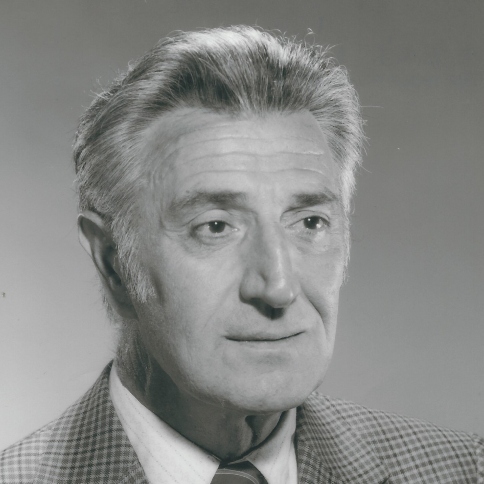
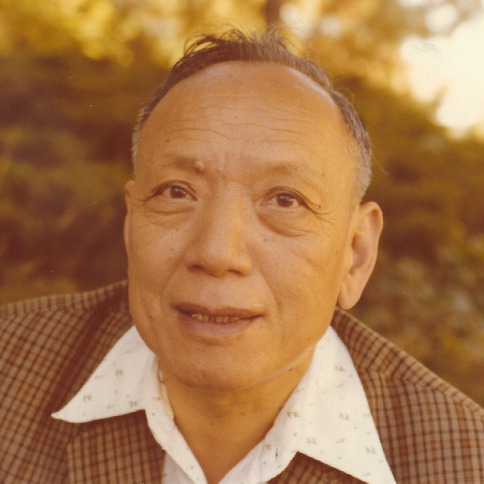
Conyers Herring

Wolf Prize Laureate in Physics 1985

Conyers Herring


Affiliation at the time of the award:

Stanford University, USA


Award citation:

“for their major contributions to the fundamental theory of solids, especially of the behavior of electrons in metals”.


Prize share:

Conyers Herring

Philippe Nozières


These two great physicists have played parallel roles in the brief history of solid state physics. Each of them, in his own way, could be thought of as being the conscience of his field, as a central figure who has contributed by his personal work as well as by his strong influence and valuable suggestions to his colleagues.

Conyers Herring (born in 1914, USA) earned his Ph.D. in physics from Princeton University in 1937, presenting a dissertation titled “On Energy Coincidences in the Theory of Brillouin Zones” under the guidance of Eugene Wigner. Transitioning to the technical staff at Bell Laboratories in Murray Hill, New Jersey, in 1946, he continued his tenure there until 1978. Later, he became part of the faculty at Stanford University.

Professor Conyers Herring has laid the foundations of band structure calculations of metals and semiconductors, culminating in the discovery of the Orthogonalized Plane Wave Method (O.P.W.). He was years ahead of his time in this contribution. A great deal of modern solid state physics as produced today stems from this original and early paper.

His influence on the development of solid state physics extends to a deep understanding of many facets such as surface physics, of thermionic emission, of transport phenomena in semiconductors and of collective excitations in solids such as spin waves.

He created the theoretical physics division at Bell Telephone Laboratory, which influenced the total research effort at this institution and brought about much of the most original research in condensed matter physics . He has been most influential in promoting international cooperation among scientists and through his character and his personal example, he has exemplified a somewhat unattainable ideal of how a research scholar in any field should operate.

Theodore H. Maiman

Wolf Prize Laureate in Physics 1984

Theodore H. Maiman


Affiliation at the time of the award:

Maiman Associates, USA


Award citation:

“for his realization of the first operating laser, the pulsed three level ruby laser.”


Prize share:

Theodore H. Maiman

Erwin L. Hahn

Sir Peter Hirsch


Dr. Theodore H. Maiman. The impact of lasers on many technological fields is well known. They are used, for example, as cutting tools in metallurgical and textile industry, as scalpels in surgery, as alignment devices in the construction industry, as length and frequency standards in scientific applications. The original ruby laser of Maiman was instrumental in establishing the new sub field of non-linear optics, which explores the properties of matter at extremely high light intensities. It has also been used in ranging experiments to measure the earth-moon distance with retro-reflectors set-up by the moon astronauts.

Peter B. Hirsch

Wolf Prize Laureate in Physics 1984

Sir Peter Hirsch


Affiliation at the time of the award:

Oxford University, United Kingdom


Award citation:

“for his development of the utilization of the transmission electron microscope as a universal instrument to study the structure of crystalline matter”.


Prize share:

Sir Peter Hirsch

Theodore H. Maiman

Erwin L. Hahn


Professor Peter Hirsch developed the use of the transmission electron microscope, to study imperfections in the structure of metals, ceramics and other materials. His work has made it possible to examine such solids in far greater detail than is possible with the optical microscope.

Rudolph A. Marcus

Wolf Prize Laureate in Chemistry 1985

Rudolph A. Marcus


Affiliation at the time of the award:

Noyes Laboratory of Chemical Physics, California Institute of Technology, USA


Award citation:

“for his contribution to chemical kinetics, especially the theories of unimolecular reactions and electron transfer reactions”.


Prize share:

None


Rudolph A. Marcus (born in 1923, Canada) fostered an early fascination with the sciences, displaying a strong aptitude for mathematics during his education at Baron Byng High School. His academic journey continued at McGill University under the tutelage of Carl A. Winkler. At McGill, Marcus diverged from the conventional path of a chemistry student, delving extensively into mathematics courses, a decision that would later underpin his formulation of the theory on electron transfer. His academic pursuits culminated in the attainment of a B.Sc. in 1943 and a Ph.D. in 1946, both from McGill University.

Following his graduation, Marcus commenced his professional career in 1946, initially working at the National Research Council (Canada), subsequently advancing to positions at the University of North Carolina and the Polytechnic Institute of Brooklyn. It was during his tenure at the University of North Carolina in 1952 that he innovatively developed the Rice–Ramsperger–Kassel–Marcus theory by amalgamating RRK theory with transition state theory. In 1964, Marcus transitioned to a teaching role at the University of Illinois, furthering his academic contributions.

Professor Rudolph A. Marcus has made many important contributions to a wide range of fields in theoretical chemical kinetics. His work has been fundamental and stimulating and has set the tone for all of the modern work in this field, starting with his initial work on RRKM theory in 1951 and continuing through his present work on semi-classical dynamics and chaos. Some of these theories are currently referred to as the Marcus theory. Many fields of chemistry have been greatly influenced by his work.

His theory of unimolecular reactions unified earlier ideas on the reactions of vibrationally excited molecules, based them on statistical notions, and related them to molecular properties. The so-called RRKM theory has become a standard textbook theory, and enjoyed many recent applications.

Marcus theory of electron-transfer reactions in solution has also become a standard theory. It is based on the recognition of the changes undergone by reactant and solvent molecules during the transfer of electrons. Quantitative relations derived by Marcus have been widely tested and are widely used by chemists. He has also extended his theory to electron transfer on electrodes, and to proton transfer in solution.

Other important contributions to theoretical chemistry include the semi classical theory of molecular collisions (in parallel with Professor W. H. Miller), the introduction of the concept of collision coordinates, and the semi-classical theory of quantization of bound states.

Robert H. Burris

Wolf Prize Laureate in Agriculture 1985

Robert H. Burris


Affiliation at the time of the award:

College of Agriculture and Life Sciences, University Of Wisconsin, USA


Award citation:

“for his pioneering fundamental research on the mechanisms of biological nitrogen fixation and its application in crop production.”


Prize share:

None


Robert H. Burris (born in 1914, USA) completed his undergraduate studies in chemistry, earning a B.S. degree from South Dakota State University in 1936, followed by obtaining his Ph.D. from the University of Wisconsin-Madison in 1940. His postdoctoral research involved collaborating with Harold Urey at Columbia University. Subsequently, he returned to Madison and ultimately ascended to a professorial position within the biochemistry department. Notably, he held the position of department chairman from 1958 to 1970.

In the air above every hectare of land there are about 78 tons of elemental nitrogen. The latter is chemically inert and, under ordinary conditions, does not react with other elements. Hence most crop plants are likely to be starving in this sea of nitrogen. Only when the nitrogen in the air is combined with other elements it is possible for plants to use this nitrogen in their growth processes.

The mere fact that some bacteria are able to use the elemental form of nitrogen that exists in the atmosphere has been known for nearly 100 years since its discovery by the Russian biochemist S. N. Vinogradsky. Thus, these nitrogen-fixing bacteria can grow in the absence of combined nitrogen and, at the same time, produce nitrogenous substances in the soil that may be used later by crop plants.

However, during the first fifty years since the discovery of biological nitrogen fixation by soil-inhabiting bacteria, very little information was available as regards the biochemical mechanisms involved. This was quite surprising in view of the paramount importance of this process in the nitrogen budget of our globe.

The state of the knowledge regarding this wonder of nature has changed dramatically in the late 1930’s and early 1940’s when Professor Burris investigations on the basic chemistry and physiology of the microorganisms that fix nitrogen, actually opened up an entire new vista of basic research on biological nitrogen fixation. He was the first to use a radioactive isotope of nitrogen (15N) in this study, which led to the discovery of ammonia to be the key intermediate in this biochemical process.

For over 45 years, following these pioneering efforts, Professor Burris and his colleagues have purified and studied in great detail and depth the complex of enzymes involved, and the metabolic pathways followed in this natural phenomenon. At the same time they developed novel techniques for reliable, quantitative assay of the nitrogen fixing activity of microorganisms.

The scope of his research in this particular area has not been limited to the well recognized nitrogen-fixing bacteria that live in symbiosis with leguminous, plants in nodules formed on their roots. His studies also embraced the free-living microorganisms that are able to fix atmospheric nitrogen. Mention should be made in this connection of Prof. Burris pioneering work on Azospirillum – a free-living nitrogen-fixing genus of bacteria associated with plant roots, in particular cereal plants.

One may sum up Burris’ contributions to fundamental biochemical research on nitrogen fixation by concluding that his very careful, thorough investigations have been in the heart of the efforts to elucidate the mechanism of this life-supporting process. He has thus rightly earned the title of ‘world doyen of nitrogen fixation.

Because of the pressing food needs of the world on one hand, and the rising cost of chemical nitrogen fixation for use in mineral fertilizers on the other, the subject of biological nitrogen fixation is currently receiving greatly increased attention throughout the world.

The lifelong fundamental studies of Prof. Burris provided the scientific background for the now worldwide practice of inoculating legume crops with industrially manufactured pre-cultured strains of nitrogen-fixing bacteria. The latter are capable of supplying essentially all the nitrogen requirements of the plan~ Furthermore, the highly sensitive techniques developed by Prof. Burris for measuring this biological activity, proved most instrumental in the selection of more effective strains of bacteria for this purpose.

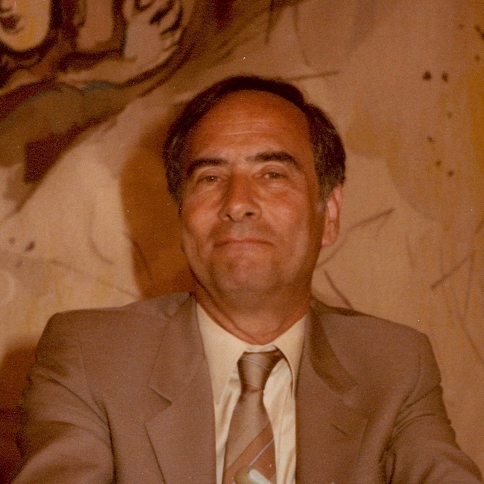
Ralph Erskine

Wolf Prize Laureate in Architecture 1984

Ralph Erskine


Award citation:

“for his fundamental contribution to contemporary architecture, based on his creative spirit, solving human problems in a highly original formal language”.


Prize share:

None


Ralph Erskine is a creative and original architect who, in a long career, has evolved from one of the second generation leaders of the Modern Movement, to an architect concerned in a wide range of projects with a dialogue between the existing and the new, and the participation of the users in the creation of their habitat. The rich and varied formal expression in the body of his work shows a very personal vocabulary leading to a strong and meaningful statement.

Kunihiko Kodaira

Wolf Prize Laureate in Mathematics 1985

Kunihiko Kodaira


Affiliation at the time of the award:

The Japan Academy, Japan


Award citation:

“for his outstanding contributions to the study of complex manifolds and algebraic varieties”.


Prize share:

Kunihiko Kodaira

Hans Lewy


Professor Kunihikio Kodaira made a profound study of harmonic integrals with incisive, important applications to algebraic and complex geometry. These include the projective imbedding theorem, deformations of complex structures (with D. C. Spencer), and the classification of complex analytic surfaces. His work has greatly influenced and inspired researchers in these subjects throughout the world.

Hans Lewy

Wolf Prize Laureate in Mathematics 1985

Hans Lewy


Affiliation at the time of the award:

University of California at Berkeley, USA


Award citation:

“for initiating many, now classic and essential, developments in partial differential equations”.


Prize share:

Hans Lewy

Kunihiko Kodaira


Working in Germany in the 1920’s and subsequently in the United States, Professor Hans Lewy has laid the foundations to some of the most fruitful theories in partial differential equations and their applications. His early work with Courant and Friedrichs, 1928, heralded the development of numerical methods for solving partial differential equations and later led to a stability theory for finite difference equations. He produced the famous example of a smooth linear partial differential equation having no solution. His other contributions include the study of the Monge-Ampere equation, work in fluid dynamics and the theory of cavities, and an early study of variational inequalities. In all these topics his ideas, have been fundamental and his results most original.

Erwin L. Hahn

Wolf Prize Laureate in Physics 1984

Erwin L. Hahn


Affiliation at the time of the award:

University of California, USA


Award citation:

“for his discovery of nuclear spin echoes and for the phenomenon of self-induced transparency”.


Prize share:

Erwin L. Hahn

Theodore H. Maiman

Sir Peter Hirsch


Professor Erwin L. Hahn’s research demonstrated that a collection of spinning nuclei could retain a coherent memory for a period of time and made it possible to extend the use of magnetic resonance techniques for a variety of purposes in science, engineering and medicine including the storage and retrieva l of information. Optical self-induced transparency is an outstanding example of nonlinear interaction between matter and high intensity light pulses. The experiments of Hahn elucidate concepts of statistical mechanics and collective excitations in complex (many-body) systems.

Shiing-Shen Chern

Wolf Prize Laureate in Mathematics 1983

Shiing-Shen Chern


Affiliation at the time of the award:

University of California at Berkeley, USA


Award citation:

“for outstanding contributions to global differential geometry, which have profoundly influenced all mathematics”.


Prize share:

Shiing-Shen Chern

Paul Erdos


Professor Shiing-Shen Chern has been the leading figure in global differential geometry. His earlier work on integral geometry, especially on the kinematic formula, was the source of most later work. His ground-breaking discovery of characteristic classes (now known as Chern classes) was the turning point that set global differential geometry on a course of tumultuous development. The field has blossomed under his leadership, and his results, together with those of his numerous students, have influenced the development of topology, algebraic geometry, complex manifolds, and most recently of gauge theories in mathematical physics.