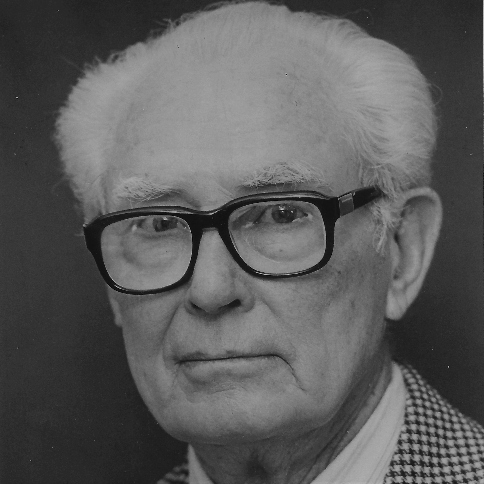
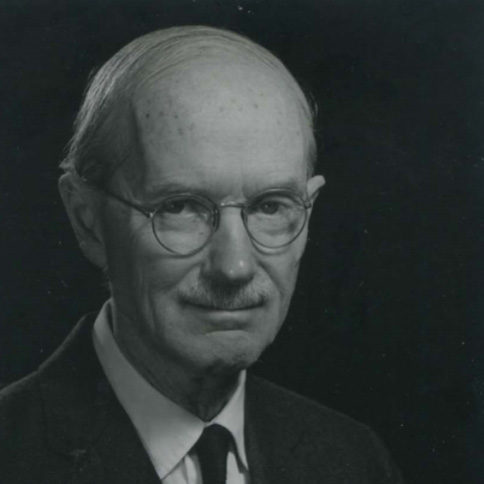
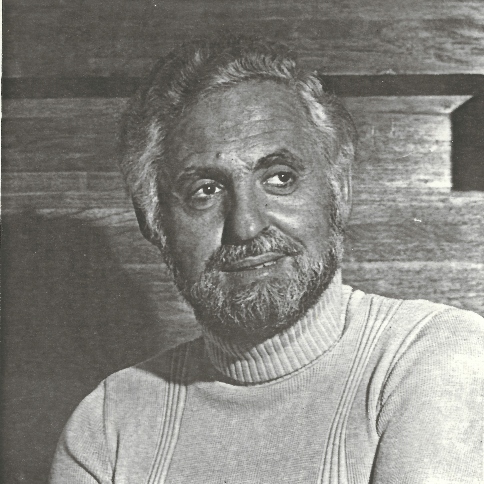
John C. Walker

Wolf Prize Laureate in Agriculture 1978

John C. Walker


Affiliation at the time of the award:

University of Wisconsin, USA


Award citation:

“for his research in plant pathology, developing of disease-resistant varieties of major food plants”.


Prize share:

John C. Walker

George F. Sprague 


Professor Sprague (a geneticist – plant breeder) and Professor Walker (a plant pathologist -plant breeder) have achieved world eminence in the development of improved crop plants to the extent of greatly stabilizing the culture, increasing yields, and improving the quality of a number of major vegetable crops, and of maize – one of the world’s dominant grain crops. Each has developed novel and efficient methodology of breeding techniques and procedures. Both have been towering figures in contributing to both applied and basic research. Both have most enviable records of having trained scientific manpower for agriculture’s needs. Students of each are to be found throughout the world, many of them having established themselves as distinguished researchers, educators and/or administrators. Each awardee has served well the organizations of his respective science and agricultural industry, as well as the governments of the world.

Professor Emeritus Walker’s eminence as a plant pathologist would lead many to judge him to be among history’s 3 or 4 greatest plant pathologists. Central to his career have been his contributions to the control of plant diseases by the development of resistant varieties of crop plants, the development of novel and effective breeding methodology, the demonstration of the role of environmental factors, particularly host nutrition and soil temperature, in the epidemiology of plant diseases, the physiological nature of diseases, and the chemical basis of disease resistance in plants.

He is, perhaps, the World’s best example of a scientist combining applied research oriented to food production and fundamental research directed to advancing the frontiers of knowledge, integrated and organized around specific problems of agriculture. Similarly, other disease control studies led to the discovery of much fundamental information regarding the role of aerial and soil environal factors in the incidence and severity of disease.

As an educator, he is without peer in the training of scientists in the profession of plant pathology. His classic text book: “Plant Pathology”, which has been translated into several languages, has been the standard treatise on the subject. It is today the most widely used classroom text in university schools of agriculture everywhere.

Jean Dausset

Wolf Prize Laureate in Medicine 1978

Jean Dausset


Affiliation at the time of the award:

Saint Louis Hospital Paris, Frace


Award citation:

“for discovering the HL-A system, the major histocompatibility complex in man and its primordial role in organ transplantation”.


Prize share:

Jean Dausset

George D. Snell

Jon J. van Rood


Dr. George Snell discovered and described in mice the H-2 antigens, the structure which codes for major transplantation antigens carrier genes. These genes are essential in the onset of the immune response and therefore mechanism of defense.

The investigation of histocompatibility antigens in humans, led Professor J. Dausset in Paris and Professor Van Rood in Leiden to the discovery and description of a model similar to that in mice, the HL-A system. This is the major histocompatibility complex in man, and its primordial role in organ transplantation has been extensively established and evaluated. Moreover, the association of HL-A antigens to the mechanisms governing the incidence of a number of diseases is under active research.

These investigations are a major breakthrough in the understanding of modern genetics and have opened new avenues for adequate matching of organ and tissue transplantation and for possible control and prevention of certain diseases.

The name of the late Peter Gorer, the British scientist who was among the founders of this field will be linked forever to the pillars of medical genetics.

Izrail M. Gelfand

Wolf Prize Laureate in Mathematics 1978

Izrail M. Gelfand


Affiliation at the time of the award:

Moscow State University, U.S.S.R


Award citation:

“for his work on functional analysis, group representation, and for his seminal contributions to many areas of mathematics and its applications”.


Prize share:

Izrail M. Gelfand

Carl L. Siegel


Professor Izrail M. Gelfand (born in 1913, USSR) was a student of Kolmogorov, and some of his most important work was done in the 1940´s. Since the early 1950´s he has been Head of the Section of the Institute of Applied Mathematics of the USSR Academy of Sciences. He was a member of the editorial board of “Uspekhi Matematicheskikh Nauk”, chief editor of the journal “Functional Analysis”. From 1968-1970, he was President of the Moscow Mathematical Society. He was awarded the Order of Lenin three times, and the Lenin Prize, and received many other honors and recognition such as Honorary Membership in the American National Academy of Sciences, the American Mathematical Society, the London Mathematical Society, and many more.

George F.Sprague

Wolf Prize Laureate in Agriculture 1978

George F. Sprague


Affiliation at the time of the award:

University of Illinois, USA


Award citation:

“for his outstanding research on the genetic amelioration of maize for human welfare”.


Prize share:

George F. Sprague 

John C. Walker


Professor Sprague (a geneticist – plant breeder) and Professor Walker (a plant pathologist -plant breeder) have achieved world eminence in the development of improved crop plants to the extent of greatly stabilizing the culture, increasing yields, and improving the quality of a number of major vegetable crops, and of maize – one of the world´s dominant grain crops. Each has developed novel and efficient methodology of breeding techniques and procedures. Both have been towering figures in contributing to both applied and basic research. Both have most enviable records of having trained scientific manpower for agriculture´s needs. Students of each are to be found throughout the world, many of them having established themselves as distinguished researchers, educators and/or administrators. Each awardee has served well the organizations of his respective science and agricultural industry, as well as the governments of the world.

In the annals of world agriculture, hybrid maize is the most spectacular example of the exploitation of a genetic phenomenon heterosis for increasing food production. Unquestionably Professor Sprague´s name ranks foremost in the 40-year-long history of this great achievement of agricultural science. Moreover, many of the concepts, much of the theory and, any of the breeding models, which he developed for maize, have influenced the improvement of other crop plants.

Throughout his long and distinguished scientific career, Professor Sprague has worked untiringly to link theoretical quantitative genetic theory to practical plant breeding. Among his most fruitful basic studies was the development of a mathematical genetic model for selection that led to the development of an improved gene pool of maize germ plasm. Professor Sprague´s genetic research laid the ground work, for improvement in nutritional quality in maize. A fact, which holds great promise to maize-eating nations. He conducted investigations, which demonstrated that protein quality of maize was genetically modifiable.

In summary, few people in the history of agriculture have had such a profound impact on the improvement of a major crop as has Professor Sprague.

George D. Snell

Wolf Prize Laureate in Medicine 1978

George D. Snell


Affiliation at the time of the award:

Jackson Laboratory, USA


Award citation:

“for discovery of H-2 antigens, which codes for major transplantation antigens and the onset of the immune response”.


Prize share:

George D. Snell

Jean Dausset

Jon J. van Rood


Dr. George Snell discovered and described in mice the H-2 antigens, the structure which codes for major transplantation antigens carrier genes. These genes are essential in the onset of the immune response and therefore mechanism of defense.

The investigation of histocompatibility antigens in humans, led Professor J. Dausset in Paris and Professor Van Rood in Leiden to the discovery and description of a model similar to that in mice, the HL-A system. This is the major histocompatibility complex in man, and its primordial role in organ transplantation has been extensively established and evaluated. Moreover, the association of HL-A antigens to the mechanisms governing the incidence of a number of diseases is under active research.

These investigations are a major breakthrough in the understanding of modern genetics and have opened new avenues for adequate matching of organ and tissue transplantation and for possible control and prevention of certain diseases.

The name of the late Peter Gorer, the British scientist who was among the founders of this field will be linked forever to the pillars of medical genetics.

Chien-Shiung Wu

Wolf Prize Laureate in Physics 1978

Chien-Shiung Wu


Affiliation at the time of the award:

Columbia University, USA


Award citation:

“for her persistent and successful exploration of the weak interaction which helped establish the precise form and the non conservation of parity for this new natural force.”


Prize share:

None


Professor Chien-Shiung Wu (born in 1912, China)  has done outstanding experimental work on the mechanism of beta disintegration, and thereby, of weak interactions generally. This work extended mostly from 1948 to 1963. In addition, she has made important contributions to several other fields of fundamental physics, to physics Instrumentation, and recently, to biology.

In her most famous work, she demonstrated that the direction of emission of beta rays is strongly correlated with the direction of the spin of the emitting nucleus. This showed that parity is not conserved in beta disintegration, in accord with the epochal theory of Lee and Yang, which had been developed just a few months before.

The success of this theory raised the problem of the exact coupling between the nucleon, which undergoes beta decay, and the electron and neutrino, which are emitted in this decay.

Among Wu’s other contributions we want to mention her demonstration that the two quanta from the annihilation of positrons and electrons are polarized at right angles to each other, as they should be according to Dirac’s theory. This proves that electron and positron have opposite parity. In recent years (1966 to 1971), Wu has made a thorough study of the X ray spectra of muonic atoms and has become interested in biological problems, especially the structure of hemoglobin. Her Moessbauer studies of this substance have given surprising results, and have considerably clarified its structure.

Carl L. Siegel

Wolf Prize Laureate in Mathematics 1978

Carl L. Siegel


Affiliation at the time of the award:

University of Gottingen, Germany


Award citation:

“in recognition of his contributions to the theory of numbers, theory of several complex variables, and celestial mechanics”.


Prize share:

Carl L. Siegel

Izrail M. Gelfand


Professor Carl L. Siegel received his Doctor of Philosophy degree in Gottingen, 1920; became Professor of Mathematics at the University of Frankfurt-am-Main, 1922, and later at the University of Gottingen. Many of his important contributions to the theory of numbers and several complex variables date to this period in Gottingen. Being an outspoken anti-Nazi, he fled Germany in 1940 to Denmark, and was at the Institute for Advanced Study, Princeton, from 1940 to 1950 at which time he returned to Gottingen.

Carl Djerassi

Wolf Prize Laurate in Chemistry 1978

Carl Djerassi


Affiliation at the time of the award:

Stanford University, USA


Award citation:

“for his work in bioorganic chemistry, application of new spectroscopic techniques, and his support of international cooperation”.


Prize share:

None


Professsor Carl Djerassi (born in 1923, Austria) had a unique impact on science, technology, and the betterment of huamnity. He synthesized the first oral contraceptive, 19- norethindrone, which is the active ingredient in more than half of all oral contraceptives, the most widely used form of birth control in the world. His scientific work has been reported in over 800 published articles and books on synthetic organic chemistry. He has pioneered the use of various physical tools for the elucidation of the structure of organic molecules. He has been effective in translating scientific knowledge into technological practice. He has been responsible for important international scientific cooperative efforts between the United States Mexico, Brazil, Zaire, Kenya, and other countries, involving the creation of new research groups and institutions in chemistry and other fields of science and technology.

He is chairman of the United States National Academy of Science Board on Science and Technology in International Development and has been the driving force in recent Pugwash Conferences on the search for solutions to the world´s population growth problems. For all these contributions to science, to industry, and to humanity, Carl Djerassi is awarded the first Wolf Foundation Prize for Chemistry.

Arvid Carlsson

Wolf Prize Laureate in Medicine 1979

Arvid Carlsson


Affiliation at the time of the award:

Gothenburg University, Sweden


Award citation:

“for his work which established the role of dopamine as a neurotransmitter”.


Prize share:

Arvid Carlsson

Oleh Hornykiewicz

Roger W. Sperry


These scientists had made outstanding contributions in brain physiology and physio-pathology.

Professor Arvid Carlsson is honored for his work, which established the role of dopamine as a neurotransmitter. Professor at the University of Lund, Sweden until 1959, he is since then Professor of the Department of Pharmacology at the University of Gothenburg; he is a member of the Royal Swedish Academy of Sciences, and others. Dr. Carlsson received various Prizes and awards, among them the ‘Jahre’s Medical Prize in 1974. He has published almost 300 articles a considerable part of them dealing with the occurrence and functions of dopamine in brain. Dr. Carlsson’s work has had an impact on basic as well as clinical brain research.