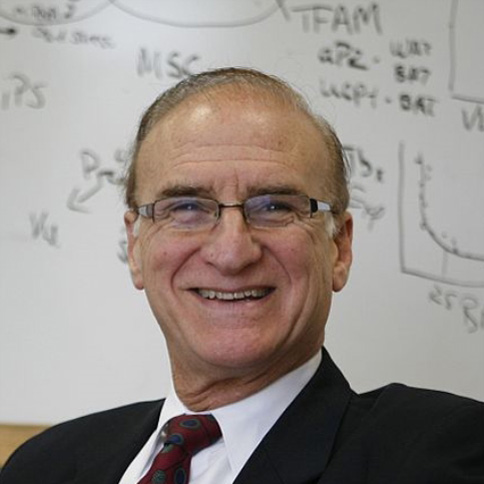
Simon K. Donaldson

Wolf Prize Laureate in Mathematics 2020

Sir Simon Kirwan Donaldson


Affiliation at the time of the award:

Imperial College London, UK

Simons Center, Stony Brook, UK


Award citation:

“for their contributions to differential geometry and topology”


Prize Share:

Simon Donaldson 

Yakov Eliashberg


Sir Simon Kirwan Donaldson (born 1957, Cambridge, U.K.) is an English mathematician known for his work on the topology of smooth (differentiable) four-dimensional manifolds and Donaldson–Thomas theory.

Donaldson’s passion of youth was sailing. Through this, he became interested in the design of boats, and in turn in mathematics. Donaldson gained a BA degree in mathematics from Pembroke College, Cambridge in 1979, and in 1980 began postgraduate work at Worcester College, Oxford.

As a graduate student, Donaldson made a spectacular discovery on the nature or 4-dimensional geometry and topology which is considered one of the great events of 20th century mathematics. He showed there are phenomena in 4-dlmenslons which have no counterpart in any other dimension. This was totally unexpected, running against the perceived wisdom of the time.

Not only did Donaldson make this discovery but he also produced new tools with which to study it, involving deep new ideas in global nonlinear analysis, topology, and algebraic geometry.

After gaining his DPhil degree from Oxford University in 1983, Donaldson was appointed a Junior Research Fellow at All Souls College, Oxford, he spent the academic year 1983–84 at the Institute for Advanced Study in Princeton, and returned to Oxford as Wallis Professor of Mathematics in 1985. After spending one year visiting Stanford University, he moved to Imperial College London in 1998. Donaldson is currently a permanent member of the Simons Center for Geometry and Physics at Stony Brook University and a Professor in Pure Mathematics at Imperial College London.

Donaldson’s work is remarkable in its reversal of the usual direction of ideas from mathematics being applied to solve problems in physics.

A trademark of Donaldson’s work is to use geometric ideas in infinite dimensions, and deep non-linear analysis, to give new ways to solve partial differential equations (PDE). In this way he used the Yang-Mills equations, which has its origin in quantum field theory, to solve problems in pure mathematics (Kähler manifolds) and changed our understanding of symplectic manifolds. These are the phase spaces of classical mechanics, and he has shown that large parts of the powerful theory of algebraic geometry can be extended to them.

Applying physics to problems or pure mathematics was a stunning reversal of the usual interaction between the subjects and has helped develop a new unification of the subjects over the last 20 years, resulting in great progress in both. His use of moduli (or parameter) spaces of solutions of physical equations – and the interpretation of this technique as a form of quantum field theory – is now pervasive throughout many branches of modem mathematics and physics as a way to produce “Donaldson-type Invariants” of geometries of all types. In the last 5 years he has been making great progress with special geometries crucial to string theory in dimensions six (“Donaldson-Thomas theory”), seven and eight.

Professor Simon Donaldson is awarded the Wolf Prize for his leadership in geometry in the last 35 years. His work has been a unique combination of novel ideas in global non-linear analysis, topology, algebraic geometry, and theoretical physics, following his fundamental work on 4-manifolds and gauge theory. Especially remarkable is his recent work on symplectic and Kähler geometry.


Jennifer Doudna

Wolf Prize Laureate in Medicine 2020

Jennifer Doudna


Affiliation at the time of the award:

University of California, Berkeley, USA


Award citation:

“for revealing the medicine-revolutionizing mechanism of bacterial immunity via RNA-guided genome editing.”


Prize Share:

Jennifer Doudna

Emmanuelle Charpentier


Jennifer Doudna, together with the French microbiologist Emmanuelle Charpentier, led the discovery of the gene-editing tool CRISPR-Cas9. This transformative technology has the potential to eradicate previously incurable diseases and revolutionizing the fields of genetics, molecular biology and medicine.

Doudna (Born 1964) grew up in rural Hawaii, where she first became interested in the chemistry of living systems. Dr Doudna is currently the Li Ka Shing Chancellor’s Chair in Biomedical and Health Sciences and she is Professor of Molecular and Cell Biology and Professor of Chemistry at UC Berkeley and an Investigator of the Howard Hughes Medical Institute.  Professor Doudna’s research seeks to understand how RNA molecules control the expression of genetic information. Early in her career, Dr Doudna’s lab determined some of the first crystal structures of RNA and RNA-protein complexes, providing unprecedented insights into molecular function of non-protein-coding RNAs.

More recently she and her collaborator Emmanuelle Charpentier determined the mechanism of RNA-guided bacterial adaptive immunity by the CRISPR-Cas9 system, enabling them to harness this system for efficient genome engineering in animals and plants. These “genetic scissors” can be used for targeting any gene in a cell in order to modify it. With this revolutionary technology, it is much easier to modify gene expression, to switch a gene “on” or “off,” or to change, repair, or remove genes. This new tool is now used in molecular biology laboratories around the world, and has the potential to revolutionize medicine by paving the way to finding new forms of treatment for currently incurable diseases.

The bacterial CRISPR-Cas9 system is based on an immune-like defense mechanism of action that bacteria use to protect themselves from viruses.

The genome editing technique resulting from their findings immediately allowed researchers to target and cut DNA with great precision and has therefore improved the speed, efficiency and flexibility of genome editing at an unprecedented speed and ease. This new understanding already enables world-wide researchers to rapidly model human disease genes in the laboratory, accelerating the search for new drug leads and opening new doors for the treatment of human genetic disorders. These same features also call for extreme care in employing this novel technology, highlighting the need for continuous exchange of information between research scientists and policy makers for avoiding the risks involved in careless use of these unprecedented research tools.

Jennifer Doudna is awarded the Wolf Prize for her continuous research excellence which has led to her leading work that has systematically revealed both the structural elements and the medicine-revolutionizing mechanism of bacterial immunity via RNA-guided genome editing in collaboration with Emanuelle Charpentier; and for her important contribution to the ethical discussion of how this technology should best be used for ensuring successful yet humane and considerate prospects for human health and well-being.

John Kappler

Wolf Prize Laureate in Medicine 2015

John Kappler 


Affiliation at the time of the award:

National Jewish Health, Denver, Colorado, USA


Award citation:

“for advancing the understanding of the molecular basis of the immune response”. 


Prize Share:

John Kappler 

Jeffrey Ravetch

Philippa Marrack


They have made major contributions to the understanding of the key antigen-specific molecules, the T cell receptor for antigen and antibodies, and how these molecules participate in immune recognition and effector function. Working together, Drs Kappler and Marrack were instrumental in documenting that the T cell receptor recognizes antigen differently from B cells, and succeeded in identifying the previously elusive T cell receptor by an ingenious use of monoclonal T cells and monoclonal antibodies. Dr Jeffrey Ravetch has studied the heterogeneous effector function of antibody molecules and has documented the importance of diverse receptors for the constant “Fc” part of antibody molecules. He cloned many of these receptors for the immunoglobulin Fc region, and showed their importance in mediating antibody function in normal and pathological states. Together this trio has contributed much to the understanding of the molecular basis of the immune response in health and disease.

Lewis Cantley

Wolf Prize Laureate in Medicine 2016

Lewis Cantley


Affiliation at the time of the award:

Weill Cornell Medical College in New York, USA


Award Citation:

“for discovery of phosphoinositide-3 kinases and their roles in physiology and disease”.


Prize Share:

Lewis Cantley


Cantley is widely recognized for his seminal contributions to understanding growth factor signaling, cellular metabolism, and tumor formation.

Indeed, genetic aberrations in this pathway are among the most common event in human cancer.


C. Ronald Kahn

Wolf Prize Laureate in Medicine 2016

C. Ronald Kahn 


Affiliation at the time of the award:

Harvard Medical School, USA


Award Citation:

“for pioneering studies defining insulin signaling and its alterations in disease.”


Prize Share:

C. Ronald Kahn

Lewis Cantley


Kahn’s work has been a key to elucidating the pathogenesis of type II diabetes. His observation that the insulin receptor transmits insulin signals through activation of an intrinsic protein tyrosine kinase was the first step in unraveling the insulin signaling cascade. Thesestudies formed that basis of our present detailed understanding of the pathogenesis of insulin resistance, and in contemporaneous clinical studies, Kahn showed that insulin resistance precedes and leads to type II diabetes.


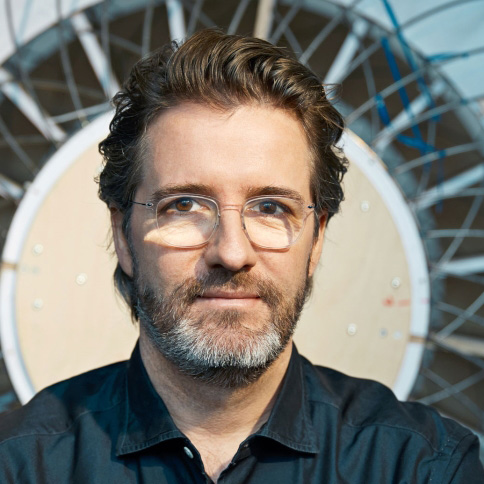
Olafur Eliasson

Wolf Prize Laureate in the Arts 2014

Olafur Eliasson


Award citation:

“for uniting art and science to trigger moments of individual and collective revelation”.


Prize share:

None


Olafur Eliasson is an artist who with his spectacular and ground-breaking installations manages something as rare as appealing to both a narrow world of art professionals and to a broader public of art lovers.

Based on a profound interest in architecture, science and natural phenomena, his works focus on exploring human perception. With his intricate installations, Eliassen manages to create a special sense of connection between the viewer and the work of art, investigating how perception is not universal, but shaped by time, space, and culture.

Faced with Olafur Eliasson’s works, the spectator experiences an enhanced awareness of his own presence, as he is not only seeing and perceiving, but is also seeing and being perceived – most notably this was the case with Eliasson’s “Weather Project” in the Tate Modern in 2004 which not only became one of the biggest successes for Tate Modern to date, but also managed to create a mesmerizing total installation of work and audience.

Eliassen has set a great example as an artist transgressing national borders and cultural differences. Olafur Eliasson has shown how art can become relevant and engaging not only for the select few but for a wide audience around the globe without seeking any form of artistic compromise.

Stephen L. Buchwald

Wolf Prize Laureate in Chemistry 2019

Stephen L. Buchwald


Affiliation at the time of the award:

Massachusetts Institute of Technology (MIT), USA 


Award citation:

“for developing efficient transition-metal catalysts which form carbon-heteroatom bonds, thus transforming the way drug molecules are manufactured, for the benefit of humankind”.


Prize Share:

Stephen L. Buchwald

John F. Hartwig 


Stephen L. Buchwald was born (1955) in Bloomington, Indiana. He received his Sc.B. degree from Brown University. and his doctorate from Harvard University. He was a Myron A. Bantrell post-doctoral fellow at Caltech with Professor Robert H. Grubbs where he studied titanocene methylenes as reagents in organic synthesis and the mechanism of Ziegler-Natta polymerization. In 1984, he began as an assistant professor of chemistry Massachusetts Institute of Technology (MIT) He was promoted to the associate professor (1989), to professor (1993), and was named the Camille Dreyfus Professor in 1997. In 2015, he became associate head of the Chemistry Department. During his time at MIT, he has received numerous honors, including the Harold Edgerton Faculty Achievement Award of MIT, an Arthur C. Cope Scholar Award, the 2000 Award in Organometallic Chemistry from the American Chemical Society, a MERIT award from the National Institutes of Health and many more.

The development of palladium-catalyzed carbon-carbon bond formation by Prof. Heck, Prof. Negishi and Prof. Suzuki, resulted in the 2010 Nobel Prize for this innovation. This achievement underscored the immense importance of making new chemical bonds, and at the same time it created an urgent need for going beyond carbon-carbon bonds. This is precisely the achievement of Prof. Buchwald and Prof. Hartwig who have independently harnessed cross coupling for the making of carbon-heteroatom bonds. These bonds and especially the carbon-nitrogen bonds are immensely important, because such bonds constitute a very basis of medicinal chemistry. Thus, the two laureates have pioneered the development of transition metal catalyzed procedures that are broadly applicable and allow carbon-heteroatom bonds of all sorts to be formed with previously unknown efficiency and precision.

In so doing, Profs. Buchwald and Hartwig have profoundly impacted the practice of organic synthesis in general and medicinal chemistry in particular. The transformative nature of their achievement has changed the way whereby ever-more-efficient drugs are discovered and eventually manufactured, for the extensive benefit of society today and in the future. This breakthrough is the fruit of truly basic research and fundamental mechanistic investigations into ligand design and the elementary steps that transition metal complexes are able to entertain. These methodologies proved to be truly potent and represent, as such, a lasting legacy for the art and science of catalysis, and the prime justification for awarding Buchwald and Hartwig with the Wolf Prize for 2019.

Moshe Safdie

Wolf Prize Laureate in Architecture 2019

Moshe Safdie


Award citation:

“For a career motivated by the social concerns of architecture and formal experimentation”.


Prize Share:

None


Over a long and distinguished career spanning 50 years, Moshe Safdie has produced a body of work of great originality and artistry in the field of architecture and urbanism. He is also a distinguished educator and in his numerous publications he has articulated a clear and coherent position as an academic and critic.

The projects undertaken by his architectural studio consistently seek experimentation, and can be understood as an evolving form of research. The outreach of the practice is truly international, with projects completed in North and South America, Asia and the Middle East.

The Habitat ’67 project, part of the Montreal World Exposition, is a seminal example of experimental housing, and the impact it has had on housing concepts cannot be overstated. It remains a model of relatively low-rise, high-density housing and has been drawn upon by many architects throughout the world since it was completed. This project alone is worthy of significant recognition.
What has followed is a collection of projects of great complexity and cultural significance, which include, amongst many others, the National Gallery of Canada in Ottawa, the Harvard Rosovsky Hall in Cambridge, Massachusetts, Exploration Place in Wichita, Kansas, the National Library of Israel and the Yad Vashem Holocaust History Museum in Jerusalem. All of these project address complex public programmes and explore an architecture of exceptional originality and formal experimentation.
The jury of the Wolf Foundation Prize in the field of architecture has unanimously decided to support the nomination of Moshe Safdie for this most prestigious award.

John F. Hartwig

Wolf Prize Laureate in Chemistry 2019

John F. Hartwig


Affiliation at the time of the award:

University of California, Berkeley, USA


Award citation:

“for independently developing efficient transition-metal catalysts which form carbon-heteroatom bonds, thus transforming the way drug molecules are manufactured, for the benefit of humankind”.


Prize Share:

John F. Hartwig 

Stephen L. Buchwald


Hartwig is a brilliant scientist who has made contributions to organometallic chemistry that have greatly advanced the field. He has also invented new synthetic methods that are proving to be exceedingly useful for total synthesis of complex molecular targets and new molecules of importance to medicinal chemistry and organic electronic materials.

John Hartwig received his undergraduate degree from Princeton University, obtained his Ph.D. from U.C. Berkeley with Bob Bergman and Richard Andersen, and conducted a postdoctoral fellowship at MIT with Stephen Lippard. In 1992, he began his independent career at Yale University and became the Irenée P. DuPont Professor in 2004. In 2006, he moved to the University of Illinois where he was the Kenneth L. Rinehart Jr. Professor of Chemistry. In 2011, he returned to U.C. Berkley as the Henry Rapoport Professor. He has received numerous awards, including an A.C. Cope Scholar Award, the ACS award in Organometallic Chemistry, the American Chemical Socity H.C. Brown Award for Synthetic Methods, the Nagoya Gold Medal, and the Willard Gibbs Medal. He was elected to the National Academy of Sciences in 2012, the American Academy of Arts and Sciences in 2015, 2018 Centenary Prize from Royal Society of Chemistry and 2018 Tetrahedron Prize for Creativity in Organic Chemistry

The development of palladium-catalyzed carbon-carbon bond formation by Prof. Heck, Prof. Negishi and Prof. Suzuki, resulted in the 2010 Nobel Prize for this innovation. This achievement underscored the immense importance of making new chemical bonds, and at the same time it created an urgent need for going beyond carbon-carbon bonds. This is precisely the achievement of Prof. Buchwald and Prof. Hartwig who have independently harnessed cross coupling for the making of carbon-heteroatom bonds. These bonds and especially the carbon-nitrogen bonds are immensely important, because such bonds constitute a very basis of medicinal chemistry. Thus, the two laureates have pioneered the development of transition metal catalyzed procedures that are broadly applicable and allow carbon-heteroatom bonds of all sorts to be formed with previously unknown efficiency and precision.

In so doing, Profs. Buchwald and Hartwig have profoundly impacted the practice of organic synthesis in general and medicinal chemistry in particular. The transformative nature of their achievement has changed the way whereby ever-more-efficient drugs are discovered and eventually manufactured, for the extensive benefit of society today and in the future. This breakthrough is the fruit of truly basic research and fundamental mechanistic investigations into ligand design and the elementary steps that transition metal complexes are able to entertain. These methodologies proved to be truly potent and represent, as such, a lasting legacy for the art and science of catalysis, and the prime justification for awarding Buchwald and Hartwig with the Wolf Prize for 2019.

Jeffrey M. Friedman

Wolf Prize Laureate in Medicine 2019

Jeffrey M. Friedman


Affiliation at the time of the award:

Rockefeller University, USA


Award citation:

“for the identification of Leptin, a new endocrine system regulating body weight”.


Prize Share:

None


Jeffrey M. Friedman is a leader in the biology of the mechanisms that control body weight. Jeffrey M. Friedman, born in Orlando, Florida, received his medical degree from Albany Medical College of Union University and residency training in Internal Medicine at Albany Medical Center Hospital. He received his PhD degree in 1986 from the Rockefeller University and later joined the Faculty, where he is presently Professor and an Investigator of the Howard Hughes Medical Institute. Professor Friedman’s achievements have been recognized by numerous awards

The endocrine system that Friedman discovered is comprised of the hormone leptin, its cytokine family receptor and key hypothalamic neurons that regulate appetite and metabolism. Leptin is an afferent signal in this fundamental endocrine feedback loop and serves a critical biological function of stably maintaining adipose tissue mass. Mutations in leptin or its receptor cause massive obesity in mammals, and leptin therapy can effectively treat obesity in leptin deficient patients. Leptin also links changes in nutrition to adaptive responses in other physiological systems, with major effects on insulin sensitivity, fertility, immune function and neuroendocrine function (among others). Leptin is now an approved treatment for generalized lipodystrophy, a condition associated with severe diabetes, and has also shown promise for the treatment of other types of diabetes and for hypothalamic amenorrhea, an infertility syndrome in females. Most obese patients have high endogenous levels of leptin, indicating that they are leptin-resistant, and show variable responses to exogenous leptin. Prior to Friedmans studies, little was known about specific components of biological systems that regulate weight, with many questioning the very existence of such a homeostatic system. The discovery of an entirely new endocrine system controlling body weight (and many other processes) is a major, remarkable, landmark contribution exceptionally worthy of the Wolf Prize in Medicine