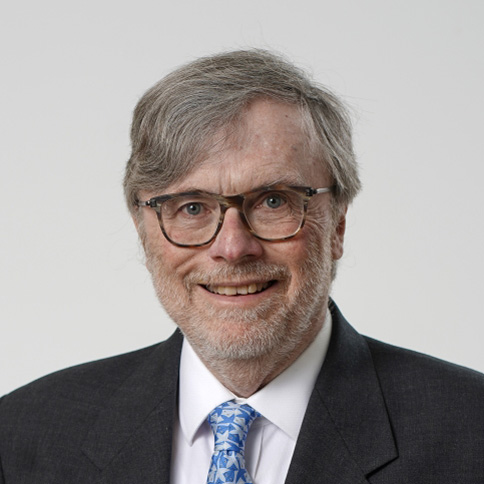
Jean Francois le Gall

Wolf Prize Laureate in Mathematics 2019

Jean Francois le Gall


Affiliation at the time of the award:

Université Paris-Sud ,France


Award citation:

“for his deep and elegant work on stochastic processes”.


Prize Share:

Jean Francois le Gall

Gregory Lawler


Jean-François Le Gall (born in 1959, France) is a French mathematician working in areas of probability theory such as Brownian motion, Lévy processes, superprocesses and their connections with partial differential equations, the Brownian snake, random trees, branching processes, stochastic coalescence and random planar maps. He received his Ph.D. in 1982 under the supervision of Marc Yor. He is currently professor at the University of Paris-Sud in Orsay and is a senior member of the Institut universitaire de France.

Le Gall’s generation has a great impact on Probability or demonstrated more power and beauty in their arguments. He has been at the forefront of Probability since 1983, when he established what still are the best results on pathwise uniqueness for one-dimensional stochastic differential equations. His current groundbreaking discoveries on the Brownian map ensure he remains at the cutting edge of the field today. He has received the 1986 Rollo Davidson Prize the 2005 Grand Prix Sophie Germain, French Academy of Science, the 2005 Fermat prize in mathematics and was elected to French academy of sciences, December 2013.

Jean-François Le Gall has made several deep and elegant contributions to the theory of stochastic processes. His work on the fine properties of Brownian motions solved many difficult problems, such as the characterization of sets visited multiple times and the behavior of the volume of its neighborhood – the Brownian sausage. Le Gall made groundbreaking advances in the theory of branching processes, which arise in many applications. In particular, his introduction of the Brownian snake and his studies of its properties revolutionized the theory of super-processes – generalizations of Markov processes to an evolving cloud of dying and splitting particles. He then used some of these tools for achieving a spectacular breakthrough in the mathematical understanding of 2D quantum gravity. Le Gall established the convergence of uniform planar maps to a canonical random metric object, the Brownian map, and showed that it almost surely has Hausdorff dimension 4 and is homeomorphic to the 2-spher.

Gregory Lawler

Wolf Prize Laureate in Mathematics 2019

Gregory Lawler


Affiliation at the time of the award:

The University of Chicago, USA


Award citation:

“for his extensive and groundbreaking research on random paths and loops”.


Prize Share:

Gregory Lawler

Jean Francois le Gall


Gregory Francis Lawler (born in 1955) is an American mathematician working in probability theory and best known for his work since 2000 on the Schramm–Loewner evolution. Gregory Lawler received his Ph.D. from Princeton University in 1979 under the supervision of Edward Nelson. He was on the faculty of Duke University from 1979 to 2001, of Cornell University from 2001 to 2006, and since 2006 is at the University of Chicago. Lawler received the 2006 SIAM George Pólya Prize, in 2012 he became a fellow of the American Mathematical Society and Member, National Academy of Sciences in 2013.

Lawler has made trailblazing contributions to the development of probability theory. He obtained outstanding results regarding a number of properties of Brownian motion, such as cover times, intersection exponents and dimensions of various subsets. Studying random curves, Lawler introduced a now classical model, the Loop-Erased Random Walk (LERW), and established many of its properties. While simple to define, it turned out to be of a fundamental nature, and was shown to be related to uniform spanning trees and dimer tilings. This work formed much of the foundation for a great number of spectacular breakthroughs, which followed Oded Schramm’s introduction of the SLE curves. Lawler, Schramm and Werner calculated Brownian intersection exponents, proved Mandelbrot’s conjecture that the Brownian frontier has Hausdorff dimension 4/3 and established that the LERW has a conformally invariant scaling limit. These results, in turn, paved the way for further exciting progress by Lawler and others.

David Zilberman

Wolf Prize Laureate in Agriculture 2019

David Zilberman


Affiliation at the time of the award:

University of California, Berkeley, USA


Award citation:

“for developing economic models to answer fundamental agricultural economic and policy questions”.


Prize Share:

None


David Zilberman has been a professor in the Agricultural and Resource Economics Department in Berkeley since 1979 where he holds the Robinson Chair. He is the cofounder and co-director of the BEAHRS Environmental Leadership Program (ELP) and is the director of the Master of Development Practice (MDP). David writes both for professional journals and the general public and aims to integrate economic theory to real world problems in both developed and under developing countries. He is also an extension specialist, and co-editor of ARE Update. David is a fellow of the American Agricultural Economics Association and the Association of Environmental and Resource Economists. He has published in various fields on the Economics of agriculture, environment, technology and risk. David completed his B.A. in Economics and Statistics from Tel Aviv University in Israel and his PhD in Agricultural and Resource Economics from U.C. Berkeley.

Dr. Zilberman has incorporated biophysical features of agroeconomic systems to develop economic models and econometric decision-making frameworks to answer fundamental agricultural economic and policy questions in several important areas:

Water: He developed models of choice and impact of water conservation technologies, showing that they are yield-enhancing and usually water-saving, though when yield effects are especially high, they may lead to increased water use per unit of land. Introduction of water trading can facilitate adoption of conservation practices.

Pest Control: Zilberman revolutionized research on the economics of pest control by

(a) Introducing the damage control function to estimate the productivity of pest control strategies.

(b) Developing methods to assess the benefits of pesticide under regulation.

(c) Introducing a method to regulate environmental health risks of chemical pesticides.

Biotechnology: His studies challenge myths about genetically modified (GM) crops. He showed that the introduction of GM cotton has increased yields substantially in India and that GMOs have increased supplies of corn and soybean, reducing prices and benefitting the poor. His work provides a framework to assess the cost of delay in introducing new technologies due to prolonged regulatory processes. He estimated the social cost of regulation for golden rice and banning the introduction of biotechnologies to Africa.

Payment for Ecosystem Services: Zilberman developed better mechanisms to allocate government payment for agricultural services, and motivated the redesign of programs like the Conservation Reserve Program (CRP) in the US.

Technology Adoption: Zilberman’s work developed a sophisticated approach to analyze adoption of modern technologies in agriculture incorporating farmer behavior, heterogeneity, and dynamic processes of learning. This approach has been applied heavily.

Dr. Zilberman’s career presents a unique mixture of theoretical work, applied research and extension, and he is a leading protagonist in debates over water policy, environmental and resource policy in agriculture and the bioeconomy.

Marc Chagall

Wolf Prize Laureate in Art 1981

Marc Chagall


Award citation:

“The living greatest, original and poetic visionary among the pioneers of modern art, whose glowing colours and human warmth have both a deep personal meaning and universal appeal”.


Prize share:

Marc Chagall

Antoni Tàpies


Marc Chagall (born in 1887, USSR) Is unquestionably the most original and most human and poetic visionery among the pioneers of modern art and one of the greatest painters of all time. For the first decade of the 20th century to our own time, the source of Chagall’s creative genius has not stopped flowing.

The range of chagall’s work is enormous, besides easle paintings, he made numerous graphic works, book illustrations, sketches, he created designs for the stage and ballet, stained glass windows, mosaics, tapestries etc.

Among his [ublic works of particular importance during these last years: stained glass windows at the Metz Cathedral (1960) and afterwards, at the synagogue of the Haddasah hospital in Jerusalem (1962), a painting at the ceiling of the paris opera (1964), mural paintings at the Metropolitan Opera in New York (1966), mosaics and 3 large gobelins at the Knesset building in Jerusalem (1964-1969), stained glass windows at the Frauminster in Zurich, and so forth.

The poetic vision and the human worth radiating from Chagall’s glowing colours and from his images have no doubt strong relationship to the Jewish spirit and tradition. His figures and landscapes stem from recollections of the Jewish village, which continuously reappear in his work. However, the greatness of Chagall’s vision lies in that it breaks through these limits. Chagall’s art has become the common spiritual property of our time.

Antoni Tàpies

Wolf Prize Laureate in Art 1981

Antoni Tàpies


Award citation:

“the spiritual contents of Tàpies work does no derive from a calculated composition of clearly defined shapes and colours, but is based on the creation of a sensitive system of textures and on the use of materials as the real constituents of the artistic and spiritual contents”.


Prize share:

Antoni Tàpies

Marc Chagall


Was born more than one generation after Chagall.

Tàpies is one of the most characteristic and at the same time the most original of the creators of abstract painting of the late 50’s and 60’s. 

Thick rough-surfased layers and an austere colour scheme characterize many of his works, but he also uses frequently unconventional materials in a bold and highly imaginitive way. 

Tàpies has remained in spain during the Franco regime and his own work may have also expressed a silent protest against political repression. his work is truly representative of the Catalan spirit, but it is also universal in character. 

His influence has been deeply felt all over Europe and the USA and even in Israel. The art of this great Catalonian master has survived its “historical moment” and has retained its vigour and individual identity. 

Vladimir Drinfeld

Wolf Prize Laureate in Mathematics 2018

Vladimir Drinfeld


Affiliation at the time of the award:

University of Chicago, USA


Award citation:

“for their ground-breaking work in algebraic geometry (a field that integrates abstract algebra with geometry), in mathematical physics and in presentation theory, a field which helps to understand complex algebraic structures”.


Prize Share:

Vladimir Drinfeld

Alexander Beilinson 


An “algebraic structure” is a set of objects, including the actions that can be performed on those objectas, that obey certain axioms. One of the roles of modern algebra is to research, in the most general and abstract way possible, the properties of various algebraic structures (including their objects), many of which are amazingly complicated.

Vladimir Drinfeld, born in Kharkov, Ukraine (1954), represented the USSR at the International Mathematical Olympiad at the age of 15 and won a gold medal. In the same year he also began his studies at the University of Moscow. Since the eighties he has been considered one of the world’s leading mathematicians. In 1990 he won the prestigious Fields Medal and in 2008 was elected to the National Academy of Sciences (USA). Drinfeld has contributed greatly to various branches of pure mathematics, mainly algebraic geometry, arithmetic geometry and the theory of representation – as well as mathematical physics. The mathematical objects named after him – the “Drinfeld Modules”, the “Drinfeld Chtoucas”, the “Drinfeld Upper Half Plane”, the “Drinfeld Associator”, and so many others that one of his endorsers jokingly said, “one could think that “Drinfeld” was an adjective, not the name of a person”.

In the seventies, Drinfeld began his work on the aforementioned “Langlands Program”, the ambitious program that aimed at unifying the fields of mathematics. This program was proposed by the American-Canadian mathematician Robert Langlands (winner of the Wolf Prize in 1996) and discovered for the first-time tight and direct links between different branches of mathematics. Numbers theory (the field based on arithmetic, “sums”), algebraic representation theory and another field called “automorphic forms”, (which is related to harmonic analysis and assists, for example, in the physical study of waves and frequencies). By means of a new geometrical object he developed, which is now called “Drinfeld Chtoucas”, Drinfeld succeeded in proving some of the connections that had been indicated by the Langlands Program. In the eighties he invented the concept of algebraic “Quantum Group”, which led to a profusion of developments and innovations not only in pure mathematics but also in mathematical physics (for example in statistical mechanics).

Drinfeld and Beilinson, together created a geometric model of algebraic theory that plays a key role in both field theory and physical string theory, thereby further strengthening the connections between abstract modern mathematics and physics. In 2004 they jointly published their work in a book that describes important algebraic structures used in quantum field theory, which is the theoretical basis for the particle physics of today. This publication has since become the basic reference book on this complex subject.

Paul McCartney

Wolf Prize Laureate in Music 2018

Sir Paul McCartney


Award citation:

“The Orpheus of our era”


Prize Share:

Sir Paul McCartney 

Adam Fischer


Sir Paul McCartney is one of the greatest songwriters of all time. His versatility underlies an extraordinary wingspan, from the most physical rock to melodies of haunting and heartbreaking intimacy. His lyrics have an equally broad range, from the naive and the charming to the poignant and even desperate. He has touched the hearts of the entire world, both as a Beatle and in his subsequent bands, including Wings. Like all great art, his melodies are both of their time and beyond time: today a third generation finds itself under the spell of his invidious imagination. There is little doubt that his songs, like those of the great classical masters Schubert, Schumann, Brahms, Fauré, Debussy and Ravel, and like those of his more modern predecessors (among them Cole Porter, Jerome Kern and George Gershwin) will be sung and savored as long as there are human beings to lift up their voices.

On July 6, 1957, Paul McCartney met John Lennon at Woolton Village Fete and joined his skiffle group, the Quarrymen, which, after several name changes, became the Beatles. McCartney and Lennon quickly established themselves as songwriters for the group, and, by the time the Beatles signed with EMI-Parlophone in 1962, they were writing most of their own material. By their third album the group stopped recording covers. Lennon and McCartney’s songwriting partnership was very important to them, both financially and creatively; even in 1969, when they were estranged over business matters and supposedly not on speaking terms, Lennon brought McCartney his song The Ballad of John and Yoko. Their music transcended personal differences.

Though usually associated with ballads and love songs, McCartney also was responsible for many of the Beatles’ harder rock songs, such as Lady Madonna, Back in the USSR, and Helter Skelter (all 1968), but above all he has an extraordinary gift for melodies and sometimes tags an entirely new one on to the end of a song, as he did with Hey Jude (1968).

The Beatles ceased playing live shows in 1966. After their breakup in 1970, McCartney recorded two solo albums, McCartney (1970) and Ram (1971), before forming the band Wings with his wife Linda (formerly Linda Eastman). Wings toured the world and became the best-selling pop act of the 1970s, with an astonishing 27 U.S. Top 40 hits and five consecutive number one albums, including the highly acclaimed Band on the Run (1973) and Wings at the Speed of Sound (1976).
Critics loved his 1989 album, Flowers in the Dirt, which coincided with his return to live performance. In 1997 McCartney was knighted by Queen Elizabeth II for services to music.

In 2001 a volume of his poetry, Blackbird Singing, which also included some song lyrics, was published. McCartney celebrated his 62nd birthday in Russia in 2004, playing his 3,000th concert to an audience of 60,000 people in St. Petersburg.

With some 60 gold records and sales of more than 100 million singles in the course of his career, McCartney is arguably the most commercially successful performer and composer in popular music. The 1965 Beatles track Yesterday (wholly written by McCartney and performed alone with a string quartet) has been played some six million times on U.S. radio and television, far outstripping its nearest competitor. Moreover, with over 3,000 cover versions, it is also the most-recorded song ever. In 2009 the U.S. Library of Congress announced that McCartney would be awarded its Gershwin Prize for Popular Song.

More than a rock musician, McCartney is now regarded as a British institution; an icon like warm beer and cricket, he has become part of British identity

Omar M. Yaghi

Wolf Prize Laureate in Chemistry 2018

Omar M. Yaghi


Affiliation at the time of the award:

University of California, Berkeley, USA


Award citation:

“for his contribution in the field of reticular chemistry”.


Prize share:

Omar M. Yaghi

Makoto Fujita


Traditional chemistry has focused on intermolecular connections, particularly on strong covalent bonds formed when two atoms share one or more electrons. In contrast, supramolecular chemistry deals with the study of the connections and the interactions between molecules – a study that promotes the development of novel materials with unique properties that are sometimes very useful

Omar M. Yaghi of the University of California at Berkeley, born in Amman in Jordan (1965), is a member of a refugee family with many children. At the age of 15 he was sent to the United States and soon became prominent for his outstanding talent for science. In 1985, Yaghi began his doctoral studies in chemistry at the University of Illinois at Urbana-Champaign. After completing his studies, he completed a post-doctorate at Harvard. In 1992, he gained his first independent academic post at the Arizona State University. This is where he actually conceived, developed, and finally began to apply his grand, chemical program to bond molecules together – through strong bonds – to large “frameworks”. His achievements in this field have earned him many awards, such as the Sacconi Medal of the Italian Chemical Society, the Izatt-Christensen International Award, the Materials Research Society Medal, the King Faisal International Prize in Science (also known as the Arab Nobel Prize), the Mustafa Prize in Nano-Science and Nanotechnology and the Albert Einstein World Award of Science conferred by the World Cultural Council

Yaghi is actually the main developer of a new branch in supramolecular chemistry called “Reticular Chemistry” (In Latin “reticulum” means “small grid”). Reticular Chemistry makes it possible to combine molecules into networks that create highly porous structures with a very large surface area, enabling the efficient storage and handling of various materials “trapped” in pores (for example, various gaseous fuels), and efficient capture and storage of elements and compounds such as carbon and water. The porous feature is very important for practical purposes, as it enables the capture and compact storage of large quantities of gases in small volumes

Through the use of Reticular Chemistry, Yaghi developed two entirely new types of compounds, called metal-organic frameworks (MOFs) and covalent organic frameworks (COFs). While the supramolecular chemistry was initially limited to relatively weak bonds, such as hydrogen bonds and Van der Waals interactions, the great advantage of Reticular Chemistry is its success in creating supramolecular structures, frameworks with very strong, covalent bonds between molecules, that give them unprecedented chemical and structural strength. Thanks to Reticular Chemistry, each of these frameworks can be viewed as a molecule. Just as the molecule determines the specific geometry and spatial array of each of the atoms, so too does the framework determine each of the molecules in a well-defined geometry and well defined spatial array. Actually, in view of the fact that these frames encompass relatively large volumes, their chemistry is much richer than that of the molecules of which they are comprised, enabling them to impart unique properties. There are many possible applications for this. For example, producing materials that capture carbon dioxide very efficiently may reduce the rate of gas entering the atmosphere, thereby reducing the trend of global warming.

Makoto Fujita

Wolf Prize Laureate in Chemistry 2018

Makoto Fujita


Affiliation at the time of the award:

University of Tokyo, Japan


Award citation:

“for his achievements in the field of supramolecular chemistry”.


Prize share:

Makoto Fujita

Omar M. Yaghi


Traditional chemistry has focused on intermolecular connections, particularly on strong covalent bonds formed when two atoms share one or more electrons. In contrast, supramolecular chemistry deals with the study of connections and interactions between molecules – a study that promotes the development of novel materials with unique properties that are sometimes very useful.

Makoto Fujita, born in 1957, developed his academic career quickly and at the age of 42 was appointed full professor at Nagoya University. Three years later (2002) he was appointed to the same position at Tokyo University, the most prestigious university in Japan. He was soon recognized as one of the pioneers in the field of supramolecular chemistry and was awarded many prizes: the Arthur C. Cope Scholar Award from the American Society of Chemistry, the Izatt-Christensen International Award for Macrocyclic Chemistry, the International Society for Nanoscale Science, Computation, and Engineering (ISNSCE) Award, The Fred Basolo Medal for Outstanding Research in Inorganic Chemistry from North Western University and the Nagoya silver medal. Fujita’s impressive academic yield, since the beginning of his academic career till today (i.e., between 1980 and 2017), includes approximately 330 publications.

Makoto Fujita’s main contribution to Supramolecular Chemistry has been the development of a new method for the formation of supramolecular structures called “metal-guided synthesis” or “self-assembly with metallic guidance”. This novel method enables quick and spontaneous assembly (under specific thermodynamic conditions) of supramolecular materials, and is much easier and more effective than the cumbersome, tedious, and highly inefficient methods previously used to synthesize such materials. As early as 1990, Fujita published an article describing this method of synthesizing materials on a nanometric scale containing both metal ions and various organic molecules (i.e., molecules containing carbon and hydrogen atoms connected to each other). Fujita and his colleagues used this method to synthesize a molecular square at each of the four vertices in which the metal atom Palladium, Pd (H is hydrogen, N nitrogen and O oxygen.

In the years that followed, this method was used to build increasingly complex molecules, nanostructures and materials. Fujita’s group, for example, synthesized three-dimensional porous molecules, called “cages”, that can be used as molecular “containers” that store smaller molecules. This structure may give the trapped materials new chemical properties: for instance, it may increase the solubility of drugs and therefore their effectiveness.

Several years ago, Fujita and his colleagues managed to synthesize a cage large enough to store protein molecules in its pores. This is of great practical importance, since many new drugs are protein-based. In 2016, they succeeded in assembling relatively large cage, 8 nanometres wide, (a nanometre is one billionth of a meter), and later that year they theoretically proved that, with the self-assembly method they had developed, it is possible to assemble 144 such cages into one stable, giant cage. Another acceptable use of materials, synthesized by the self-assembly method, is catalysts that accelerate chemical reactions that, in their absence, occur very slowly.

A particularly important and interesting application of these large cages, developed by Fujita himself, is the possibility of using them for x-ray crystallography (for studying the crystalline structure of matter) without even having to produce a crystal of the material being tested. Instead of this, the material can be “imprisoned”, in a synthesized cage that positions and stabilizes it in such a way that it can be directly examined using standard crystallography.

Gilles Brassard

Wolf Prize Laureate in Physics 2018

Gilles Brassard


Affiliation at the time of the award:

University of Montreal, Canada


Award citation:

“for founding and advancing the fields of Quantum Cryptography and Quantum Teleportation”.


Prize Share:

Gilles Brassardand

Charles H. Bennett


Gilles Brassard, born in Montreal (1955), received a PhD from Cornell University in the study of theoretical computer science, and more specifically cryptography. He has been a faculty member at the Université de Montréal ever since (1979) and Canada Research Chair in Quantum Information Science since 2001. Fellow of the Royal Society of London (2013), the International Association for Cryptologic Research (2006), the Canadian Institute for Advanced Research (2002) and the Royal Society of Canada (1996), he was made Officer in the Order of Canada (2013) and in the Ordre national du Québec (2017). Among his numerous honours, professor Brassard has been awarded the Killam Prize for Natural Sciences (2011) and the Gerhard Herzberg Canada Gold Medal for Science and Engineering (2009), which are the two highest scientific awards given by Canada, as well as the Prix d’excellence du FRQNT (2013) and the Prix Marie-Victorin (2000), which are the two highest scientific awards given by Québec. Together with Charles H. Bennett and Stephen Wiesner, he was also awarded the Rank Prize in Opto-electronics (2006) for research on the original concept of quantum cryptography.

The information revolution, which continues to transform every aspect of life in the 21st century, grew out of two discoveries made at Bell Laboratories in 1948. One was the transistor, which launched decades of amazing miniaturization of electronics. The other was Claude Shannon’s revolutionary paper on information theory. Nowadays even non scientists understand the gist of it: anything one wishes to communicate—words, sounds, pictures, shapes, movements and maybe someday even smells—can be coded into bits—zeros and ones—transmitted through a channel such as radio or optical fiber to a remote location and then reassembled into an arbitrarily good approximation of the original, for the benefit of the recipient. Shannon’s theory was an idealization of the robust behavior of macroscopic objects then used as information carriers, like punch cards, cog wheels and electrical switches. Such information can be accurately read and copied without disturbing the original. But chemists and physicists have long known that the information in tiny objects behaves in subtler ways. One cannot learn the exact state of an atom of matter, or a photon of light, because attempting to do so disturbs it; and two atoms or photons, that have once interacted but subsequently move too far apart to influence one another, can exist in a so-called entangled state, where the particles each behave randomly, but in ways that are too strongly correlated to be explained by supposing that each particle is in some (perhaps unknown) state of its own. These phenomena (called “quantum” in distinction to the ordinary “classical” behavior of macroscopic objects) have been reasonably well understood since the 1930’s, and have even excited a certain amount of interest among philosophers, but were considered to be part of the disciplines of physics and chemistry, with little relevance to information processing except as a nuisance, for example making tiny transistors noisier and less reliable than their larger cousins

Twenty years after Shannon’s paper, Stephen Wiesner noticed that quantum effects could be used to do some intriguing things not covered by Shannon’s theory, for example combining two messages into a single transmission from which the receiver could recover either one, but not both. Wiesner made little effort to publish or publicize these ideas, but he did tell a few friends. Charles Bennett from IBM Research and Gilles Brassard from the Université de Montréal were respectively the first physicist and first computer scientist to take Wiesner’s ideas seriously and develop them, thereby launching the discipline now known as quantum information science. Their first discovery, which became the first practical application of quantum information, was quantum key distribution. Quantum key distribution allows two users, communicating via a public classical channel (such as radio) and a quantum channel susceptible to eavesdropping (such as faint flashes of light sent through empty space or an optical fiber), to agree on a body of shared secret information, a so-called cryptographic key, with high confidence based on laws of physics that it is unknown to anyone else. With their students François Bessette, Louis Salvail and John Smolin they built a working demonstration in 1989, along the way overcoming other problems needed to make the scheme practical, such as compensating for transmission and measurement errors and partial information leakage to an eavesdropper. In the early 1990’s, in collaboration with Wiesner, Claude Crépeau, Richard Jozsa, Asher Peres and William Wootters, Bennett and Brassard showed that entanglement was not just an intriguing phenomenon, but a useful and quantifiable resource, despite having no ability to communicate by itself. In the technique called superdense coding, it doubles the amount of classical information that can be sent through a quantum channel, while in quantum teleportation it enables quantum information to be sent through a classical channel. Meanwhile, Artur Ekert showed that entanglement itself can be used for quantum key distribution. Also in the 1990’s they and other researchers, building on early work of David Deutsch and Richard Feynman in the 1980’s, showed that quantum notions provide the same kind of powerful generalization of Turing’s classical theory of computation as of Shannon’s classical theory of communication. This culminated in Peter Shor’s celebrated 1994 discovery of fast quantum algorithms for factoring and discrete logarithm, problems whose presumed intractability underlies the security of much of today’s electronic commerce, launching a worldwide effort to build a scalable quantum computer. Since then, quantum key distribution systems have become commercially available, and have been extended to ranges of hundreds of kilometers through optical fibers, and thousands of km in satellite-based systems. Practically, aside from their applications to communication, computation and modern kinds of information processing, which involve both communication and computation, quantum-information-inspired techniques have improved timekeeping and precision measurement. Theoretically, they have provided tantalizing hints about some of physics’s deepest mysteries, such the black hole information problem, quantum gravity and the origin of spacetime

The mechanics of quantum information processing, where qubits—the quantum generalization of Shannon’s bits—are acted on by the quantum generalizations of classical computing’s ANDs, ORs and NOTs, can be described in full detail using only a modest amount of secondary-school algebra, but it is harder to find words to explain how quantum information differs from the familiar classical kind. Though it is only a metaphor, one could say that whereas classical information is like the information in a book, quantum information is like the information in a dream. A dream cannot be copied or broadcast, and if you try to describe it to someone else, you eventually forget the dream and remember only what you said about it. But unlike dreams, this fragile dreamlike kind of information obeys well-understood laws, makes possible new kinds of communication and computing, and is improving our understanding of the universe in ways still being discovered

It is for their role in launching quantum information theory that Bennett and Brassard have received the 2018 Wolf Prize in Physics