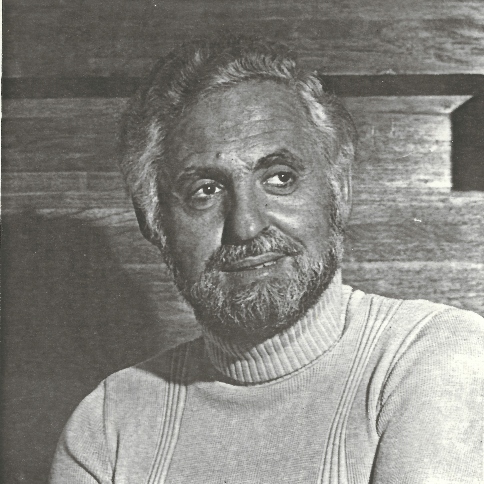
George C. Pimentel

Wolf Prize Laureate in Chemistry 1982

George C. Pimentel


Affiliation at the time of the award:

University of California, USA


Award citation:

“for development of matrix isolation spectroscopy and for the discovery of photodissociation lasers and chemical lasers”.


Prize share:

George C. Pimentel

John C. Polanyi


Professor George Claude Pimentel has made pioneering contributions to molecular spectroscopy and laser chemistry. In 1954 he developed the matrix isolation technique by which spectra of free radicals and unstable molecules at very low temperatures can be detected. In 1964-1965 Pimentel created the first photodissociation and chemical lasers. These are amongst the most efficient and powerful lasers known. The chemical laser was subsequently developed by Pimentel and collaborators as a most sensitive tool for the microscopic elucidation of chemical reaction processes. Both chemical lasers and the iodine photodissociation laser figure importantly in current efforts to achieve power generation by laser induced nuclear fusion reactions.
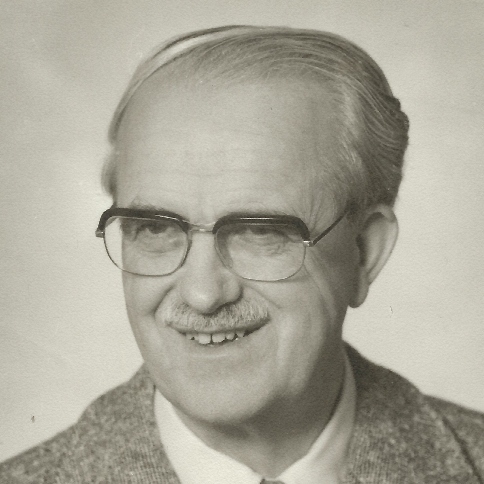
Joseph Chatt

Wolf Prize Laureate in Chemistry 1981

Joseph Chatt


Affiliation at the time of the award:

University of Sussex, United Kingdom


Award citation:

“for pioneering and fundamental contributions to synthetic transition metal chemistry, particularly transition metal hydrides and dinitrogen complexes”.


Prize share:

None


Professor Joseph Chatt (born in 1914, UK) has made outstanding pioneering contributions to modern inorganic chemistry. His name is particularly associated with the use of tertiary phosphines as ligands and the reactions of complex compounds in organic solvents. He has studied the nature of the coordinate link which led to his establishment of the Chatt-Dewar model for the binding of olefins to transition metals, and from there he developed ideas which led to the synthesis of stable transition metal alkyls and aryls, and hydrides. From these researches have grown a vast new area of organometallic and catalytic chemistry, which finds direct expression in the catalytic processes exploited in the petrochemical industry.

He also has developed theories to rationalise the trans-effect and also a classification of metal ions as Class (a) or Class (b) which provided the basis for the ‘hard’ and “soft” classification of acids and bases.

He led a varied team of scientists, which has achieved international acclaim in the study of nitrogen fixation. His chemical work has revealed the first reactions of complexed dinitrogen to yield well defined complexes, a large number of new dinitrogen complexes, and the first’ indications of a rational development of new catalytic processes for the synthesis of ammonia, hydrazine, and amines. It also offerd the first real prospect of understanding the chemistry of the natural nitrogen fixation process mediated by the enzyme nitrogenase.

Henry Eyring

Wolf Prize Laureate in Chemistry 1980

Henry Eyring


Affiliation at the time of the award:

University of Utah, USA


Award citation:

“for his development of absolute rate theory and its imaginative applications to chemical and physical processes”.


Prize share:

None


Professor Henry Eyring has dedicated a lifetime being involved in the many ramifications of this powerful approach to chemical dynamics. He has shown that the absolute rate theory is equally valid in detonations of gases, corrosion of metal surfaces, nerve action, marine biology, etc. The list of applications rapidly becomes legion. The universality of the theory is its greatest strength.

The award of the 1980 Wolf Prize in Chemistry to Henry Eyring is a fitting and proper recognition for the work of this unique and gifted scientist. His transition state or absolute rate theory of treating chemical reaction kinetics and other rate processes has become the guiding principle behind everyday thinking in this area. The successful application by Henry Eyring of this theory to diverse phenomena in chemistry, biology, engineering, geology and physics over a fifty year period constitutes the basis for this award.

He is the holder of 15 Honorary Doctorates, has received numerous awards, has authored 590 scientific publications and is a member of a great number of Academies of Sciences and scientific associations all over the world.

Herman F. Mark

Wolf Prize Laureate in Chemistry 1979

Herman F. Mark


Affiliation at the time of the award:

Polytechnic Institute of New York, USA


Award citation:

“for his contributions to understanding the structure and behavior of natural and synthetic polymers”.


Prize share:

None


Professor (Emeritus) Mark’s contribution has had a major effect upon the academic understanding of this important class of materials, which in nature play a central role not only in the structure of the living cell but in its function as well. Herman Mark’s scientific contribution and personal interest have played a major role in the development of synthetic materials on a huge scale everywhere. Today´s use of these synthetic materials has changed the style of life throughout the world.

Since 1940 Professor of Organic Chemistry at the Polytechnic Institute of New York, Prof. Mark has published over 500 original and review articles and has written about 20 books on various topics related to polymer chemistry. Doctor Honoris Causa at 17 Universities and Polytechnics, member of 18 Academies of Science throughout the world, among them U.S.A., U.S.S.R., Holland, Germany, Austria and India. Professor Mark has received a great number of medals and awards since 1928.

Carl Djerassi

Wolf Prize Laurate in Chemistry 1978

Carl Djerassi


Affiliation at the time of the award:

Stanford University, USA


Award citation:

“for his work in bioorganic chemistry, application of new spectroscopic techniques, and his support of international cooperation”.


Prize share:

None


Professsor Carl Djerassi (born in 1923, Austria) had a unique impact on science, technology, and the betterment of huamnity. He synthesized the first oral contraceptive, 19- norethindrone, which is the active ingredient in more than half of all oral contraceptives, the most widely used form of birth control in the world. His scientific work has been reported in over 800 published articles and books on synthetic organic chemistry. He has pioneered the use of various physical tools for the elucidation of the structure of organic molecules. He has been effective in translating scientific knowledge into technological practice. He has been responsible for important international scientific cooperative efforts between the United States Mexico, Brazil, Zaire, Kenya, and other countries, involving the creation of new research groups and institutions in chemistry and other fields of science and technology.

He is chairman of the United States National Academy of Science Board on Science and Technology in International Development and has been the driving force in recent Pugwash Conferences on the search for solutions to the world´s population growth problems. For all these contributions to science, to industry, and to humanity, Carl Djerassi is awarded the first Wolf Foundation Prize for Chemistry.