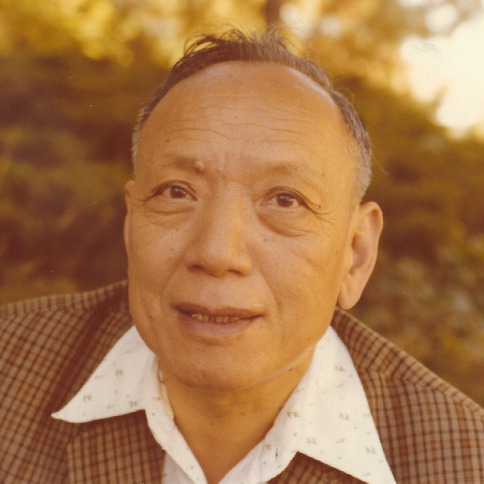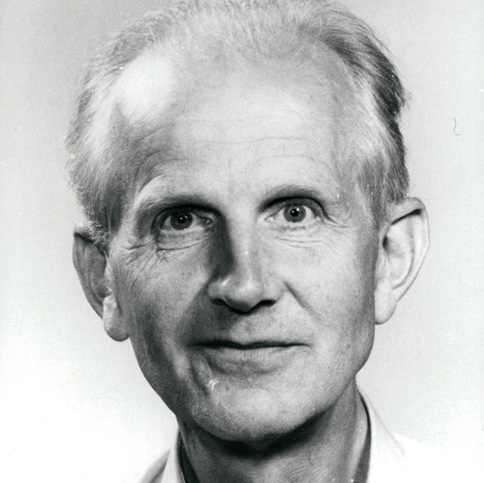
Lars Hörmander

Wolf Prize Laureate in Mathemstics 1988

Lars Hörmander


Affiliation at the time of the award:

University of Lund, Sweden


Award citation:

“for fundamental work in modern analysis, in particular, the application of pseudo differential and Fourier integral operators to linear partial differential equations”.


Prize share:

Lars Hörmander

Friedrich Hirzebruch 


Professor Lars Hörmander is the foremost contributor to the modern theory of linear partial differential equations. For his early work on equations with constant coefficients he was awarded the 1962 Fields Medal, the highest honor a young mathematician can receive. Since then, he has played a leading role in the development of the modern machinery of the subject, viz. pseudodifferential operators (which combine and perfect differential and singular integral operators) and Fourier integral operators (which originate from geometrical optics). Hörmander applied these new tools with striking effect; the modern view of wave fronts and their singularities provides an outstanding example of the success of these methods.

The whole development has been described by Hörmander in a masterly four volume treatise, which has become the standard of the field. Hörmander has also achieved notable results concerning several complex variables, the Nash-Moser implicit function theorem, scattering theory, nonlinear hyperbolic equations, etc., illustrating in these subjects also his extraordinary technical power and versatility.

Friedrich Hirzebruch

Wolf Prize Laureate in Mathematics 1988

Friedrich Hirzebruch


Affiliation at the time of the award:

Max-Planck-Institut fuer Mathematik, Germany

University of Bonn, Germany


Award citation:

“for outstanding work combining topology, algebraic and differential geometry, and algebraic number theory; and for his stimulation of mathematical cooperation and research”.


Prize share:

Friedrich Hirzebruch 

Lars Hörmander


Friedrich Hirzebruch (born in 1927, Germany) pursued his studies at the University of Münster from 1945 to 1950, with an interlude of one year at ETH Zürich. Following this, he held a position at Erlangen and subsequently spent the years 1952 to 1954 at the Institute for Advanced Study in Princeton, New Jersey. After a year at Princeton University from 1955 to 1956, he attained a professorship at the University of Bonn. He remained there, eventually assuming the role of director at the Max-Planck-Institut für Mathematik in 1981.

The name of Professor Friedrich Hirzebruch has been connected with famous results in the areas of topology, algebraic geometry, and global differential geometry, results which all mark the beginning of important theories and which have had an enormous influence on the development of modern mathematics.

Hirzebruchws achievements include- the discovery of the signature theorem for differentiable manifolds and the formulation and proof of the Riemann-Roch theorem for algebraic varieties; the integrality theorem for characteristic classes of differentiable manifolds; the proportionality theorem for complex homogeneous manifolds and (with A. Borel) the general theory of characteristic classes of homogeneous spaces of compact Lie groups; complex K-theory and its spectral sequence and various geometrical applications (with M.F. Atiyah); the “topological” proof of the Dedekind reciprocity theorem through 4-manifold theory and other fascinating relations between differential topology and algebraic number theory; the systematic study of Hilbert modular-forms and-surfaces and their relation to class numbers.

Many mathematicians have expanded and generalized Hirzebruch’s ideas. He himself has always been interested in the beautiful particular case and concrete problem, which he solves by creating new methods that combine unusual geometric, algebraic, and arithmetic intuition. Moreover, through his brilliant lecturing and writing, through the “Arbeitstagung Bonn” (yearly international meetings at the highest level), and through his dedicated work in scientific organizations he has greatly stimulated world-wide cooperation in research.

Peter D. Lax

Wolf Prize Laureate in Mathematics 1987

Peter D. Lax


Affiliation at the time of the award:

Courant Institute of Mathematical Sciences, USA


Award citation:

“for his outstanding contributions to many areas of analysis and applied mathematics”.


Prize share:

Peter D. Lax

Kiyoshi Ito


Professor Peter D. Lax, a graduate of the Courant Institute, embodies the best traditions of D. Hilbert as continued by R. Courant. Among his many contributions are the solution of the Cauchy problem with oscillatory data, the clarification of the role of stability of a numerical scheme, the comprehensive development of scattering theory, the theory of non-linear conservation laws and a deep insight into the Korteweg-de Vries equation. Prof. Lax’s influence has been profound and decisive in both pure and applied mathematic

Kiyoshi Ito

Wolf Prize Laureate in Mathematics 1987

Kiyoshi Ito


Affiliation at the time of the award:

Research Institute for Mathematical Sciences, Kyoto University, Japan


Award citation:

“for his fundamental contributions to pure and applied probability theory, especially the creation of the stochastic differential and integral calculus”.


Prize share:

Kiyoshi Ito

Peter D. Lax


Professor Kiyoshi Ito has given us a full understanding of the infinitesimal development of Markovian sample paths. This may be viewed as Newton’s law in the stochastic realm, providing a direct translation between the governing partial differential equation and the underlying probabilistic mechanism. Its main ingredient is the differential and integral calculus of functions of Brownian motion. The resulting theory is a cornerstone of modern probability, both pure and applied. In addition, Prof. Ito has been the inspirer and teacher of a whole generation of Japanese probabilists.

Samuel Eilenberg

Wolf Prize Laureate in Mathematics 1986

Samuel Eilenberg


Affiliation at the time of the award:

Columbia University, USA


Award citation:

“for his fundamental work in algebraic topology and homological algebra”.


Prize share:

Samuel Eilenberg

Atle Selberg


Professor Samuel Eilenberg began his mathematical education in the Polish School of point set topology, and has since made basic contributions to algebraic topology. Among his many seminal works are those in obstruction theory and in the creation of singular homology theory. His study of the relations between homology and homotopy is fundamental. He was one of the creators of the cohomology of groups and of the cohomology of Lie algebras and in fact of homological algebra. Each of these subjects has had many applications. His work has been central in several major developments of modern mathematics.

Atle Selberg

Wolf Prize Laureate in Mathematics 1986

Atle Selberg


Affiliation at the time of the award:

Institute for Advanced Study, USA


Award citation:

“for his profound and original work on number theory and on discrete groups and automorphic forms”.


Prize share:

Atle Selberg

Samuel Eilenberg


In early work, Professor Atle Selberg proved that the zeros of the Riemann zeta function on the critical line have positive density. He conceived and developed the general sieve method, which has become a fundamental tool in analytic number theory. His ideas on sieves led him to his celebrated “Selberg formula” which is the basis of his elementary proof of the prime number theorem. He discovered the trace formula, which bears his name. Out of it grew a new interaction of group representations and number theory. He initiated the study of the arithmeticity of lattices. His contributions are so deep and so many that his name is already part of the history of mathematic

Kunihiko Kodaira

Wolf Prize Laureate in Mathematics 1985

Kunihiko Kodaira


Affiliation at the time of the award:

The Japan Academy, Japan


Award citation:

“for his outstanding contributions to the study of complex manifolds and algebraic varieties”.


Prize share:

Kunihiko Kodaira

Hans Lewy


Professor Kunihikio Kodaira made a profound study of harmonic integrals with incisive, important applications to algebraic and complex geometry. These include the projective imbedding theorem, deformations of complex structures (with D. C. Spencer), and the classification of complex analytic surfaces. His work has greatly influenced and inspired researchers in these subjects throughout the world.

Hans Lewy

Wolf Prize Laureate in Mathematics 1985

Hans Lewy


Affiliation at the time of the award:

University of California at Berkeley, USA


Award citation:

“for initiating many, now classic and essential, developments in partial differential equations”.


Prize share:

Hans Lewy

Kunihiko Kodaira


Working in Germany in the 1920’s and subsequently in the United States, Professor Hans Lewy has laid the foundations to some of the most fruitful theories in partial differential equations and their applications. His early work with Courant and Friedrichs, 1928, heralded the development of numerical methods for solving partial differential equations and later led to a stability theory for finite difference equations. He produced the famous example of a smooth linear partial differential equation having no solution. His other contributions include the study of the Monge-Ampere equation, work in fluid dynamics and the theory of cavities, and an early study of variational inequalities. In all these topics his ideas, have been fundamental and his results most original.

Shiing-Shen Chern

Wolf Prize Laureate in Mathematics 1983

Shiing-Shen Chern


Affiliation at the time of the award:

University of California at Berkeley, USA


Award citation:

“for outstanding contributions to global differential geometry, which have profoundly influenced all mathematics”.


Prize share:

Shiing-Shen Chern

Paul Erdos


Professor Shiing-Shen Chern has been the leading figure in global differential geometry. His earlier work on integral geometry, especially on the kinematic formula, was the source of most later work. His ground-breaking discovery of characteristic classes (now known as Chern classes) was the turning point that set global differential geometry on a course of tumultuous development. The field has blossomed under his leadership, and his results, together with those of his numerous students, have influenced the development of topology, algebraic geometry, complex manifolds, and most recently of gauge theories in mathematical physics.

Paul Erdos

Wolf Prize Laureate in Mathematics 1984

Paul Erdos


Affiliation at the time of the award:

Hungarian Academy of Sciences, Hungary


Award citation:

“for his numerous contributions to number theory, combinatorics, probability, set theory, and mathematical analysis, and for personally stimulating mathematicians the world over”.


Prize share:

Paul Erdos

Shiing-Shen Chern


Professor Paul Erdos is one of the most prolific mathematicians of all times. His elementary proof of the prime number theorem (jointly with A. Selbey) came after many a famous mathematician had pronounced such a proof impossible. The field of combinatorics owes its very existence to his work. His ingenious applications of probabilistic methods to existence questions, has enabled him and those who followed him obtain results well beyond explicit computation. His partition calculus in set theory (partly in collaboration with R. Rado) has created a new branch of mathematics, at the intersection between mathematical logic and set theory. Two generations of mathematicians world-wide have benefited from his example and stimulation.