Claudio Abbado

Wolf Prize Laureate in Music 2008/9

Claudio Abbado


Prize share:

Claudio Abbado

Giya Kancheli 


Claudio Abbado is one of the world’s pre-eminent conductors. A remarkable human being, whose music-making is imbued with passion, intellect and love. Abbado’s interpretations of great musical works expose incredible depths.

Abbado brought Milan’s La Scala Opera House and the Berlin Philharmonic Orchestra to new heights. An exceptional conductor, he has nurtured and promoted the immense musical talent of the younger generation.

Abbado also established, developed, and brought to public attention, the Mahler Youth Orchestra and the European Community Youth Orchestra, transforming these into two of the world´s most extraordinary orchestras.


Mstislav Rostropovich

Wolf Prize Laureate in Music 2004

Mstislav Rostropovich


Award citation:

“a cellist, conductor, pianist and exceptional human being, who has created a career of monumental proportions”.


Prize share:

Mstislav Rostropovich

Daniel Barenboim


Mstislav Rostropovich has nurtured an entirely new repertory for the violoncello and brought the joy of music to millions of people worldwide. Rostropovich is a living testimony to the way in which music can have a positive and transforming impact on the inhabitants of this bruised and troubled planet.

Internationally acclaimed as one of the great cellists and musicians of our time, Rostropovich has performed worldwide and has worked diligently to enlarge the cello repertory, by commissioning works from many of the 20th century’s great composers. His extraordinary technique and passionate performances have set a standard for cellists worldwide.

Rostropovich is one of the world’s most outspoken defenders of human and artistic freedom. In 1974, after a period of four years during which Aleksandr Solzhenitsyn resided in their home, Rostropovich and his wife, the celebrated soprano Galina Vishnevskaya, decided to leave the Soviet Union. Since then he has devoted much time, and given numerous performances, in support of humanitarian efforts around the world. His total involvement in both music and society makes him the quintessential citizen artist.

Rostropovich is one of the most active recording artists of the 20th century. He also won acclaim as an outstanding conductor, appearing with many of the world’s leading orchestras, as well as conducting and recording many operas.

As a musician and as citizen of the world, Mstislav Rostropovich personifies the triumph of artistic endeavor and humanity over social oppression.

Daniel Barenboim

Wolf Prize Laureate in Music 2004

Daniel Barenboim


Award citation:

“a person of profound musical and humanitarian commitment, who has distinguished himself as one of the great musicians of our time.”


Prize share:

Daniel Barenboim

Mstislav Rostropovich


Whether conducting an opera or performing the 32 Beethoven piano sonatas, Daniel Barenboim brings a protean ability to all his endeavors. His deep belief that music humanizes sound is manifested in his ongoing efforts to bring peace to all peoples. Through prodigious talent and energy, Barenboim leads an artistic life remarkable in its breadth and wholeness. He has built a brilliant and unique career as an orchestral and operatic conductor, while at the same time pursuing his calling as an exceptional pianist and accompanist to distinguished singers.

Barenboim first found fame on the world’s concert stages as a greatly gifted pianist. He has gained a well-deserved reputation as an outstanding interpreter of Beethoven and Mozart, and has provided many sensitive and imaginative renditions and recordings of their piano works, as well as those of diverse composers spanning three centuries.

Barenboim’s career as a conductor was firmly established with debuts in London, which eventually led to performances on podiums around the world. He has complemented his orchestral leadership with distinguished appearances at the world’s major opera houses.

His combined career as pianist and conductor has enabled Barenboim to enrich the entire music profession and the world at large. His dedication to human rights causes and to world peace has helped to bring together individuals of all races and creeds. He is committed to the notion that people can more thoughtfully listen to each other through the artistry of music.

Riccardo Muti

Wolf Prize Laureate in Music 2000

Riccardo Muti


Award citation:

“one of the most outstanding conductors of our time”.


Prize share:

Riccardo Muti

Pierre Boulez 


Riccardo Muti is one of the most outstanding conductors of his times. His musical charisma brings excitement to concert halls and opera houses His creative activities have found expression beyond the boundaries of the domain of music. Muti constitutes one of the most important links in the chain of development of the image of the conductor, whose interpretation of the masterpieces of symphonic music and opera enriches the contemporary world of music. He belongs to the rare breed of conductors, representing the great tradition of interpreters of musical oevres, that has developed from the Baroque era to the present day. What is more, he embellishes this tradition with extraordinary creativity and a freshly rich imagination.

Muti’s activity reaches beyond the realm of concert halls and opera houses. As a conductor he is always first in bringing the humanitarian message of music in moments of crisis. Thus, he came with his La Scala Opera Orchestra to Kosovo and on another occasion to Jerusalem, in support of the peace process. Muti has gained a reputation as the conductor who initiated the founding of a musical therapy center for children with special needs. At the same time he kept encouraging young orchestras and musicians to excel in the fields of composition, instrumental performance and singing.

Pierre Boulez

Wolf Prize Laureate in Music 2000

Pierre Boulez


Award citation:

“one of the most creative living personalities in the realm of music”.


Prize share:

Pierre Boulez 

Riccardo Muti


Pierre Boulez is a great composer, an outstanding conductor, a philosopher of music, and a distinguished teacher – a true musical savant. He is the most prominent contemporary figure to combine together the creator and the investigator within his personality. He has gone a long way to investigate the acoustical limits of sound, as well as its influence on people.

Boulez is the scholar who opened wide, to young composers of the fifties, the gates leading to the new aesthetics of the musical avant-garde style that developed during the second half of the twentieth century.

It was Boulez who created the IRCAM (Institute de Recherche et de Coordination Acoustique/Musique) at the Pompidou Centre in Paris. On his initiative and under his direction, it became a universal center, where investigators from the world over are intent on deciphering the codes that link music to human beings. At IRCAM Boulez established a group of performers who give expression to the new musical discoveries through public concerts. He also encourages young musicians to present their original compositions to the public at large.

Zubin Mehta

Wolf Prize Laureate in Music 1995/6

Zubin Mehta


Award citation:

“who is considered one of the world’s foremost conductors of our time. His humanitarian contributions to bring people together through the universal language of music and his constant encouragement of young artists, are unforgettable”.


Prize share:

Zubin Mehta 

Gyorgy Ligeti


Maestro Zubin Mehta (born in 1936, India) received early training in music from his father, Mehli Mehta, first concertmaster and later conductor of the Bombay Symphony. He studied violin and piano from the age of 7, and by the time he was 16 he was conducting concerto accompaniments for his father. He left Bombay for Vienna to study piano, composition, string bass and conducting at the Academy of Music. He played in various orchestras, graduating in 1957 with diploma in conducting. In the following year Mehta conducted the Musikverein in Vienna and won the first prize of the First International Conductors Competition, in Liverpool, England.

Substituting for Eugene Ormandy, Mehta became the youngest conductor ever to lead the Vienna Philharmonic. He was also the youngest man to conduct the then 25-year old Israel Philharmonic in 1961, which he has been invited to conduct each year since. He later became Music Director of the Israel Philharmonic, and in 1981 this appointment was extended for life.

Many important guest-conducting engagements followed. In 1962, at the age of 26, he was engaged to be Music Director of the Los Angeles Philharmonic. He has been Music Director of the Montreal Symphony, the New York Philharmonic and the Maggio Musicale Fiorentino.

Zubin Mehta has been awarded many international distinctions, including the “Order of the Lotus”, India´s highest cultural award for outstanding accomplishment in the arts and sciences. Mehta received Honorary Doctorate Degrees from the Hebrew University of Jerusalem, Tel Aviv University and the Weizmann Institute of Science.

Gyorgy Ligeti

Wolf Prize Laureate in Music 1995/6

Gyorgy Ligeti


Award citation:

“One of the most outstanding composers of the second half of the 20th century. While based on musical tradition, he has brought new ways, original and innovative, and created models to inspire younger generations of composers”.


Prize share:

Gyorgy Ligeti

Zubin Mehta 


Maestro Gyorgy Ligeti (born in 1923, Romania) studied composition under Sandor Veress and Ferenc Farkas in the Liszt Academy of Music, Budapest. From 1950 to 1956 he lectured there on the theory of music. From 1957 to 1958 he lived in Cologne, working in the electronic music studio of the West-deutscher Rundfunk. In 1959 he settled in Vienna and in the 1960´s he lectured regularly at the Oarmstadt courses and in the Academy of Music in Stockholm. He has directed composition courses in Bilthoven, Essen, Jyvaskyla, Tanglewood, Siena and Aix-en-Provence.

Ligeti lived principally in West Berlin from 1969 to 1973. He spent the year 1972 at the University of Stanford in California, as a composer-in-residence. Since 1973 he has been Professor of Composition at the Hochschule fuer Musik in Hamburg. He has received many artistic awards, among them; the Berliner Kunstpreis, the Beethovenpreis der Stadt Bonn, the Bachpreis der Stadt Hamburg, the Prix Maurice Ravel, Prix Honegger, Prix Prince Pierre de Monaco and Commandeur dans I´Ordre National des Arts and Lettres, France. He is a member of the Academies of Arts of Berlin, Hamburg and Munich, the Swedish Royal Academy of Music and the American Academy and Institute of Arts and Letters.

His numerous compositions include works for wind quintet, string quartets, capella choirs, electronic music, organ, singers and instrumentalists, cello, harpsichord, string orchestra, concertos for piano, cello, flute, oboe and orchestra, women´s choir and orchestra, pieces for tape, for piano, for violin, the opera “Le Grand Macabre”, and many others.
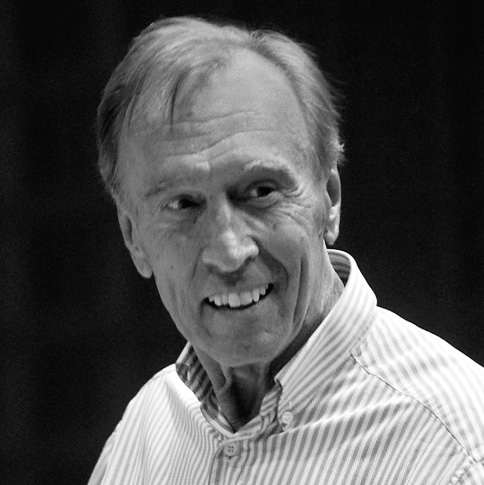
Yehudi Menuhin

Wolf Prize Laureate in Music 1991

Sir Yehudi Menuhin


Award citation:

“One of the greatest violinists of the 20th century, his unforgettable interpretations and humanitarian activities contributed significantly to bringing nations together through musical education, enlightening peoples and elevating cultural levels throughout the world”.


Prize share:

Sir Yehudi Menuhin

Luciano Berio 


Sir Yehudi Menuhin’s name fills a whole period of the music history. The most famous child prodigy of the 20th century, he went on in his professional career to bring joy and understanding to all.

His unforgettable interpretations not only had great professional impact but also meant love and kindness. In this sense, it can be said that Menuhin is one of the great humanitarians who have contributed much to bring nations together.

His name is also always connected with those institutions whose activities are directed to musical education, enlightenment of peoples and elevation of the cultural level of humanity.


Luciano Berio

Wolf Prize Laureate in Music 1991

Luciano Berio


Award citation:

“One of the greatest composers of our generation, he is also recognized and admired worldwide as interpreter, conductor, Iecturer and writer whose new ideas, in an age of devaluation of human values, help to bring closer nations, cultures and generations”.


Prize share:

Luciano Berio 

Sir Yehudi Menuhin


Luciano Berio, one of the great thinkers with a very wide field of creation, is undoubtedly one of the foremost composers of our generation, particularly noted for innovations in electronic music.

Berio is respected and admired worldwide for his achievellef1ts as interpreter, conductor, lecturer and writer.

His manifold activities, in an age of devaluation of human values, communicate new ideas and help to unify nations, cultures and generations.

Krzysztof Penderecki

Wolf Prize Laureate in Music 1987

Krzysztof Penderecki


Award citation:

“for his achievements and innovations in the field of composition”.


Prize share:

Krzysztof Penderecki

Isaac Stern


Because of his achievements and innovations in the field of composition, Krzysztof Penderecki is justifiably being regarded as one of the most noted contemporary composers. His significance and world-wide fame are not less founded on the choice of themes for several of his major works. In them, Penderecki specifically points out the difficulties of human life and draws the attention to wrong and injustice. At the same time, he tries to sensitize the listener to concern for humanism, communication, tolerance towards the phenomena of life, as well as possibly for a “cultural religiosity” in the ecumenical sense.