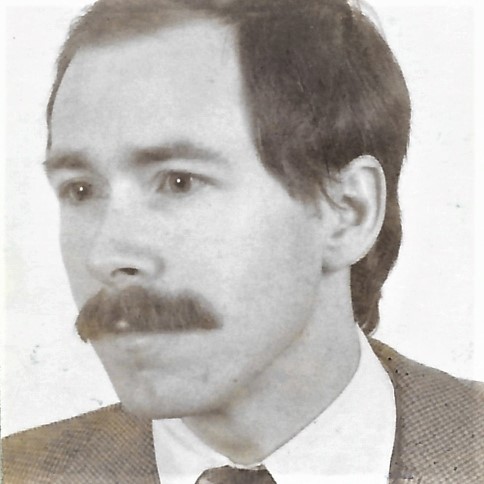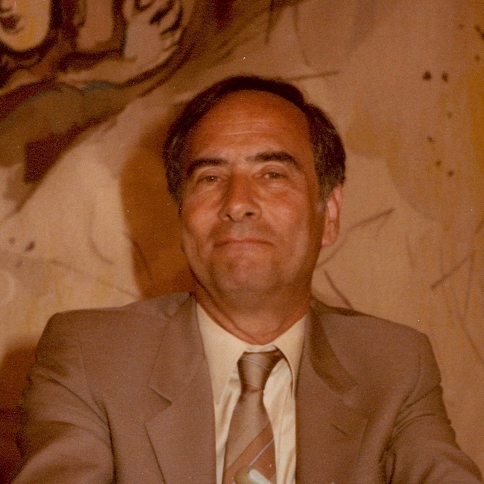
Theodore H. Maiman

Wolf Prize Laureate in Physics 1984

Theodore H. Maiman


Affiliation at the time of the award:

Maiman Associates, USA


Award citation:

“for his realization of the first operating laser, the pulsed three level ruby laser.”


Prize share:

Theodore H. Maiman

Erwin L. Hahn

Sir Peter Hirsch


Dr. Theodore H. Maiman. The impact of lasers on many technological fields is well known. They are used, for example, as cutting tools in metallurgical and textile industry, as scalpels in surgery, as alignment devices in the construction industry, as length and frequency standards in scientific applications. The original ruby laser of Maiman was instrumental in establishing the new sub field of non-linear optics, which explores the properties of matter at extremely high light intensities. It has also been used in ranging experiments to measure the earth-moon distance with retro-reflectors set-up by the moon astronauts.

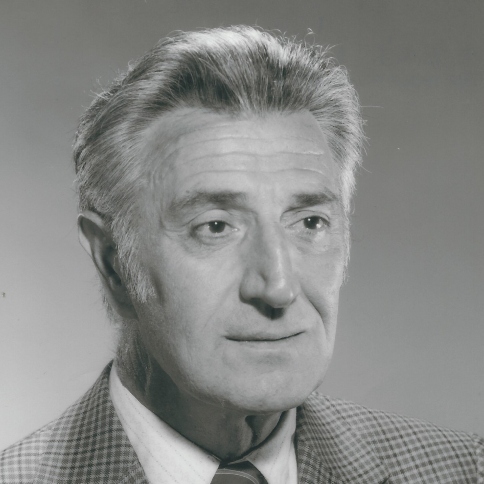
Peter B. Hirsch

Wolf Prize Laureate in Physics 1984

Sir Peter Hirsch


Affiliation at the time of the award:

Oxford University, United Kingdom


Award citation:

“for his development of the utilization of the transmission electron microscope as a universal instrument to study the structure of crystalline matter”.


Prize share:

Sir Peter Hirsch

Theodore H. Maiman

Erwin L. Hahn


Professor Peter Hirsch developed the use of the transmission electron microscope, to study imperfections in the structure of metals, ceramics and other materials. His work has made it possible to examine such solids in far greater detail than is possible with the optical microscope.

Erwin L. Hahn

Wolf Prize Laureate in Physics 1984

Erwin L. Hahn


Affiliation at the time of the award:

University of California, USA


Award citation:

“for his discovery of nuclear spin echoes and for the phenomenon of self-induced transparency”.


Prize share:

Erwin L. Hahn

Theodore H. Maiman

Sir Peter Hirsch


Professor Erwin L. Hahn’s research demonstrated that a collection of spinning nuclei could retain a coherent memory for a period of time and made it possible to extend the use of magnetic resonance techniques for a variety of purposes in science, engineering and medicine including the storage and retrieva l of information. Optical self-induced transparency is an outstanding example of nonlinear interaction between matter and high intensity light pulses. The experiments of Hahn elucidate concepts of statistical mechanics and collective excitations in complex (many-body) systems.

Martin L. Perl

Wolf Prize Laureate in Physics 1982

Martin L. Perl


Affiliation at the time of the award:

Stanford Linear Accelerator Center, Stanford University, USA


Award citation:

“for their experimental discovery of unexpected new particles establishing a third generation quarks and leptons”.


Prize share:

Martin L. Perl

Leon M. Lederman


Professor Martin L. Perl single-handedly pushed, inspired, and directed the search for a new heavy lepton, which was not wanted by any theory and was not expected by the vast majority of particle physicists. The Perl group designed the apparatus to provide an unambiguous signature of the production and decay of a pair of heavy leptons. After the first events indicating the production of a pair of tau leptons, an intense period of review and criticism was required to verify this hypothesis. Since each candidate tau decayed into a visible electron or muon and a neutrino, which always escaped detection, the unambiguous identification of the tau presented unusual difficulty. Subsequent experiments determined many properties of the tau lepton and proved that the neutrino emitted in its decay is not one of the two known neutrinos and must be a sixth lepton completing the third lepton family. While many people contributed to these experiments, it was Professor Perl who guided the work and it was his careful analysis of the early data, which proved the existence of the new particle.

Leon M. Lederman

Wolf Prize Laureate in Physics 1982

Leon M. Lederman


Affiliation at the time of the award:

Fermi National Accelerator Laboratory Chicago, USA

Columbia University, USA


Award citation:

“for their experimental discovery of unexpected new particles establishing a third generation quarks and leptons”.


Prize share:

Leon M. Lederman

Martin L. Perl


Professor Leon M. Lederman and his associates discovered the upsilon particle after a long and sophisticated experimental program devoted to the study of the production of muon pairs, which was of interest in its own right. The upsilon and its two partners discovered in the same experiment were immediately recognized as the ground state and the first two excited states of the spectrum of bound states of a new fifth quark and its antiquark. The spacings between the energy levels provided significant new information for the theories of quantum chromodynamics describing the binding of quarks into hadrons, while the very existence of a fifth quark raised much deeper problems, which are still unresolved.

In addition, Lederman has participated in many other fundamental physics experiments, including the discoveries of the long-lived KO, the non-conservation of parity in muon decay and the existence of two kinds of neutrinos.

Victor J. Weisskopf

Wolf Prize Laureate in Physics 1981

Victor J. Weisskopf


Affiliation at the time of the award:

Massachusetts Institute of Technology, U.S.A.


Award citation:

“for their outstanding contributions to theoretical physics, especially in the development and application of the quantum theory of, fields”.


Prize share:

Victor J. Weisskopf

Gerard T. Hooft

Freeman J. Dyson


The activity of Professor Victor F. Weisskopf (born in 1908, Austria) extends over a period of more than 50 years and covers two subfields of theoretical physics: quantum field theory and theoretical nuclear physics. Furthermore, he has gained a reputation as an international statesman In quantum field theory his main contributions include an early recognition that the incorporation of the positron in quantum electrodynamics eased to a large extent the self-energy difficulties and that infinities might be removed by renormalization of the electron’s mass and charge. Also, in collaboration with Pauli, he formulated the correct quantization method for boson fields and gave the proper method for extending to bosons the concept of antiparticles. These chievements make him one of the pioneers of quantum field theory.

In nuclear physics he successfully applied thermodynamical methods to Bohrs compound nucleus model obtaining many semiquantitative results that guided the art for years. Furthermore, he analyzed with H. Feshbach and C. Porter neutron nucleus scattering. Introducing statistical methods, founded on quantum mechanics, that have been successfully applied in several different contexts even outside of the nuclear field.

As Director of CERN and on many other occasions he has shown considerable diplomatic ability addressed to improve international relations in science, fostering, to quote the statute of the Wolf Foundation, humanity and brotherly relationships amongst the peoples.

Gerard T. Hooft

Wolf Prize Laureate in Physics 1981

Gerard T. Hooft


Affiliation at the time of the award:

University of Utrecht, The Netherlands


Award citation:

“for their outstanding contributions to theoretical physics, especially in the development and application of the quantum theory of, fields”.


Prize share:

Gerard T. Hooft

Victor J. Weisskopf

Freeman J. Dyson


Professor Gerard T. Hooft (born in 1946, The Netherlands) has made a major contribution to the revival of quantum field theory as an essential part of our understanding of elementary particle interactions. Following earlier work by his thesis advisor, M. Veltman, in 1971 T. Hooft showed that infinities could be eliminated by renormalization in theories with spontaneously broken gauge symmetries, such as the electroweak theory of Weinberg and Salam. Together with Veltman, he then systematically developed the mathematical background for calculations in such theories, including especially the method of dimensional regularization, which has been of great value in many areas; including even quantum gravity. T. Hooft also showed how dimensional regularization could serve as the basis for renormalization group calculations, by the so-called “minimum substraction” technique. He then went on to do ground breaking work on a number of topics. He laid the foundation for systematic calculations of instanton effects, including the striking effect of baryon nonconservation. He revived interest in magnetic monopoles by showing that these particles are necessary consequences of a wide variety of gauge theories. He initiated a new approach to the calculation of physical quantities in gauge theories of strong interactions, by the “large N” approximation. Most recently, he has developed methods for deciding what sorts of, massless bound states may be expected to occur in various gauge theories, providing a mathematical basis for speculations about composite particle models of quarks and leptons. A large part of the theoretical physics of the 1970´s has been based on the seminal papers of T. Hooft.

Freeman J. Dyson

Wolf Prize Laureate in Physics 1981

Freeman J. Dyson


Affiliation at the time of the award:

Institute for Advanced Study, Princeton, U.S.A.


Award citation:

“for their outstanding contributions to theoretical physics, especially in the development and application of the quantum theory of, fields”.


Prize share:

Freeman J. Dyson

Victor J. Weisskopf

Gerard T. Hooft


Professor Freeman J. Dyson is noted for major contributions to many different areas of physics and technology in which he has made effective use of his deep knowledge of mathematics. In early work, he showed that the apparently different approaches of Tomonaga, Schwinger and Feynman to quantum electrodynamics were internally consistent and led to the same results. Shortly after he proved that divergences of the theory would be removed in every order of perturbation theory by incorporating them in the renormalized charge and mass of electron. In these works, Dyson developed an elegant mathematical method, based on the V-matrix, which has become basic to more general field theories as well as to the many-body problem, of the physics of condensed matter.

In classic work with A. Lenard, he proved the stability of matter that the attractive force between electrons and the positive nuclei does not cause matter to collapse. In another area, on the analyticity of scattering amplitudes, he obtained results fundamental to dispersion theory methods for scattering problems. His wide-ranging interests extend from biology to astrophysics, including such technological areas as nuclear reactors and solar energy. Through his writings, he has contributed greatly to the public understanding of science.

Michael E. Fisher

Wolf Prize Laureate in Physics 1980

Michael E. Fisher


Affiliation at the time of the award:

Cornell University, USA


Award citation:

“for path breaking developments culminating in the general theory of the critical behavior at transitions between the different thermodynamic phases of matter”.


Prize share:

Michael E. Fisher

Kenneth G. Wilson

Leo P. Kadanoff


The set of theoretical ideas, which these three men have had the central roles in developing are of the most fundamental importance to physics and chemistry. They constitute the long hoped-for solution, in an unexpected and exciting form, to questions about critical points and critical fluctuations first formulated in the early 1930´s and later brought into sharper focus by an increasing body of experimental data and numerical analyses, much of it done by or under the stimulus of Fisher. To chemistry these ideas contribute new insights to the nature of thermodynamic phases as well as the solution of one of its oldest problems; to physics a new and elegant methodology which Kadanoff and especially Wilson have shown to be relevant to many important and apparently unrelated problems of quantum physics, especially the gauge theory of strong interactions between elementary particles and the quantum theory of magnetic impurity systems. The power and generality of this new conceptual structure is only beginning to be properly tested by these extensions to new fields.

Professor Michael E. Fisher has been an extraordinarily productive scientist, and one still at the height of his powers and creativity. Fisher´s major contributions have been in equilibrium statistical mechanics, and have spanned the full range of that subject. He was mainly responsible for bringing together, and teaching a common language to, chemists and physicists working on diverse problems of phase transitions.


Leo P. Kadanoff

Wolf Prize Laureate in Physics 1980

Leo P. Kadanoff


Affiliation at the time of the award:

University of Chicago, USA


Award citation:

“for path breaking developments culminating in the general theory of the critical behavior at transitions between the different thermodynamic phases of matter”.


Prize share:

Leo P. Kadanoff

Michael E. Fisher

Kenneth G. Wilson


The set of theoretical ideas, which these three men have had the central roles in developing are of the most fundamental importance to physics and chemistry. They constitute the long hoped-for solution, in an unexpected and exciting form, to questions about critical points and critical fluctuations first formulated in the early 1930’s and later brought into sharper focus by an increasing body of experimental data and numerical analyses, much of it done by or under the stimulus of Fisher. To chemistry these ideas contribute new insights to the nature of thermodynamic phases as well as the solution of one of its oldest problems; to physics a new and elegant methodology which Kadanoff and especially Wilson have shown to be relevant to many important and apparently unrelated problems of quantum physics, especially the gauge theory of strong interactions between elementary particles and the quantum theory of magnetic impurity systems. The power and generality of this new conceptual structure is only beginning to be properly tested by these extensions to new fields.

Professor Leo P. Kadanoff has made excellent theoretical research, which he is still carrying on, in several fields of physics, but more particularly on phase transitions and critical-point phenomena. The latter work was seminal to an understanding of these matters, inspiring a great deal of further study by many theorists.