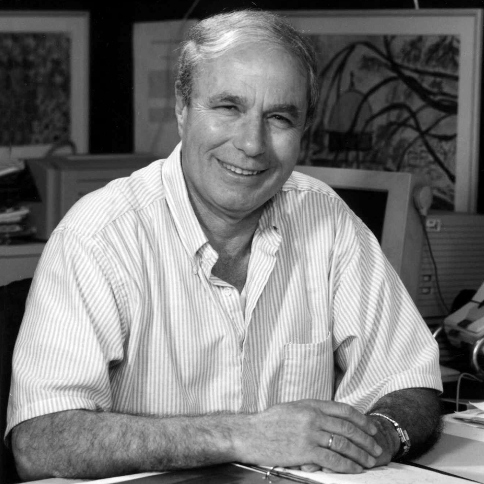
Roger N. Beachy

Wolf Prize Laureate in Agriculture 2001

Roger N. Beachy


Affiliation at the time of the award:

Danforth Plant Science Center, USA


Award citation:

“for the use of recombinant DNA technology, to revolutionize plant (Beachy) and animal (Womack) sciences, paving the way for applications to neighboring fields”.


Prize share:

Roger N. Beachy

James E. Womack


Dr. Roger N. Beachy is a recognized expert in plant virology and biotechnology of plants, having established principles for the genetic engineering of plants, that make them resistant to viral diseases. He was the first one to demonstrate pathogen-derived resistance in plants and to produce the first disease-resistant transgenic plant. Dr. Beachy is undoubtedly in the forefront of the plant biotechnology revolution. Without him, and his work, this field would not be as developed as it is now. He was the first to show that, by transferring and expressing the coat protein gene of a virus in plants (coat protein-mediated resistance – CPMR), these transgenic plants become resistant to viral infection. His discovery of the CPMR led to the development of virus-resistant varieties of potato, tomato, pepper, cucumber, squash, sugar beets, papaya and plum. Benefits to other crops will surely ensue. A large number of scientists from developing countries were trained under Dr. Beachy´s supervision, at the International Laboratory for Tropical Agricultural Biotechnology (ILTAB). Professor Beachy´s recent appointment as head of a new plant science center in Saint Louis, speaks for his high standing in the scientific community.

K. Barry Sharpless

Wolf Prize Laureate in Chemistry 2001

K. Barry Sharpless


Affiliation at the time of the award:

Scripps Research Institute, USA


Award citation:

“for their pioneering, creative and crucial work in developing asymmetric catalysis for the synthesis of chiral molecules, greatly increasing humankind´s ability to create new products of fundamental and practical importance”.


Prize share:

K. Barry Sharpless

Henri B. Kagan

Ryoji Noyori


Professors H. B. Kagan, R. Noyori and K. B. Sharpless, have independently made great advances in developing the ability to synthesize chiral molecules. They pioneered the use of chiral molecular metal complexes as catalysts in asymmetric synthesis. Minute amounts of such catalysts can enable the production of large amounts of desired products of controlled handedness. These catalysts can perform various molecular transformations in an asymmetric fashion, such as reduction, oxidation and isomerization, leading to a variety of useful chiral products.

The chiral synthetic advances made by these three scientists, working on three different continents but pursuing the same significant goals, are critical to pharmaceutical manufacturing and the preparation of a very large number of molecules of controlled handedness. Their pioneering work has revolutionized our understanding of asymmetric catalysis and provided the means for efficient industrial and laboratory preparations of important pharmaceutical products and fine chemicals needed for daily life.

The first example of asymmetric catalysis (cyclopropanation) by a well-defined metal (copper) complex was reported by Noyori in 1966. Although only a low enantiomeric excess was obtained, the result stimulated further research. In 1971, Kagan reported a breakthrough in catalytic enantioselectivity. Using a C2- symmetric ligand (DIOP) for the first time, he obtained a very high enantiomeric excess in alkene hydrogenation, catalyzed by a rhodium complex. Kagan’s work had a strong influence on the course of research in the field of asymmetric catalysis, leading to the development of a variety of C2 -symmetric ligands and stimulating the study of several important reactions, such as asymmetric hydrogenation, hydroformylation, hydrosilylation and allylic alkylation. In 1980, Noyori reported asymmetric catalysis, by complexes of a new diphosphine ligand, BINAP. Catalysis by ruthenium and rhodium complexes of this ligand, resulted in spectacular laboratory and commercial applications, in asymmetric hydrogenation and isomerization. In the same year, Sharpless reported a breakthrough in the important field of asymmetric oxidation. His general method for the highly enantioselective epoxidation of allylic alcohols catalyzed by a titanium complex, is of broad scope and is used routinely in synthesis. More recently, Sharpless developed another highly useful synthetic methodology, the asymmetric dihydroxylation of alkenes, catalyzed by an osmium complex.
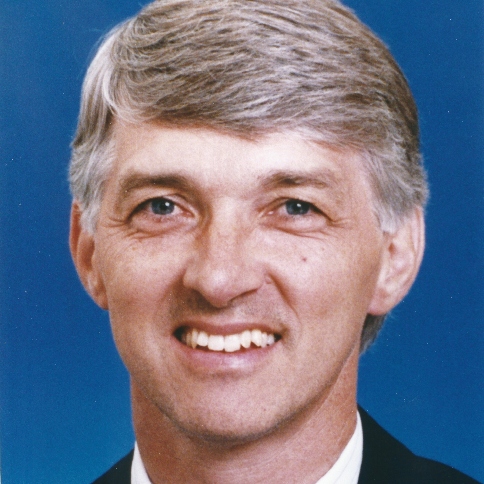
James E. Womack

Wolf Prize Laureate in Agriculture 2001

James E. Womack


Affiliation at the time of the award:

Texas A&M University, USA


Award citation:

“for the use of recombinant DNA technology, to revolutionize plant (Beachy) and animal (Womack) sciences, paving the way for applications to neighboring fields”.


Prize share:

James E. Womack

Roger N. Beachy


The development, by Professor James E. Womack, of a whole genome cattle-hamster radiation hybrid (RH) panel, has fueled a new thrust in cattle genomics and comparative gene mapping. RH mapping has become an effective tool for building ordered maps of conserved sequences, derived from genes, thus integrating linkage and physical maps of mammalian chromosomes. The recent construction of a cattle-human whole-genome comparative map, on the basis of parallel RH mapping, will play a vital role in the genetic dissection of multigenic traits and the characterization of important agricultural loci.

Professor Womack has taken special interest in assisting the careers of young scientists, particularly those in developing countries. Many of his students have gone on to positions of international leadership in animal genomics. A whole new generation of scientists will use the chromosomal coordinates, provided by Womack,to positionally clone the genes affecting economically important traits in mammals.

Henri B. Kagan

Wolf Prize Laureate in Chemistry 2001

Henri B. Kagan


Affiliation at the time of the award:

University of Paris-South, France


Award citation:

“for their pioneering, creative and crucial work in developing asymmetric catalysis for the synthesis of chiral molecules, greatly increasing humankind’s ability to create new products of fundamental and practical importance”.


Prize share:

Henri B. Kagan

Ryoji Noyori

K. Barry Sharpless


Henri Boris Kagan was born in 1930 in Boulogne-Billancourt, near Paris, to Alexandre Kagan, an engineer, and Adeline, née Celniker. His childhood unfolded against the backdrop of the Second World War: during the war, the Kagan family found refuge in a village in southern France, where they lived under assumed names. After the war, Kagan resumed his education, but his path to science was far from predetermined. He later recalled that he was not considered a particularly good student in his early school years and initially followed a literary track, which did not suit him. A move to the sciences changed his direction, awakening a growing interest in mathematics, physics, and chemistry. He was especially fascinated by experiments that brought classroom science to life, and on weekends he regularly visited the Palais de la Découverte in Paris, where subjects ranging from nuclear physics to astronomy captured his imagination. At first, Kagan envisioned becoming an engineer and working in industry; only later did he choose chemistry—a decision that would set him on the path to an extraordinary scientific career.

Professors H. B. Kagan, R. Noyori and K. B. Sharpless, have independently made great advances in developing the ability to synthesize chiral molecules. They pioneered the use of chiral molecular metal complexes as catalysts in asymmetric synthesis. Minute amounts of such catalysts can enable the production of large amounts of desired products of controlled handedness. These catalysts can perform various molecular transformations in an asymmetric fashion, such as reduction, oxidation and isomerization, leading to a variety of useful chiral products.

The chiral synthetic advances made by these three scientists, working on three different continents but pursuing the same significant goals, are critical to pharmaceutical manufacturing and the preparation of a very large number of molecules of controlled handedness. Their pioneering work has revolutionized our understanding of asymmetric catalysis and provided the means for efficient industrial and laboratory preparations of important pharmaceutical products and fine chemicals needed for daily life.

The first example of asymmetric catalysis (cyclopropanation) by a well-defined metal (copper) complex was reported by Noyori in 1966. Although only a low enantiomeric excess was obtained, the result stimulated further research. In 1971, Kagan reported a breakthrough in catalytic enantioselectivity. Using a C2- symmetric ligand (DIOP) for the first time, he obtained a very high enantiomeric excess in alkene hydrogenation, catalyzed by a rhodium complex. Kagan´s work had a strong influence on the course of research in the field of asymmetric catalysis, leading to the development of a variety of C2 -symmetric ligands and stimulating the study of several important reactions, such as asymmetric hydrogenation, hydroformylation, hydrosilylation and allylic alkylation. In 1980, Noyori reported asymmetric catalysis, by complexes of a new diphosphine ligand, BINAP. Catalysis by ruthenium and rhodium complexes of this ligand, resulted in spectacular laboratory and commercial applications, in asymmetric hydrogenation and isomerization. In the same year, Sharpless reported a breakthrough in the important field of asymmetric oxidation. His general method for the highly enantioselective epoxidation of allylic alcohols catalyzed by a titanium complex, is of broad scope and is used routinely in synthesis. More recently, Sharpless developed another highly useful synthetic methodology, the asymmetric dihydroxylation of alkenes, catalyzed by an osmium complex.

Avram Hershko

Wolf Prize Laureate in Medicine 2001

Avram Hershko


Affiliation at the time of the award:

Technion – Israel Institute of Technology, Israel


Award citation:

“for the discovery of the ubiquitin system of intracellular protein degradation and the crucial functions of this system in cellular regulation”.


Prize share:

Avram Hershko

Alexander Varshavsky 


Hershko and Varshavsky stand out in their seminal contributions to the discovery of both the mechanism and the functions of ubiquitin-dependent proteolysis.

Professor Avram Hershko was the first to recognize that the covalent attachment of a small protein, later found to be ubiquitin, plays a role in ATP-dependent proteolysis. Over the following several years, along with his co-workers, Hershko elucidated the three-step mechanism of ubiquitination, which involves the ubiquitin-activating (E1) enzyme, that forms a thioester linkage to ubiquitin, a ubiquitin-conjugating (E2) enzyme, that transfers ubiquitin to the target protein, and the E3 component, required for recognizing the protein target. This elegant and rigorous biochemical analysis provided the framework for subsequent studies of the role of ubiquitin in regulated proteolysis.

The discovery by Hershko and Varshavsky that ubiquitin-dependent proteolysis is a fundamental regulatory process, impacts on virtually all aspects of modern biology.

Álvaro Siza

Wolf Prize Laureate in Architecture 2001

Álvaro Siza


Award citation:

“for the critical relevance of his typically responsive architecture to the continual transformation of both landscape and urban fabric”.


Prize share:

None


Starting with extremely modest interventions in the relatively underdeveloped country Portugal was, Architect Álvaro Siza consistently demonstrated the catalytic power of architectonic creation to transform and re-energize the context in which it is situated. He has done this by enriching and revitalizing the syntactical, spatial and programmatic legacy of the Modern Movement without indulging in the formalism to which contemporary architectural practice is so evidently prone, be this of a superficially spectacular or technological nature. Siza has been able to maintain the consistency of his ethical position without inhibiting his prodigious capacity for poetic intervention.

Alexander Varshavsky

Wolf Prize Laureate in Medicine 2001

Alexander Varshavsky


Affiliation at the time of the award:

California Institute of Technology, USA


Award citation:

“for the discovery of the ubiquitin system of intracellular protein degradation and the crucial functions of this system in cellular regulation”.


Prize share:

Alexander Varshavsky 

Avram Hershko


Hershko and Varshavsky stand out in their seminal contributions to the discovery of both the mechanism and the functions of ubiquitin-dependent proteolysis.

Professor Alexander Varshavsky coming from a separate, more biological angle, began studies on histone protein modifications. His discovery that the ubiquitin-activating enzyme was defective in murine ts85 cells, provided the first important demonstration that the ubiquitin system plays an essential role in cell physiology. Soon thereafter, using yeast genetics, Varshavsky demonstrated that ubiquitin conjugation enzymes regulated DNA repair and cell cycle processes. These studies by Varshavsky demonstrated that the ubiquitin directed proteolysis system plays a key role in cellular regulation and provides biological significance to Hershko’s biochemistry.

The discovery by Hershko and Varshavsky that ubiquitin-dependent proteolysis is a fundamental regulatory process, impacts on virtually all aspects of modern biology.

Riccardo Muti

Wolf Prize Laureate in Music 2000

Riccardo Muti


Award citation:

“one of the most outstanding conductors of our time”.


Prize share:

Riccardo Muti

Pierre Boulez 


Riccardo Muti is one of the most outstanding conductors of his times. His musical charisma brings excitement to concert halls and opera houses His creative activities have found expression beyond the boundaries of the domain of music. Muti constitutes one of the most important links in the chain of development of the image of the conductor, whose interpretation of the masterpieces of symphonic music and opera enriches the contemporary world of music. He belongs to the rare breed of conductors, representing the great tradition of interpreters of musical oevres, that has developed from the Baroque era to the present day. What is more, he embellishes this tradition with extraordinary creativity and a freshly rich imagination.

Muti’s activity reaches beyond the realm of concert halls and opera houses. As a conductor he is always first in bringing the humanitarian message of music in moments of crisis. Thus, he came with his La Scala Opera Orchestra to Kosovo and on another occasion to Jerusalem, in support of the peace process. Muti has gained a reputation as the conductor who initiated the founding of a musical therapy center for children with special needs. At the same time he kept encouraging young orchestras and musicians to excel in the fields of composition, instrumental performance and singing.

Raymond Davis Jr.

Wolf Prize Laureate in Physics 2000

Raymond Davis Jr.


Affiliation at the time of the award:

University of Pennsylvania, USA

Brookhaven National Laboratory, USA


Award citation:

“for their pioneering observations of astronomical phenomena by detection of neutrinos, thus creating the emerging field of neutrino astronomy”.


Prize share:

Raymond Davis Jr.

Masatoshi Koshiba 


The observations of the elusive neutrinos of astrophysical origin, by Davis and by Koshiba, have opened a new window of opportunity for the study of astronomical objects, such as the sun and exploding stars, and the study of fundamental properties of matter. Davis and Koshiba developed complementary methods that have yielded important scientific results and have inspired the development of new neutrino detection experiments.

Professor Raymond Davis Jr. developed, through persistent and sustained efforts, the first large-scale radiochemical neutrino detectors and obtained the first measurement of the flux of neutrinos from the sun. Davis developed the techniques of extracting from a large detector volume, the few atoms of argon produced by incoming neutrinos. With the continuing theoretical support of John Bahcall, these measurements were shown to provide a very stringent test for theories of the solar interior.

Raoul Bott

Wolf Prize Laureate in Mathematics 2000

Raoul Bott


Affiliation at the time of the award:

Harvard University, USA


Award citation:

“for his deep discoveries in topology and differential geometry and their applications to Lie groups, differential operators and mathematical physics”.


Prize share:

Raoul Bott

Jean-Pierre Serre


Professor Raoul Bott has been one of the leading figures in differential geometry, particularly in its links with topology and Lie groups. Through his publications, his students, and his personal qualities, he has significantly influenced the mathematics of our times.

His first major contribution was the application of Morse theory to the topology of Lie groups and homogeneous spaces, culminating in the famous “periodicity theorems” for the stable homotopy of the classical groups. This result provided the foundation for the development of K-theory, to which he also contributed greatly, in particular through his joint work with Atiyah on the index theory of differential operators and its applications to equivariant topology. He obtained seminal results in the theory of foliations. His later work, on Yang-Mills theory, moduli spaces of vector bundles, and elliptic genera, has been marked by a combination of the same geometric insight, coupled with new points of view coming from mathematical physics.