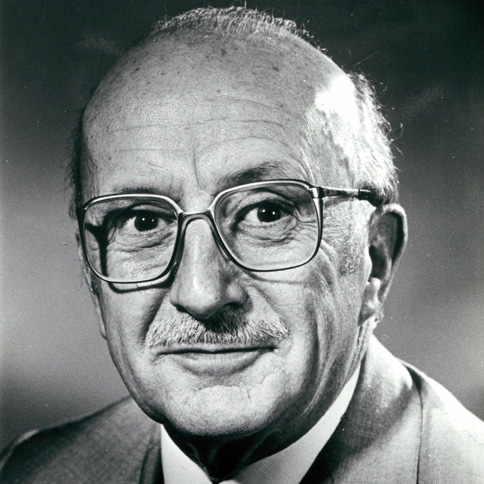
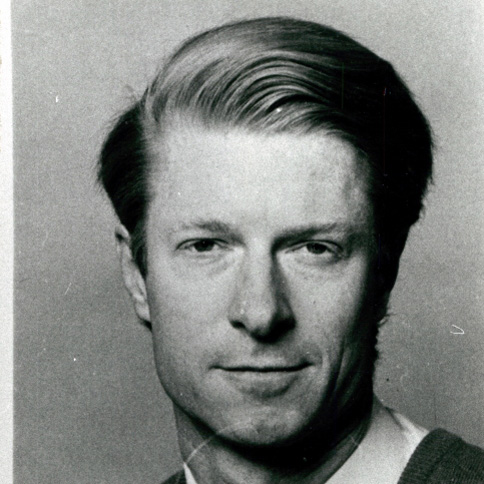
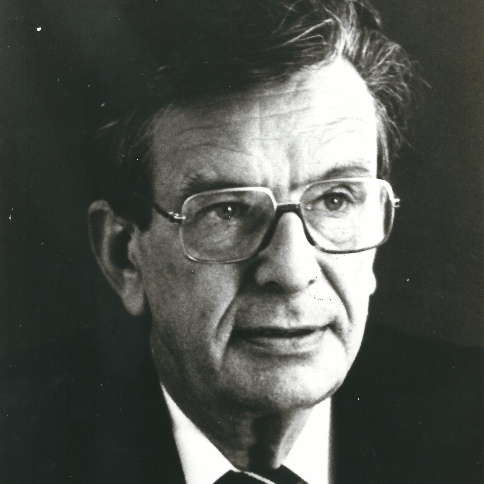
Ennio De Giorgi

Wolf Prize Laureate in Mathematics 1990

Ennio De Giorgi


Affiliation at the time of the award:

Scuola Normale Superiore, Italy


Award citation:

“for his innovating ideas and fundamental achievements in partial differential equations and calculus of variations”.


Prize share:

Ennio De Giorgi 

Ilya Piatetski-Shapiro


The work of Professor Ennio De Giorgi is among the most important and creative accomplishments in the theory of partial differential equations and the calculus of variations. At the time he began his studies, mathematicians were not able to handle anything beyond second order nonlinear elliptic equations in two variables. In his first major break-through in 1957, De Giorgi proved that solutions of uniformly elliptic second order equations of divergence form with only measurable coefficients were Holder continuous. Probably his greatest contribution cue in 1960; this was a regularity theory for minimal hypersurfaces. Such surfaces arise as surfaces of smallest area spanning a given boundary. The proof required De Giorgi to develop his own version of what we now call geometric measure theory along with a related key compactness theorem. He was then able to conclude that a minimal hypersurface is analytic outside a closed subset of codimension at least two. Since then he and his school have settled litany of the outstanding problems in this area.


David J. Thouless

Wolf Prize Laureate in Physics 1990

David J. Thouless


Affiliation at the time of the award:

University of Washington, USA


Award citation:

“for a wide variety of pioneering contributions to our understanding of the organization of complex condensed matter systems, de Gennes especially for his work on macromolecular matter and liquid crystals and Thouless for his on disordered and low-dimensional systems”.


Prize share:

David J. Thouless 

Pierre-Gilles de Gennes


Professor David J. Thouless has provided major theoretical contributions to our understanding of extended systems of atoms and electrons, and of nucleons. These have involved especially superconductivity phenomena, properties of nuclear matter, and excited collective motions within nuclei. His work on disordered systems provided key ideas for understanding electronic transport processes in systems where Anderson localization plays an important role, and indicated measurable consequences of this localization in thin wires. His contributions to spin glass theory have been substantial and·important. With J. M. Kosterlitz, he developed a theory of vortex-unbinding transitions in two-dimensional systems with continuous symmetry. This has had remarkable consequences and many applications in other areas of physics. He has made clearly apparent the significance of topological concepts (and their related variables) in condensed matter physics and demonstrated their importance for the Quantum Hall effect.

Anselm Kiefer

Wolf Prize Laureate in Arts 1990

Anselm Kiefer


Award citation:

“for his epic and physically compelling paintings, in which he creates a continuum, linking current life with history and mythology”.


Prize share:

None


Anselm Kiefer (born in 1945, Germany) Originally enrolled at the University of Freiburg with a focus on pre-law and Romance languages, he transitioned to the realm of art after three semesters. He continued his artistic education at art academies in both Freiburg and Karlsruhe. Under the tutelage of Peter Dreher, a renowned realist and figurative painter, who honed his skills. He earned his art degree in 1969.

Anselm Kiefer has created an art that synthesizes human history and the present condition of life in epic canvases that inspire gravity and awe. For him, almost alone in this century, art is an endeavor of enormous ambition and symbolic importance.

Kiefer first came to prominence in the 1970’s with subjects that dealt derisively with his German heritage, and most particularly with the Nazi period. Not only was this history mocked, the artist unselfconsciously examined the degree to which he was an heir of its character. Gradually he added to his narrative the victims of this ghastly past, as epitomized by the personage called Shulamit in a poem by Paul Celan.

In 1980, Kiefer’s work took a dramatic turn through his increasing use of diverse materials added to the surfaces of the canvases. Sand, straw, photographs, and lead produced a rich physical reality which enhanced the expressiveness of the imagery. As the 1980´s evolved, Kiefer began to transform his earlier subjects, as if to suggest the possibility of a new, though not necessarily brave, world. His art is as much about metamorphosis as it is a haunting commentary on false dreams. It is both accusative and elegiac. It addresses such universal themes as the power of myth in history and its persistence in modern life.

The best of Kiefer’s paintings are epic elegies to the human condition, which pulsate with profoundly felt emotions, complex thematic subtlety, and extraordinary surface excitement.

Kiefer’s paintings often touch raw nerves and have the potential to elicit emotional responses. By the provocative nature of his work, it is evident that Kiefer accepts and embraces the notion of the modern artist who stands outside society, taunting it, its history, norms, taboos, myths, and ideas about art and craft. Though hardly untouched by his period´s ironical outlook and experimental practices, he signals a dramatic break with prevailing, 2Oth century notions that art exists for its own sake alone; instead, he proposes that art might speak to the general concerns of humanity.

Jozef S. Schell

Wolf Prize Laureate in Agriculture 1990

Jozef S. Schell


Affiliation at the time of the award:

Max-Planck-Institute for Plant Breeding, Germany


Award citation:

“For his pioneering work in genetic transformation of plants, thereby opening up new horizons in basic plant science and breeding”.


Prize share:

None


Jozef Stefaan Schell (born in 1935, Belgium) studied zoology and microbiology at the University of Ghent, Belgium. Schell is the director of the Max Planck Institute for plant breeding in Koln, West Germany.

Professor Jozef Stefaan Schell played a key role in the development of Agrobacterium and its Ti plasmid as a vector for inserting genes into plants.

His subsequent work has moved to the use of transgenic plants to bring a new dimension into the study of classical problems in plant physiology, particularly in relation to hormone receptors and the mechanisms of hormone action.

Another particularly notable feature of Professor Schell’s work has been his orchestration of collaborative efforts to spread the knowledge and use of these techniques around the world.

The impact of his pioneering contribution and leadership is now beginning to appear as companies are developing transgenic plants for pest and disease resistance and for effecting a range of compositional changes of potential industrial importance.

Ti-plasmid-derived genetic constructions are the only proven vehicles for the introduction of foreign DNA into plants. The newly acquired DNA integrates into the plant´s genome and becomes a stable constituent of the genetic make-up of the transformed plant.

Professor Schell’s studies and research work of over many years led to the elucidation of the molecular basis of crown gall formation on plants by Agrobacterium tumefaciens and the mechanism of DNA transfer to higher plants, and formed the basis for the development of sophisticated vectors and methods for the introduction of novel or modified genes into plants. These developments now allow the stable introduction of desirable genetic traits into plants, also those of agricultural interest. Furthermore, the techniques and vector systems originating from this work are being used to study gene expression in higher plants, in response to hormones, heat shock, pathogens, light and symbiotically nitrogen fixing bacteria and in a tissue specific manner. This led to the identification of tissue specific promoters which can be used to direct the expression of newly introduced genes in the desired tissue (organ) of the plant.

The work of Schell and his coworkers, therefore, represents a major contribution not only to a scientific (molecular) understanding of gene transfer to and gene expression in higher plants, but also offers major new tools for modern plant breeding.

Peter M. Biggs

Wolf Prize Laureate in Agriculture 1989

Peter M. Biggs


Affiliation at the time of the award:

Agricultural and Food Research Council

Institute for Animal Health, United Kingdom


Award citation:

“for distinguished contributions to basic science and its successful translation into practice in the fields of animal health and crop protection”.


Prize share:

Peter M. Biggs

Michael Elliott


Dr. Peter M. Biggs has carried out pioneering work on virus-induced tumors in domestic poultry, which were a major problem in intensive production systems. Work in his laboratory showed that both retroviruses and herpes viruses were implicated in these diseases. Work in other laboratories over the same period showed that the avian retroviruses could be divided into several sub-groups with resistance in the last being controlled by a single recessive gene. This work led to the development of methods for the selection of genetically determined resistant breeding stocks. Work on the epidemiology and pathology of the most severe forms of lymphoids tumors in poultry known as Marek´s disease after the author of the initial description of the condition, showed it to be due to an unusual type of herpes virus with a high affinity for cell binding. Further development of these findings led to the development of a novel vaccine which was in fact the first effective vaccine against a tumor condition in any species. This vaccine is now used for protection against Marek´s disease throughout the world where extensive poultry production is carried out. Throughout his career Professor Biggs has made major contributions and is a recognized leader in the field of animal health, having established and encouraged the use of the techniques of genetic engineering and biotechnology for the study of infectious diseases.


Michael Elliott

Wolf Prize Laureate in Agriculture 1989

Michael Elliott


Affiliation at the time of the award:

Agricultural and Food Research Council

Institute of Arable Crops Research, United Kingdom


Award citation:

“for distinguished contributions to basic science and its successful translation into practice in the fields of animal health and crop protection”.


Prize share:

Michael Elliott

Peter M. Biggs


Michael Elliot (born in 1924, England) received his education at Skinners County School in Tunbridge Wells, followed by attending University College, Southampton, and later King’s College London. His Ph.D. research at King’s College focused on the synthesis of natural pyrethrins, sparking an enduring interest that would shape his scientific career. In 1948, Elliot took on the role of a scientific officer in the Insecticides and Fungicides Department at Rothamsted, where he delved into studying the connections between molecular structure and biological activity. The innovative work of his team led to the discovery of two sets of new compounds, earning Rothamsted Queen’s Awards for Technological Achievement in 1976 and 1980. In recognition of his significant contributions, Elliott was elected a fellow of the Royal Society in 1979 and was appointed Commander of the Order of the British Empire (CBE) in 1982.

Dr. Michael Elliot has demonstrated scientific vision in the field of crop protection against insects. In the 1940´s he recognized that the naturally occurring insecticidal compounds of plant in the Composite (Sunflower family) Chrysanthemum cinevariaefolium known as pyrethroids had important crop protective potential but suffered from serious disadvantages of lack of potency, stability and selectivity. He, therefore, embarked on an imaginative program for the development of synthetic analogues of the naturally occurring compounds and produced two, resmethrin (1962) and bioresmethrin (1985) which had greatly enhanced potency and insect specificity, combined with low mammalian toxicity. These compounds were particularly effective for use in domestic and stored products, but were photodegradable and therefore relatively ineffective under the field conditions. By 1973 Dr. Elliott had produced further analogues which combined crop surface stability and insecticidal potency with exceptionally low mammalian toxicity; they also had the advantage over the organochlorine insecticides of being readily biodegradable in the soil without the formation of toxic residues. These compounds have proved to be of enormous economic Importance in the protection of a very wide variety of herbaceous and tree crops. At the fundamental level Dr. Elliott’s work has made possible the establishment of relationships between chemical structure and insecticidal activity in pyrethroids; improved the understanding of factors which determine photostability selectivity and mammalian toxicity and provided a series of steroisomers with contrasting insecticidal activities which are proving to be powerful tools for neurophysiological “site of action’ studies.

John W. Milnor

Wolf Prize Laureate in Mathematics 1989

John W. Milnor


Affiliation at the time of the award:

Institute for Advanced Study, USA


Award citation:

“for ingenious and highly original discoveries in geometry, which have opened important new vistas in topology from the algebraic, combinatorial, and differentiable viewpoint”.


Prize share:

John W. Milnor 

Alberto P. Calderon


During his undergraduate years at Princeton University, John W. Milnor (born in 1931, USA)  was named a  Putnam Fellow in both 1949 and 1950. Notably, at the youthful age of 19, he successfully proved the Fáry–Milnor theorem. Upon completing his studies, Milnor earned an A.B. in mathematics in 1951, presenting a senior thesis entitled “Link groups,” which was supervised by Robert H. Fox. Remaining at Princeton for his graduate studies, Milnor continued his academic pursuit and obtained his Ph.D. in mathematics in 1954. His doctoral dissertation, titled “Isotopy of links,” was also conducted under the guidance of Fox.

The highly original discoveries of Professor John W. Milnor in geometry have exerted a major influence on the development of contemporary mathematics. The current state of the classification of topological, piecewise linear, and differentiable manifolds rests in large measure on his work in topology and algebra.

Milnor’s discovery of differentiable structures on S7 (the 7-dimensional sphere) which are exotic, i.e. different from the standard structure, came as a complete surprise and marked the beginning of differential topology. Later, in joint work with Kervaire, Milnor turned these structures (on any Sn) into a group which could then (in part) be computed; it turns out that there are over sixteen million distinct differentiable structures on S31 In his important work in algebraic geometry on singular points of complex hypersurfaces, exotic spheres are related to links around singularities. In the combinatorial direction, Milnor disproved the long-standing conjecture of algebraic topology known as the Hauptvermutung, by constructing spaces with two polyhedral structures that cannot have a common subdivision. This was based on an unexpected use of the previously known concept of torsion, which has since become, in its various algebraic and geometric versions, a basic tool.

These are just some highlights of Milnor’s impressive body of work. Beyond the research papers, a wealth of new results are contained in his books. These are famous for their clarity and elegance and remain a source of continuing inspiration.

John B. Gurdon

Wolf Prize Laureate in Medicine 1989

John B. Gurdon 


Affiliation at the time of the award:

University of Cambridge, United Kingdom


Award citation:

“for his introduction of the xenopus oocyte into molecular biology and his demonstration that the nucleus of a differentiated cell and of the egg differ in expression but not in the content of genetic material”.


Prize share:

John B. Gurdon 

Edward B. Lewis


The contributions of Professor John B. Gurdon to molecular embryology span three decades and cover many of the exciting advances in this field. Perhaps the most influential of Gurdon´s work is the introduction of the frog oocyte injection technology. John Gurdon first showed that messenger RNA injected into the oocyte directs the synthesis of the cognate protein, and he used this method in one of the first demonstrations of the existence of mRNA in eukaryotic cells. Since that time translation in oocytes has been used by hundreds of laboratories in a wide variety of experiments. Gurdon expanded the technology to the injection of DNA into the oocyte nucleus, allowing him to obtain, in collaboration with Don Brown, the first accurate transcription of a eukaryotic gene in a reconstituted system. This method, too, has been used by many workers to great advantage.

The injection technology was a highly original and useful derivation from Dr. Gurdon´s important experiments in nuclear transplantation in the frog. This work, which stands as a key observation in modern embryology, demonstrated that highly differentiated somatic nuclei could support the development of a complete tadpole with all its different tissues. Thus, embryogenesis does not, involve in general any irreversible change in the genome of animal cells.

In recent years Gurdon has focused his attention on the traditional problem of embryonic induction. In this area his contributions have been seminal in introducing molecular techniques to the study of induction, especially through the analysis of muscle differentiation and a-actin gene expression in the embryo.


Edward B. Lewis

Wolf Prize Laureate in Medicine 1989

Edward B. Lewis


Affiliation at the time of the award:

California Institute of Technology, USA


Award citation:

“for his demonstration and exploration of the genetic control of the development of body segments by homeotic genes”.


Prize share:

Edward B. Lewis

John B. Gurdon 


Professor Edward B. Lewis, as a scholar and experimental scientist, has no peer in his field. With exemplary insight originality, personal commitment and ingenuity he pursued the genetic of morphogenesis in Drosophila for some four decades. During three of these decades his work attracted comparatively little attention, but this lack of trendiness did not discourage him. In recent years the rest of biology began to follow Lewis in his interest in homeatic genes, leading to the most important advances in developmental genetics in this time. These advances were fostered not only by Lewis insights but also by his wonderful generosity in providing stocks and counsel to all interested colleagues.

Lewis studied and continues to study homeotic genes, identified by mutations which change the body plan of the fly leading to the formation of body parts at ectopic sites. He concluded that the function of the Mild type genes must be the control of normal organization of the body, a conclusion that has been supported widely since. Lewis identified the Bithorax Complex (BX-C) as a major locus composed of several homeotic genes that are critical for the establishment of seg8ental identity in the fly. The extensive genetic characterization of the BX-C by Lewis encouraged David Hogness and his colleagues to choose this locus as the target for the first attempts at cloning of homeotic genes. The technique-s and concepts developed in the ensuing collaboration of the Lewis and Hogness laboratories have guided the entire field since then. One of the 1IIDSt important consequences of this work, and one that Lewis predicted in a general way long ago, was the finding of a region of homology between many homeotic genes, the so-called homebox. The study of homeotic genes and homeodomain-containing proteins is one of the most active areas in biology today and it owes its origins and growth to the remarkable work of Lewis.

Duilio Arigoni

Wolf Prize Laureate in Chemistry 1989

Duilio Arigoni


Affiliation at the time of the award:

Swiss Federal Institute of Technology (ETH), Switzerland


Award citation:

“for their fundamental contributions to the elucidation of the mechanism of enzymic reactions and of the biosynthesis of natural products, in particular the pigments of life”.


Prize share:

Duilio Arigoni

Alan R. Battersby


Professors Duilio Arigoni and Alan Battersby have performed pioneering studies on the elucidation of the mechanisms by which natural products are synthesized in biological organisms.

Duilio Arigoni has explored the detailed stereochemical pathways by which enzymes convert their substrates into products. In particular his strategy of penetrating into the structure of enzyme-substrate interactions by concentrating on the detailed stereochemical fate of isotopic substrate labels, led hill to make basic contributions to the mechanism of enzymic reactions requiring coenzyme B12, one of the “pigments of life”.