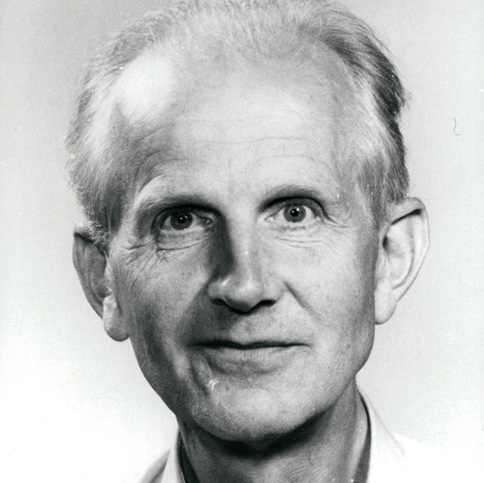
Claes T. Oldenburg

Wolf Prize Laureate in Arts 1989

Claes T. Oldenburg


Award citation:

“who, over some three decades has invested prosaic objects with historic and mythical allusions. For all the simplicity of their subject matter, they are statements about metamorphosis and invite the observer to reflect upon life’s processes “.


Prize share:

None


Claes T. Oldenburg (born in 1929, Sweden) pursued studies in literature and art history at Yale University from 1946 to 1950. Subsequently, he relocated to Chicago, where he attended classes at The School of the Art Institute of Chicago. While honing his artistic skills, Oldenburg concurrently served as a reporter at the City News Bureau of Chicago. In 1956, he made the move to New York, initially finding employment at the library of the Cooper Union Museum for the Arts of Decoration. During this period, he took the initiative to expand his knowledge independently by delving deeper into the history of art.

Oldenburg came to prominence in the late 1950s as part of a somewhat irreverent group of young artists determined to create a new imagery that reflected popular culture. For these brash American Pop Artists, objects of everyday life could provide an endless supply of subject matter. Over the years, Oldenburg has remained true to this conviction. By exploring the properties of mundane, ubiquitous and seemingly anti-artistic forms, such as electrical plugs, baseball bats, cigarette butts, clothespins, toothpaste tubes, flashlights and umbrellas, he has created an iconography that is at once remarkably universal and highly subjective.

Oldenburg’s objects, whether rendered in soft, pliable materials such as stuffed cloth, or in hard durable wood or metal, are his dramatis personae, and on occasion, take on human attributes. The apertures and prongs of a giant, soft three-way plug suggest a human figure in hapless balance. His forms seem always to be in the process of metamorphosis; so much so that they are filled with multiple meanings. A giant spoon, for example, when its bowl is seen head-on, subtly transforms itself into a ship´s prow. Through his unique alchemy, Oldenburg invests the most prosaic objects with historic and mythical allusions so they become talismans that invite endless associations on the part of the observer.

Though primarily known as a sculptor – and lately, one who with his wife and collaborator Coosje van Bruggen has been increasingly involved in creating large-scale works that have become part of urban contexts throughout the world-he is also a master draftsman, in fact, one of the century´s greatest. The origins of many of his large-scale works are in quick sketches on the pages of small notebooks, which are his visual diaries. Many of these notations are amplified in more fully realized drawings in which he explores the psychological as well as formal possibilities of particular themes. His is an art not only of gentle irony and extraordinary inventiveness, but also of considerable aesthetic accomplishment. Underlying his renditions of even the most prosaic of these is a sure and original sense of form, color, texture – the cardinal elements traditionally associated with artistic excellence. For over three decades, he has been an insightful commentator on the contemporary world, and through his art is a timeless student of its aspirations, values and contradictions. Through his lexicon of its mundane artifacts, he enables us to perceive this world in constantly fresh terms.

Alberto P. Calderon

Wolf Prize Laureate in Mathematics 1989

Alberto P. Calderon


Affiliation at the time of the award:

University of Chicago, USA


Award citation:

“for his groundbreaking work on singular integral operators and their application to and important problems in partial differential equations”.


Prize share:

Alberto P. Calderon

John W. Milnor 


Alberto P. Calderon (born in 1920, Argentina) commenced his academic journey at the University of Buenos Aires, focusing on engineering studies. Upon completing his degree in civil engineering in 1947, Calderon secured a position within the research laboratory of the geophysical division at YPF (Yacimientos Petrolíferos Fiscales), a state-owned oil company in Argentina. His work at the YPF Lab centered on exploring methods to determine the conductivity of a body by conducting electrical measurements at its boundary. Although he didn’t publish his findings until 1980 in a brief Brazilian paper, Calderon’s research marked an essential contribution to the field.Subsequently, Calderon transitioned to a role at the University of Buenos Aires. In 1948, Antoni Zygmund from the University of Chicago arrived at the university following an invitation by Alberto González Domínguez. Calderon was then designated as Zygmund’s assistant. Impressed by Calderon’s potential, Zygmund extended an invitation for Calderon to collaborate with him. In 1949, Calderon relocated to Chicago with the support of a Rockefeller Fellowship. Under the guidance of Marshall Stone’s encouragement to pursue a doctorate, Calderon utilized three recently published papers as his dissertation and earned his PhD in mathematics under Zygmund’s supervision in 1950.

The work of Professor Alberto P. Calderon has had a lasting impact on the shape of contemporary Fourier analysis and on its connections with real variables, complex analysis, and partial differential equations. In particular, his contributions to the theory of singular integral operators (SIO) have been decisive, both through the introduction of the sharpest technical tools into that theory and through its imaginative application to important problems in partial differential equations.

Together with his teacher, Antoni Zygmund, Calderon proved the famous theorem on the LP boundedness (1<P<∞) of SIO and introduced the important Calderon-Zygmund decomposition. Subsequently, he used SIO to establish the first general result on the uniqueness of the Cauchy problem. for higher order partial differential operators and systems. He then applied this machinery to obtain general results on local solvability for linear partial differential equations (independently of, and contemporaneously with, Hormander) and also gave the first general method of reducing elliptic boundary value problems for equations on the boundary. These papers provided the major stimulus for the development of pseudodifferential operators. At about the same time, he introduced the complex method of interpolation of operators in general banach spaces (contemporaneously with, J.L. Lions). with his celebrated theorem on the first commutator, Calderon initiated a new and fruitful attack on the theory of SIO, which reached a culmination in his paper on the Cauchy integral on Lipschitz curves, honored by the Bocher Prize. In this work, Calderon not only settled an important problem of long-standing in complex function theory but also apened up new vistas for research in classical analysis.


Alan R. Battersby

Wolf Prize Laureate in Chemistry 1989

Alan R. Battersby


Affiliation at the time of the award:

University of Cambridge, UK


Award citation:

“for their fundamental contributions to the elucidation of the mechanism of enzymic reactions and of the biosynthesis of natural products, in particular the pigments of life”.


Prize share:

Alan R. Battersby

Duilio Arigoni


Professors Duilio Arigoni and Alan Battersby have performed pioneering studies on the elucidation of the mechanisms by which natural products are synthesized in biological organisms.

The major efforts of Alan R. Battersby have been focused on the biosynthesis of the “pigments of life” haem, chlorophyll and vitamin B12, that are built on closely related tetrapyrrolic structural frameworks. He has demonstrated and elucidated the essential role played by two enzymes, deaminase and cosynthetase, in the construction of the tetrapyrrolic ring with its specific structural features.

Stephen W. Hawking

Wolf Prize Laureate in Physics 1988

Stephen W. Hawking


Affiliation at the time of the award:

University of Cambridge, United Kingdom


Award citation:

“for their brilliant development of the theory of general relativity, in which they have shown the necessity for cosmological singularities and have elucidated the physics of black holes. In this work they have greatly enlarged our understanding of the origin and possible fate of the Universe”.


Prize share:

Stephen W. Hawking

Roger Penrose 


Stephen W. Hawking (born in 1942, England) embarked on his university studies at the age of 17, attending University College, Oxford. He accomplished an exceptional first-class BA degree in physics. Continuing his academic pursuit, he commenced his graduate studies at Trinity Hall, Cambridge in October 1962. In March 1966, he achieved his PhD in applied mathematics and theoretical physics, specializing in general relativity and cosmology.

Following his studies, the main work of Professor Stephen W. Hawking is in general relativity and cosmology. Following the earlier work of Roger Penrose on collapsing stars, Hawking was the first to show that according to general relativity, without using quantum mechanics, the origin of the universe had to be singular. This means that the laws of physics break down at the origin of the universe and this created a major intellectual crisis for physics. The solution to this crisis is still unknown.

His next major work concerned the properties of black holes and general relativity. In the early 70’s he made major discoveries about the classical properties of black holes. However, in 1974 he astonished the scientific world by showing that when the surroundings of a black hole are treated quantum mechanically then the black hole turns out to have a temperature and an entropy, and to satisfy the laws of thermodynamics. In particular, a black hole would radiate as if it were a black body with a temperature inversely proportional to its mass. The final stages of this process would be violently explosive.

This work represented a new branch of physics in which general relativity, quantum mechanics and thermodynamics are combined.

Roger Penrose

Wolf Prize Laureate in Physics 1988

Roger Penrose


Affiliation at the time of the award:

University of Oxford, United Kingdom


Award citation:

“for their brilliant development of the theory of general relativity, in which they have shown the necessity for cosmological singularities and have elucidated the physics of black holes. In this work they have greatly enlarged our understanding of the origin and possible fate of the Universe”.


Prize share:

Roger Penrose 

Stephen W. Hawking


Professor Roger Penrose has made remarkable seminal contributions to the development of the general theory of relativity as well as to many other subjects in mathematical physics. He initiated the greatest discoveries in classical general relativity since its founding over seventy years ago by finding those conditions which must necessarily lead to “singularities” in any universe. These were applied to our own Universe to show that it must have began in a “big bang” and may end in a corresponding “crunch”. Related applications include the description of configurations in nature which lead inexorably to the formation of black holes. Penrose also showed how various natural processes may be extracting energy from the spin of such black holes. He has greatly enlarged our understanding of space – time by powerful analyses of its possible structure and by the invention of mathematical tools designed to allow an entirely new framework for the description of physical phenomena.

Raphael D. Levine

Wolf Prize Laureate in Chemistry 1988

Raphael D. Levine


Affiliation at the time of the award:

Hebrew University of Jerusalem, Israel


Award citation:

“for their incisive theoretical studies elucidating energy acquisition and disposal in molecular systems and mechanisms for dynamical selectivity and specificity”.


Prize share:

Raphael D. Levine

Joshua Jortner


Professor Raphael D. Levine is one of the pioneers, and a leader of worldwide recognition, in the modern theory of chemically reactive collisions and unimolecular reactions. He has played a central role in the application of the principles of quantum mechanics to the description of physical change in a reaction from a microscopic point of view, introducing many new concepts and terms which became standard to this area. His pioneering works include the quantum theory of absolute rates, the first quantal treatment of molecular photodissociation, elucidation of the role of resonances in reactive molecular collisions, the theory of collision- induced dissociation, and (most recently) the foundations of dynamical stereochemistry.

Recognizing the insufficiency of the microscopic approach to fully comprehend the dynamics of too complex systems, Levine formulated a novel theoretical method for analysing the dynamical selectivity and specificity of molecular reactions, based on ideas borrowed from thermodynamics and information theory. His “surprisal analysis” (brought forth in 1972 in collaboration with Richard Bernstein and Avinoam Ben-Shaul) became a major analytical tool in the study of reaction dynamics, and spread into diverse branches of science such as nuclear physics and molecular biology. Levine’s achievements in applying the ideas of quantum mechanics and thermodynamics culminated in their synthesis in his recent introduction of the algebraic approach to reaction dynamics, based on the maximum entropy principle.

Lars Hörmander

Wolf Prize Laureate in Mathemstics 1988

Lars Hörmander


Affiliation at the time of the award:

University of Lund, Sweden


Award citation:

“for fundamental work in modern analysis, in particular, the application of pseudo differential and Fourier integral operators to linear partial differential equations”.


Prize share:

Lars Hörmander

Friedrich Hirzebruch 


Professor Lars Hörmander is the foremost contributor to the modern theory of linear partial differential equations. For his early work on equations with constant coefficients he was awarded the 1962 Fields Medal, the highest honor a young mathematician can receive. Since then, he has played a leading role in the development of the modern machinery of the subject, viz. pseudodifferential operators (which combine and perfect differential and singular integral operators) and Fourier integral operators (which originate from geometrical optics). Hörmander applied these new tools with striking effect; the modern view of wave fronts and their singularities provides an outstanding example of the success of these methods.

The whole development has been described by Hörmander in a masterly four volume treatise, which has become the standard of the field. Hörmander has also achieved notable results concerning several complex variables, the Nash-Moser implicit function theorem, scattering theory, nonlinear hyperbolic equations, etc., illustrating in these subjects also his extraordinary technical power and versatility.

Henri-Géry Hers

Wolf Prize Laureate in Medicine 1988

Henri-Géry Hers


Affiliation at the time of the award:

Catholic University of Louvain, Belgium


Award citation:

“for the biochemical elucidation of lysosomal storage diseases and the resulting contributions to biology, pathology, prenatal diagnosis, and therapeutics.”


Prize share:

Henri-Géry Hers

Elizabeth F. Neufeld 


The whole field of genetic storage diseases (thesaurismoses) except for a few glycogen storage conditions (nonlysosomal) was a complete mystery. The diseases were known mostly by the names of the clinicians who first described them: Hunter, Hurler, Tay-Sachs, Niemann-Pick, Gaucher, Pompe, Fabry, etc. Morphological studies had shown the presence of abundant abnormal deposits in the tissues of the patients, hence the term “storage disease”, and in some cases the chemical composition of the deposits had been identified, at least roughly. The underlying enzymic deficiencies were unknown, but were generally believed to affect some biosynthetic pathway.

Thanks to the work of Professors Hers and Neufeld and to the investigations they have sparked, more than 30 genetic storage diseases are now known to be deficiencies of lysosomal digestion and a common pathological pattern with unique features has been recognized. These discoveries have led to major advances in cell biology, including the identification of a number of new lysosomal enzymes, the recognition of the importance of lysosomal autophagy, and the elucidation of the remarkable mechanism whereby lysosomal enzymes are targeted to their destination. From the medical point of view it has now become possible, in this group of rare but diverse and tragically crippling diseases, against which no prevention or therapy was available, to provide genetic counselling through the detection of heterozygotes, to effect prenatal diagnosis in time for therapeutic abortion, and even to seriously consider and investigate the possibility of replacement therapy.

Professor Henri-Géry Hers (born in 1923, Belgium) discovered the first such disease and fathered the concept that allowed an extensive elucidation of one of the most mysterious chapters of pathology in a span of less than ten years. This important achievement is not an isolated chance event. It arose as an offshoot of a life-long commitment to the study of carbohydrate metabolism, which started in the early 1950s with the description of the “Hers pathway” of fructose metabolism and ends, provisionally, with the discovery of a new intracellular messenger of major significance: fructose 2, 6-bisphosphate. In between are a long series of papers devoted to the control of glycogen metabolism in the liver, a number of contributions to genetic pathology (in addition to lysosomal storage diseases), and studies on purine metabolism.

Giancarlo De Carlo

Wolf Prize Laureate in Architecture 1988

Giancarlo De Carlo


Award citation:

“for their work which represents the spirit of an architecture that looks to the future without renouncing the past; brings about meaningful shapes and environments without forsaking human and social aspects and responds to universal issues without neglecting regional attributes”.


Prize share:

Giancarlo De Carlo

Fumihiko Maki


With unstable values and dubious notions prevailing in their field, Fumihiko Maki and Giancarlo De Carlo, each in his own way and in different corners of the world, have succeeded in reaching invaluable achievements, which successfully augment the scale of the modern movement in architecture thus constituting its legitimate extension – most reasonable sequel.

Giancarlo De Carlo maintained a courageous stand vis-a-vis the current architectural scene and, also a solitary one. His range of interests spanning a large horizon. Significantly in this respect, is the name De Carlo chose for the review he initiated and directs: “Spazio e Societa”.

Particularly commendable – even exemplary – is the painstaking work he has carried out with great skill over the years for the benefit of smaller mediaeva l towns in Italy on a general planning, restorative and architectural level: notably Urbino.

De Carlo is also influential polemically through his writings, his lecturing and his teaching at home and abroad. As for the buildings of this tireless all-rounder, they are admirably sited, inventive and subtly detailed always generously conceived to accommodate people. They are also manifestly contemporary yet unobtrusively imbued with the past. They are, in fact, gratifyingly intelligent.

Fumihiko Maki

Wolf Prize Laureate in Architecture 1988

Fumihiko Maki


Affiliation at the time of the award:

University of Tokyo, Japan


Award citation:

“for their work which represents the spirit of an architecture that looks to the future without renouncing the past; brings about meaningful shapes and environments without forsaking human and social aspects and responds to universal issues without neglecting regional attributes”.


Prize share:

Fumihiko Maki

Giancarlo De Carlo


With unstable values and dubious notions prevailing in their field, Fumihiko Maki and Giancarlo De Carlo, each in his own way and in different corners of the world, have succeeded in reaching invaluable achievements, which successfully augment the scale of the modern movement in architecture thus constituting its legitimate extension – most reasonable sequel.

Within the spectacular panorama of contemporary architecture in Japan, Fumihiko Maki is the steadiest major figure. Excellence is the hallmark of his searching mind and modest personality. Maki’s buildings are ingenious, precise, sensitive and exquisitely made. They are welcomingly proportioned (very large ones remaining gracefully humane) but also lively, cheerful and pleasantly experimental exciting in a quiet sophisticated sort of way. Since Maki is a master of imaginative logic, there is still room for wonder within what is essentially reasonable. Above all, his work is wide open to the future and never either nostalgically close to the past or crudely separated from it; nor is it ever ponderous or even remotely rhetorical.

Maki knows the world – and within it his own country. He is, in fact, equally attuned to both, which is one clue to his remarkably balanced achievements. In the field of urbanism and mass housing, Maki’s thesis on Group Form left an early mark. As a teacher he is cherished in both Japan and the U.S.