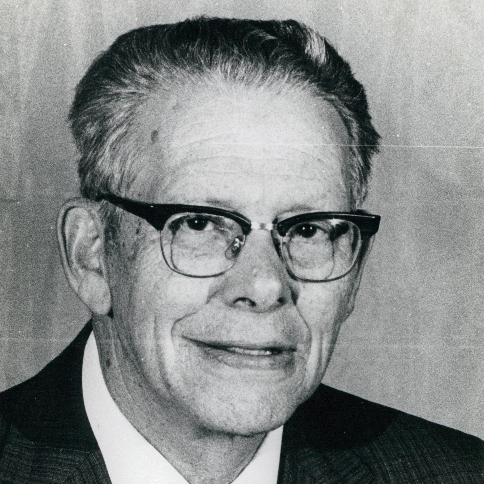
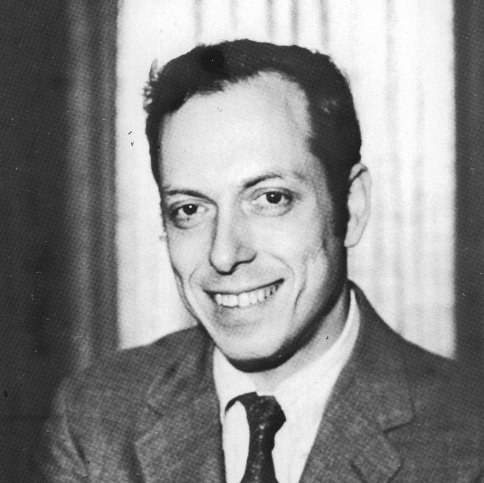
Paul Erdos

Wolf Prize Laureate in Mathematics 1984

Paul Erdos


Affiliation at the time of the award:

Hungarian Academy of Sciences, Hungary


Award citation:

“for his numerous contributions to number theory, combinatorics, probability, set theory, and mathematical analysis, and for personally stimulating mathematicians the world over”.


Prize share:

Paul Erdos

Shiing-Shen Chern


Professor Paul Erdos is one of the most prolific mathematicians of all times. His elementary proof of the prime number theorem (jointly with A. Selbey) came after many a famous mathematician had pronounced such a proof impossible. The field of combinatorics owes its very existence to his work. His ingenious applications of probabilistic methods to existence questions, has enabled him and those who followed him obtain results well beyond explicit computation. His partition calculus in set theory (partly in collaboration with R. Rado) has created a new branch of mathematics, at the intersection between mathematical logic and set theory. Two generations of mathematicians world-wide have benefited from his example and stimulation.

John S. Waugh

Wolf Prize Laureate in Chemistry 1984

John S. Waugh


Affiliation at the time of the award:

Massachusetts Institute of Technology, USA


Award citation:

“for his fundamental theoretical and experimental contributions to high resolution nuclear magnetic resonance spectroscopy in solids”.


Prize share:

John S. Waugh

Herbert S. Gutowsky

Harden M. McConnell


Magnetic resonance spectroscopy has made a singular contribution to chemistry in theory, structure and dynamics of molecules in liquids and solids. This is reflected in the choice of the recipients of the Wolf Prize in Chemistry for 1984.

Professor John S. Waugh extended the use of high resolution nuclear magnetic resonance spectroscopy from liquids to solids. He succeeded to sharpen the spectrum in solids, which is naturally broad and diffuse, by effectively averaging the spin Hamiltonian, using special combinations of externally oscillating fields. His studies have significantly deepened the physical and theoretical insights into the nature of the spin Hamiltonian and its role in nuclear magnetic resonance. In particular his method for enhancing the signal of diluted spins in the presence of abundant ones became extremely useful for carbon thirteen nuclear magnetic resonance in organic solids, where polarization transfer from the abundant protons to the rare carbon spins occurs, while at the same time broadening effects are eliminated.

Herbert S. Gutowsky

Wolf Prize Laureate in Chemistry 1984

Herbert S. Gutowsky


Affiliation at the time of the award:

University of Illinois at Urbana, USA


Award citation:

“for his pioneering work in the development and applications of nuclear magnetic resonance spectroscopy in chemistry”.


Prize share:

Herbert S. Gutowsky

Harden M. McConnell

John S. Waugh


Magnetic resonance spectroscopy has made a singular contribution to chemistry in theory, structure and dynamics of molecules in liquids and solids. This is reflected in the choice of the recipients of the Wolf Prize in Chemistry for 1984.

Professor Herbert S. Gutowsky was the first to apply the nuclear magnetic resonance method to chemical research. His experimental and theoretical work on the chemical shift effect and its relation to molecular structure has provided the chemist with working tools to study molecular conformation and molecular interactions in solutions. Gutowsky’s pioneering work on the spin-spin coupling effect developed this phenomenon into a “finger print” method for the identification and characterization of organic compounds. He was also the first to observe the effect of dynamic processes on the lineshape of high resolution nuclear magnetic resonance spectra, and exploited it for the studies of hindered rotation in molecules, Simultaneously with others he discovered the effect of the scalar and dipolar interaction with unpaired electrons in solutions of paramagnetic ions.

Harden M. McConnell

Wolf Prize Laureate in Chemistry 1984

Harden M. McConnell


Affiliation at the time of the award:

Stanford University California, USA


Award citation:

“for his studies of the electronic structure of molecules through paramagnetic resonance spectroscopy and for the introduction and biological applications of spin label techniques”.


Prize share:

Harden M. McConnell

Herbert S, Gutowsky

John S. Waugh


Magnetic resonance spectroscopy has made a singular contribution to chemistry in theory, structure and dynamics of molecules in liquids and solids. This is reflected in the choice of the recipients of the Wolf Prize in Chemistry for 1984.

Professor Harden M. McConnell recognized that the discovery of nuclear hyperfine interactions in aromatic free radicals represented a major breakthrough in the study of the electronic structure of unsaturated hydrocarbons. His theoretical and experimental studies of nuclear hyperfine interactions in such compounds showed conclusively that this interaction gave a measure of the unpaired electron spin densities on the carbon atoms. McConnell’s theoretical and experimental investigations of the anisotropic nuclear hyperfine interaction laid a firm foundation for the analysis of the paramagnetic resonance spectra of organic free radicals in. molecular crystals. His work also provided the first experimental demonstration of a negative spin density at a proton. Finally, McConnell realized that certain nitroxide free radicals had the potential of providing labels for studying molecular motions. His introduction of ‘spin labels’ has led to a deep understanding of such motions, and to extensive applications in many biological systems of great interest.


Don Kirkham

Wolf Prize Laureate in Agriculture 1984

Don Kirkham


Affiliation at the time of the award:

Iowa State University, USA


Award citation:

“for their innovative contributions to the quantitative understanding of soil-water and other environmental interactions influencing crop growth and yield”.


Prize share:

Don Kirkham

Cornelis T. de Wit


Don Kirkham (born in 1908, USA) pursued his studies in physics at Columbia University, accomplishing the attainment of bachelor’s, master’s, and Ph.D. degrees. Upon his return in 1937, he ventured into the realm of academia, teaching mathematics and physics at Utah State University. It was during this tenure that he encountered the domains of agricultural and soil sciences, spurred by the burgeoning discipline of soil physics. His newfound interests and insights emerged through the influential guidance of Professor Willard Gardner, a distinguished soil physicist affiliated with the Utah Agricultural Experiment Station.

His pioneering mathematical and physical analyses of the movement of water in the soil has provided solutions to a number of important practical problems. An outstanding example is the establishment, on a rigorous scientific basis, of efficient and economic designs for land drainage systems that have had a significant and worldwide impact on the maintenance of soil fertility and land productivity over a range of irrigated and rain-fed agricultural situations. Many of the standard techniques of measurement, as well as of analysis and design, now used in the study of soil-water relations, were developed initially by Kirkham. His combination of rigorous mathematical-physical analysis, carefully designed laboratory experimentation and extensive field trials and measurements has had a seminal influence on soil physics through his training of a large number of students, many of whom later attained distinction in this branch of science, as well as through his extensive folio of scientific publications, text books and manuals, and his lectures.

Kirkham’s long and productive career in soil physics, by its demonstration of the applicability of the fundamental laws of physics to soil and environmental problems and the advantages of mathematical analysis for their description and solution, heralded a new and productive era in soil science.

In coupling the names of Kirkham and de Wit, we believe that we have identified scientists who have been innovators in both theory and experiment and whose contributions to crop production systems have been both important and universal in nature.


Cornelis T. De Wit

Wolf Prize Laureate in Agriculture 1984

Cornelis T. de Wit


Affiliation at the time of the award:

Agricultural University, The Netherlands


Award citation:

“for their innovative contributions to the quantitative understanding of soil-water and other environmental interactions influencing crop growth and yield”.


Prize share:

Cornelis T. de Wit

Don Kirkham


Professor Cornelis T. de Wit. (born in 1924, The Netherlands) with his innovative application of computer simulation models to the study of the environmental determination of crop production, he introduced a new and powerful approach to agricultural research. His individual contributions have encompassed the whole hierarchy of models from individual physical processes such as ‘transpiration, photosynthesis, respiration and competition, to whole crop models allowing the growth and yields of particular crops to be simulated and predicted for a given environment. This integrated systems approach to modelling crop production has been applied to an almost world-wide range of soils, climates and crops and has been used successfully as a method for studying the interactions between a crop and its environment with the object of increasing production at either the local or regional scale.

In coupling the names of Kirkham and de Wit, we believe that we have identified scientists who have been innovators in both theory and experiment and whose contributions to crop production systems have been both important and universal in nature.

Solomon H. Snyder

Wolf Prize Laureate in Medicine 1982

Solomon H. Snyder


Affiliation at the time of the award:

Johns Hopkins University Medical School, USA


Award citation:

“for the development of the ways to label neurotransmitter receptors, which provide tools to describe their properties”.


Prize share:

Solomon H. Snyder

Jean Pierre Changeux

Sir James W. Black


Receptor sites in cell membranes are recognized to have cardinal importance in many physiological and pathological processes. Our three prize winners have each made notable contributions in this area.

The contribution of Solomon H. Snyder made possible clearer insight into brain function, the mechanisms of the action of neuropsychotherapeutic agents, and the characterization of opiate receptors and their ligands.

James W. Black

Wolf Prize Laureate in Medicine 1982

Sir James W. Black


Affiliation at the time of the award:

Wellcome Research Laboratories, United Kingdom


Award citation:

“for developing agents which block beta adrenergic and histamine receptors”.


Prize share:

Sir James W. Black

Jean Pierre Changeux

Solomon H. Snyder


Receptor sites in cell membranes are recognized to have cardinal importance in many physiological and pathological processes. Our three prize winners have each made notable contributions in this area.

The agents developed by Sir James W. Black have been widely and effectively used in the treatment of hypertension, angina pectoris and peptic ulceration.