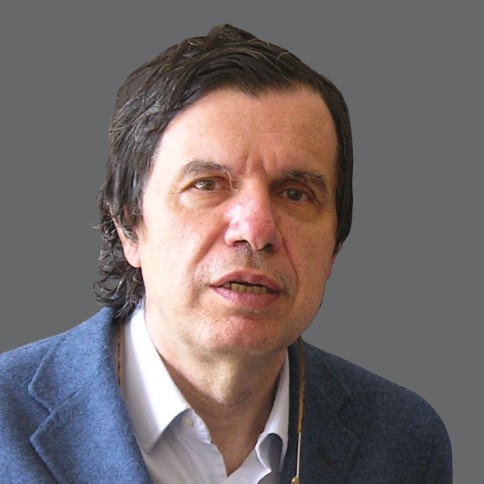
Yoshiharu Tsukamoto

Wolf Prize Laureate in Architecture 2022

Yoshiharu Tsukamoto


Award citation:

“for their work that highlights the importance to architecture of its ethnographic and inhabitational characteristics, in their writings and practice”.


Prize share:

Yoshiharu Tsukamoto

Momoyo Kaijima  

Elizabeth Diller


At a time of considerable world change, when social and cultural values have been questioned, these three are outstanding in challenging norms to advance the field of architecture and its wider influence. Whilst very different in their production, they share a common vital quality of bringing research, pedagogy and practice into critical confluence for the advancement of their field. In doing so, they reveal the degree to which art, science, and engagement with society, require values that can be interrogated and challenged, as a central part of their contribution. Conscious of the wider affects of architecture, each recipient embodies the idea of collaboration in varied ways, embracing geographic, cultural and methodological differences to be celebrated: excellence through diversity. With their radical architectural visions, they continue to be meaningful influencers of future architectural generations. They have developed the agency of architecture through an expanded field, in engaging politics, the city as the base for social action, and the imperative of reaching broader audiences.

Yoshiharu Tsukamoto was born in the Kanagawa Prefecture and received his Ph.D. in Engineering from the Tokyo Institute of Technology, where he is currently a professor.

Tsukamoto and Kaijima fostered their partnership after joining forces in competitions where they achieved many successes—so much so—that they decided to found Atelier Bow-Wow in which they continue to thrive.

The prolific work of this Japanese architectural team spans over three decades. They begin each architectural project with observation: the site, those who will eventually inhabit the building, the behavior of the people in the surroundings, shared spaces, resources, and climate. With all this in mind, they will then try to push “that which exists” a bit further to create a new phenomenon.

Since 1992 when Tsukamoto and Kaijima founded their practice, they have consistently shown themselves to be exceptional practitioners, bridging the relationship between research and practice, proposing alternative ways of making architecture focused on its social affects. With the publication of ‘Made In Tokyo’ (2001) the pioneering “Behaviorology” (2010) and ‘Architectural Ethnography’ (2018), they have developed a treatise on how to translate the liminal and in-between spaces of the city into opportunities for public engagement. With a practice that is predominantly residential and adeptly made, their work on behavior gives dominance to design strategies that work bottom-up, looking at human rituals as the basis for design opportunities. This was further tested in their post 2011 tsunami project reconstructing Momonoura village. They have profoundly influenced younger generations alternative human-centered approaches to the urban environment.

Momoyo Kaijima

Wolf Prize Laureate in Architecture 2022

Momoyo Kaijima


Award citation:

“for their work that highlights the importance to architecture of its ethnographic and inhabitational characteristics, in their writings and practice”.


Prize share:

Momoyo Kaijima  

Yoshiharu Tsukamoto

Elizabeth Diller


At a time of considerable world change, when social and cultural values have been questioned, these three are outstanding in challenging norms to advance the field of architecture and its wider influence. Whilst very different in their production, they share a common vital quality of bringing research, pedagogy and practice into critical confluence for the advancement of their field. In doing so, they reveal the degree to which art, science, and engagement with society, require values that can be interrogated and challenged, as a central part of their contribution. Conscious of the wider affects of architecture, each recipient embodies the idea of collaboration in varied ways, embracing geographic, cultural and methodological differences to be celebrated: excellence through diversity. With their radical architectural visions, they continue to be meaningful influencers of future architectural generations. They have developed the agency of architecture through an expanded field, in engaging politics, the city as the base for social action, and the imperative of reaching broader audiences.

Momoyo Kaijima is Tokyo-born and completed her Architecture degree at the Tokyo Institute of Technology, at which she later received her doctorate, as well. Today Kaijima is a Prof. of Architectural Behaviorology at ETH Zurich.

Kaijima and Tsukamoto fostered their partnership after joining forces in competitions where they achieved many successes—so much so—that they decided to found Atelier Bow-Wow in which they continue to thrive.

The prolific work of this Japanese architectural team spans over three decades. They begin each architectural project with observation: the site, those who will eventually inhabit the building, the behavior of the people in the surroundings, shared spaces, resources, and climate. With all this in mind, they will then try to push “that which exists” a bit further to create a new phenomenon.

Since 1992 when Tsukamoto and Kaijima founded their practice, they have consistently shown themselves to be exceptional practitioners, bridging the relationship between research and practice, proposing alternative ways of making architecture focused on its social affects. With the publication of “Made In Tokyo” (2001) the pioneering “Behaviorology” (2010) and “Architectural Ethnography” (2018), they have developed a treatise on how to translate the liminal and in-between spaces of the city into opportunities for public engagement. With a practice that is predominantly residential and adeptly made, their work on behavior gives dominance to design strategies that work bottom-up, looking at human rituals as the basis for design opportunities. This was further tested in their post 2011 tsunami project reconstructing Momonoura village. They have profoundly influenced younger generations alternative human-centered approaches to the urban environment.

Anne L’Huillier

Wolf Prize Laureate in Physics 2022

Anne L’Huillier


Affiliation at the time of the award:

Lund University, Sweden


Award citation:

“for pioneering contributions to ultrafast laser science and attosecond physics”.


Prize share:

Anne L’Huillier

Paul Corkum

Ferenc Krausz


“for pioneering and novel work in the fields of ultrafast laser science and attosecond physics and for demonstrating time-resolved imaging of electron motion in atoms, molecules, and solids. Each of them made crucial contributions, both to the technical development of attosecond physics and to its application to fundamental physics studies”.


Anne L’Huillier Is a French/Swedish physicist and professor of atomic physics at Lund University, working on the interaction between short and intense laser pulses and atoms. As a child, she was inspired by Apollo 11, the first manned mission to land on the Moon, in 1969. She was also influenced by her grandfather, who was a professor of electrical engineering working on radio communication. The result was a great enthusiasm for science and technology, which later made her a leader in experimental attosecond physics.

L’Huillier was awarded a double master’s degree in theoretical physics and mathematics and later switched to experimental physics to complete a Ph.D. in 1986, at Université Paris VI. She was then permanently employed as researcher at the Commissariat de l’Energie Atomique (CEA). In 1987, she participated in an experiment where high-order harmonics were observed for the first time using a picosecond Nd:YAG laser system. She was fascinated by the experiment and decided to devote her  time to work in this area of research. In 1995, she moved to Lund University in Sweden where she became a full professor in 1997. In 2004 she was elected a member of the Royal Swedish Academy of Sciences.

Anne L’Huillier was among the firsts to experimentally demonstrate high harmonic generation, which is the process by which attosecond pulses form, and contributed significantly to the development of a proper theoretical description of the process. She also performed a number of seminal experiments to improve the understanding of the underlying process and was a key player in the formation of the new attosecond science research field.


Elizabeth Diller

Wolf Prize Laureate in Architecture 2022

Elizabeth Diller


Award citation:

“for her exceptional and influential work connecting architecture to artistic practice, engaged in the public domain”.


Prize share:

Elizabeth Diller

Momoyo Kaijima  

Yoshiharu Tsukamoto


At a time of considerable world change, when social and cultural values have been questioned, these three are outstanding in challenging norms to advance the field of architecture and its wider influence. Whilst very different in their production, they share a common vital quality of bringing research, pedagogy and practice into critical confluence for the advancement of their field. In doing so, they reveal the degree to which art, science, and engagement with society, require values that can be interrogated and challenged, as a central part of their contribution. Conscious of the wider affects of architecture, each recipient embodies the idea of collaboration in varied ways, embracing geographic, cultural and methodological differences to be celebrated: excellence through diversity. With their radical architectural visions, they continue to be meaningful influencers of future architectural generations. They have developed the agency of architecture through an expanded field, in engaging politics, the city as the base for social action, and the imperative of reaching broader audiences.

Elizabeth Diller, a Polish-born American architect, Professor of Architectural Design at Princeton University, Diller began her studies at Cooper Union in the 70s, with the interest of becoming a filmmaker but eventually was drawn to study architecture. Elizabeth talks of the influence that the New York cultural scene, which at that time was a hotbed of creativity and alternative thinking, had on her work. She was greatly moved by looking at the works of people from various fields including Stanley Kubrick, the filmmaker, and the artist, Gordon Matta-Clark. Inherent in her work is the intention and ability to break the boundaries between art and architecture. During her studies at Cooper Union, Elizabeth met her future spouse and partner Ricardo Scofidio, who together founded the firm Diller Scofidio + Renfro (DS+R). Her practice specializes in buildings for cultural institutions and has made groundbreaking projects that radically present her propositions to the wider public.

Elizabeth Diller has completed groundbreaking projects in the connected worlds of art and architecture, radically representing her propositions to the wider public. With three decades of work between academia, research and practice, her efforts have radicalized the relationship between architecture, art and the engagement of a larger audience. Many key works of her studio, Diller Scofidio + Renfro – including notably, Blur Building from the 2002 Swiss Expo to the High Line which first opened in 2009 in New York – have involved designing public spaces with an emphasis on scenographies that migrate from performing and visuals arts spaces to the urban landscape. These environmental projects are informed and activated by Diller and partner Ricardo Scofidio’s early, self-generated and alternative projects, including “para-site”, installed at MoMA in 1989, as well as the Mile-Long Opera, a performance Diller co- created and directed in 2019, featuring 1,000 singers along the High Line. This approach has transformed the ways in which new subjectivities are conceived.

George Lusztig

Wolf Prize Laureate in Mathematics 2022

George Lusztig


Affiliation at the time of the award:

Massachusetts Institute of Technology, USA


Award citation:

“for Groundbreaking contributions to representation theory and related areas”.


Prize share:

None


Lusztig is a Romanian-American mathematician, who works on geometric finite reductive groups, representation theory and algebraic groups. Lusztig’s work is characterized by a very high degree of originality, an enormous breadth of subject matter, remarkable technical virtuosity, and great profundity in getting to the heart of the problems involved. Lusztig’s groundbreaking contributions mark him as one of the great mathematicians of our time.

His passion for mathematics began at a young age. In fact, it was in math competitions at school which made him realize that he was talented in mathematics. After finishing 10th grade, Lusztig represented Romania in the International Mathematical Olympiad in 1962 and then again, in 1963: being awarded a Silver Medal on both occasions. Lusztig graduated from the University of Bucharest in 1968 and received both the M.A. and Ph.D. from Princeton University in 1971 under the direction of Michael Atiyah and William Browder. He joined the MIT mathematics faculty in 1978 following a professorship appointment at the University of Warwick, 1974-77. He was appointed Norbert Wiener Professor at MIT 1999-2009.

Lusztig is known for his work on representation theory, in particular for the objects closely related to algebraic groups, such as finite reductive groups, Hecke algebras, P-adic groups, quantum groups, and Weyl groups. He essentially paved the way for modern representation theory. This has included fundamental new concepts, including the character sheaves, the “Deligne–Lusztig” varieties, and the “Kazhdan–Lusztig” polynomials.

Lusztig’s first breakthrough came with Deligne around 1975, with the construction of Deligne-Lusztig representations. He then obtained a complete description of the irreducible representations of reductive groups over finite fields. Lusztig’s description of the character table of a finite reductive group rates as one of the most  extraordinary achievements of a single mathematician in the 20th century. To achieve his goal, he developed a panoply of techniques which are in use today by hundreds of mathematicians. The highlights include the use of étale cohomology; the role played by the dual group; the use of intersection cohomology, and the ensuing theory of character sheaves, almost characters, and the noncommutative Fourier transform.

In 1979 Kazhdan and Lusztig defined the “Kazhdan-Lusztig” basis of the Hecke algebra of a Coxeter group and stated the “Kazhdan-Lusztig” conjecture. The “Kazhdan-Lusztig” conjecture led directly to the “Beilinson-Bernstein” localization theorem, which four decades later, remains our most powerful tool for understanding representations
of reductive Lie algebras. Lusztig’s work with Vogan then introduced a variant of the “Kazhdan-Lusztig” algorithm to produce “Lusztig-Vogan” polynomials. These polynomials are fundamental to our understanding of real reductive groups and their unitary representations.

In the 1990s, Lusztig made seminal contributions to the theory of quantum groups. His contributions include the introduction of the canonical basis; the introduction of the Lusztig form (which allows specialization to a root of unity, and connections to modular representations); the quantum Frobenius and a small quantum group; and connections to the representation theory of affine Lie algebras. Lusztig’s theory of the canonical basis (and Kashiwara’s parallel theory of crystal bases) has led to deep results in combinatorics and representation theory. Recently there has been significant progress in representation theory and low-dimensional topology via “categorification”; the roots of this work go back to Lusztig’s geometric categorification of quantum groups via perverse sheaves on quiver moduli.

Olga Neuwirth

Wolf Prize Laureate in Music 2021

Olga Neuwirth


Award Citation:

“for her outstanding mastery, artistry and communicative skill as a composer of today”.


Prize Share:

Olga Neuwirth

Stevie Wonder


Both Olga Neuwirth and Stevie Wonder, though fundamentally different in genre and style, have pushed the boundaries of their art, each in his/her own realm of expression, to serve as vehicle for universal values and humanistic ideals.

Olga Neuwirth was born in 1968 in Graz, Austria and studied at the Vienna Academy of Music and Performing Arts and San Francisco Conservatory of Music, also studying painting and film at San Francisco Art College. For over 30 years Olga Neuwirth’s works have explored a wide range of forms and genres: operas, radio-plays, sound-installations, art-works, photography and film-music. In many works she fuses live-music, electronics and video into audio-visual experiences. Her work, characterized by an incomparable tonal language and the exploration of new musical forms, has been highly celebrated by audiences and critics worldwide over the last decades and is without doubt a significant enrichment of the repertoire of contemporary music. Olga Neuwirth is one of the most complete contemporary composers of her generation. Her constant quest for adventure and innovation has resulted in a creative outpouring of a rare intensity and her work is a testimony to a masterful, singular voice that is ever-resistant to outside pressures. Her Music-theatre pieces expand the collaborative vocabulary of opera, to explore further interactions between traditional ensembles, live-electronics, imagery and architecture using advanced audio-visual technologies, unfolding a new world of sound images, mixing traditional fragments of multiple source, creating metamorphoses characterized by shifts, transgressions and associative references. Neuwirth chooses her topics with great sensitivity and relevance. They run from focusing on the human voice as a manifestation of the soul, through feminism and gender identity to poignant reflection on dark historical moments. Olga Neuwirth’s brilliant and courageous art serves her as a platform to explore burning contemporary philosophical, social and political ideas, bringing them to the awareness of multiple audiences in the world’s most prestigious venues

Stevie Wonder

Wolf Prize Laureate in Music 2021

Stevie Wonder


Award Citation:

“for his remarkable musical and philanthropic contributions, enriching the lives of generations of music lovers”.


Prize Share:

Stevie Wonder 

Olga Neuwirth


Both Neuwirth and Wonder, though fundamentally different in genre and style, have pushed the boundaries of their art, each in his/her own realm of expression, to serve as a vehicle for universal values and humanistic ideals.

Stevie Wonder, Born in Michigan in 1950, a world-renowned singer, songwriter, instrumentalist, record producer – and an outstanding ambassador for peace. Stevie Wonder’s music draws its inspiration from rhythm and blues, jazz, soul, and Funk, but its core is welded deeply into the rich culture of the black community throughout the history of the United States and its roots in Africa. Stevie Wonder’s Beautiful and soulful lyrics reflect a wide variety of relevant topics, from deep personal thoughts and emotions up to social and political issues that deal with discrimination, racism, Poverty and cultural expression within society as such they continue to be extremely relevant up to this day While the music contribution of Stevie Wonder has shaped popular music worldwide since the 1960s, with dozens of records and numerous unforgettable songs, his ongoing commitment to support social struggles in the interest of humanity and his activism for peace.

Stevie Wonder, has been one of the brightest stars in the firmament of singers and song-writers for almost 50 years. In the USA, he has received practically every outstanding Honor and Award and is generally considered an icon of the American music scene. In his brilliant and unique musical language that broadened the melodic, harmonic and sound-concept of the genre, he has transformed the music world and influenced many of the great musicians who came after him. Wonder has combined words and music to articulate joy and pain, deeply rooted in hardship, sadness and injustice, criticizing the racist American society. His message of love and peace and universal brotherly love has inspired and helped so many. Wonder has left strong, lasting marks as a humanitarian, philanthropist and civil rights activist, as he has used his success and fame to affect people and make the world a better place.

Leslie Leiserowitz

Wolf Prize Laureate in Chemistry 2021

Leslie Leiserowitz


Affiliation at the time of the award:

Weizmann Institute of Science, Israel


Award citation:

“for collaboratively established the fundamental reciprocal influences of three-dimensional molecular structure upon structures of organic crystals”.


Prize share:

Leslie Leiserowitz

Meir Lahav


Crystal formation is one of the most fundamental phenomenas in chemistry. The structure of organic crystals is of particular importance because the crystal shape (morphology) reflects the three-dimensional structure (stereochemistry) of the molecules assembled in that crystal. In 1848 Louis Pasteur conducted his famous experiment, physically separating the two crystalline forms of a tartaric acid salt, which mirror one another. Pasteur’s experiment became the basis for modern stereochemistry, and it was followed by the study of the first Nobel Laureate in Chemistry, Jacobus H. van’t Hoff. However, neither Pasteur, van’t Hoff, nor many other famous chemists failed to understand the relationship between crystal morphology and molecular stereochemistry.

It took nearly 140 years until Professors Lahav and Leiserowitz conducted their milestone experiments in the Mid-1980s, demonstrating for the first time that the absolute configuration of molecules can be derived from their crystal morphologies. They not only solved the long-standing puzzle but also pioneered the science of organic crystals’ stereochemistry. They directly related the stereochemistry of the individual molecule to the shape of the macroscopic crystal. They founded the links between molecular structure, crystal morphology, crystal growth’ dynamics, and molecular chirality (the structural property of an object, which makes it different from its mirror image, like the human hands). Their findings laid the foundation for our current knowledge of the selective self-assembly of organic molecules. In this way, their rules powerfully complement our understanding of organic chemistry for covalent assembly and macromolecules’ self-assembly.

Furthermore, Lahav and Leiserowitz applied their theories for the design and engineering of chiral crystals, controlling the relative growth-rate of crystal faces through both acceleration and inhibition with trace amounts of specific chiral additives. They have engineered two- and three-dimensional crystals and explained their crystal growth dynamics. They have demonstrated for the first time that it was possible to design crystals that could lead to products that were not available by conventional methods. They have also explained variety of pathological crystallization, including those of cholesterol in blood vessels, and malaria pigment in Plasmodium infected red blood cells.

Since all biological systems are composed of molecules of a single chirality, the fundamental scientific question of the origin of life on Earth is closely related to the origin of chirality in nature. Lahav and Leiserowitz have addressed possible pathways to this phenomenon by showing that specific chemical reactions can display chiral amplification in forming one component from a racemic mixture (a mixture of both chiral forms in equal proportions). They demonstrated how polymerization within two-dimensional racemic crystallites could generate homochiral oligopeptides. These observations, therefore, valuably link small-molecule organic assembly in crystals to consequent homochiral biopolymers. Thus, their elegant experiments have created theoretical bases for the emergence of life’s complex chemical machinery from simpler prebiotic mixtures.


Meir Lahav

Wolf Prize Laureate in Chemistry 2021

Meir Lahav


Affiliation at the time of the award:

Weizmann Institute of Science, Israel


Award citation:

“for collaboratively established the fundamental reciprocal influences of three-dimensional molecular structure upon structures of organic crystals”.


Prize share:

Meir Lahav

Leslie Leiserowitz


Crystal formation is one of the most fundamental phenomena in chemistry. The structure of organic crystals is of particular importance because the crystal shape (morphology) reflects the three-dimensional structure (stereochemistry) of the molecules assembled in that crystal. In 1848 Louis Pasteur conducted his famous experiment, physically separating the two crystalline forms of a tartaric acid salt, which mirror one another. Pasteur’s experiment became the basis for modern stereochemistry, and it was followed by the study of the first Nobel Laureate in Chemistry, Jacobus H. van’t Hoff. However, neither Pasteur, van’t Hoff, nor many other famous chemists failed to understand the relationship between crystal morphology and molecular stereochemistry.

It took nearly 140 years until Professors Lahav and Leiserowitz conducted their milestone experiments in the Mid-1980s, demonstrating for the first time that the absolute configuration of molecules can be derived from their crystal morphologies. They not only solved the long-standing puzzle but also pioneered the science of organic crystals’ stereochemistry. They directly related the stereochemistry of the individual molecule to the shape of the macroscopic crystal. They founded the links between molecular structure, crystal morphology, crystal growth’ dynamics, and molecular chirality (the structural property of an object, which makes it different from its mirror image, like the human hands). Their findings laid the foundation for our current knowledge of the selective self-assembly of organic molecules. In this way, their rules powerfully complement our understanding of organic chemistry for covalent assembly and macromolecules’ self-assembly.

Furthermore, Lahav and Leiserowitz applied their theories for the design and engineering of chiral crystals, controlling the relative growth-rate of crystal faces through both acceleration and inhibition with trace amounts of specific chiral additives. They have engineered two- and three-dimensional crystals and explained their crystal growth dynamics. They have demonstrated for the first time that it was possible to design crystals that could lead to products that were not available by conventional methods. They have also explained variety of pathological crystallization, including those of cholesterol in blood vessels, and malaria pigment in Plasmodium infected red blood cells.

Since all biological systems are composed of molecules of a single chirality, the fundamental scientific question of the origin of life on Earth is closely related to the origin of chirality in nature. Lahav and Leiserowitz have addressed possible pathways to this phenomenon by showing that specific chemical reactions can display chiral amplification in forming one component from a racemic mixture (a mixture of both chiral forms in equal proportions). They demonstrated how polymerization within two-dimensional racemic crystallites could generate homochiral oligopeptides. These observations, therefore, valuably link small-molecule organic assembly in crystals to consequent homochiral biopolymers. Thus, their elegant experiments have created theoretical bases for the emergence of life’s complex chemical machinery from simpler prebiotic mixtures.

Giorgio Parisi

Wolf Prize Laureate in Physics 2021

Giorgio Parisi


Affiliation at the time of the award:

University of Rome ‘‘La Sapienza’’, Italy


Award citation:

“for ground-breaking discoveries in disordered systems, particle physics and statistical physics”.


Prize share:

None


Giorgio Parisi, Professor of theoretical physics at the University of Rome, ‘‘La Sapienza’’, whose research has focused on quantum field theory, statistical mechanics, and complex systems.

His father and grandfather were both construction workers, and the young Parisi was encouraged to become an engineer. Instead, Parisi was drawn to the complicated abstractions he read in books of popular science, science fiction and mathematics and wanted to do something that involved research. Parisi was torn between majoring in physics and mathematics. He attracted by the adventurous nature of research and sees physics as the terrain on which to play his intellectual challenge at the highest level. Parisi graduated in physics in 1970 in the shortest possible time, under the direction of Nicola Cabibbo. Parisi’s achievements span many areas of modern physics and even the field of biological models. He is author of many books, articles and ideas that have opened up new areas of research.

The Wolf Prize in Physics is awarded to Giorgio Parisi for being one of the most creative and influential theoretical physicists in recent decades. His work has a large impact on diverse branches of physical sciences, spanning the areas of particle physics, critical phenomena, disordered systems as well as optimization theory and mathematical physics. In 1977 together with Altarelli, Parisi discovered the evolution equations allowing to accurately formulating how quarks and gluons are distributed inside the proton and nuclei (they were discovered independently by Yu. L. Dokshitzer). Parisi’s work was indispensable in analyzing the fundamental structure of matter at the smallest possible distance scale done through high-energy scattering of elementary particles. His results have served in preparing and analyzing the experiments performed at the Large-Hardon-Collider (LHC), for dark matter searches, and are used today in the planning experiments for the Future Circular Collider.

In another series of seminal works from 1979-84, Parisi introduced the concept of replica symmetry breaking and applied it to models of “spin-glasses” (the Sherrington-Kirkpatrick model), where no simple order parameter exists. His remarkable intuition led him to the discovery of the non-ergodic nature of the frustrated spin-glass phase, where many pure states unrelated by symmetry coexist, with a highly non-trivial ultra-metric structure. Parisi’s suggestion of a new organization of matter has led to a paradigm shift in statistical physics, and many applications followed in other disordered systems such as structural glasses, neural networks, and combinatorial optimization theory.

His highly innovative work (with Sourlas) in studying classical phase transitions has led to the possibility to identify the actual realization of a symmetry called supersymmetry in condensed matter systems.