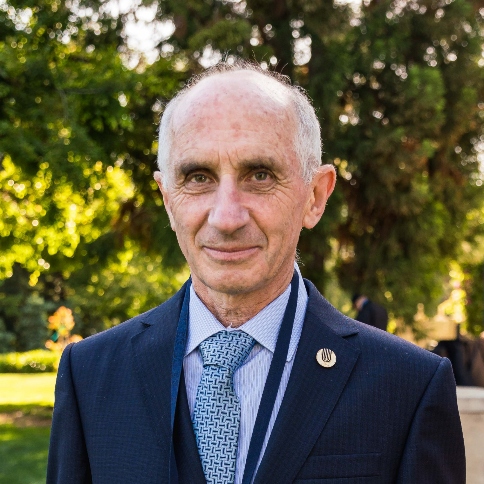
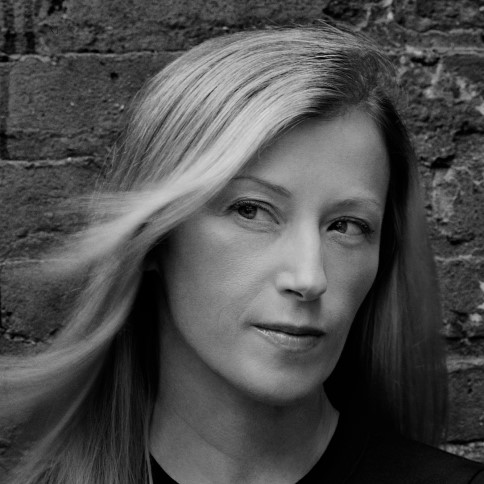
Adrian Krainer

Wolf Prize Laureate in Medicine 2021

Adrian Krainer


Affiliation at the time of the award:

Cold Spring Harbor Laboratory, USA


Award Citation:

“for his fundamental mechanistic discoveries on RNA splicing leading to a world’s first treatment for spinal muscular atrophy (SMA)”.


Prize Share:

Adrian Krainer

Joan Steitz

Lynne Maquat


“for fundamental discoveries in RNA biology that have the potential to better human lives. They have made ground-breaking discoveries in RNA regulatory mechanisms demonstrating that RNA is not a passive template between DNA and protein, but rather plays a dominant role in regulating and diversifying gene expression”.


Adrian Krainer is a professor of biochemistry and molecular genetics. Krainer’s research focuses on how splicing normally works, how it is altered in genetic diseases and cancer, and how we can correct these defects for therapy. Krainer and his team focused on finding a way to treat SMA, a neuromuscular disease that is the leading genetic cause of death in infants, by RNA therapy.

Adrian Krainer is awarded the Wolf Prize for his major contributions have advanced our understanding of the molecular mechanisms and regulation of RNA splicing.  He identified and purified the first human protein splicing factor and demonstrated its roles in constitutive and alternative splicing.  Krainer used this knowledge to study two genes, SMN1 and SMN2, associated with spinal muscular atrophy. Krainer devised an ingenious strategy to rescue the protein deficit caused by SMN1 mutations by promoting the appropriate splicing of the sister gene SMN2. This treatment received accelerated approval for use in humans and has dramatically improved the lives of thousands of children born with SMA.

Lynne Elizabeth Maquat

Wolf Prize Laureate in Medicine 2021

Lynne E. Maquat


Affiliation at the time of the award:

University of Rochester, USA


Award Citation:

“For discovering a mechanism that destroys mutant mRNA in cells – non-sense mediated mRNA decay (NMD)”.


Prize Share:

Lynne Maquat

Joan Steitz

Adrian Krainer


“for fundamental discoveries in RNA biology that have the potential to better human lives. They have made ground-breaking discoveries in RNA regulatory mechanisms demonstrating that RNA is not a passive template between DNA and protein, but rather plays a dominant role in regulating and diversifying gene expression”.


Lynne Elizabeth Maquat is a professor of biochemistry and molecular biology at the University of Rochester, whose research focuses on the cellular mechanisms of human disease.

Messenger RNA (mRNA) takes genetic instructions from DNA and uses them to create proteins that carry out multiple cellular functions. NMD is a quality control mechanism that removes flawed messenger RNA molecules that, if left intact, would lead to the production of abnormal proteins that could be toxic to cells and initiate disease. Cells also use this pathway (NMD) to better respond to changing environmental conditions. NMD functions in one-third of inherited disorders, such as cystic fibrosis, and in one-third of acquired diseases, including many forms of cancer.  Her work has furthered our understanding of the molecular basis of human disease and provides valuable information to help physicians implement “personalized” or “precision” medicine by treating the disease mutation that is specific to each individual patient.

Lynne Maquat is awarded the wolf prize for discovering a mechanism that destroys mutant messenger RNA in cells, nonsense-mediated mRNA decay. Maquat studied patients with B-thalassemia and discovered that the disease-causing mutation results in pre-mature termination of B-globin mRNA translation. Maquat and colleagues demonstrated the dependence of NMD on the position of the pre-mature stop codon within the mRNA transcript, leading to the discovery of the exon junction complex. Maquat also discovered that NMD works on normal (nonmutant) transcripts and thus plays an important role in regulating on-going gene expression.


Joan Steitz

Wolf Prize Laureate in Medicine 2021

Joan Steitz


Affiliation at the time of the award:

Yale University, USA


Award Citation:

“for ground-breaking discoveries on RNA processing and its function”.


Prize Share:

Joan Steitz

Lynne Maquat

Adrian Krainer


“for fundamental discoveries in RNA biology that have the potential to better human lives. They have made ground-breaking discoveries in RNA regulatory mechanisms demonstrating that RNA is not a passive template between DNA and protein, but rather plays a dominant role in regulating and diversifying gene expression”.


Joan Steitz is a Sterling Professor of molecular biophysics and biochemistry at Yale University and Investigator at the Howard Hughes Medical Institute.

Our DNA carries the instructions to manufacture all the proteins needed by a cell. After each gene is copied from DNA into RNA, the RNA message is “spliced” – a process involving precise cutting and pasting. Steitz has studied RNA since the 1960s and was the first to describe the translation initiation sites of prokaryotic RNA in 1969. She turned her attention to eukaryotic cells, focusing on why eukaryotic cells produce an excess of RNA in the nucleus that is not found in cytoplasm in the form of mRNA. Steitz demonstrated that ribosomes use complementary base pairing to start translating mRNA. She discovered snRNPs )small nuclear ribonucleoproteins(- small non-coding RNAs that are crucial for splicing of mRNA. Teaching and mentoring young scientists and advocating for women in science has also been a hallmark of Steitz’s career.

Joan Steitz is awarded the Wolf Prize for her many fundamental contributions to the field of RNA biology. In particular, she discovered the critical roles of small non-coding RNAs in the splicing of pre-mRNAs and the biogenesis of ribosomal RNA, and elucidated biochemical mechanisms that regulate RNA stability in eukaryotic cells. Her pioneering discoveries have laid the foundations to much of the subsequent research on RNA splicing.  


Caroline Dean

Wolf Prize Laureate in Agriculture 2020

Caroline Dean


Affiliation at the time of the award:

John Innes Centre, England, UK


Award citation:

“for pioneering discoveries in flowering time control and epigenetic basis of vernalization.”


Prize share:

None


As winter gives way to spring, as if by clockwork, many plants bloom in all their glory in order to attract pollinators. These species delay their flowering until the onset of spring, when there are optimal conditions  for fertilization. It has been long known that plants delay flowering until they have experienced a period of prolonged cold, a process termed vernalization. Prof. Dean’s work on understanding the plant’s memory mechanisms and temperature sensing, has many implications for agriculture and extending crop range to ensure year-round supply.

Professor Dean (Born 1957) grew up in the north of England. After gaining both a BA and a PhD in Biology at the University of York, Caroline moved to California to research molecular biology. She began working at the John Innes Centre in 1988, where she works on the molecular basis of vernalization.

Dean’s research has provided several major breakthroughs that have direct impact on our understanding of a fundamental process in biology that is of critical importance to society, namely the molecular mechanism controlling the timing of flowering in higher plants. Her research was focused around two central questions in plant biology: Why do certain plants have to pass through winter before they bloom, and how do they remember that they have been exposed to cold temperatures weeks or months earlier? These are not merely academic problems, because the breeding of different varieties of cereals that either have or do not have this winter requirement has been a major cornerstone for increasing the yield of agricultural crops in temperate climates. Dean and her students cloned several of the most important genes controlling Arabidopsis flowering time in response to vernalization, the process by which plants recall temperature to regulate flowering in the correct season.

In attempts to understand the mechanisms by which the vernalization pathway operates, Dean and coworkers have discovered an epigenetic mechanism that regulates the pathway, linking RNA processing with small RNA silencing pathways and histone demethylation. Together with collaborators they then developed a quantitative molecular model explaining how plants “remember” winter. Her seminal research describes the mode by which plants extract signals from noisy temperature profiles, and how this is remembered through subsequent development. Dean has translated her basic research from Arabidopsis thaliana into crop biology as well, especially by breeding of various Brassicas that have flowering time alleles chosen by molecular methods based on her basic research. Dean’s work provides a molecular paradigm for environmentally-controlled epigenetic regulation with enormous ramifications for breeding crops in stressful and changing environments.

Caroline has been a strong advocate for women in science, and enthusiastic role model and mentor. Dean’s work and its implications for agriculture have gained increasing currency in the face of a changing climate, which have been of profound importance not only for agriculture, but also for biology as a whole.


Allan H. MacDonald

Wolf Prize Laureate in Physics 2020

Allan H. MacDonald


Affiliation at the time of the award:

The University of Texas at Austin, USA


Award citation:

“For pioneering theoretical and experimental work on twisted bilayer graphene.”


Prize Share:

Allan H. MacDonald 

Pablo Jarillo-Herrero

Rafi Bistritzer


Since the 2004 groundbreaking experiments regarding the two-dimensional material -graphene, several research groups were soon studying the properties of twisted bilayer graphene. Graphene is a significant foundation for an entirely new generation of technologies. The hope is that graphene-based applications will benefit the environment and reduce costs. Electronic and computer industry requires materials whose conductance can be controlled.

The work of Jarillo-Herrero, MacDonald and Bistrizer has shown that the conductance properties of graphene interfaces can be controlled via the spatial misfit angle between the layers and then at certain angles the electrons exhibit surprising physical behavior. This physical discovery has the potential of leading to an energy revolution.

In 2011, a group led by Allan Macdonald, a theoretical physicist from the University of Texas, researched an intriguing behavior of twisted bilayer graphene, where the atomic lattices of two stacked graphene layers are laterally rotated with respect to each other by a small misfit angle. According to the calculations of MacDonald and Bistrizer (who did his post-doctoral thesis under the supervision of MacDonald at that time), the tunneling velocity of electrons between the layers depends on the misfit angle and completely vanishes at the “magic angle” of 1.1 degrees. It was hoped that this discovery would lead to the creation of a new type of super-conductor, namely a material that allows electrical current to pass with no impedance and with no energy loss.

The original paper by MacDonald and Bistrizer, which describes their discovery, was not received with enthusiasm by the scientific community and was even forgotten for several years.

At the same time, Jarillo-Herrero was working on twisted bilayer graphene in his lab at MIT. He became convinced that the ideas expressed by Macdonald and Bistrizer had substance.

His research team  therefore invested considerable efforts in creating and measuring twisted bilayer graphene of various twist angles. The experiments proved successful in 2017 when it was found that positioning the layers at an angle of 1.1 degrees relative to one another (“the magic angle”) resulted in unusual electrical properties, precisely as MacDonald and Bistrizer have suggested. In this position, at sufficiently low temperatures, the electrons move from one layer to the other, creating a lattice with unusual qualities. The paper that described the phenomenon, which was published in Nature in 2018, revolutionized physics and triggered a flood of additional papers.

The discovery opens the door to building a super-conductor from bilayer graphene, in which electron movement is completely controlled by external electrical current. This electrical behavior resembles the behavior of copper-based superconductors called Cuprates. Cuprates demonstrate electrical conductivity with no resistance in relatively high temperatures compared with other super-conductors. For this reason, Cuprates now form a source of hope for realizing the dream of electrical conductivity with no energy loss at temperatures close to room temperature. If this mission is achieved, it would lead to a far-reaching energy revolution. However, one obstacle that prevents this revolution is that we do not yet have a theory that explains the behavior of superconductors at high temperatures. In the absence of a solid theoretical foundation, it is difficult to develop new, better materials. This is one of the reasons for the excitement around the discovery of bilayer graphene and the magic angle, which allows us to understand better what happens on the microscopic level when transitioning from a conductor to a superconductor state.

Allan H. MacDonald (1951, Canada) received the B.Sc. degree from St. Francis Xavier University, Antigonish, Nova Scotia, Canada in 1973 and the M.Sc. and Ph.D. degrees in physics from the University of Toronto in 1974 and 1978, respectively. He was a member of the research staff of the National Research Council of Canada from 1978 to 1987 and has taught at Indiana University (1987-2000) and the University of Texas at Austin (2000-present) where he now holds the Sid W. Richardson Chair in Physics. He has contributed to research on the quantum Hall effect, electronic band structure theory, magnetism, and superconductivity among a variety of other topics. Prof. MacDonald is a fellow of the American Physical Society, a member of the American Academy of Arts and Sciences and the US National Academy of Sciences, and a recipient of the Herzberg Medal, the Ernst Mach Honorary Medal, and the Buckley Prize.

Yakov Eliashberg

Wolf Prize Laureate in Mathematics 2020

Yakov Eliashberg


Affiliation at the time of the award:

Stanford University, USA


Award citation:

“for their contributions to differential geometry and topology.”


Prize Share:

Yakov Eliashberg

Simon Donaldson 


Yakov Eliashberg is one of the founders of symplectic and contact topology, a discipline originated as mathematical language for qualitative problems of classical mechanics, and having deep connections with modern physics. The emergence of symplectic and contact topology has been one of the most striking long-term advances in mathematical research over the past four decades. Eliashberg is among the main exponents of this development.

Professor Eliashberg was born in 1946 in Leningrad (now St. Petersburg), Russia. He received his doctoral degree in Leningrad University in 1972 under the direction of V.A. Rokhlin, and in the same year he joined Syktyvkar University in northern Soviet Union. Eliashberg’s route passed through the refusenik years in Leningrad (1980-1987) where he had to do software engineering in order to feed his family, and where he was virtually cut off from normal mathematical life. In 1988 he emigrated to the United States and in 1989 became a Professor at Stanford University. He is a Member of U.S. National Academy of Sciences. For his contributions, Eliashberg has received a number of prestigious awards, including the Guggenheim Fellowship in 1995, the Oswald Veblen Prize in 2001, the Heinz Hopf Prize in 2013 and the Crafoord Prize in 2016. Eliashberg is currently the Herald L. and Caroline L. Ritch Professor at Stanford University.

Eliashberg developed a highly ingenious and very visual combinatorial technique that led him to the first manifestation of symplectic rigidity: the group of symplectomorphisms is closed in the group of all diffeomorphisms in the uniform topology. This fundamental result, proved in a different way also by Gromov and called nowadays the Eliashberg-Gromov theorem, is considered as one of the wonders and cornerstones of symplectic topology. In a series of papers (1989-1992), Eliashberg introduced and explored a fundamental dichotomy “tight vs overtwisted” contact structure that shaped the face of modern contact topology. Using this dichotomy, he gave the complete classification of contact structures on

the 3-sphere (1992). In these papers Eliashberg laid foundations of modern contact topology and introduced mathematical language which is widely used by researchers in this rapidly developing field.

In a seminal 2000 paper Eliashberg (with Givental and Hofer) pioneered foundations of symplectic field theory, a powerful, rich and notoriously sophisticated algebraic structure behind Gromov’s pseudo-holomorphic curves. It had a huge impact and became one of the most central and exciting directions in symplectic and contact topology. It has led to a significant progress on numerous areas including topology of Lagrangian submanifolds and geometry and dynamics of contact transformations, and it exhibited surprising links with classical and quantum integrable systems.

In recent years (2013-2015), Eliashberg found a number of astonishing appearances of homotopy principle in symplectic and contact topology leading him to a solution of a number of outstanding open problems and leading to a “mentality shift” in the field. Before these developments the consensus among experts was that the symplectic world is governed by rigidity coming from Gromov’s theory of pseudo-holomorphic curves or, equivalently, by Morse theory on the loop spaces of symplectic manifolds. The current impression based on Eliashberg’s discoveries is that rigidity is just a drop in the ocean of flexible phenomena.

Professor Yakov Eliashberg is awarded the Wolf Prize for his foundational work on symplectic and contact topology changing the face of these fields, and for his ground-breaking contribution to homotopy principles for partial differential relations and to topological foundations of multi-dimensional complex analysis.


Emmanuelle Charpentier

Wolf Prize Laureate in Medicine 2020

Emmanuelle Charpentier


Affiliation at the time of the award:

The Max Planck Unit for the Science of Pathogens, Germany 


Award citation:

“for deciphering and repurposing the bacterial CRISPR/Cas9 immune system for genome editing.”


Prize Share:

Emmanuelle Charpentier

Jennifer Doudna


Emmanuelle Charpentier (Born 1968) is a French biochemist, microbiologist and geneticist that is recognized as a world-leading expert in regulatory mechanisms underlying processes of infection and immunity in bacterial pathogens.

Together with Jennifer Doudna, led the discovery of the revolutionary gene-editing tool, CRISPR. They used this existing defense mechanism in bacteria to turn CRISPR-Cas9 into a real tool for cleaving the DNA of bacterial and also human cells. These “genetic scissors” can be used for targeting any gene in a cell in order to modify it. With this revolutionary technology, it is much easier to modify gene expression, to switch a gene “on” or “off,” or to change, repair, or remove genes. This new tool is now used in molecular biology laboratories around the world and has the potential to revolutionize medicine by paving the way to finding new forms of treatment for currently incurable diseases.

Charpentier studied biochemistry, microbiology and genetics at the University Pierre and Marie Curie, Paris, France and obtained her Ph.D. in Microbiology for her research performed at the Pasteur Institute, Paris, France. She then continued her work in the US, at The Rockefeller University, New York University Langone Medical Center and the Skirball Institute of Biomolecular Medicine (all in New York) and at St. Jude Children’s Research Hospital (in Memphis). Charpentier returned to Europe to establish her own research group as Associate Professor at The University of Vienna in Austria. She was then appointed Associate Professor at The Laboratory for Molecular Infection Medicine Sweden at Umeå University in Sweden where she habilitated in the field of Medical Microbiology. Between 2013 -2015, Charpentier was Head of the Department of Regulation in Infection Biology at the Helmholtz Centre for Infection Research, Braunschweig, and Professor at the Medical School of Hannover in Germany. In 2013, she was awarded an Alexander von Humboldt Professorship. In 2015, she was appointed Scientific Member of the Max Planck Society. From 2015 to 2018, Charpentier was Director of the Department of Regulation in Infection Biology at the Max Planck Institute for Infection Biology in Berlin, Germany. Since 2018, she is Scientific and Managing Director of the Max Planck Unit for the Science of Pathogens in Berlin, an institute that she founded together with the Max Planck Society.

The bacterial CRISPR-Cas9 system is based on an immune-like defense mechanism of action that bacteria used to protect themselves from viruses. The genome editing technique resulting from their findings immediately allowed researchers to target and cut DNA with great precision and has therefore improved the speed, efficiency and flexibility of genome editing at an unprecedented speed and ease. This new understanding already enables world-wide researchers to rapidly model human disease genes in the laboratory, accelerating the search for new drug leads and opening new doors for the treatment of human genetic disorders. These same features also call for extreme care in employing this novel technology, highlighting the need for continuous exchange of information between research scientists and policy makers for avoiding the risks involved in careless use of these unprecedented research tools.

Emmanuelle Charpentier is awarded the Wolf Prize for engaging her experties in bacterial pathogens for deciphering and repurposing the bacterial CRISPR/Cas9 immune system and its pathogen defense role for genome editing which enables its use in all live organisms on earth.

Cindy Sherman

Wolf Prize Laureate in Art 2020

Cindy Sherman


Award citation:

“for redefining the concept of art made with a camera”.


Prize Share:

None


Cindy Sherman (born in 1954) is one of the most important and influential artists of the past decades. Her selection by the jury panel, which comprises senior curators from leading international museums, has been unanimous. Sherman’s works have been displayed over the years in dozens of solo and group exhibitions in the world’s prime museums. They can be found in museums and private collections. Sherman was recognized with numerous awards and prizes celebrating her outstanding achievements as a distinct, original and meaningful creator. Sherman’s performative actions are documented by her camera. She transforms in front of the camera while providing a critical reflection of the values of the changing contemporary culture. Sherman’s works emphasize the gender and age discourse, reviews the history of art and popular culture, and deliberates ethics in an age of digital manipulation.

For five decades, Cindy Sherman has redefined the concept of art made with a camera with trailblazing originality. From her earliest work as a student in the mid-1970s, to her digital experiments today, Sherman has continually explored the construction of identity, probing its relation to mass media, popular culture, and visual codes.

The artist’s acclaimed “Untitled Film Stills” series, 1977-80, transformed portraiture. Began when she was just 23, the series comprises 70 black-and-white photographs of Sherman in various female guises: the new-to-the-city ingénue, the vulnerable wife, the flirtatious librarian. Compiled from 1950s and ’60s B movies, and media absorbed by the artist, the characters are immediately recognizable, yet without distinction. “Untitled Film Stills” suggests the limited, media-framed identities available for women, and has remained a touchstone of 20th century photography.

At the core of her practice, Sherman holds a mirror to society and the culture around her. In her work since “Untitled Film” Stills, Sherman has staged herself as withering socialites, uneasy centerfolds, and grotesque clowns – alluding at the obedience and capitulation to the ongoing performance of the “self” in the social role-play. She addressed the representations of sexuality, seduction, objectification, and sexual violence.

Her recent work challenges the concept of personal authenticity. She takes the photographic manipulation of the portrait into the virtual-digital world, one of the social networks, or aesthetic medicine consumption and the structured distortion beget by software image processing. In her later works, Sherman’s greatness becomes even more apparent as she continues to innovate and challenge the spectators. No artist has achieved the psychological shape-shifting of Sherman, as she time and time again expands the potential of the photographic image, as well as art’s role in serving as a mirror and a sophisticated, challenging critical tool of its time.

Pablo Jarillo-Herrero

Wolf Prize Laureate in Physics 2020

Pablo Jarillo-Herrero


Affiliation at the time of the award:

Massachusetts Institute of Technology, USA


Award citation:

“For pioneering theoretical and experimental work on twisted bilayer graphene.”


Prize Share:

Pablo Jarillo-Herrero

Allan H. MacDonald 

Rafi Bistritzer


Since the 2004 groundbreaking experiments regarding the two-dimensional material-graphene, several research groups were soon studying the properties of twisted bilayer graphene. Graphene is a significant foundation for an entirely new generation of technologies. The hope is that graphene-based applications will benefit the environment and reduce costs. Electronic and computer industry requires materials whose conductance can be controlled.

The work of Jarillo-Herrero, MacDonald and Bistrizer has shown that the conductance properties of graphene interfaces can be controlled via the spatial misfit angle between the layers and then at certain angles the electrons exhibit surprising physical behavior. This physical discovery has the potential of leading to an energy revolution.

In 2011, a group led by Allan Macdonald, a theoretical physicist from the University of Texas, researched an intriguing behavior of twisted bilayer graphene, where the atomic lattices of two stacked graphene layers are laterally rotated with respect to each other by a small misfit angle. According to the calculations of MacDonald and Bistrizer (who did his post-doctoral thesis under the supervision of MacDonald at that time), the tunneling velocity of electrons between the layers depends on the misfit angle and completely vanishes at the “magic angle” of 1.1 degrees. It was hoped that this discovery would lead to the creation of a new type of super-conductor, namely a material that allows electrical current to pass with no impedance and with no energy loss.

The original paper by MacDonald and Bistrizer, which describes their discovery, was not received with enthusiasm by the scientific community and was even forgotten for several years.

At the same time, Jarillo-Herrero was working on twisted bilayer graphene in his lab at MIT. He became convinced that the ideas expressed by Macdonald and Bistrizer had substance.

His research team therefore invested considerable efforts in creating and measuring twisted bilayer graphene of various twist angles. The experiments proved successful in 2017 when it was found that positioning the layers at an angle of 1.1 degrees relative to one another (“the magic angle”) resulted in unusual electrical properties, precisely as MacDonald and Bistrizer have suggested. In this position, at sufficiently low temperatures, the electrons move from one layer to the other, creating a lattice with unusual qualities. The paper that described the phenomenon, which was published in Nature in 2018, revolutionized physics and triggered a flood of additional papers.

The discovery opens the door to building a super-conductor from bilayer graphene, in which electron movement is completely controlled by external electrical current.

This electrical behavior resembles the behavior of copper-based superconductors called Cuprates. Cuprates demonstrate electrical conductivity with no resistance in relatively high temperatures compared with other super-conductors. For this reason, Cuprates now form a source of hope for realizing the dream of electrical conductivity with no energy loss at temperatures close to room temperature. If this mission is achieved, it would lead to a far-reaching energy revolution. However, one obstacle that prevents this revolution is that we do not yet have a theory that explains the behavior of superconductors at high temperatures. In the absence of a solid theoretical foundation, it is difficult to develop new, better materials. This is one of the reasons for the excitement around the discovery of bilayer graphene and the magic angle, which allows us to understand better what happens on the microscopic level when transitioning from a conductor to a superconductor state.

Pablo Jarillo-Herrero (1976, Valencia) is an experimental condensed matter physicist who works on quantum electronic transport and optoelectronics in novel two-dimensional materials. His lab investigates their superconducting, magnetic, and topological properties. Jarillo-Herrero joined MIT in 2008 and was promoted to full professor in 2018. He received his ”licenciatura” in physics from the University of Valencia in Spain, in 1999; a master of science degree from the University of California at San Diego in 2001; and his PhD from the Delft University of Technology in the Netherlands, in 2005.
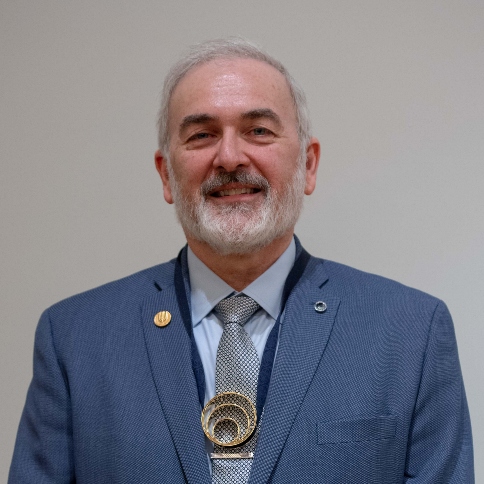
Rafi Bistritzer

Wolf Prize Laureate in Physics 2020

Rafi Bistritzer


Affiliation at the time of the award:

Applied Materials, Israel


Award citation:

“For pioneering theoretical and experimental work on twisted bilayer graphene.”


Prize Share:

Rafi Bistritzer

Allan H. MacDonald 

Pablo Jarillo-Herrero


Since the 2004 groundbreaking experiments regarding the two-dimensional material -graphene, several research groups were soon studying the properties of twisted bilayer graphene. Graphene is a significant foundation for an entirely new generation of technologies. The hope is that graphene-based applications will benefit the environment and reduce costs. Electronic and computer industry requires materials whose conductance can be controlled.

The work of Jarillo-Herrero, MacDonald and Bistrizer has shown that the conductance properties of graphene interfaces can be controlled via the spatial misfit angle between the layers and then at certain angles the electrons exhibit surprising physical behavior. This physical discovery has the potential of leading to an energy revolution.

In 2011, a group led by Allan Macdonald, a theoretical physicist from the University of Texas, researched an intriguing behavior of twisted bilayer graphene, where the atomic lattices of two stacked graphene layers are laterally rotated with respect to each other by a small misfit angle. According to the calculations of MacDonald and Bistrizer (who did his post-doctoral thesis under the supervision of MacDonald at that time), the tunneling velocity of electrons between the layers depends on the misfit angle and completely vanishes at the “magic angle” of 1.1 degrees. It was hoped that this discovery would lead to the creation of a new type of super-conductor, namely a material that allows electrical current to pass with no impedance and with no energy loss.

The original paper by MacDonald and Bistrizer, which describes their discovery, was not received with enthusiasm by the scientific community and was even forgotten for several years.

At the same time, Jarillo-Herrero was working on twisted bilayer graphene in his lab at MIT. He became convinced that the ideas expressed by Macdonald and Bistrizer had substance.

His research team therefore invested considerable efforts in creating and measuring twisted bilayer graphene of various twist angles. The experiments proved successful in 2017 when it was found that positioning the layers at an angle of 1.1 degrees relative to one another (“the magic angle”) resulted in unusual electrical properties, precisely as MacDonald and Bistrizer have suggested. In this position, at sufficiently low temperatures, the electrons move from one layer to the other, creating a lattice with unusual qualities. The paper that described the phenomenon, which was published in Nature in 2018, revolutionized physics and triggered a flood of additional papers.

The discovery opens the door to building a super-conductor from bilayer graphene, in which electron movement is completely controlled by external electrical current. This electrical behavior resembles the behavior of copper-based superconductors called Cuprates. Cuprates demonstrate electrical conductivity with no resistance in relatively high temperatures compared with other super-conductors. For this reason, Cuprates now form a source of hope for realizing the dream of electrical conductivity with no energy loss at temperatures close to room temperature. If this mission is achieved, it would lead to a far-reaching energy revolution. However, one obstacle that prevents this revolution is that we do not yet have a theory that explains the behavior of superconductors at high temperatures. In the absence of a solid theoretical foundation, it is difficult to develop new, better materials. This is one of the reasons for the excitement around the discovery of bilayer graphene and the magic angle, which allows us to understand better what happens on the microscopic level when transitioning from a conductor to a superconductor state.

Rafi Bistritzer (1974, Israel) received his bachelor’s degree in physics from Tel Aviv University and his M.Sc. and Ph.D. degrees in physics from the Weizmann Institute of Science. In 2007, Bistritzer moved to Austin, where he completed a postdoctoral fellowship at the University of Texas, under the guidance of Professor McDonald. In 2012, he returned to Israel and worked on research and development in the fields of electromagnetsm and algorithms. Bistritzer is currently the manager of an algorithm group at Applied Materials. Bistritzer’s group specializes in computer-vision and machine learning algorithms.