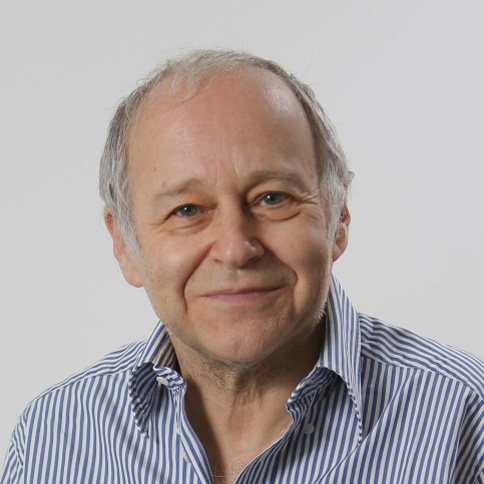
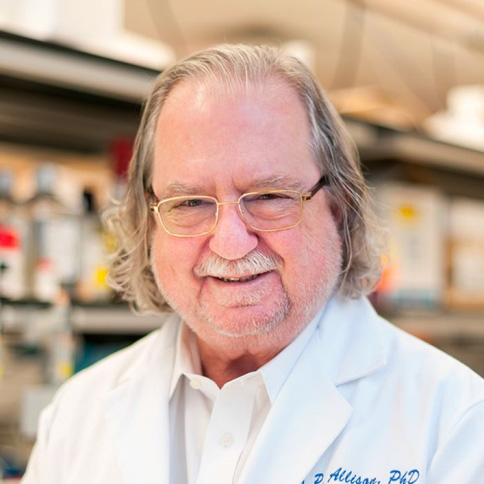
Gene Robinson

Wolf Prize Laureate in Agriculture 2018

Gene Robinson


Affiliation at the time of the award:

University of Illinois, USA


Award citation:

“for leading the genome revolution in the biology of honey bee populations”.


Prize share:

None


The honey bee plays a vital role sustaining agriculture and plant life on earth. About one-third of the food consumed by humanity is a direct product of pollination by honey bees of more than 100 important crops, including most of the world’s almonds, soybeans, buckwheat, and cotton. Their great importance to agriculture and their complex social structure make honey bees a critical subject for biological and agricultural research.

Gene Robinson, born in 1955, received a doctorate from Cornell University in 1986 and three years later joined the University of Illinois at Urbana-Champaign where, since 2011 he has headed of the Carl W. Weiss Institute for Genomic Biology as well as the Institute for Bee Research, since 1990. Robinson is a pioneer in the application of genomics – the field of genetics that deals with the sum total of genetic material, the genome of living organisms – to study social behaviour. In addition, Robinson led the effort to sequence the genome (i.e., determining the order of the nucleic acids, the building blocks of the genetic code) of the honey bee. During his career, he has published (on his own, or together with colleagues) over 300 articles, trained 29 postdoctoral fellows and 23 PhD students. He has won prestigious awards from the American Entomological Association, the International Society for Animal Behaviour and the International Society for Behavioural Genetics.

Robinson led an international consortium with more than 170 researchers from 13 countries involved in the sequencing of the honey bee genome. As part of the honey bee genome study, Robinson led the team that discovered that the honey bee has a fully functioning methylation system. Methylation is a chemical process of great biological significance. It is the adding of a methyl group (CH3, a carbon atom connected to three hydrogen atoms) to any compound. The addition of methyl molecules to the DNA coil at different locations affects how an infinite number of the potential traits inherent in the hereditary load will actually be expressed. Robinson’s discovery has led to hundreds of studies examining the possibility of the use of insect epigenetics for insecticide. Epigenetics is the field that deals with genetic changes in the function of genes that do not involve altering the DNA sequences themselves. One of the possibilities for obtaining differences between two animals with the same DNA is the different locations of methyl groups across the DNA. This can be compared to two computers with the same hardware but with different software, which, therefore, function differently.

Robinson also used the honey bee to achieve a break-through with a genomic application in the study of social behaviour, and in doing so promoted this species, which is vital to agriculture, to an important and prominent position in neuroscience. Robinson eventually came to rephrase the problem of growing multi-annual crops in modern genomic terms. Alongside the basic biology of the honeybee, Gene Robinson is responsible for a useful study on the problem of colony breakdown disorder, i.e. the disappearance of bees from beehives or bee colonies, a phenomenon that threatens the global food supply. Gene Robinson made an extraordinary contribution to our understanding of the honeybee, an understanding that has shaped the present and future of the world of bee-keeping. In addition, his impressive discoveries have also influenced other disciplines, including the science of social behaviour and mental disorders. Robinson has a dominant and unique influence on the biology of the honey bee, and his work has not been matched in research in other animals of agricultural importance.

Charles H. Bennett

Wolf Prize Laureate in Physics 2018

Charles H. Bennett


Affiliation at the time of the award:

IBM, USA


Award citation:

“for founding and advancing the fields of Quantum Cryptography and Quantum Teleportation”.


Prize Share:

Charles H. Bennett

Gilles Brassardand


Charles Bennett, born in New York City (1943), received a PhD from Harvard University in the study of molecular dynamics (computer simulations of molecular movements). He then joined IBM’s research labs where he helped develop the theoretical basis for pioneering research called Quantum Computation. In 1984 he began to develop, along with Gilles Brassard, the quantum encryption system named BB84, after, its two creators

Bennett is a member of the National Academy of Sciences of the United States (elected in 1997), a member of the American Physical Society (1998), a Laureate of the Rank Award for Electro-Optics (2006) a Laurete of the Harvey Award of the Technion in Haifa (2009), a Laureate of Japan’s Okawa Prize (2011), a Laurate of The Dirac Medal of the International Center of Theoretical Physics (2017)Iand has honorary doctorates from Masaryk U., U. of Gdansk, U. of Bristol, and ETH-Zurich

The information revolution, which continues to transform every aspect of life in the 21st century, grew out of two discoveries made at Bell Laboratories in 1948. One was the transistor, which launched decades of amazing miniaturization of electronics. The other was Claude Shannon’s revolutionary paper on information theory. Nowadays even non scientists understand the gist of it: anything one wishes to communicate—words, sounds, pictures, shapes, movements and maybe someday even smells—can be coded into bits—zeros and ones—transmitted through a channel such as radio or optical fiber to a remote location and then reassembled into an arbitrarily good approximation of the original, for the benefit of the recipient. Shannon’s theory was an idealization of the robust behavior of macroscopic objects then used as information carriers, like punch cards, cog wheels and electrical switches. Such information can be accurately read and copied without disturbing the original. But chemists and physicists have long known that the information in tiny objects behaves in subtler ways. One cannot learn the exact state of an atom of matter, or a photon of light, because attempting to do so disturbs it; and two atoms or photons, that have once interacted but subsequently move too far apart to influence one another, can exist in a so-called entangled state, where the particles each behave randomly, but in ways that are too strongly correlated to be explained by supposing that each particle is in some (perhaps unknown) state of its own. These phenomena (called “quantum” in distinction to the ordinary “classical” behavior of macroscopic objects) have been reasonably well understood since the 1930’s, and have even excited a certain amount of interest among philosophers, but were considered to be part of the disciplines of physics and chemistry, with little relevance to information processing except as a nuisance, for example making tiny transistors noisier and less reliable than their larger cousins

Twenty years after Shannon’s paper, Stephen Wiesner noticed that quantum effects could be used to do some intriguing things not covered by Shannon’s theory, for example combining two messages into a single transmission from which the receiver could recover either one, but not both. Wiesner made little effort to publish or publicize these ideas, but he did tell a few friends. Charles Bennett from IBM Research and Gilles Brassard from the Université de Montréal were respectively the first physicist and first computer scientist to take Wiesner’s ideas seriously and develop them, thereby launching the discipline now known as quantum information science. Their first discovery, which became the first practical application of quantum information, was quantum key distribution. Quantum key distribution allows two users, communicating via a public classical channel (such as radio) and a quantum channel susceptible to eavesdropping (such as faint flashes of light sent through empty space or an optical fiber), to agree on a body of shared secret information, a so-called cryptographic key, with high confidence based on laws of physics that it is unknown to anyone else. With their students François Bessette, Louis Salvail and John Smolin they built a working demonstration in 1989, along the way overcoming other problems needed to make the scheme practical, such as compensating for transmission and measurement errors and partial information leakage to an eavesdropper. In the early 1990’s, in collaboration with Wiesner, Claude Crépeau, Richard Jozsa, Asher Peres and William Wootters, Bennett and Brassard showed that entanglement was not just an intriguing phenomenon, but a useful and quantifiable resource, despite having no ability to communicate by itself. In the technique called superdense coding, it doubles the amount of classical information that can be sent through a quantum channel, while in quantum teleportation it enables quantum information to be sent through a classical channel. Meanwhile, Artur Ekert showed that entanglement itself can be used for quantum key distribution. Also in the 1990’s they and other researchers, building on early work of David Deutsch and Richard Feynman in the 1980’s, showed that quantum notions provide the same kind of powerful generalization of Turing’s classical theory of computation as of Shannon’s classical theory of communication. This culminated in Peter Shor’s celebrated 1994 discovery of fast quantum algorithms for factoring and discrete logarithm, problems whose presumed intractability underlies the security of much of today’s electronic commerce, launching a worldwide effort to build a scalable quantum computer. Since then, quantum key distribution systems have become commercially available, and have been extended to ranges of hundreds of kilometers through optical fibers, and thousands of km in satellite-based systems. Practically, aside from their applications to communication, computation and modern kinds of information processing, which involve both communication and computation, quantum-information-inspired techniques have improved timekeeping and precision measurement. Theoretically, they have provided tantalizing hints about some of physics’s deepest mysteries, such the black hole information problem, quantum gravity and the origin of spacetime

The mechanics of quantum information processing, where qubits—the quantum generalization of Shannon’s bits—are acted on by the quantum generalizations of classical computing’s ANDs, ORs and NOTs, can be described in full detail using only a modest amount of secondary-school algebra, but it is harder to find words to explain how quantum information differs from the familiar classical kind. Though it is only a metaphor, one could say that whereas classical information is like the information in a book, quantum information is like the information in a dream. A dream cannot be copied or broadcast, and if you try to describe it to someone else, you eventually forget the dream and remember only what you said about it. But unlike dreams, this fragile dreamlike kind of information obeys well-understood laws, makes possible new kinds of communication and computing, and is improving our understanding of the universe in ways still being discovered

It is for their role in launching quantum information theory that Bennett and Brassard have received the 2018 Wolf Prize in Physics

Alexander Beilinson

Wolf Prize Laureate in Mathematics 2018

Alexander Beilinson


Affiliation at the time of the award:

University of Chicago, USA


Award citation:

“for their ground-breaking work in algebraic geometry (a field that integrates abstract algebra with geometry), in mathematical physics and in presentation theory, a field which helps to understand complex algebraic structures”.


Prize Share:

Alexander Beilinson 

Vladimir Drinfeld


An “algebraic structure” is a set of objects, including the actions that can be performed on those objectas, that obey certain axioms. One of the roles of modern algebra is to research, in the most general and abstract way possible, the properties of various algebraic structures (including their objects), many of which are amazingly complicated

Alexander Beilinson was born in Moscow (1957), won the Ostrowski Prize (together with a colleague) in 1999, for extraordinary achievements in mathematics, and in 2017 he was elected to the National Academy of Sciences of the United States. His outstanding achievements include proofs of the Kashdan-Lustig and Jantzen conjectures, which play a key role in the representation theory, the development of important conjectures (“Beilinson’s Conjectures”) in algebraic geometry, and a significant contribution to the interface between geometry and mathematical physics. The joint work of Beilinson and Vladimir Drinfeld on the Langlands Program – a woven fabric of theorems and conjectures designed to link key areas of mathematics – has led to impressive progress in implementing the program in important areas of physics, such as quantum field theory and string theory.

Drinfeld and Beilinson, together created a geometric model of algebraic theory that plays a key role in both field theory and physical string theory, thereby further strengthening the connections between abstract modern mathematics and physics. In 2004 they jointly published their work in a book that describes important algebraic structures used in quantum field theory, which is the theoretical basis for the particle physics of today. This publication has since become the basic reference book on this complex subject.

Adam Fischer

Wolf Prize Laureate in Music 2018

Adam Fischer


Award citation:

“who is recognized as an Inspirational conductor and eloquent defender of human rights”.


Prize Share:

Adam Fischer

Sir Paul McCartney 


Ádám Fischer is one of the most distinguished conductors active today. Trained in Budapest and Vienna, he has had a long association with the Vienna State Opera and was made an honorary member in 2017. He held the post of principal conductor in Karlsruhe, general music director in Freiburg im Breisgau, and music director of the Kassel Opera.

Fischer created an international Gustav Mahler Festival in Kassel and founded and directs the Austro-Hungarian Haydn Orchestra, performing in the venue in which Haydn premiered a majority of his symphonies. His active career encompasses the major opera houses and most prestigious orchestras of the world.

His support of human rights, and in particular, his protest against the political developments in his native Hungary, make him an artist of exemplary integrity–a quality that shapes his interpretations as well as the morality of his stance.

The Wolf Foundation is proud to recognize in Ádám Fischer a musical leader beloved around the world, whose aspirations serve as an inspiration to us all. Dynamic initiative and diversity characterise the creative work of the world-renowned conductor Adam Fischer. He is the founder of two international festivals where he has found an artistic home. Under his direction, the Wagner Festival in Budapest has established an excellent reputation in the more than ten years of its existence – with opera productions at the Palace of Arts, including Wagner’s Ring cycle as their centrepiece performed on four consecutive days every year. The Haydn Festival in Eisenstadt was founded in 1987 and has established its reputation as a renowned centre for performing the music of Haydn. At the same time, Adam Fischer founded the Österreichisch-Ungarische Haydn Philharmonie for the festival. In the many years as their Principal Conductor he set new standards for the interpretation of Haydn’s music. The recordings of the complete Haydn symphonies which have received numerous awards are a testimony to this achievement. He retains close links with the orchestra as their Honorary Conductor. Adam Fischer‘s most recent project for the forthcoming seasons is to dedicate himself to the complete works of Gustav Mahler which he will perform in concert and record live on CD together with the Düsseldorfer Symphoniker whose Principal Conductor he has been since 2015. He is also Artistic Consultant to the Tonhalle concert hall in Düsseldorf where he has initiated a human rights award which will be presented every year at a specially organised human rights concert. Adam Fischer has a close relationship with the Danish Chamber Orchestra in Copenhagen, whose Principal Conductor he has been since 1998, an artistic partnership which has found its expression especially in a highly acclaimed and award-winning recording of Mozart’s complete symphonic work. This successful collaboration is now being continued with a Beethoven cycle. At the Wiener Staatsoper, which has been one of his artistic homes since 1973, Adam Fischer has conducted several new productions and as many as 26 different operas. One of the recent highlights was a series of perfomances of Wagner’s Walküre which was enthusiastically received in Tokyo, as part of the Wiener Staatsoper’s guest performance in Japan in 2016. For his services he was appointed Hononary Member of the Wiener Staatsoper in consultation with the Austrian Minister for Culture in 2017. With an extremely wide repertoire of German and Italian opera, Adam Fischer has appeared for more than thirty years at all the leading opera houses worldwide including the MET in New York, the Bayerische Staatsoper in Munich, Covent Garden in London, the Opéra de Bastille in Paris, Oper Zürich and La Scala in Milan, where he recently conducted a highly acclaimed new production of the Magic Flute, a work with which he made his debut there in 1986. A guest at the Bayreuth Festival for many years, he was elected Conductor of the Year by the German magazine Opernwelt in 2002 for his performances of Wagner’s Ring cycle. In the concert hall, Adam Fischer regularly appears on the podium with the Wiener Philharmoniker (2017 Mozartwoche Salzburg and subscription concerts at the Vienna Musikverein), Wiener Symphoniker (this season subscription concerts and “Frühling in Wien” at the Vienna Musikverein) and the Orchestra of the Age of Enlightenment (recently in London, New York Carnegie Hall and Budapest), the Mozarteum Orchester Salzburg (Mozart matinees at the Salzburg Festival) and in collaboration with all the leading orchestras worldwide such as the Münchner Philharmoniker, Bamberger Symphoniker, Tonhalle Orchester Zürich, Orchestre de Paris, London Philharmonic, Chicago and Boston Symphony Orchestras, NHK Symphony Orchestra. After studying composition and conducting in his home town Budapest and in Vienna with the legendary Hans Swarowsky, Adam Fischer first took up engagements as a répétiteur and Kapellmeister which led him to Graz, Helsinki, Karlsruhe and Munich. He was General Music Director in Freiburg (1981-1983), Kassel (1987-1992) and Mannheim (2000-2005) before returning to his native Budapest as Artistic Director of the Budapest Opera (2007-2010). Two Echo Klassik Awards for the recordings of the complete collection of symphonies by Joseph Haydn (Österreichisch-Ungarische Haydn Philharmonie), an International Classical Music Award in 2015 for a recording of the complete collection of Mozart’s symphonies (Danish Chamber Orchestra) and the Grand Prix du Disque awarded for the recordings of Goldmark’s The Queen of Sheba and Bartók’s Duke Bluebeard’s Castle document the wide range of his work in his extensive discography. Adam Fischer is an Honorary Member of the Musikverein für Steiermark in Graz. He is a recipient of the Order of Dannebrog which was given to him by the Queen of Denmark and has been awarded the honorary title of professor by the Austrian Federal President.

Robert G. Bergman

Wolf Prize Laureate in Chemistry 2017

Robert Bergman


Affiliation at the time of the award:

University of California, Berkeley, USA


Award citation:

“for the discovery of the activation of C-H bonds of hydrocarbons by soluble transition metal complexes”.


Prize share:

None


Hydrocarbons (alkanes), the major constituents of petroleum, are the most abundant row material of the chemical industry for producing a variety of important products such as plastics. The utilization of alkanes is greatly facilitated by the activation of their highly inert C-H bonds. Finding the means for such activation has been a high priority goal for generations of chemists. In the early 1980s Bergman discovered the first transition metal compound (an iridium complex) to catalyze the activation of C-H bonds leading to an oxidative addition reaction. Bergman’s discovery of C-H oxidative additions has stimulated an entirely new sub-field of research, both in academia and industry, and continues to be a “hot” research topic.

Bergman’s early work in this area focused on fundamentals of C-H bond activation. It established that intermolecular C-H bond oxidative addition is very general including for the least reactive hydrocarbon methane. He also established that C-H activation occurs with a variety of low-valent metals such as rhenium, is strongly favored over intramolecular insertion, is a thermally reversible reaction, can be achieved with asymmetric induction, and that the C-H activating intermediates can be generated both thermally and photochemically. More recently he discovered methods to apply catalytic C-H bond activation reactions to the synthesis of a wide variety of useful heterocycles. Bergman’s brilliant studies are now textbook examples of outstanding mechanistic research.

In addition to C-H bond activation, Bergman has been responsible for an impressive number of enduring, path-breaking contributions to physical organic, organometallic and inorganic chemistry, and homogeneous catalysis. His impact on these fields has been monumental and his discoveries have been the basis for advances ranging from petroleum chemistry (C-H activation) to medicinal chemistry (ene-diyne cycloaromatization).

Richard Schoen

Wolf Prize Laureate in Mathematics 2017

Richard Schoen


Affiliation at the time of the award:

University of California, USA


Award citation:

“for their striking contributions to analysis and geometry”.


Prize share:

Richard Schoen

Charles Fefferman 


Richard Schoen (born in 1950) is one of the most recognized and outstanding mathematicians of our time. In the early years of his research career, he co-founded the then-new mathematical research field- geometric analysis. Since then, his vision, his insight, and his technical power led him to break countless barriers, open up numerous new research directions, and elevate our understanding of mathematical structure. Schoen is a leader in geometric analysis and its application to algebra, geometry, topology, differential equations, and mathematical physics.

Schoen’s fundamental contributions in several areas of geometric analysis fall into two main categories:

(a) the study of conformal geometry and scalar curvature, including applications to classical general relativity.

(b) the theory of minimal surfaces and harmonic maps, particularly the regularity theory of those.

The proof by Schoen (together with S.T. Yau) that energy is positive in General Relativity is a remarkable result, many people have tried to prove it without success, for half a century since Einstein invented his theory. What makes the problem so remarkable is that it is a fundamental statement, without which Einstein’s theory of Gravity would presumably not make much sense (at least from a quantum point of view), yet it is completely unclear why it is true. Neither Einstein nor any of his successors for half a century were able to clarify this. The theorem of Schoen and Yau is an unusual example in which a deep and rigorous mathematical theorem sheds light in an essential way on a central theory of modern physics.

Richard Schoen is awarded the Wolf Prize for being a pioneer and a driving force in geometric analysis. His work on the regularity of harmonic maps and minimal surfaces had a lasting impact on the field. His solution of the Yamabe problem is based on the discovery of a deep connection to general relativity. Through his work on geometric analysis, Schoen has contributed greatly to our understanding of the interrelation between partial differential equations and differential geometry. Many of the techniques he developed continue to influence the advance of non-linear analysis.

Michel Mayor

Wolf Prize Laureate in Physics 2017

Michel Mayor


Affiliation at the time of the award:

University of Geneva ,Switzerland


Award citation:

“for the first discovery of an exoplanet orbiting a solar-type star”.


Prize share:

Michel Mayor 

Didier Queloz


In 1995, Mayor and Queloz were the first to discover a planet outside the solar system orbiting a solar-type star. The discovery of this planet, 51 Pegasi b, was the result of a continuous improvement of cross-correlation spectrographs by Mayor (completed in collaboration with Queloz) over a period of 20 years in order to obtain more accurate radial velocities. The discovery of 51 Pegasi b led to a revolution in the theory of planetary systems, since it is a Jovian planet having a very short orbital period of only 4.2 days, orders of magnitude smaller than the 12-year period of Jupiter in the solar system. This short period is attributed to orbital migration of planets during their formation in an accretion disk.

This discovery opened the floodgates for subsequent observations revealing an incredible diversity of exoplanets, some with large and quite eccentric elliptical orbits, unlike the nearly circular orbits in our own solar system. The team led by Mayor and Queloz has contributed to the discovery of more than 250 additional exoplanets, including several multi-planetary systems having up to 7 planets. Thanks to the most recent spectrograph (HARPS) developed by their team and installed at La Silla Observatory, they were able to reveal the very rich subpopulation of super-Earth planets on tight orbits and to conduct statistical research on exoplanets. Mayor participated in the first detection of an exoplanet transiting its host star, opening the way to the study of the composition of exoplanets. Soon after, Queloz, Mayor and their collaborators were able to measure the first Rossiter-McLaughlin effect for a transiting planet, which allowed the measurement of the projected angle between the stellar spin axis and the planets orbital axis. Subsequent observations show a large variety of angles, which cannot be explained solely by planetary migration.

Lawrence Weiner

Wolf Prize Laureate in Arts 2017

Lawrence Weiner


Award citation:

“for the radicalism and avant-garde at the core of their work, and for inspiring generations to come”.


Prize share:

Lawrence Weiner

Laurie Anderson


Lawrence Weiner (born 1942) is one of the leading figures in the art world of the last decades. Present in the field of art since 1967, he is recognized as a pioneer of conceptual art, displaying an unprecedented use of language as material.
His texts create unexpected substitutes of sculpture and painting on brick, cement or glass walls, on transparent or opaque surfaces, in art institutes and other placess. Whether in the context of art or the broader context of cities and landscapes, his texts create a multi-inspirational performance of humanism. Weiner’s texts are not limited to English alone, he uses a variety of local languages, a fact that enhances his accumulating work with a universal dimension, including a political core that doesn’t lose its strength as years go by. On the contrary – it accumulates more and more impact.

His unique handwriting, recognizable and anonymous at once, maintains the non-materialistic dimension of conceptual art in a world of art that is becoming increasingly focused on objects. As such, Weiner’s work is a signature over ever-lasting radicalism.
Choosing Lawrence Weiner and Laurie Anderson as the 2017 Wolf Prize Laureates is a choice of artists whose career is motivated by radical thought and practice. Deriving from a conceptual framework, their art is in constant search of the next level. Their choice is a declaration of faith in art that is not confined to the traditional objects of art, and exist beyond the restrictions and temptations of the art market.

Laurie Anderson

Wolf Prize Laureate in Arts 2017

Laurie Anderson


Award citation:

“for the radicalism and avant-garde at the core of their work, and for inspiring generations to come”.


Prize share:

Laurie Anderson

Lawrence Weiner


Laurie Anderson (born in 1947, Illinois) is an independent cutting-edge, multi-media artist, active and influential worldwide. Her oeuvres carry strong and clear humanist and feminist messages. These messages are conveyed to the audience mostly through storytelling, moving and still images and live performances.

When she graduated from fine art studies, she began to do performances and gradually music. In the early 1970s, Anderson worked as an art instructor and as an art critic for magazines such as Artforum and illustrated children’s books. In 1974, Anderson conducted a world tour with Duets on Ice – an art performance in which she played music (violin and recorded sound) while wearing ice skates with the blades frozen into a block of ice; the performance endured as long as the ice was not melted. In 1981, Her single O Superman was released and reached the top of pop-music charts in the UK. This single was part of a larger stage work titled United States and was included on her album Big Science.

She has collaborated with leading artists, e.g., her late husband Lou Reed, Peter Gabriel, and others. With her multi-dimensional way of thinking and art practice, she has become a role model of free and independent art making. Her original voice and spirit have inspired many artists and art-consumers to date. In 2003, Anderson was NASA’s first artist-in-residence.

Laurie Anderson is awarded the Wolf Prize for her art, being a significant example of the essence of multi-disciplinary art that has developed since the 1970’s. Anderson’s work is manifested in music, performance, films, poetry, and visual art, while breaking the boundaries between media and expanding the range of creativity. She paved the path to a new kind of artwork, discovering new territories for art while combining different media, esthetics, and technologies. She can be characterized as a symbol of our time – always trying new options and challenging norms. Anderson has influenced generations of artists who view her as a source of inspiration of multi-disciplinary, innovative, and groundbreaking creativity.

James P. Allison

Wolf Prize Laureate in Medicine 2017

James P. Allison


Affiliation at the time of the award:

University of Texas MD Anderson Cancer Center, USA


Award citation:

“for sparking a revolution in cancer therapy through (his) discovery of immune checkpoint blockade”.


Prize share:

None


Jim Allison made major contributions to our understanding of the immune system beginning with his early work on defining the T cell receptor and continuing with his recognition that T cell activation also required engagement of costimulatory receptors. But his greatest achievement is his brilliant insight that the CTLA-4 receptor was an inhibitory, not an activating, receptor for T cells. Allison’s brilliant insight that blocking the function of inhibitory receptors on T lymphocytes could result in activation of anti-tumor immunity forever transformed the field of immunotherapy, which had languished for many years. In a seminal series of pre-clinical studies, Allison demonstrated that treatment of melanoma-bearing mice with antibody to CTLA-4 resulted in impressive tumor regressions. Despite skepticism in the field, Allison persevered in touting immune blockade of CTLA-4 as a novel form of cancer immunotherapy. This ultimately led to the development and FDA approval in 2011 of an anti-human CTLA-4 monoclonal antibody, ipilimumab, that led to durable remissions in some patients with advanced melanoma, some of whom are still alive today a decade after treatment. The discovery of immune checkpoint blockade by Allison eventually led to the FDA approval of an additional class of drugs that blocked a second inhibitory receptor, PD-1, or its ligand, PDL1. This approach, termed “checkpoint inhibition” or “checkpoint blockade” has now resulted in activation of anti-tumor immunity against many cancers. Allison’s success arose from highly innovative basic science discoveries that ultimately were translated successfully into new therapies that have saved the lives of patients with advanced cancer. The emergence of immunotherapy as a fourth pillar in cancer treatment along with surgery, radiation, and chemotherapy was hailed by Science magazine as the 2013 Breakthrough of the Year.