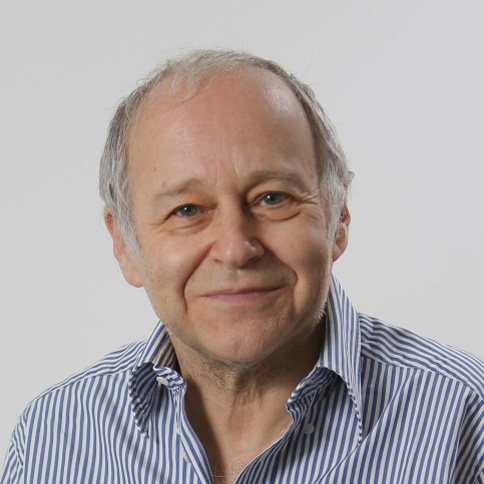
Paul McCartney

Wolf Prize Laureate in Music 2018

Sir Paul McCartney


Award citation:

“The Orpheus of our era”


Prize Share:

Sir Paul McCartney 

Adam Fischer


Sir Paul McCartney is one of the greatest songwriters of all time. His versatility underlies an extraordinary wingspan, from the most physical rock to melodies of haunting and heartbreaking intimacy. His lyrics have an equally broad range, from the naive and the charming to the poignant and even desperate. He has touched the hearts of the entire world, both as a Beatle and in his subsequent bands, including Wings. Like all great art, his melodies are both of their time and beyond time: today a third generation finds itself under the spell of his invidious imagination. There is little doubt that his songs, like those of the great classical masters Schubert, Schumann, Brahms, Fauré, Debussy and Ravel, and like those of his more modern predecessors (among them Cole Porter, Jerome Kern and George Gershwin) will be sung and savored as long as there are human beings to lift up their voices.

On July 6, 1957, Paul McCartney met John Lennon at Woolton Village Fete and joined his skiffle group, the Quarrymen, which, after several name changes, became the Beatles. McCartney and Lennon quickly established themselves as songwriters for the group, and, by the time the Beatles signed with EMI-Parlophone in 1962, they were writing most of their own material. By their third album the group stopped recording covers. Lennon and McCartney’s songwriting partnership was very important to them, both financially and creatively; even in 1969, when they were estranged over business matters and supposedly not on speaking terms, Lennon brought McCartney his song The Ballad of John and Yoko. Their music transcended personal differences.

Though usually associated with ballads and love songs, McCartney also was responsible for many of the Beatles’ harder rock songs, such as Lady Madonna, Back in the USSR, and Helter Skelter (all 1968), but above all he has an extraordinary gift for melodies and sometimes tags an entirely new one on to the end of a song, as he did with Hey Jude (1968).

The Beatles ceased playing live shows in 1966. After their breakup in 1970, McCartney recorded two solo albums, McCartney (1970) and Ram (1971), before forming the band Wings with his wife Linda (formerly Linda Eastman). Wings toured the world and became the best-selling pop act of the 1970s, with an astonishing 27 U.S. Top 40 hits and five consecutive number one albums, including the highly acclaimed Band on the Run (1973) and Wings at the Speed of Sound (1976).
Critics loved his 1989 album, Flowers in the Dirt, which coincided with his return to live performance. In 1997 McCartney was knighted by Queen Elizabeth II for services to music.

In 2001 a volume of his poetry, Blackbird Singing, which also included some song lyrics, was published. McCartney celebrated his 62nd birthday in Russia in 2004, playing his 3,000th concert to an audience of 60,000 people in St. Petersburg.

With some 60 gold records and sales of more than 100 million singles in the course of his career, McCartney is arguably the most commercially successful performer and composer in popular music. The 1965 Beatles track Yesterday (wholly written by McCartney and performed alone with a string quartet) has been played some six million times on U.S. radio and television, far outstripping its nearest competitor. Moreover, with over 3,000 cover versions, it is also the most-recorded song ever. In 2009 the U.S. Library of Congress announced that McCartney would be awarded its Gershwin Prize for Popular Song.

More than a rock musician, McCartney is now regarded as a British institution; an icon like warm beer and cricket, he has become part of British identity

Omar M. Yaghi

Wolf Prize Laureate in Chemistry 2018

Omar M. Yaghi


Affiliation at the time of the award:

University of California, Berkeley, USA


Award citation:

“for his contribution in the field of reticular chemistry”.


Prize share:

Omar M. Yaghi

Makoto Fujita


Traditional chemistry has focused on intermolecular connections, particularly on strong covalent bonds formed when two atoms share one or more electrons. In contrast, supramolecular chemistry deals with the study of the connections and the interactions between molecules – a study that promotes the development of novel materials with unique properties that are sometimes very useful

Omar M. Yaghi of the University of California at Berkeley, born in Amman in Jordan (1965), is a member of a refugee family with many children. At the age of 15 he was sent to the United States and soon became prominent for his outstanding talent for science. In 1985, Yaghi began his doctoral studies in chemistry at the University of Illinois at Urbana-Champaign. After completing his studies, he completed a post-doctorate at Harvard. In 1992, he gained his first independent academic post at the Arizona State University. This is where he actually conceived, developed, and finally began to apply his grand, chemical program to bond molecules together – through strong bonds – to large “frameworks”. His achievements in this field have earned him many awards, such as the Sacconi Medal of the Italian Chemical Society, the Izatt-Christensen International Award, the Materials Research Society Medal, the King Faisal International Prize in Science (also known as the Arab Nobel Prize), the Mustafa Prize in Nano-Science and Nanotechnology and the Albert Einstein World Award of Science conferred by the World Cultural Council

Yaghi is actually the main developer of a new branch in supramolecular chemistry called “Reticular Chemistry” (In Latin “reticulum” means “small grid”). Reticular Chemistry makes it possible to combine molecules into networks that create highly porous structures with a very large surface area, enabling the efficient storage and handling of various materials “trapped” in pores (for example, various gaseous fuels), and efficient capture and storage of elements and compounds such as carbon and water. The porous feature is very important for practical purposes, as it enables the capture and compact storage of large quantities of gases in small volumes

Through the use of Reticular Chemistry, Yaghi developed two entirely new types of compounds, called metal-organic frameworks (MOFs) and covalent organic frameworks (COFs). While the supramolecular chemistry was initially limited to relatively weak bonds, such as hydrogen bonds and Van der Waals interactions, the great advantage of Reticular Chemistry is its success in creating supramolecular structures, frameworks with very strong, covalent bonds between molecules, that give them unprecedented chemical and structural strength. Thanks to Reticular Chemistry, each of these frameworks can be viewed as a molecule. Just as the molecule determines the specific geometry and spatial array of each of the atoms, so too does the framework determine each of the molecules in a well-defined geometry and well defined spatial array. Actually, in view of the fact that these frames encompass relatively large volumes, their chemistry is much richer than that of the molecules of which they are comprised, enabling them to impart unique properties. There are many possible applications for this. For example, producing materials that capture carbon dioxide very efficiently may reduce the rate of gas entering the atmosphere, thereby reducing the trend of global warming.

Makoto Fujita

Wolf Prize Laureate in Chemistry 2018

Makoto Fujita


Affiliation at the time of the award:

University of Tokyo, Japan


Award citation:

“for his achievements in the field of supramolecular chemistry”.


Prize share:

Makoto Fujita

Omar M. Yaghi


Traditional chemistry has focused on intermolecular connections, particularly on strong covalent bonds formed when two atoms share one or more electrons. In contrast, supramolecular chemistry deals with the study of connections and interactions between molecules – a study that promotes the development of novel materials with unique properties that are sometimes very useful.

Makoto Fujita, born in 1957, developed his academic career quickly and at the age of 42 was appointed full professor at Nagoya University. Three years later (2002) he was appointed to the same position at Tokyo University, the most prestigious university in Japan. He was soon recognized as one of the pioneers in the field of supramolecular chemistry and was awarded many prizes: the Arthur C. Cope Scholar Award from the American Society of Chemistry, the Izatt-Christensen International Award for Macrocyclic Chemistry, the International Society for Nanoscale Science, Computation, and Engineering (ISNSCE) Award, The Fred Basolo Medal for Outstanding Research in Inorganic Chemistry from North Western University and the Nagoya silver medal. Fujita’s impressive academic yield, since the beginning of his academic career till today (i.e., between 1980 and 2017), includes approximately 330 publications.

Makoto Fujita’s main contribution to Supramolecular Chemistry has been the development of a new method for the formation of supramolecular structures called “metal-guided synthesis” or “self-assembly with metallic guidance”. This novel method enables quick and spontaneous assembly (under specific thermodynamic conditions) of supramolecular materials, and is much easier and more effective than the cumbersome, tedious, and highly inefficient methods previously used to synthesize such materials. As early as 1990, Fujita published an article describing this method of synthesizing materials on a nanometric scale containing both metal ions and various organic molecules (i.e., molecules containing carbon and hydrogen atoms connected to each other). Fujita and his colleagues used this method to synthesize a molecular square at each of the four vertices in which the metal atom Palladium, Pd (H is hydrogen, N nitrogen and O oxygen.

In the years that followed, this method was used to build increasingly complex molecules, nanostructures and materials. Fujita’s group, for example, synthesized three-dimensional porous molecules, called “cages”, that can be used as molecular “containers” that store smaller molecules. This structure may give the trapped materials new chemical properties: for instance, it may increase the solubility of drugs and therefore their effectiveness.

Several years ago, Fujita and his colleagues managed to synthesize a cage large enough to store protein molecules in its pores. This is of great practical importance, since many new drugs are protein-based. In 2016, they succeeded in assembling relatively large cage, 8 nanometres wide, (a nanometre is one billionth of a meter), and later that year they theoretically proved that, with the self-assembly method they had developed, it is possible to assemble 144 such cages into one stable, giant cage. Another acceptable use of materials, synthesized by the self-assembly method, is catalysts that accelerate chemical reactions that, in their absence, occur very slowly.

A particularly important and interesting application of these large cages, developed by Fujita himself, is the possibility of using them for x-ray crystallography (for studying the crystalline structure of matter) without even having to produce a crystal of the material being tested. Instead of this, the material can be “imprisoned”, in a synthesized cage that positions and stabilizes it in such a way that it can be directly examined using standard crystallography.

Gilles Brassard

Wolf Prize Laureate in Physics 2018

Gilles Brassard


Affiliation at the time of the award:

University of Montreal, Canada


Award citation:

“for founding and advancing the fields of Quantum Cryptography and Quantum Teleportation”.


Prize Share:

Gilles Brassardand

Charles H. Bennett


Gilles Brassard, born in Montreal (1955), received a PhD from Cornell University in the study of theoretical computer science, and more specifically cryptography. He has been a faculty member at the Université de Montréal ever since (1979) and Canada Research Chair in Quantum Information Science since 2001. Fellow of the Royal Society of London (2013), the International Association for Cryptologic Research (2006), the Canadian Institute for Advanced Research (2002) and the Royal Society of Canada (1996), he was made Officer in the Order of Canada (2013) and in the Ordre national du Québec (2017). Among his numerous honours, professor Brassard has been awarded the Killam Prize for Natural Sciences (2011) and the Gerhard Herzberg Canada Gold Medal for Science and Engineering (2009), which are the two highest scientific awards given by Canada, as well as the Prix d’excellence du FRQNT (2013) and the Prix Marie-Victorin (2000), which are the two highest scientific awards given by Québec. Together with Charles H. Bennett and Stephen Wiesner, he was also awarded the Rank Prize in Opto-electronics (2006) for research on the original concept of quantum cryptography.

The information revolution, which continues to transform every aspect of life in the 21st century, grew out of two discoveries made at Bell Laboratories in 1948. One was the transistor, which launched decades of amazing miniaturization of electronics. The other was Claude Shannon’s revolutionary paper on information theory. Nowadays even non scientists understand the gist of it: anything one wishes to communicate—words, sounds, pictures, shapes, movements and maybe someday even smells—can be coded into bits—zeros and ones—transmitted through a channel such as radio or optical fiber to a remote location and then reassembled into an arbitrarily good approximation of the original, for the benefit of the recipient. Shannon’s theory was an idealization of the robust behavior of macroscopic objects then used as information carriers, like punch cards, cog wheels and electrical switches. Such information can be accurately read and copied without disturbing the original. But chemists and physicists have long known that the information in tiny objects behaves in subtler ways. One cannot learn the exact state of an atom of matter, or a photon of light, because attempting to do so disturbs it; and two atoms or photons, that have once interacted but subsequently move too far apart to influence one another, can exist in a so-called entangled state, where the particles each behave randomly, but in ways that are too strongly correlated to be explained by supposing that each particle is in some (perhaps unknown) state of its own. These phenomena (called “quantum” in distinction to the ordinary “classical” behavior of macroscopic objects) have been reasonably well understood since the 1930’s, and have even excited a certain amount of interest among philosophers, but were considered to be part of the disciplines of physics and chemistry, with little relevance to information processing except as a nuisance, for example making tiny transistors noisier and less reliable than their larger cousins

Twenty years after Shannon’s paper, Stephen Wiesner noticed that quantum effects could be used to do some intriguing things not covered by Shannon’s theory, for example combining two messages into a single transmission from which the receiver could recover either one, but not both. Wiesner made little effort to publish or publicize these ideas, but he did tell a few friends. Charles Bennett from IBM Research and Gilles Brassard from the Université de Montréal were respectively the first physicist and first computer scientist to take Wiesner’s ideas seriously and develop them, thereby launching the discipline now known as quantum information science. Their first discovery, which became the first practical application of quantum information, was quantum key distribution. Quantum key distribution allows two users, communicating via a public classical channel (such as radio) and a quantum channel susceptible to eavesdropping (such as faint flashes of light sent through empty space or an optical fiber), to agree on a body of shared secret information, a so-called cryptographic key, with high confidence based on laws of physics that it is unknown to anyone else. With their students François Bessette, Louis Salvail and John Smolin they built a working demonstration in 1989, along the way overcoming other problems needed to make the scheme practical, such as compensating for transmission and measurement errors and partial information leakage to an eavesdropper. In the early 1990’s, in collaboration with Wiesner, Claude Crépeau, Richard Jozsa, Asher Peres and William Wootters, Bennett and Brassard showed that entanglement was not just an intriguing phenomenon, but a useful and quantifiable resource, despite having no ability to communicate by itself. In the technique called superdense coding, it doubles the amount of classical information that can be sent through a quantum channel, while in quantum teleportation it enables quantum information to be sent through a classical channel. Meanwhile, Artur Ekert showed that entanglement itself can be used for quantum key distribution. Also in the 1990’s they and other researchers, building on early work of David Deutsch and Richard Feynman in the 1980’s, showed that quantum notions provide the same kind of powerful generalization of Turing’s classical theory of computation as of Shannon’s classical theory of communication. This culminated in Peter Shor’s celebrated 1994 discovery of fast quantum algorithms for factoring and discrete logarithm, problems whose presumed intractability underlies the security of much of today’s electronic commerce, launching a worldwide effort to build a scalable quantum computer. Since then, quantum key distribution systems have become commercially available, and have been extended to ranges of hundreds of kilometers through optical fibers, and thousands of km in satellite-based systems. Practically, aside from their applications to communication, computation and modern kinds of information processing, which involve both communication and computation, quantum-information-inspired techniques have improved timekeeping and precision measurement. Theoretically, they have provided tantalizing hints about some of physics’s deepest mysteries, such the black hole information problem, quantum gravity and the origin of spacetime

The mechanics of quantum information processing, where qubits—the quantum generalization of Shannon’s bits—are acted on by the quantum generalizations of classical computing’s ANDs, ORs and NOTs, can be described in full detail using only a modest amount of secondary-school algebra, but it is harder to find words to explain how quantum information differs from the familiar classical kind. Though it is only a metaphor, one could say that whereas classical information is like the information in a book, quantum information is like the information in a dream. A dream cannot be copied or broadcast, and if you try to describe it to someone else, you eventually forget the dream and remember only what you said about it. But unlike dreams, this fragile dreamlike kind of information obeys well-understood laws, makes possible new kinds of communication and computing, and is improving our understanding of the universe in ways still being discovered

It is for their role in launching quantum information theory that Bennett and Brassard have received the 2018 Wolf Prize in Physics

Gene Robinson

Wolf Prize Laureate in Agriculture 2018

Gene Robinson


Affiliation at the time of the award:

University of Illinois, USA


Award citation:

“for leading the genome revolution in the biology of honey bee populations”.


Prize share:

None


The honey bee plays a vital role sustaining agriculture and plant life on earth. About one-third of the food consumed by humanity is a direct product of pollination by honey bees of more than 100 important crops, including most of the world’s almonds, soybeans, buckwheat, and cotton. Their great importance to agriculture and their complex social structure make honey bees a critical subject for biological and agricultural research.

Gene Robinson, born in 1955, received a doctorate from Cornell University in 1986 and three years later joined the University of Illinois at Urbana-Champaign where, since 2011 he has headed of the Carl W. Weiss Institute for Genomic Biology as well as the Institute for Bee Research, since 1990. Robinson is a pioneer in the application of genomics – the field of genetics that deals with the sum total of genetic material, the genome of living organisms – to study social behaviour. In addition, Robinson led the effort to sequence the genome (i.e., determining the order of the nucleic acids, the building blocks of the genetic code) of the honey bee. During his career, he has published (on his own, or together with colleagues) over 300 articles, trained 29 postdoctoral fellows and 23 PhD students. He has won prestigious awards from the American Entomological Association, the International Society for Animal Behaviour and the International Society for Behavioural Genetics.

Robinson led an international consortium with more than 170 researchers from 13 countries involved in the sequencing of the honey bee genome. As part of the honey bee genome study, Robinson led the team that discovered that the honey bee has a fully functioning methylation system. Methylation is a chemical process of great biological significance. It is the adding of a methyl group (CH3, a carbon atom connected to three hydrogen atoms) to any compound. The addition of methyl molecules to the DNA coil at different locations affects how an infinite number of the potential traits inherent in the hereditary load will actually be expressed. Robinson’s discovery has led to hundreds of studies examining the possibility of the use of insect epigenetics for insecticide. Epigenetics is the field that deals with genetic changes in the function of genes that do not involve altering the DNA sequences themselves. One of the possibilities for obtaining differences between two animals with the same DNA is the different locations of methyl groups across the DNA. This can be compared to two computers with the same hardware but with different software, which, therefore, function differently.

Robinson also used the honey bee to achieve a break-through with a genomic application in the study of social behaviour, and in doing so promoted this species, which is vital to agriculture, to an important and prominent position in neuroscience. Robinson eventually came to rephrase the problem of growing multi-annual crops in modern genomic terms. Alongside the basic biology of the honeybee, Gene Robinson is responsible for a useful study on the problem of colony breakdown disorder, i.e. the disappearance of bees from beehives or bee colonies, a phenomenon that threatens the global food supply. Gene Robinson made an extraordinary contribution to our understanding of the honeybee, an understanding that has shaped the present and future of the world of bee-keeping. In addition, his impressive discoveries have also influenced other disciplines, including the science of social behaviour and mental disorders. Robinson has a dominant and unique influence on the biology of the honey bee, and his work has not been matched in research in other animals of agricultural importance.

Charles H. Bennett

Wolf Prize Laureate in Physics 2018

Charles H. Bennett


Affiliation at the time of the award:

IBM, USA


Award citation:

“for founding and advancing the fields of Quantum Cryptography and Quantum Teleportation”.


Prize Share:

Charles H. Bennett

Gilles Brassardand


Charles Bennett, born in New York City (1943), received a PhD from Harvard University in the study of molecular dynamics (computer simulations of molecular movements). He then joined IBM’s research labs where he helped develop the theoretical basis for pioneering research called Quantum Computation. In 1984 he began to develop, along with Gilles Brassard, the quantum encryption system named BB84, after, its two creators

Bennett is a member of the National Academy of Sciences of the United States (elected in 1997), a member of the American Physical Society (1998), a Laureate of the Rank Award for Electro-Optics (2006) a Laurete of the Harvey Award of the Technion in Haifa (2009), a Laureate of Japan’s Okawa Prize (2011), a Laurate of The Dirac Medal of the International Center of Theoretical Physics (2017)Iand has honorary doctorates from Masaryk U., U. of Gdansk, U. of Bristol, and ETH-Zurich

The information revolution, which continues to transform every aspect of life in the 21st century, grew out of two discoveries made at Bell Laboratories in 1948. One was the transistor, which launched decades of amazing miniaturization of electronics. The other was Claude Shannon’s revolutionary paper on information theory. Nowadays even non scientists understand the gist of it: anything one wishes to communicate—words, sounds, pictures, shapes, movements and maybe someday even smells—can be coded into bits—zeros and ones—transmitted through a channel such as radio or optical fiber to a remote location and then reassembled into an arbitrarily good approximation of the original, for the benefit of the recipient. Shannon’s theory was an idealization of the robust behavior of macroscopic objects then used as information carriers, like punch cards, cog wheels and electrical switches. Such information can be accurately read and copied without disturbing the original. But chemists and physicists have long known that the information in tiny objects behaves in subtler ways. One cannot learn the exact state of an atom of matter, or a photon of light, because attempting to do so disturbs it; and two atoms or photons, that have once interacted but subsequently move too far apart to influence one another, can exist in a so-called entangled state, where the particles each behave randomly, but in ways that are too strongly correlated to be explained by supposing that each particle is in some (perhaps unknown) state of its own. These phenomena (called “quantum” in distinction to the ordinary “classical” behavior of macroscopic objects) have been reasonably well understood since the 1930’s, and have even excited a certain amount of interest among philosophers, but were considered to be part of the disciplines of physics and chemistry, with little relevance to information processing except as a nuisance, for example making tiny transistors noisier and less reliable than their larger cousins

Twenty years after Shannon’s paper, Stephen Wiesner noticed that quantum effects could be used to do some intriguing things not covered by Shannon’s theory, for example combining two messages into a single transmission from which the receiver could recover either one, but not both. Wiesner made little effort to publish or publicize these ideas, but he did tell a few friends. Charles Bennett from IBM Research and Gilles Brassard from the Université de Montréal were respectively the first physicist and first computer scientist to take Wiesner’s ideas seriously and develop them, thereby launching the discipline now known as quantum information science. Their first discovery, which became the first practical application of quantum information, was quantum key distribution. Quantum key distribution allows two users, communicating via a public classical channel (such as radio) and a quantum channel susceptible to eavesdropping (such as faint flashes of light sent through empty space or an optical fiber), to agree on a body of shared secret information, a so-called cryptographic key, with high confidence based on laws of physics that it is unknown to anyone else. With their students François Bessette, Louis Salvail and John Smolin they built a working demonstration in 1989, along the way overcoming other problems needed to make the scheme practical, such as compensating for transmission and measurement errors and partial information leakage to an eavesdropper. In the early 1990’s, in collaboration with Wiesner, Claude Crépeau, Richard Jozsa, Asher Peres and William Wootters, Bennett and Brassard showed that entanglement was not just an intriguing phenomenon, but a useful and quantifiable resource, despite having no ability to communicate by itself. In the technique called superdense coding, it doubles the amount of classical information that can be sent through a quantum channel, while in quantum teleportation it enables quantum information to be sent through a classical channel. Meanwhile, Artur Ekert showed that entanglement itself can be used for quantum key distribution. Also in the 1990’s they and other researchers, building on early work of David Deutsch and Richard Feynman in the 1980’s, showed that quantum notions provide the same kind of powerful generalization of Turing’s classical theory of computation as of Shannon’s classical theory of communication. This culminated in Peter Shor’s celebrated 1994 discovery of fast quantum algorithms for factoring and discrete logarithm, problems whose presumed intractability underlies the security of much of today’s electronic commerce, launching a worldwide effort to build a scalable quantum computer. Since then, quantum key distribution systems have become commercially available, and have been extended to ranges of hundreds of kilometers through optical fibers, and thousands of km in satellite-based systems. Practically, aside from their applications to communication, computation and modern kinds of information processing, which involve both communication and computation, quantum-information-inspired techniques have improved timekeeping and precision measurement. Theoretically, they have provided tantalizing hints about some of physics’s deepest mysteries, such the black hole information problem, quantum gravity and the origin of spacetime

The mechanics of quantum information processing, where qubits—the quantum generalization of Shannon’s bits—are acted on by the quantum generalizations of classical computing’s ANDs, ORs and NOTs, can be described in full detail using only a modest amount of secondary-school algebra, but it is harder to find words to explain how quantum information differs from the familiar classical kind. Though it is only a metaphor, one could say that whereas classical information is like the information in a book, quantum information is like the information in a dream. A dream cannot be copied or broadcast, and if you try to describe it to someone else, you eventually forget the dream and remember only what you said about it. But unlike dreams, this fragile dreamlike kind of information obeys well-understood laws, makes possible new kinds of communication and computing, and is improving our understanding of the universe in ways still being discovered

It is for their role in launching quantum information theory that Bennett and Brassard have received the 2018 Wolf Prize in Physics

Alexander Beilinson

Wolf Prize Laureate in Mathematics 2018

Alexander Beilinson


Affiliation at the time of the award:

University of Chicago, USA


Award citation:

“for their ground-breaking work in algebraic geometry (a field that integrates abstract algebra with geometry), in mathematical physics and in presentation theory, a field which helps to understand complex algebraic structures”.


Prize Share:

Alexander Beilinson 

Vladimir Drinfeld


An “algebraic structure” is a set of objects, including the actions that can be performed on those objectas, that obey certain axioms. One of the roles of modern algebra is to research, in the most general and abstract way possible, the properties of various algebraic structures (including their objects), many of which are amazingly complicated

Alexander Beilinson was born in Moscow (1957), won the Ostrowski Prize (together with a colleague) in 1999, for extraordinary achievements in mathematics, and in 2017 he was elected to the National Academy of Sciences of the United States. His outstanding achievements include proofs of the Kashdan-Lustig and Jantzen conjectures, which play a key role in the representation theory, the development of important conjectures (“Beilinson’s Conjectures”) in algebraic geometry, and a significant contribution to the interface between geometry and mathematical physics. The joint work of Beilinson and Vladimir Drinfeld on the Langlands Program – a woven fabric of theorems and conjectures designed to link key areas of mathematics – has led to impressive progress in implementing the program in important areas of physics, such as quantum field theory and string theory.

Drinfeld and Beilinson, together created a geometric model of algebraic theory that plays a key role in both field theory and physical string theory, thereby further strengthening the connections between abstract modern mathematics and physics. In 2004 they jointly published their work in a book that describes important algebraic structures used in quantum field theory, which is the theoretical basis for the particle physics of today. This publication has since become the basic reference book on this complex subject.

Adam Fischer

Wolf Prize Laureate in Music 2018

Adam Fischer


Award citation:

“who is recognized as an Inspirational conductor and eloquent defender of human rights”.


Prize Share:

Adam Fischer

Sir Paul McCartney 


Ádám Fischer is one of the most distinguished conductors active today. Trained in Budapest and Vienna, he has had a long association with the Vienna State Opera and was made an honorary member in 2017. He held the post of principal conductor in Karlsruhe, general music director in Freiburg im Breisgau, and music director of the Kassel Opera.

Fischer created an international Gustav Mahler Festival in Kassel and founded and directs the Austro-Hungarian Haydn Orchestra, performing in the venue in which Haydn premiered a majority of his symphonies. His active career encompasses the major opera houses and most prestigious orchestras of the world.

His support of human rights, and in particular, his protest against the political developments in his native Hungary, make him an artist of exemplary integrity–a quality that shapes his interpretations as well as the morality of his stance.

The Wolf Foundation is proud to recognize in Ádám Fischer a musical leader beloved around the world, whose aspirations serve as an inspiration to us all. Dynamic initiative and diversity characterise the creative work of the world-renowned conductor Adam Fischer. He is the founder of two international festivals where he has found an artistic home. Under his direction, the Wagner Festival in Budapest has established an excellent reputation in the more than ten years of its existence – with opera productions at the Palace of Arts, including Wagner’s Ring cycle as their centrepiece performed on four consecutive days every year. The Haydn Festival in Eisenstadt was founded in 1987 and has established its reputation as a renowned centre for performing the music of Haydn. At the same time, Adam Fischer founded the Österreichisch-Ungarische Haydn Philharmonie for the festival. In the many years as their Principal Conductor he set new standards for the interpretation of Haydn’s music. The recordings of the complete Haydn symphonies which have received numerous awards are a testimony to this achievement. He retains close links with the orchestra as their Honorary Conductor. Adam Fischer‘s most recent project for the forthcoming seasons is to dedicate himself to the complete works of Gustav Mahler which he will perform in concert and record live on CD together with the Düsseldorfer Symphoniker whose Principal Conductor he has been since 2015. He is also Artistic Consultant to the Tonhalle concert hall in Düsseldorf where he has initiated a human rights award which will be presented every year at a specially organised human rights concert. Adam Fischer has a close relationship with the Danish Chamber Orchestra in Copenhagen, whose Principal Conductor he has been since 1998, an artistic partnership which has found its expression especially in a highly acclaimed and award-winning recording of Mozart’s complete symphonic work. This successful collaboration is now being continued with a Beethoven cycle. At the Wiener Staatsoper, which has been one of his artistic homes since 1973, Adam Fischer has conducted several new productions and as many as 26 different operas. One of the recent highlights was a series of perfomances of Wagner’s Walküre which was enthusiastically received in Tokyo, as part of the Wiener Staatsoper’s guest performance in Japan in 2016. For his services he was appointed Hononary Member of the Wiener Staatsoper in consultation with the Austrian Minister for Culture in 2017. With an extremely wide repertoire of German and Italian opera, Adam Fischer has appeared for more than thirty years at all the leading opera houses worldwide including the MET in New York, the Bayerische Staatsoper in Munich, Covent Garden in London, the Opéra de Bastille in Paris, Oper Zürich and La Scala in Milan, where he recently conducted a highly acclaimed new production of the Magic Flute, a work with which he made his debut there in 1986. A guest at the Bayreuth Festival for many years, he was elected Conductor of the Year by the German magazine Opernwelt in 2002 for his performances of Wagner’s Ring cycle. In the concert hall, Adam Fischer regularly appears on the podium with the Wiener Philharmoniker (2017 Mozartwoche Salzburg and subscription concerts at the Vienna Musikverein), Wiener Symphoniker (this season subscription concerts and “Frühling in Wien” at the Vienna Musikverein) and the Orchestra of the Age of Enlightenment (recently in London, New York Carnegie Hall and Budapest), the Mozarteum Orchester Salzburg (Mozart matinees at the Salzburg Festival) and in collaboration with all the leading orchestras worldwide such as the Münchner Philharmoniker, Bamberger Symphoniker, Tonhalle Orchester Zürich, Orchestre de Paris, London Philharmonic, Chicago and Boston Symphony Orchestras, NHK Symphony Orchestra. After studying composition and conducting in his home town Budapest and in Vienna with the legendary Hans Swarowsky, Adam Fischer first took up engagements as a répétiteur and Kapellmeister which led him to Graz, Helsinki, Karlsruhe and Munich. He was General Music Director in Freiburg (1981-1983), Kassel (1987-1992) and Mannheim (2000-2005) before returning to his native Budapest as Artistic Director of the Budapest Opera (2007-2010). Two Echo Klassik Awards for the recordings of the complete collection of symphonies by Joseph Haydn (Österreichisch-Ungarische Haydn Philharmonie), an International Classical Music Award in 2015 for a recording of the complete collection of Mozart’s symphonies (Danish Chamber Orchestra) and the Grand Prix du Disque awarded for the recordings of Goldmark’s The Queen of Sheba and Bartók’s Duke Bluebeard’s Castle document the wide range of his work in his extensive discography. Adam Fischer is an Honorary Member of the Musikverein für Steiermark in Graz. He is a recipient of the Order of Dannebrog which was given to him by the Queen of Denmark and has been awarded the honorary title of professor by the Austrian Federal President.

Robert G. Bergman

Wolf Prize Laureate in Chemistry 2017

Robert Bergman


Affiliation at the time of the award:

University of California, Berkeley, USA


Award citation:

“for the discovery of the activation of C-H bonds of hydrocarbons by soluble transition metal complexes”.


Prize share:

None


Hydrocarbons (alkanes), the major constituents of petroleum, are the most abundant row material of the chemical industry for producing a variety of important products such as plastics. The utilization of alkanes is greatly facilitated by the activation of their highly inert C-H bonds. Finding the means for such activation has been a high priority goal for generations of chemists. In the early 1980s Bergman discovered the first transition metal compound (an iridium complex) to catalyze the activation of C-H bonds leading to an oxidative addition reaction. Bergman’s discovery of C-H oxidative additions has stimulated an entirely new sub-field of research, both in academia and industry, and continues to be a “hot” research topic.

Bergman’s early work in this area focused on fundamentals of C-H bond activation. It established that intermolecular C-H bond oxidative addition is very general including for the least reactive hydrocarbon methane. He also established that C-H activation occurs with a variety of low-valent metals such as rhenium, is strongly favored over intramolecular insertion, is a thermally reversible reaction, can be achieved with asymmetric induction, and that the C-H activating intermediates can be generated both thermally and photochemically. More recently he discovered methods to apply catalytic C-H bond activation reactions to the synthesis of a wide variety of useful heterocycles. Bergman’s brilliant studies are now textbook examples of outstanding mechanistic research.

In addition to C-H bond activation, Bergman has been responsible for an impressive number of enduring, path-breaking contributions to physical organic, organometallic and inorganic chemistry, and homogeneous catalysis. His impact on these fields has been monumental and his discoveries have been the basis for advances ranging from petroleum chemistry (C-H activation) to medicinal chemistry (ene-diyne cycloaromatization).

Richard Schoen

Wolf Prize Laureate in Mathematics 2017

Richard Schoen


Affiliation at the time of the award:

University of California, USA


Award citation:

“for their striking contributions to analysis and geometry”.


Prize share:

Richard Schoen

Charles Fefferman 


Richard Schoen (born in 1950) is one of the most recognized and outstanding mathematicians of our time. In the early years of his research career, he co-founded the then-new mathematical research field- geometric analysis. Since then, his vision, his insight, and his technical power led him to break countless barriers, open up numerous new research directions, and elevate our understanding of mathematical structure. Schoen is a leader in geometric analysis and its application to algebra, geometry, topology, differential equations, and mathematical physics.

Schoen’s fundamental contributions in several areas of geometric analysis fall into two main categories:

(a) the study of conformal geometry and scalar curvature, including applications to classical general relativity.

(b) the theory of minimal surfaces and harmonic maps, particularly the regularity theory of those.

The proof by Schoen (together with S.T. Yau) that energy is positive in General Relativity is a remarkable result, many people have tried to prove it without success, for half a century since Einstein invented his theory. What makes the problem so remarkable is that it is a fundamental statement, without which Einstein’s theory of Gravity would presumably not make much sense (at least from a quantum point of view), yet it is completely unclear why it is true. Neither Einstein nor any of his successors for half a century were able to clarify this. The theorem of Schoen and Yau is an unusual example in which a deep and rigorous mathematical theorem sheds light in an essential way on a central theory of modern physics.

Richard Schoen is awarded the Wolf Prize for being a pioneer and a driving force in geometric analysis. His work on the regularity of harmonic maps and minimal surfaces had a lasting impact on the field. His solution of the Yamabe problem is based on the discovery of a deep connection to general relativity. Through his work on geometric analysis, Schoen has contributed greatly to our understanding of the interrelation between partial differential equations and differential geometry. Many of the techniques he developed continue to influence the advance of non-linear analysis.