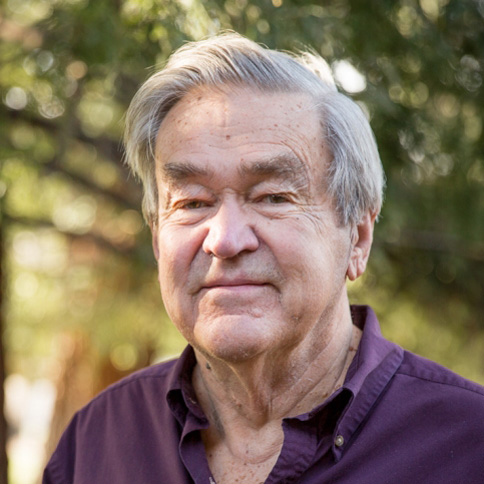
Phyllis Lambert

Wolf Prize Laureate in Architecture 2016

Phyllis Lambert


Award Citation:

“For being vigorously involved in the realization of seminal innovative buildings, exemplary urban regeneration projects and leading research institutes”.


Prize Share:

None


“Citizen Lambert” embodies the vicissitudes of the culture of architecture over 6 decades. Playing all possible roles of designer, planner, artist, writer, photographer, curator, museum director, patron and philanthropist, she ultimately stands for professional rigor and aesthetic elegance, but also for intellectual doubt and political critic. From the mid 1950’s to the present she is vigorously involved in the realization of seminal innovative buildings, exemplary urban preservation and regeneration projects and leading architectural research institutes.

Lambert’s first work of architecture was commissioning Ludwig Mies van der Rohe as designer of the Seagram Building in New York and herself as director of planning (1954-1958) for the project. During the 1960s she designed the Saidye Bronfman Centre in Montreal and served as consultant for the Toronto-Dominion Center project. In the 1970’s Lambert was architect-developer (with Gene Summers) for the renovation of the landmark Biltmore Hotel in Los Angeles and won for this project the National Honor Award of the American Institute of Architects.

Lambert has been the founder, the director and the chair of the board of trustees of the Canadian Center for Architecture (completed in 1989), a notable museum and study center in Montreal. Housing extensive collections of architectural drawings, books, photographs and documents, hosting numerous scholars and curators, and initiating considerable publications and exhibitions, the CCA has established itself as both an exquisite reservoir of historical treasures and a prolific catalyst of architectural and urban discourse.

A persistent civic activist, Lambert was instrumental in founding the preservation group Heritage Montreal; the Investment Fund of Montreal, which revitalizes medium- and low-income housing; the Montreal Institute of Policy Alternatives; and a roundtable dedicated to renewing Montreal’s western downtown neighborhood. She has initiated a number of preservation-related projects and publications including: Court House – A photographic Document; Photography and Architecture: 1839-1939; Opening the Gates of Eighteenth-Century Montreal; and The Fortress of Babylon and the Ben Ezra Synagogue, Cairo.

Robert P. Kirshner

Wolf Prize Laureate in Physics 2015

Robert P. Kirshner


Affiliation at the time of the award:

Harvard University, USA


Award citation:

“for forging the path to supernova cosmology through his observations and insights”.


Prize share:

Robert P. Kirshner

James D. Bjorken 


This year’s Wolf prize in physics is awarded to two researchers who made fundamental contributions toward understanding the structure of the Universe at the very smallest and the very largest sizes.

Robert Kirshner has devoted his professional life to cutting-edge research on cosmology and supernovae. He created the group, environment and directions that allowed his graduate students and postdoctoral fellows to uncover the acceleration in the expansion of the universe. This discovery is a landmark in fundamental physics, as well as in astronomy, and presents a profound challenge to theorists.

In 1974, Prof. Kirshner invented, with John Kwan, a method to measure the expansion rate of the universe based on observations of supernovae. Many key roadblocks, especially the effects due to reddening by interstellar dust, had to be overcome before supernovae could be used as a standard candle of sufficient accuracy to detect any change in the expansion rate. In the 1980s, Kirshner’s program of monitoring supernova explosions in a suite of wavelengths was the world’s most extensive and led to SNIa becoming widely accepted as the best for cosmological investigations. This was an essential step for the later discovery of the acceleration of the expansion.

Kirshner also led a program in which ultraviolet spectra of SNIa’s were measured with the Hubble Space Telescope. The results enabled the effects of redshift on the light (“photometry”) from supernovae at different distances to be properly corrected. All supernova cosmology teams now use these essential data.

Prof. Kirshner guided the formation of the High Z Supernova Team, one of the two teams widely credited with the discovery of cosmic acceleration. He gathered a first-rate group of students, such as Brian Schmidt and Adam Reiss, and led them toward practical and effective steps to find and follow SN Ia in a way that could reliably reveal cosmic deceleration, as was then almost the universally-expected result. Especially important was Kirshner’s insistence that the data at more than one colour be obtained to allow separation of dust from cosmic-motion effects in the photometry data.

Linda J. Saif

Wolf Prize Laureate in Agriculture 2015

Linda J. Saif


Affiliation at the time of the award:

The Ohio State University, USA


Award citation:

“for advancing animal and human health through research in virology and immunology”.


Prize share:

None


Dr. Saif, an exceptional virologist and immunologist, has focused her career on diseases that are of critical importance to agriculture, food safety and human health. Her discoveries of novel enteric and respiratory viruses of food animals and humans have led to her extensive contributions of fundamental knowledge of the gut-mammary immunologic axis and has provided new ways to design vaccines and vaccination strategies. Dr. Saif has discovered new paradigms of the complex way the immune system protects animals against intestinal infections. She has also discovered new viruses that cause intestinal diseases in livestock and subsequent ways to control them. Collectively, Dr. Saif’s scientific contributions have contributed immensely to the improvement of global food safety, food production as well as animal and human health. Dr. Saif has also served with diligence as a scientific advisor and mentor for a large number of graduate students and post-doctoral fellows, many of whom have gone on to become prominent scientists and leading animal health experts in developed and developing countries around the world.

Philippa Marrack

Wolf Prize Laureate in Medicine 2015

Philippa Marrack


Affiliation at the time of the award:

National Jewish Health, Denver, Colorado, USA


Award citation:

“for advancing the understanding of the molecular basis of the immune response”.


Prize Share:

Philippa Marrack

John Kappler 

Jeffrey Ravetch


They have made major contributions to the understanding of the key antigen-specific molecules, the T cell receptor for antigen and antibodies, and how these molecules participate in immune recognition and effector function. Working together, Drs Kappler and Marrack were instrumental in documenting that the T cell receptor recognizes antigen differently from B cells, and succeeded in identifying the previously elusive T cell receptor by an ingenious use of monoclonal T cells and monoclonal antibodies. Dr Jeffrey Ravetch has studied the heterogeneous effector function of antibody molecules and has documented the importance of diverse receptors for the constant “Fc” part of antibody molecules. He cloned many of these receptors for the immunoglobulin Fc region, and showed their importance in mediating antibody function in normal and pathological states. Together this trio has contributed much to the understanding of the molecular basis of the immune response in health and disease.

Jeffrey Ravetch

Wolf Prize Laureate in Medicine 2015

Jeffrey Ravetch


Affiliation at the time of the award:

Rockefeller University, New York, USA


Award citation:

“for advancing the understanding of the molecular basis of the immune response”.


Prize Share:

Jeffrey Ravetch

John Kappler 

Philippa Marrack


Jeffery Ravetch (Born in 1951) revealed the essential mechanisms by which antibodies mediate and regulate their diverse and paradoxical in vivo biological activities. His findings overturned dogma and revealed how antibodies can trigger inflammation, on the one hand, while suppressing inflammatory responses on the other, thereby resolving long-standing observations on the contradictory nature of antibody function. Ravetch’s studies defining how antibodies provide their therapeutic activity through selective engagement of either Fc receptors or SIGN molecules have directed the redesign of antibodies to enhance their therapeutic capacity for treating cancer and inflammatory diseases. As a direct result of his work, over a dozen therapeutic antibodies selectively engineered for either activation or inhibitory Fc receptor binding have been introduced into clinical trials, advancing toward approval. Ravetch’s demonstration of the dominance of the Fc receptor pathway in the mechanism by which pathological immune complexes trigger inflammation has led to the development and clinical testing of small molecule inhibitors of these signaling pathways for the treatment of autoimmune disorders.

Jeffrey Ravetch, John Kappler, and Philippa Marrack are awarded the Wolf Prize for making major contributions to the understanding of the key antigen-specific molecules, the T cell receptor for antigen and antibodies, and how these molecules participate in immune recognition and effector function. Working together, Drs Kappler and Marrack were instrumental in documenting that the T cell receptor recognizes antigen differently from B cells, and succeeded in identifying the previously elusive T cell receptor by an ingenious use of monoclonal T cells and monoclonal antibodies.

Jeffrey Ravetch has studied the heterogeneous effector function of antibody molecules and has documented the importance of diverse receptors for the constant “Fc” part of antibody molecules. He cloned many of these receptors for the immunoglobulin Fc region and showed their importance in mediating antibody function in normal and pathological states. Together, Ravetch, Kappler , and Marrack, have contributed much to the understanding of the molecular basis of the immune response in health and disease.


James D. Bjorken

Wolf Prize Laureate in Physics 2015

James D. Bjorken


Affiliation at the time of the award:

Stanford University, USA


Award citation:

“for predicting scaling in deep inelastic scattering, leading to identification of nucleon’s pointlike constituents”.


Prize share:

James D. Bjorken 

Robert P. Kirshner


This year’s Wolf prize in physics is awarded to two researchers who made fundamental contributions toward understanding the structure of the Universe at the very smallest and the very largest sizes.

The strong force is responsible for the existence of protons and neutrons and for holding them together in atomic nuclei. It is also responsible for over 99% of the atoms’ mass. Bjorken made a crucial contribution for elucidating the nature of the strong force. In 1967 Bjorken predicted that electrons scattering violently off protons would exhibit the so-called scaling behavior, as if they were interacting with pointlike, charged and quasi-free particles inside the nucleon. At the time this was a very counterintuitive and radical idea. Yet, subsequent experiments, carried in 1968/69 at the Stanford Linear Accelerator Center (SLAC), provided a stunning confirmation for Bjorken’s scaling prediction. The leaders of the SLAC experiments, Jerome Friedmann, Henry Kendall and Richard Taylor were recognized by the 1990 Nobel Prize in Physics, for providing the experimental proof for the existence of quarks – the pointlike constituents of the nucleon.

Following the experimental success of Bjorken’s scaling laws, theorists embarked on a quest for a fundamental quantum theory which exhibits scaling. In 1973 David Gross, Frank Wilczek and H. David Politzer discovered that a theory now known as Quantum Chromodynamics (QCD) possesses the required property, namely that the force between quarks goes down as they get closer, so that at small distance they behave as if they were free. This property is now known as “asymptotic freedom”. In 2004 Gross, Wilczek and Politzer were awarded the Nobel Physics Prize for their discovery. QCD was validated in detail by extensive experiments as the theory of Strong Interactions.

The prevailing view today is that all fundamental interactions in Nature, with possible exception of gravity, are described by theories whose mathematical structure is analogous to QCD. Such theories are known as non-abelian gauge theories. Thus in retrospective, Bjorken’s scaling not only led to the discovery of quarks, but also pointed the direction toward the mathematical framework governing all fundamental interactions.

Murray Perahia

Wolf Prize Laureate in Music 2015

Murray Perahia


Award citation:

“for his thrilling and sincere interpretation of music and his influence On the new generation”.  


Prize share:

Murray Perahia

Jessye Norman


One of the great pianists of our times, Murray Perahia has excelled in promoting the music of all creative periods. He has been a great influence on a great number of upcoming pianists in the world and encouraged many students to enhance their art.

Through his extraordinary performances, he has become a model for all serious musicians and music lovers, while he never compromised his standards.

Perahia is constantly trying to emphasize the composer’s intentions rather than his own ego and yet- his unique personality is evident in every one of his performances.

Jessye Norman

Wolf Prize Laureate in Music 2015

Jessye Norman


Award citation:

“for her extraordinary performances worldwide, her educational activities and her devotion for health related causes.


Prize share:

Jessye Norman

Murray Perahia


Jessye Norman was not only an outstanding personality in the world of music but has done a great deal to encourage young people to seek a career as singers as well as musicians in general. She has had a profound influence on many students of all races and genders, which has greatly improved their status as well as their lives.

Besides her musical activity, that enriched large and different audiences, from classical music lovers to Jazz and Afro American Music followers, she has been involved in very important social activities such as fighting for health related causes. With the warm, winning and honest personality, she opened the world of music to wide audiences throughout the world.

James G. Arthur

Wolf Prize Laureate in Mathematics 2015

James G. Arthur


Affiliation at the time of the award:

University of Toronto, Canada


Award citation:

“for his monumental work on the trace formula and his fundamental contributions to the theory of automorphic representations of reductive groups”.


Prize share:

None


Arthur’s development of the trace formula for reductive groups is a monumental mathematical achievement. It generalizes the Selberg trace formula for SL(2) from 1956. In his work, Arthur introduced many major tools in non-commutative harmonic analysis on general reductive groups. Building on the work of Langlands, Shelstad, Kottwitz, Waldspurger and others, Arthur obtained the trace formula in stable form. Using the Fundamental Lemma proved by Ngo, Arthur’s work culminated in his description, as envisioned by Langlands, of the structure of automorphic representations of classical groups (symplectic groups and quasi-split special orthogonal groups). Some of the highlights are the functoriality associated to the standard representation, the multiplicity formulas in the discrete spectrum, the classification of the expected counter-examples to the generalized Ramanujan conjecture, and the description of local L-packets and global A-packets. Arthur’s work had an enormous impact. For example, it had been a central tool in Lafforgue’s proof of the Langlands correspondence for function fields. Recently it has been used by Clozel, Harris, Taylor and others in constructing Galois representations associated to automorphic forms via p-adic methods. Arthur’s ideas, achievements and the techniques he introduced will have many more deep applications in the theory of automorphic representations, and the study of locally symmetric spaces. Arthur’s work is a mathematical landmark that will inspire future generations of mathematicians.

Victor Ambros

Wolf Prize Laureate in Medicine 2014

Victor Ambros


Affiliation at the time of the award:

The University of Massachusetts Medical School, USA


Award citation:

“for The discovery of microRNA as central regulators of gene expression in health and disease”.


Prize share:

Victor Ambros

Gary Ruvkun

Nahum Sonenberg


Prof. Ambros and Prof. Ruvkun MicroRNAs were discovered in 1993 by Victor Ambros during a study of the role of the gene lin-14 in the development of C.elegans, in parallel to the demonstration of the Ruvkun group that elements of the lin-4 gene product operate by acting on the 3’UTR of Lin-14, regulating its expression, at the level of RNA. It was indeed found that a short RNA product encoded by the lin-4 gene regulates the expression of the Lin-14 protein. In 2000 Ruvkun discovered the second microRNA characterized: let-7, which repressed lin-41, lin-14, lin-28, lin-42, and daf-12 expression during developmental stage transitions in C. elegans. let-7 was soon found to be conserved in many species, indicating the existence of miRNA as a wider phenomenon. Since 2000, miRNA research has revealed multiple roles in negative regulation (transcript degradation and sequestering, translational suppression) and possible involvement in positive regulation (transcriptional and translational activation) across the animal and plant kingdoms. In plants, miRNAs control the expression of genes encoding transcription factors, stress response

Proteins and other proteins that impact the development, growth, and physiology of plants. In the animal kingdom miRNAs are involved in most biological processes, playing a key regulatory role in gene expression in health and disease.

Different sets of expressed miRNAs are found in different cell types and tissues. These small endogenous miRNAs interact with a variety of important genes and play critical roles in a wide range of biological processes, including cell proliferation and differentiation. miRNAs are frequently dysregulated in human diseases including

Numerous cancers. miRNAs are involved in cancer pathogenesis by regulating oncogenes or tumor suppressor genes. It is therefore anticipated that molecular diagnostics as well as therapies based on miRNA biology will be developed in the future, as is already apparent from the emerging scientific and clinically oriented literature.