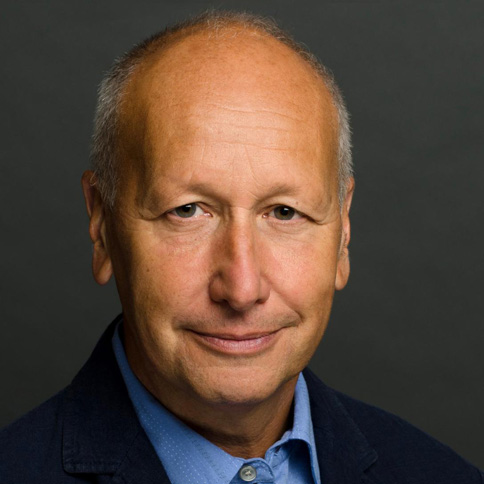
Joachim Messing

Wolf Prize Laureate in Agriculture 2013

Joachim Messing


Affiliation at the time of the award:

Rutgers University, USA


Award citation:

“for innovations in recombinant DNA cloning that revolutionized agriculture and deciphering the genetic codes of crop plants”.


Prize share:

Joachim Messing

Jared M. Diamond 


Research of the two recipients is conducted at two distinctly different levels.

Professor Joachim Messing’s work emphasizes the micro level; gene function, gene cloning, gene sequencing – all geared towards crop understanding and agricultural improvement. This work contributed not only to the realization of the importance of unraveling plant genomes but publicly available tools were developed proving to be absolutely essential to feasibly conduct such studies. Methods were developed to harness plant gene biodiversity to improve utilization of plants as providers of food, feed and fiber. Prof Messing developed the unique “shotgun DNA sequencing” method, a pioneering cloning technology that served as the basis for analysis of large size genomes as found in crop plants. His consequent technological innovations allowed sequencing genomes of complex organisms, and particularly those of importance to agriculture. Importantly, Messing’s work was freely available to the public, thus he contributed directly to plant production, improved agronomic traits and food safety, and developed the necessary tools for such analyses that have been used by countless researchers. His contributions were critical for the development of Bt-resistant strains of maize and cotton that have been remarkably successful and still widely used. Recognizing the importance of maize in many diets, and its relatively poor protein content, he strived to improve the protein value of maize by developing improved maize cultivars with increased levels methionine and lysine. These improvements, too, have been made available without monetary compensation. As founder of the plant genome initiative at Rutgers (PGIR), he directly contributed to the genome sequencing of rice, sorghum and maize. The Wolf Prize in Agriculture is a worthy recognition of Joachim Messing’s contribution towards the quest to produce nutritious and safer food and is entirely consistent with the spirit of this award

Jared M. Diamond

Wolf Prize Laureate in Agriculture 2013

Jared M. Diamond


Affiliation at the time of the award:

UCLA, USA


Award citation:

“for pioneering theories of crop domestication, the rise of agriculture and its influences on the development and demise of human societies, as well as its impact on the ecology of the environment”.


Prize share:

Jared M. Diamond 

Joachim Messing


Professor Jared M. Diamond operates at the macro level of societies, continents, plant and animal systems and contributed to the understanding of processes of domestication and their importance in shaping the evolution of agricultural and social systems, emphasizing the introduction of sustainable agricultural and natural resource management systems that recognize the interaction between agriculture and the environment. Professor Diamond has developed a multidisciplinary approach, melding knowledge and methods from biophysical and social sciences, to analyze the historical evolution of human societies across the globe. In his book, Guns Germs and Steel, his multidisciplinary approach shows how ecological and geographical differences between societies affected their domestication opportunities, their agricultural trajectory and other aspects of human evolution: spread of languages, evolution of epidemic diseases and collapse, survival and prosperity of societies. In his book Collapse he uses case studies to document that short-term decision-making ignoring natural resource dynamics that may lead to agricultural collapse. The book makes a strong intellectual case for policy making that emphasizes sustainability considerations. Diamond’s publications and research contributions earned him the 1999 National Medal of Science. The enormous and impressive scope of Prof. Jared’s scholarship (depth and breadth) that focuses on the role of agriculture in human development is worthy for recognition by the Wolf Prize in Agriculture; more importantly, this recognition promotes the implementation of measures, learnt from the history of agriculture, to ascertain success in agriculture’s main objective, namely continued provision of food while preserving our natural resources.

George D. Mostow

Wolf Prize Laureate in Mathematics 2013

George D. Mostow


Affiliation at the time of the award:

Yale University, USA


Award citation:

“for fundamental and pioneering contribution to geometry and Lie group theory”.


Prize share:

George D. Mostow 

Michael Artin


George D. Mostow made a fundamental and pioneering contribution to geometry and Lie group theory. His most celebrated accomplishment in this fields is the discovery of the completely new rigidity phenomenon in geometry, the Strong Rigidity Theorems. These theorems are some of the greatest achievements in mathematics in the second half of the 20th century. This established a deep connection between continuous and discrete groups, or equivalently, a remarkable connection between topology and geometry. Mostow’s rigidity methods and techniques opened a floodgate of investigations and results in many related areas of mathematics. Mostow’s emphasis on the “action at infinity” has been developed by many mathematicians in a variety of directions. It had a huge impact in geometric group theory, in the study of Kleinian groups and of low dimensional topology , in work connecting ergodic theory and Lie groups. Mostow’s contribution to mathematics is not limited to strong rigidity theorems. His work on Lie groups and their discrete subgroups which was done during 1948-1965 was very influential. Mostow’s work on examples of nonarithmetic lattices in two and three dimensional complex hyperbolic spaces (partially in collaboration with P. Delinge) is brilliant and lead to many important developments in mathematics. In Mostow’s work one finds a stunning display of a variety of mathematical disciplines. Few mathematicians can compete with the breadth, depth, and originality of his works.

Eduardo Souto de Mouro

Wolf Prize Laureate in Architecture 2013

Eduardo Souto de Mouro


Award citation:

“for the advancement of architectural knowledge in showing how buildings can philiosophically and experientially engage with the natural world, and for his exceptional skills as a designer”.


Prize share:

None


Architecture can be considered as the most social of all art forms with a direct impact on each of us as a source of constant inspiration. In a body of work of different scales and types, in Portugal and abroad, Eduardo Souto de Moura has created a better environment for people in a clear social frame work. Of particular note is the coexistence that his buildings establish between society and nature, most poignantly in the stadium at Braga To reward his advancement of the craft and ideas of architecture.

Simon Rattle

Wolf Prize Laureate in Music 2012

Sir Simon Denis Rattle


Award citation:

“for being a leading international figure among the conductors of our time. His worldwide reputation as a perfectionist in performing a wide range of musical works is highly appreciated by those who played under his baton, as well as various audiences around the world”.


Prize share:

Simon Rattle

Placido Domingo


Simon Rattle (born in 1955, in Liverpool) is a British-German conductor, best noted for his work with the City of Birmingham Symphony Orchestra, Berlin Philharmonic, and London Symphony Orchestra, and with the orchestral works of Mahler, Beethoven, and Sibelius. Rattle has in fact conducted a wide range of repertoire, showing a particular affinity for adventurous orchestral work from the 20th century – by composers such as Bartók, Stravinsky and Szymanowski.

As a child, Rattle learned the piano and violin and played percussion for the Merseyside Youth Orchestra. At 16 years old, in 1971, he entered the Royal Academy of Music.

In 1974, he was made assistant conductor of the Bournemouth Symphony Orchestra. He joined the Glyndebourne music staff at the age of 20 in 1975. He went on to conduct over 200 performances of 13 different operas at Glyndebourne and on tour during the subsequent 28 years.

At the age of 21, in 1976, Rattle made his first Prom at the Royal Albert Hall, conducting the London Sinfonietta in August 1976, with a programme including the première of Harrison Birtwistle’s Meridian and Arnold Schoenberg’s First Chamber Symphony.

In 1977, he became assistant conductor of the Royal Liverpool Philharmonic.

From 1980 to 1998, Rattle was Principal Conductor and Artistic Adviser of the City of Birmingham Symphony Orchestra and was appointed Music Director in 1990. He moved to Berlin in 2002 and held the positions of Artistic Director and Chief Conductor of the Berliner Philharmoniker.

Ronald M. Evans

Wolf Prize Laureate in Medicine 2012

Ronald M. Evans


Affiliation at the time of the award:

The Salk Institute, USA


Award citation:

“for discovering the gene superfamily encoding nuclear receptors and elucidating the mechanism of action of this class of receptors”.


Prize share:

None


Dr. Ronald M. Evans (born in 1949, USA) is best known for his discovery of the superfamily of genes encoding nuclear receptors and for the elucidation of their universal mechanism of action, a process of controlled gene expression that governs how lipophilich hormones, vitamins and drugs regulate diverse developmental and metabolic pathways.

Ron Evans establishes the mechanism by which hormones signal through the nucleus to regulate gene expression, thereby controlling physiology. This was achieved by cloning and characterizing the first nuclear receptor, the glucocorticoid receptor, which produced a blueprint for understanding all nuclear receptors subsequently discovered. Evans went on to mineralocorticoid, thyroid and retinoic acid (Vitamin A) receptors, providing a unifying mechanism by which chemically distinct hormones precisely control a series of genetic switches. Discovery of this superfamily redefined endocrine physiology based on knowledge of receptor structure and function, leading to the prediction of the existence of as yet undiscovered hormonal signaling pathways and the discovery of the first orphan receptor. This led to the development of a technology platform known as “reverse endocrinology”, which then ked Evans to the discovery of the first orphan hormone. Reverse endocrinology helped to launch the rapid evolution of entirely new branches of endocrine physiology and to identify novel molecular targets for therapy.

In summary, Evan’s discoveries on the nuclear hormone receptors define a unitary signaling pathway and a central paradigm for the control of eukaryotic expression. His work establishes a transcriptional basis to physiology and has led to the discovery of completely unrecognized physiologic pathways as well a new generation of drugs for the treatment of cancer, metabolic disease and muscular dystrophies.

A. Paul Alivisatos

Wolf Prize Laureate in Chemistry 2012

A. Paul Alivisatos


Affiliation at the time of the award:

Lawrence Berkley National Lab, Berkley, USA


Award citation:

“for developing the colloidal inorganic nanocrystal as a building block of nanoscience making fundamental contributions to controlling the synthesis of these particles, to measuring and understanding their physical properties, and to utilizing their unique properties for applications ranging from light generation and harvesting to biological imaging.”


Prize share:

A. Paul Alivisatos 

Charles M. Lieber


Prof. Paul Alivisatos (born 1959, USA) has developed the colloidal inorganic nanocrystal as a building block of nanoscience making fundamental contributions to controlling the synthesis of these particles, to measuring and understanding their physical properties, and to utilizing their unique properties for applications ranging from light generation and harvesting to biological imaging.

He and his coworkers have developed methods for synthesizing nanocrystals and have elucidated the principles and scaling laws that underlie their development, so that high quality, defect-free colloidal inorganic nanoparticles of defined size and shape can now be made routinely in many laboratories around the world. He has shown how to prepare branched and hollow nanoparticles.

His colloidal nanocrystals have allowed him to study fundamental physics and chemistry of these “artificial atoms” in the novel and important size range between molecules and continuous solids. He has contributed to the spectroscopy of nanocrystals in the time domain and to the study of such photophysical phenomena as electron relaxation, electron-vibration coupling, single-photon emission, and single-electron charging. He has led in studying such phenomena as size dependent melting and pressure induced solid-solid phase transitions and in creating “artificial molecules”, where small numbers of colloidal nanoparticles are joined together into specific arrangements with controlled symmetry and connectivity.

He has demonstrated applications of inorganic nanocrystals in solid state lighting and in solar cells, and has developed methods for biological imaging, such as his “Plasmon ruler”‘ which measures the relative motion of two nanocrystals, joined by DNA or peptides.

Michael Aschbacher

Wolf Prize Laureate in Mathematics 2012

Michael Aschbacher


Affiliation at the time of the award:

California Institute of Technology, USA


Award citation:

“for being a principal architect of the classification of finite simple groups. His impact on the theory of finite is extraordinary in its depth, breadth and beauty”. 


Prize share:

Michael Aschbacher

Luis Caffarelli 


Michael Aschbacher And John Thompson (wolf prize Laureate of 1992) are the two great modern masters of the theory of finite groups, in an era that brought to fruition a line of research going back to Galois in the 1830’s. The breadth and depth of Aschbacher’s understanding of finite groups in general, and finite simple groups in particular, and the power he brought to bear on their analysis, are astonishing.

Aschbacher astounded the finite group theory community with a series of papers that raised the classification project for finite simple groups from a distant dream to the reality it is today.

In a series of papers in the 1970’s Aschbacher developed the theory of standard components and tightly embedded subgroups, and brought the theory of groups of odd characteristic type close to the completion.

Turning next to groups of characteristic type, Aschbacher handled all of the most difficult cases, notably the Thin Group case, the p-Uniqueness Case, and finally the Quasithin Case. This last result, contained in two massive monographs written jointly with S.D Smith, completed the classification of finite simple groups. In the process, he significantly advanced the theories of GF(2) representations, Thompson factorization, and pushing- up.

Also worthy of mention are Aschbacher’s work on maximal subgroups of finite simple groups, his joint work with Y.Segev on the uniqueness of the sporadic groups, and his joint work with S.D. Smith on the Quillen conjecture.


Placido Domingo

Wolf Prize Laureate in Music 2012

Placido Domingo


Award citation:

“for being one of the greatest legendary tennors of all times, instrumental in giving many young artists encouragement and showing devotion to humanitarion causes”.


Prize share:

Placido Domingo

Simon Rattle


Maestro Placido Domingo of the Washington and Los Angeles Opera Houses, USA – Placido Domingo is one of the greatest tenors of all times. He has appeared in leading roles in 128 operas in around the world. His repertoire encompasses works from the early 18th century to Wagner and contemporary operas. Since the beginning of his career, Placido Domingo has also exhibited devotion to Israel and to various humanitarian causes. He has been especially active in encouraging young artists, and has shown much initiative as the ambassador of Hear the World, an organization that raises awareness about the importance of hearing and educates the public about the consequences of hearing loss. Placido Domingo is a tenor famous for his powerful, multicolored voice that retains its purity and clarity at all registers.

Notably, at the beginning of this career, Domingo appeared with the Israeli opera between 1962 and 1965. The award to Domingo is the first time the Wolf Foundation has awarded a prize to a vocal artist.

Luis Caffarelli

Wolf Prize Laureate in Mathematics 2012

Luis Caffarelli


Affiliation at the time of the award:

University of Texas, USA


Award citation:

“for outstanding, visionary, original and fundamental work on partial differential equations, in particular on regularity for elliptic and parabolic equations, free boundary problems and fluid mechanics”.


Prize share:

Luis Caffarelli 

Michael Aschbacher


Luis Caffarelli has repeatedly made very deep breakthroughs. His early work on free boundary problems was the first place where his extraordinary talent and intuition began to show. Free boundary problems are about finding both the solutions to an equation and the region where the equation holds. In a series of pioneering papers, Caffarelli put forward a novel methodology which eventually leads, after several truly amazing technical estimates that step by step to improve the regularity of the solutions and the boundary, to full regularity under very mild assumptions. Although the theory is complicated the arguments are elementary and full of beautiful geometric intuition and mastery of analytic technique.

A second fundamental contribution by Cafarelli is the study of fully nonlinear elliptic partial differential equations (including the famous Monge-Ampere equation), which he revolutionized. The upshot is that, although the equations are nonlinear, they behave for purposes of regularity as if they were linear. (Work of Nirenberg, Spruck, Evans, Krylov and others also played a significant role here.)

Another fundamental contribution by Cafarelli is his joint work with Kohn and Nirenberg on partial regularity of solutions of the incompressible Navier-Stokes equation in 3 space dimensions. Although the full regularity of solutions is still unknown and likely very hard, Caffarelli-Kohn-Nirenberg showed that the singular set must have parabolic Hausdorff dimension strictly less than one. In particular, singular fibers cannot occur (V.Scheffer also deserves partial credit).

Prof. Caffarelli has also produced deep work on homogenization and on equations with nonlocal dissipation. The list could be continued. Caffarelli is the world’s leading expert on regularity of solutions of partial differential equations.