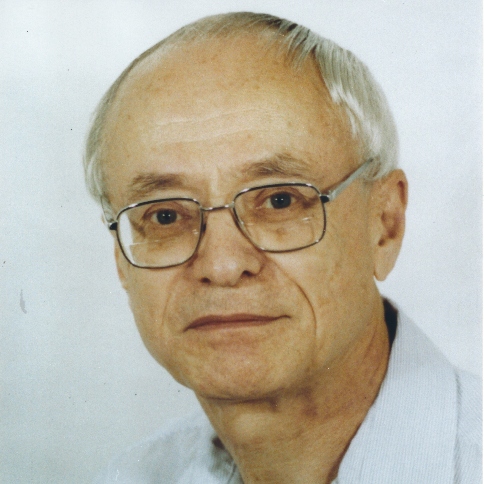
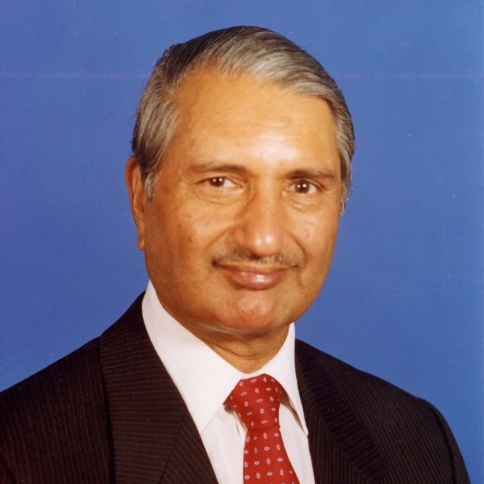
Alexander Varshavsky

Wolf Prize Laureate in Medicine 2001

Alexander Varshavsky


Affiliation at the time of the award:

California Institute of Technology, USA


Award citation:

“for the discovery of the ubiquitin system of intracellular protein degradation and the crucial functions of this system in cellular regulation”.


Prize share:

Alexander Varshavsky 

Avram Hershko


Hershko and Varshavsky stand out in their seminal contributions to the discovery of both the mechanism and the functions of ubiquitin-dependent proteolysis.

Professor Alexander Varshavsky coming from a separate, more biological angle, began studies on histone protein modifications. His discovery that the ubiquitin-activating enzyme was defective in murine ts85 cells, provided the first important demonstration that the ubiquitin system plays an essential role in cell physiology. Soon thereafter, using yeast genetics, Varshavsky demonstrated that ubiquitin conjugation enzymes regulated DNA repair and cell cycle processes. These studies by Varshavsky demonstrated that the ubiquitin directed proteolysis system plays a key role in cellular regulation and provides biological significance to Hershko’s biochemistry.

The discovery by Hershko and Varshavsky that ubiquitin-dependent proteolysis is a fundamental regulatory process, impacts on virtually all aspects of modern biology.

Riccardo Muti

Wolf Prize Laureate in Music 2000

Riccardo Muti


Award citation:

“one of the most outstanding conductors of our time”.


Prize share:

Riccardo Muti

Pierre Boulez 


Riccardo Muti is one of the most outstanding conductors of his times. His musical charisma brings excitement to concert halls and opera houses His creative activities have found expression beyond the boundaries of the domain of music. Muti constitutes one of the most important links in the chain of development of the image of the conductor, whose interpretation of the masterpieces of symphonic music and opera enriches the contemporary world of music. He belongs to the rare breed of conductors, representing the great tradition of interpreters of musical oevres, that has developed from the Baroque era to the present day. What is more, he embellishes this tradition with extraordinary creativity and a freshly rich imagination.

Muti’s activity reaches beyond the realm of concert halls and opera houses. As a conductor he is always first in bringing the humanitarian message of music in moments of crisis. Thus, he came with his La Scala Opera Orchestra to Kosovo and on another occasion to Jerusalem, in support of the peace process. Muti has gained a reputation as the conductor who initiated the founding of a musical therapy center for children with special needs. At the same time he kept encouraging young orchestras and musicians to excel in the fields of composition, instrumental performance and singing.

Raymond Davis Jr.

Wolf Prize Laureate in Physics 2000

Raymond Davis Jr.


Affiliation at the time of the award:

University of Pennsylvania, USA

Brookhaven National Laboratory, USA


Award citation:

“for their pioneering observations of astronomical phenomena by detection of neutrinos, thus creating the emerging field of neutrino astronomy”.


Prize share:

Raymond Davis Jr.

Masatoshi Koshiba 


The observations of the elusive neutrinos of astrophysical origin, by Davis and by Koshiba, have opened a new window of opportunity for the study of astronomical objects, such as the sun and exploding stars, and the study of fundamental properties of matter. Davis and Koshiba developed complementary methods that have yielded important scientific results and have inspired the development of new neutrino detection experiments.

Professor Raymond Davis Jr. developed, through persistent and sustained efforts, the first large-scale radiochemical neutrino detectors and obtained the first measurement of the flux of neutrinos from the sun. Davis developed the techniques of extracting from a large detector volume, the few atoms of argon produced by incoming neutrinos. With the continuing theoretical support of John Bahcall, these measurements were shown to provide a very stringent test for theories of the solar interior.

Raoul Bott

Wolf Prize Laureate in Mathematics 2000

Raoul Bott


Affiliation at the time of the award:

Harvard University, USA


Award citation:

“for his deep discoveries in topology and differential geometry and their applications to Lie groups, differential operators and mathematical physics”.


Prize share:

Raoul Bott

Jean-Pierre Serre


Professor Raoul Bott has been one of the leading figures in differential geometry, particularly in its links with topology and Lie groups. Through his publications, his students, and his personal qualities, he has significantly influenced the mathematics of our times.

His first major contribution was the application of Morse theory to the topology of Lie groups and homogeneous spaces, culminating in the famous “periodicity theorems” for the stable homotopy of the classical groups. This result provided the foundation for the development of K-theory, to which he also contributed greatly, in particular through his joint work with Atiyah on the index theory of differential operators and its applications to equivariant topology. He obtained seminal results in the theory of foliations. His later work, on Yang-Mills theory, moduli spaces of vector bundles, and elliptic genera, has been marked by a combination of the same geometric insight, coupled with new points of view coming from mathematical physics.

Pierre Boulez

Wolf Prize Laureate in Music 2000

Pierre Boulez


Award citation:

“one of the most creative living personalities in the realm of music”.


Prize share:

Pierre Boulez 

Riccardo Muti


Pierre Boulez is a great composer, an outstanding conductor, a philosopher of music, and a distinguished teacher – a true musical savant. He is the most prominent contemporary figure to combine together the creator and the investigator within his personality. He has gone a long way to investigate the acoustical limits of sound, as well as its influence on people.

Boulez is the scholar who opened wide, to young composers of the fifties, the gates leading to the new aesthetics of the musical avant-garde style that developed during the second half of the twentieth century.

It was Boulez who created the IRCAM (Institute de Recherche et de Coordination Acoustique/Musique) at the Pompidou Centre in Paris. On his initiative and under his direction, it became a universal center, where investigators from the world over are intent on deciphering the codes that link music to human beings. At IRCAM Boulez established a group of performers who give expression to the new musical discoveries through public concerts. He also encourages young musicians to present their original compositions to the public at large.

Masatoshi Koshiba

Wolf Prize Laureate in Physics 2000

Masatoshi Koshiba


Affiliation at the time of the award:

University of Tokyo, Japan


Award citation:

“for their pioneering observations of astronomical phenomena by detection of neutrinos, thus creating the emerging field of neutrino astronomy”.


Prize share:

Masatoshi Koshiba 

Raymond Davis Jr.


The observations of the elusive neutrinos of astrophysical origin, by Davis and by Koshiba, have opened a new window of opportunity for the study of astronomical objects, such as the sun and exploding stars, and the study of fundamental properties of matter. Davis and Koshiba developed complementary methods that have yielded important scientific results and have inspired the development of new neutrino detection experiments.

Professor Masatoshi Koshiba led the design and construction of the Kamiokande detector and its successors. The Kamiokande detectors broke new ground, by recording the time of arrival, energy and direction of the incoming neutrinos. These attributes were essential in identifying neutrinos from Supernova 1987a; in identifying that low energy neutrinos originate in the sun, by measuring the direction of their source; and in measuring fluxes of neutrinos of different types, produced in the atmosphere by cosmic rays, providing the first evidence that neutrinos have mass.

Jean-Pierre Serre

Wolf Prize Laureate in Mathematics 2000

Jean-Pierre Serre


Affiliation at the time of the award:

College de France, France


Award citation:

“for his many fundamental contributions to topology, algebraic geometry, algebra, and number theory and for his inspirational lectures and writing”.


Prize share:

Jean-Pierre Serre

Raoul Bott


Professor Jean-Pierre Serre is a mathematician of enormous versatility, who has had a huge influence on an astonishingly wide range of subjects.

Serre’s initial work in algebraic topology and complex geometry made him the youngest recipient ever of the Fields Medal in 1954. His application of algebraic methods to infinite dimensional spaces was to become a major theme in all modern geometry. He transformed algebraic geometry and commutative algebra, through use of sheaf-theoretical and homological methods, constructed the first sheaf cohomology in characteristic p, created modern geometric class field theory, and made major contributions to Galois cohomology and to the theory of arithmetic groups. In number theory, Serre’s influence is inestimable. He introduced the notion of l-adic representations, gave spectacular applications to elliptic curves, abelian varieties, and the theory of modular forms. His conjecture about the modularity of Galois representations was a key step toward the eventual proof of Fermat´s Last Theorem.

Through his lectures, books, courses, each of which is a gem of mathematical exposition and clarity, Serre has inspired generations of mathematicians.

Gurdev S. Khush

Wolf Prize Laureate in Agriculture 2000

Gurdev S. Khush


Affiliation at the time of the award:

International Rice Research Institute, Philippines


Award citation:

“for his extraordinary contribution to theoretical research in plant genetics, evolution and breeding especially of rice, with regard to food production and alleviation of hunger”.


Prize share:

None


Dr. Gurdev S. Khush has had a marked impact in several research spheres in genetics and breeding. Below are three spheres of his long-term, sustained, innovative and exceptional scientific activity:

The area of cytogenetics, genomic constitution, evolutionary studies, chromosome additions (trisomics) and deletions (haplo), interspecific relations, linkage maps and their relation and orientation to specific chromosomes in the genome. Dr. Khush began his research in this area with rye (Secale), then continued with tomato (Lycopersicon) and for the last quarter of a century or so, he has focused on cultivated rice and related wild species (Oryza spp.). Dr. Khush has made remarkable contributions on the above, by developing new approaches and mobilizing new techniques, culminating with molecular ones. His contributions to rice cytogenetics and genetics are seminal. The genetic maps of molecular and traditional markers in rice are now very advanced. They also serve in synteny studies of the origins and evolution of other grain crops (e.g. wheat, maize and barley).

Over many years, Dr. Khush has developed an outstanding line of research focusing on understanding of the nature of plant resistance, mainly rice, to diseases and especially to insects. The latter is a much more problematic area, in which Dr. Khush´s achievements are exceptional. Using his basic genetic and biological research findings, he has been able to produce rice varieties resistant to several major insect pests, such as brown planthopper (Nilaparvata lugens), green leafhopper (Nephotettix virescens), whitebacked planthopper (Sogatella purcifera) and gall midge (Orseolia oryzae). Such verieties are more productive and also more eco-friendly. His research on the genetics of host-parasites interactions has led to the identification of numerous genes for disease and insect resistance, now utilized by IRRI and diverse national programs for developing pest resistant varieties. Khush has established complete series of primary trisomics of rice, utilized for the first time, for associating linkage groups with cytologically identifiable chromosomes. From the progenies of primary trisomics, he selected secondary and telotrisomics used for determining the orientation of linkage groups, positions of centromeres and arm location of genes and molecular markers. With his colleagues, Khush established the first molecular genetic map of rice, and has tagged many genes for disease and insect resistance and stress tolerance, with molecular markers. These advances are now used to apply molecular marker-aided selection in rice improvement. Dr. Khush has also investigated species relationships in genus Oryza, through cytogenetic and molecular approaches and transferred useful genes from wild species to cultivated rice.

The far-seeding aspect of Dr. Khush’s research activities centers on the development of a New Plant Type (NPT) of rice (sometimes labeled “super rice”). This calls for the design and mobilization of genes from cultivated rice and various wild species, to produce genotypes with more efficient photosynthesis, a better ratio of seed yield to straw and thus much higher yields and of better quality. A prototype in this NPT has already been developed and it is now being bred to diseases and pests.

F. Albert Cotton

Wolf Prize Laureate in Chemistry 2000

F. Albert Cotton


Affiliation at the time of the award:

Texas A&M University, USA


Award citation:

“for opening up an entirely new phase of transition metal chemistry based on pairs and clusters of metal atoms directly linked by single or multiple bonds”.


Prize share:

None


Professor F. Albert Cotton has been investigating transition metal compounds with metal-metal bonds from the mid-1960’s. The importance of bonding interactions in chemistry is paramount. Through elegant and novel synthesis, detailed characterization via X-ray diffraction and other spectroscopic techniques coupled with theoretical calculation and insights for over 30 years, he has elucidated the exact nature of metal-metal bonds, with special emphasis on metal-metal multiple bonds, including unique quadruple bonds. Cotton’s model for metal-metal bonding serves to describe the chemistry of dinuclear complexes throughout the periodic table and offers a unified, rational understanding of binuclear and multinuclear metal complexes. The implications and impact of this extensive body of results in biochemistry, catalysis and material science, go beyond the inherent importance and novelty of metal-metal bonding itself. Cotton’s accomplishments contribute to the understanding of metal functions in biological systems, particularly enzymes essential for all living organisms. They provide an insight to catalytic systems of great industrial importance.

Cotton has also played a key role in establishing the fluxional nature of many organometallic complexes now taken for granted. He has also set the stage for modern metal cluster chemistry. His work is cited in all text books and monographs in inorganic chemistry. Moreover, Cotton has authored, or co-authored, the most influential and widely used text books in inorganic chemistry. He is the preeminent inorganic chemist in the world. Through his research and text books he has changed the practice of inorganic chemistry and left an indelible mark on chemistry as a whole.

Raymond U. Lemieux

Wolf Prize Laureate in Chemistry 1999

Raymond U. Lemieux


Affiliation at the time of the award:

University of Alberta, Canada


Award citation:

“for his fundamental and seminal contributions to the study and synthesis of oligosaccharides and to the elucidation of their role in molecular recognition in biological systems”.


Prize share:

None


Professor Raymond U. Lemieux’s seminal contributions to the chemistry of carbohydrates, stretching over close to half a century, have led to a transformation of the discipline. this study is now universally recognized as being of immense importance in chemistry and biology. Lemieux has had an exceptional ability to focus quickly and clearly on the basic questions, in an area whose critical biological significance he addressed before others, and to produce original conceptual frameworks and experimental tools to deal with them. This ability and his many achievements have provided the pillars upon which present-day oligosaccharide chemistry and biochemistry now rest.

Inter alia, Lemieux pioneered many methodologies and concepts, which have become “tools of the trade” in areas far beyond those of his original innovations. These include:

  • The introduction of NMR as a tool for the determination of anomeric stereochemistry of oligosaccharides; his experimental work was the basis for the famous Karplus correlations.
  • His discovery and formulation of the endo- and exo-anomeric effects and their importance in influencing the relative stabilities and reactivities of anomeric structures. Although the anomeric effect was originally identified in pyranoid rings, its relevance to conformational analysis of geminally hetero-atom substituted carbon chains was immediately obvious.
  • His development of synthetic methods for assembly of ligosaccharides under stereochemical control at the anomeric carbon, which laid the foundation for the work of many others who followed his innovations.
  • His landmark synthetic work on human blood group antigenic determinants, which became possible as a result of his work on stereochemical control, and its subsequent medical applications.
  • His immensely important work in establishing the central role of carbohydrate structures in molecular recognition in biological systems and the essential role of (solvent) water in the energetics of oligosaccharide-protein interactions.