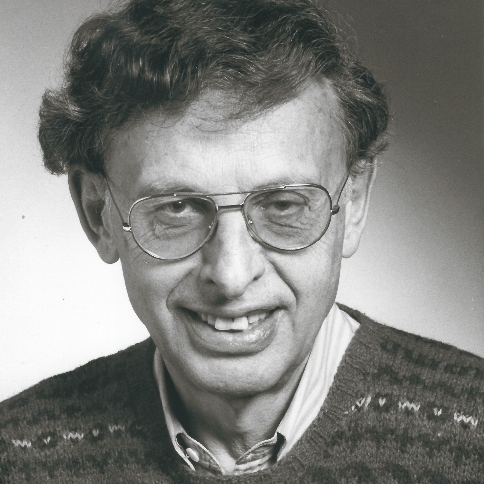
Laszlo Lovasz

Wolf Prize Laureate in Mathematics 1999

Laszlo Lovasz


Affiliation at the time of the award:

Yale University, USA

Eotvos University, Hungary


Award citation:

“for his outstanding contributions to combinatorics, theoretical computer science and combinatorial optimization”.


Prize share:

Laszlo Lovasz

Elias M. Stein 


Professor Laszlo Lovasz has obtained ground breaking results in discrete mathematics which have had very significant applications to other areas of pure and applied mathematics as well as to theoretical computer science. He solved several outstanding problems including the perfect graph conjecture, Kneser’s conjecture and the determination of the Shannon capacity of the pentagon, by introducing deep mathematical methods relying on geometric, polyhedral and topological techniques. His algorithmic ideas, including applications of the ellipsoid method in combinatorial optimization, the lattice basis reduction algorithm, the matroid parity algorithm and the improved procedures for volume computation, all had profound influence on theoretical computer science. He also contributed to the PCP characterization of NP land its connection to the hardness of approximation. His “Local Lemma” is one of the main early results in the development of the probabilistic method. His comprehensive books and fascinating lectures have stimulated mathematical research around the world.


Eric R. Kandel

Wolf Prize Laureate in Medicine 1999

Eric R. Kandel


Affiliation at the time of the award:

Columbia University, USA


Award citation:

“for the elucidation of the organismic, cellular and molecular mechanisms whereby short term memory is converted to a long term form”.


Prize share:

None


Employing the marine snail, Aplysia, Professor Eric R. Kandel developed a simple experimental model for the gill and siphon withdrawal reflex in response to stimulation. He studied three forms of learning with this system: habituation, sensitization and classical conditioning. He reconstructed the wiring of neurons used in this set of reflex behaviors and demonstrated that short term memory involves increased transmitter release from pre-existing synaptic connections while long term memory involves growth of new synaptic connections. Simple forms of learning produce these changes by modulating the strength of specific neuronal connections. Following up these studies at the organismic-behavioral level and the cellular network level, Kandel turned his attention to the subcellular and molecular basis of memory. He demonstrated that release of serotonin and the peptide SCP by presynaptic neurons results in increased levels of cyclic AMP and the stimulation of the cyclic AMP dependent protein kinase in the sensory neurons. Repeated release of neurotransmitters results in enhanced covalent modification of proteins. Kandel then identified the critical substrates for this protein kinase including the S-type K+ channel and CREB-like transcription factors. The short term to long term memory switch depends upon translocation of the protein kinase A catalytic subunit into the nucleus and phosphorylated CREB mediated transcription. This in turn results in the induction of the C/EBP transcription factor which has been shown to be essential for the self-sustained maintenance of the long term facilitation of memory. These studies, carried out over thirty years, relate behavior at the organismic level to events at the molecular level. Recently these same molecular events were shown to play a similar role in learning by Drosophila and in the mammalian brain, thus extending the generalization of this research.

Elias M. Stein

Wolf Prize Laureate in Mathematics 1999

Elias M. Stein


Affiliation at the time of the award:

Princeton University, USA


Award citation:

“for his contributions to classical and ‘Euclidean’ Fourier analysis and for his exceptional impact on a new generation of analysts through his eloquent teaching and writing.”


Prize share:

Elias M. Stein 

Laszlo Lovasz


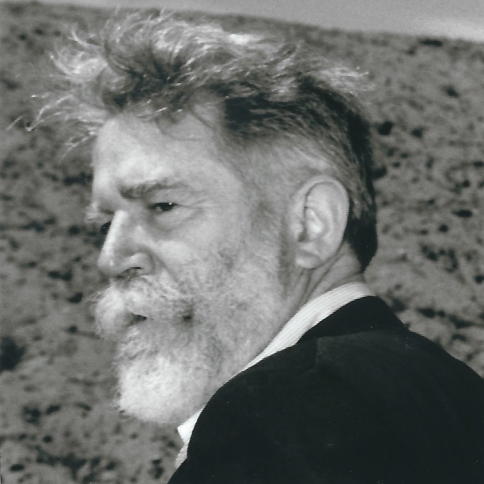
Professor Elias M. Stein has made fundamental contributions in mathematical analysis understood in a very broad sense. He developed (jointly with G. Weiss and C. Fefferman) the theory of Hardy spaces in several complex variables; in particular he emphasized the role of duality between the Hardy spaces and the BMO spaces introduced earlier by F. John and L. Nirenberg. In the representation theory of Lie groups he discovered, with R. Kunze, the so-called “Kunze-Stein” phenomenon, classical by now, on the existence of certain families of unitary representations of the group SL (2,R). He also made a profound contribution to the problem of several complex variables. He is one of the creators of Euclidean Fourier Analysis, has shaped classical analysis by recognizing the role of singular integrals, Radon transforms and maximal operators obtained by integration on lower dimensional manifolds in Euclidean spaces. The clarity of his expository monographs and the contributions of his numerous outstanding students have had a deep impact on the development of the field.

Dan Shechtman

Wolf Prize Laureate in Physics 1999

Dan Shechtman


Affiliation at the time of the award:

Technion – Israel Institute of Technology, Israel


Award citation:

“for the experimental discovery of quasi-crystals, non periodic solids having long-range order, which inspired the exploration of a new fundamental state of matter”.


Prize share:

None


Since the end of the last century, it was believed that all crystals having periodic atomic arrangement in three-dimensions must exist in a restricted number of symmetries. This classification has been basic to all previous research and applications concerning the atomic structure of solids. In particular, crystals having five-fold symmetries, were excluded as a stable phase of matter.

Professor Dan Shechtman discovered five-fold symmetric alloys, a claim which was initially received with disbelief. Moreover, he had the courage to defend his experimental results in the face of severe adverse criticism. The new state of matter emerging from these experiments was fully interpreted and explained in collaboration with John W. Cahn (NIST, USA) and Denis Gratias (CNRS, France).


Yakir Aharonov

Wolf Prize Laureate in Physics 1998

Yakir Aharonov


Affiliation at the time of the award:

Tel-Aviv University, Israel

University of South Carolina, USA


Award citation:

“for the discovery of quantum topological and geometrical phases, specifically the Aharonov-Bohm effect, the Berry phase, and their incorporation into many fields of physics”.


Prize share:

Yakir Aharonov 

Sir Michael V. Berry


Yakir Aharonov (born in 1932, Israel) completed his undergraduate education at the Technion – Israel Institute of Technology in Haifa, earning a BSc in 1956. He pursued his graduate studies at the Technion before moving to Bristol University, UK, alongside his doctoral advisor David Bohm. He received his Ph.D. degree in 1960. Following his doctoral studies, Aharonov held teaching positions at Brandeis University from 1960 to 1961 and at Yeshiva University from 1964 to 1967, both in the United States.

The work of Professors Yakir Aharonov and Michael V. Berry on topological and geometrical phases has stimulated and motivated a large amount of theoretical and experimental activity in widely different fields of physics over the last thirty years. These fields include optics, nuclear physics, fluid physics, chemistry, molecular physics, string theory, gravitational physics, cosmology, solid state physics, the foundations of quantum mechanics, and most recently, attempts to develop quantum computing. A few especially transparent examples of the diversity of their impact include the understanding of coherence and wave function entanglement phenomena in optical and electronic systems; the quantum Hall effect, flux quantization and persistent currents in normal and superconducting systems, and the chaotic evolution of a quantum system.

The basic effect of Yakir Aharonov and the late David Bohm, proposed in 1959, considers a charged particle, e.g. an electron, which quantum mechanically passes on both sides of a tube containing a magnetic flux. The electron can be confined into a region where the magnetic field in a flux tube never penetrates. There is, however, a vector potential in this field free region which produces different phases in the parts of the electron’s wave function passing to the ‘left’ or ‘right’ of the flux tube. The interference pattern depends on the flux. The existence of the Aharonov-Bohm effect, which is based on the non-locality of quantum mechanics, therefore requires an unsettling revision of classical ideas about which there is still much discussion.

In 1984, Berry showed that the adiabatic theorem of quantum and classical mechanics was incomplete in that it left out the possibility that a quantum system could also acquire a ‘geometrical phase’ which depended only upon the geometry of the parameter space and the circuit adiabatically traversed. As a generalization of the Aharonov-Bohm effect, the Berry phase is now an integral part of modern quantum physics. It is routinely used in condensed matter physics, for example in understanding flux quantization, electron beam holography, and the spontaneous polarization in ferroelectrics. Far beyond that, the introduction of ‘the Berry phase’ has served to unify geometrical and topological aspects in diverse areas of science, including field and string theory, gravitational physics, mechanics, and physical chemistry.

Although the geometrical and topological phase effects remain intuitively difficult and abstract, they have become essential ingredients in the development of practical applications like micron sized electronic devices and superconducting quantum interference devices (SQUIDS).

Michael V. Berry

Wolf Prize Laureate in Physics 1998

Sir Michael V. Berry


Affiliation at the time of the award:

Bristol University, UK


Award citation:

“for the discovery of quantum topological and geometrical phases, specifically the Aharonov-Bohm effect, the Berry phase, and their incorporation into many fields of physics”.


Prize share:

Sir Michael V. Berry

Yakir Aharonov 


Michael V. Berry (born in 1941, UK) obtained his BSc in Physics from the University of Exeter and completed his PhD at the University of St. Andrews. Throughout his professional journey, he remained affiliated with the University of Bristol. He served as a research fellow, lecturer, Professor of Physics and Holds the position of Royal Society Research Professor from 1988.

The work of Professors Yakir Aharonov and Michael V. Berry on topological and geometrical phases has stimulated and motivated a large amount of theoretical and experimental activity in widely different fields of physics over the last thirty years. These fields include optics, nuclear physics, fluid physics, chemistry, molecular physics, string theory, gravitational physics, cosmology, solid state physics, the foundations of quantum mechanics, and most recently, attempts to develop quantum computing. A few especially transparent examples of the diversity of their impact include the understanding of coherence and wave function entanglement phenomena in optical and electronic systems; the quantum Hall effect, flux quantization and persistent currents in normal and superconducting systems, and the chaotic evolution of a quantum system.

The basic effect of Yakir Aharonov and the late David Bohm, proposed in 1959, considers a charged particle, e.g. an electron, which quantum mechanically passes on both sides of a tube containing a magnetic flux. The electron can be confined into a region where the magnetic field in a flux tube never penetrates. There is, however, a vector potential in this field free region which produces different phases in the parts of the electron´s wave function passing to the “left” or “right” of the flux tube. The interference pattern depends on the flux. The existence of the Aharonov-Bohm effect, which is based on the non-locality of quantum mechanics, therefore requires an unsettling revision of classical ideas about which there is still much discussion.

In 1984, Berry showed that the adiabatic theorem of quantum and classical mechanics was incomplete in that it left out the possibility that a quantum system could also acquire a “geometrical phase” which depended only upon the geometry of the parameter space and the circuit adiabatically traversed. As a generalization of the Aharonov-Bohm effect, the Berry phase is now an integral part of modern quantum physics. It is routinely used in condensed matter physics, for example in understanding flux quantization, electron beam holography, and the spontaneous polarization in ferroelectrics. Far beyond that, the introduction of “the Berry phase” has served to unify geometrical and topological aspects in diverse areas of science, including field and string theory, gravitational physics, mechanics, and physical chemistry.

Although the geometrical and topological phase effects remain intuitively difficult and abstract, they have become essential ingredients in the development of practical applications like micron sized electronic devices and superconducting quantum interference devices (SQUIDS).

Ruth Arnon

Wolf Prize Laureate in Medicine 1998

Ruth Arnon


Affiliation at the time of the award:

Weizmann Institute of Science, Israel


Award citation:

“for their major discoveries in the field of immunology”.


Prize share:

Ruth Arnon

Michael Sela 


Ruth Arnon (born in 1933, Israel) pursued her studies in chemistry at the Hebrew University of Jerusalem, earning her M.Sc. degree in 1955. In 1960, she joined the Weizmann Institute of Science, where she commenced her doctoral research under the guidance of Michael Sela.

Professors Michael Sela and Ruth Arnon were the first to introduce synthetic polypeptides into immunological research and insinuated the notion of immunogen and immunogenicity. They conceived the idea of synthetic vaccines as a mere concept in drug design and opened the road to the development of peptide vaccines. Their pioneering discoveries enabled safe, effective and long-term vaccines to be produced against infectious diseases, as well as specific peptides to be developed to treat autoimmune disorders.

Michael Sela and Ruth Arnon first introduced the use of linear and branched synthetic polypeptides as antigens, and thus brought about a better understanding of immunological phenomena. They have introduced then the notions of immunogen and immunogenicity. Distinguishing between sequential and conformational epitopes, they have succeeded to synthesize a peptide cross-linked by a disulfide bond, derived from native lysozyme. This synthetic conformational epitope, attached to a synthetic branched polypeptide, evoked antibodies reactive with the native protein. Based on this finding, Sela and Arnon developed the notion of synthetic vaccines against infectious diseases in which a specific epitope, as well as an adjuvant, could be linked covalently to a macromolecular carrier, leading to neutralizing antibodies. For close to 30 years Arnon and Sela have been deeply interested in the possibility of fighting the autoimmune disease, experimental allergic encephalomyelitis (EAE) with synthetic analogs of the molecules in the myelin sheath of the brain which are capable of provoking the disease.

Among the many analogs initially tested, they concentrated their efforts on a synthetic copolymer of four amino acids, denoted Cop 1, which cross-reacts immunologically both at the antibody level and at the T cell level, with the myelin basic protein (MBP). Cop 1 can suppress the onset of the disease in laboratory animals such as guinea pigs, rabbits, mice and rats, reverts the disease in monkeys, and is capable of reducing the number of attacks in patients with exacerbating-remitting type of multiple sclerosis (MS). Its development paves the way for the design of specific drugs for treatment of other autoimmune diseases, based on the nature of the respective autoantigen.

Michael Sela

Wolf Prize Laureate in Medicine 1998

Michael Sela


Affiliation at the time of the award:

Weizmann Institute of Science, Israel


Award citation:

“for their major discoveries in the field of immunology”.


Prize share:

Michael Sela 

Ruth Arnon


Michael Sela (born in 1924, Poland) initially wanted to specialize in chemistry, at the age of 17, he immigrated to Israel with his family and enrolled in the chemistry program at the Hebrew University of Jerusalem. Following the completion of his MSc, he started his PhD studies in Geneva.

Professors Michael Sela and Ruth Arnon were the first to introduce synthetic polypeptides into immunological research and insinuated the notion of immunogen and immunogenicity. They conceived the idea of synthetic vaccines as a mere concept in drug design and opened the road to the development of peptide vaccines. Their pioneering discoveries enabled safe, effective and long-term vaccines to be produced against infectious diseases, as well as specific peptides to be developed to treat autoimmune disorders.

Michael Sela and Ruth Arnon first introduced the use of linear and branched synthetic polypeptides as antigens, and thus brought about a better understanding of immunological phenomena. They have introduced then the notions of immunogen and immunogenicity. Distinguishing between sequential and conformational epitopes, they have succeeded to synthesize a peptide cross-linked by a disulfide bond, derived from native lysozyme. This synthetic conformational epitope, attached to a synthetic branched polypeptide, evoked antibodies reactive with the native protein. Based on this finding, Sela and Arnon developed the notion of synthetic vaccines against infectious diseases in which a specific epitope, as well as an adjuvant, could be linked covalently to a macromolecular carrier, leading to neutralizing antibodies. For close to 30 years Arnon and Sela have been deeply interested in the possibility of fighting the autoimmune disease, experimental allergic encephalomyelitis (EAE) with synthetic analogs of the molecules in the myelin sheath of the brain which are capable of provoking the disease.

Among the many analogs initially tested, they concentrated their efforts on a synthetic copolymer of four amino acids, denoted Cop 1, which cross-reacts immunologically both at the antibody level and at the T cell level, with the myelin basic protein (MBP). Cop 1 can suppress the onset of the disease in laboratory animals such as guinea pigs, rabbits, mice and rats, reverts the disease in monkeys, and is capable of reducing the number of attacks in patients with exacerbating-remitting type of multiple sclerosis (MS). Its development paves the way for the design of specific drugs for treatment of other autoimmune diseases, based on the nature of the respective autoantigen.

James Turrell

Wolf Prize Laureate in Arts 1998

James Turrell


Award citation:

“His highly individualistic imagery is a spiritualized synthesis of form and light in seemingly infinite space”.


Prize share:

None


James Turrell is considered to be one of the most interesting, original and important visual artists of the last two decades.

Turrell treats light as a substance, as other artists would treat paint or sculptural materials. He creates environments and installations in which the space becomes a radiant matter and which excludes real objects and defined images. He manages to dematerialize the art object as his works exist on the borderline between reality and imagination, between the existing and the nonexistent. His Art deals with light itself, not as a bearer of the revelation, it is the revelation.

His works challenge our visual perception of the world. By experiencing them we discover new aspects of perception and sight, and through these we rediscover ourselves. For these reasons every work by James Turrell becomes a rare physical and spiritual experience.

Gerhard Ertl

Wolf Prize Laureate in Chemistry 1998

Gerhard Ertl


Affiliation at the time of the award:

Fritz-Haber Institute, Germany


Award citation:

“for their outstanding contributions to the field of the surface science in general, and for their elucidation of fundamental mechanisms of heterogeneous catalytic reactions at single crystal surfaces in particular”.


Prize share:

Gerhard Ertl 

Gabor A. Somorjai


Gerhard Ertl (born in 1936, Germany) studied physics from 1955 to 1957, then continued under the guidance of his thesis advisor, Heinz Gerischer, to receive his doctorate from the Technical University of Munich in 1965. During the 1970s and 1980s, he held visiting professorships at esteemed institutions such as the California Institute of Technology (1976–1977), the University of Wisconsin-Milwaukee (1979), and the University of California, Berkeley (1981–1982). In 1986, he became the director of the MPG’s Fritz Haber Institute.

Professors Gerhard Ertl and Gabor A. Somorjai have laid the foundation of our present conceptual understanding of the processes of chemical change in molecules adsorbed on single crystal metal surfaces; their work has provided a new perspective to our understanding of heterogeneous catalysis. They have developed and applied sophisticated new analytical tools for determining molecular structure at metal surfaces, and the atomic structure of the metals themselves. With these tools in hand they have been able to characterize the changes in surface structure which may accompany molecular adsorption, and even changes which occur during chemical reaction, and to correlate catalytic activity with the character of the surface structure. Among their many fundamental contributions we highlight particularly, the following:

Gerhard Ertl has determined the detailed mechanisms at the molecular level, of the catalytic synthesis of ammonia over iron and the catalytic oxidation of carbon monoxide over palladium. During these very careful studies he discovered the important phenomenon of oscillatory reactions on platinum surfaces and, using photoelectron microscopy, was able to image for the first time, the oscillating changes in surface structure and coverage that occur during reaction. His work has been especially distinguished by his ability to design experiments which identify and isolate the key parameters which control chemical reactivity at catalytic surfaces.