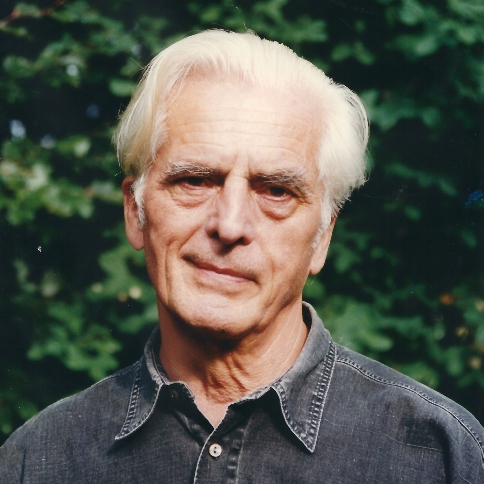
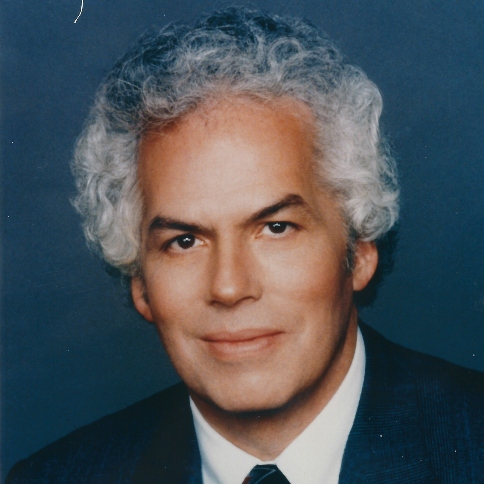
Gabor A. Somorjai

Wolf Prize Laureate in Chemistry 1998

Gabor A. Somorjai


Affiliation at the time of the award:

University of California, USA


Award citation:

“for their outstanding contributions to the field of the surface science in general, and for their elucidation of fundamental mechanisms of heterogeneous catalytic reactions at single crystal surfaces in particular”.


Prize share:

Gabor A. Somorjai

Gerhard Ertl 


Gabor A. Somorjai (born in 1935, Hungary) pursued chemical engineering studies at the Budapest University of Technology and Economics in 1956. Later, he enrolled in graduate studies at Berkeley, where he earned his doctorate in 1960. After a brief period on IBM’s research staff in Yorktown Heights, New York, he returned to Berkeley as an assistant professor in 1964.

Professors Gerhard Ertl and Gabor A. Somorjai have laid the foundation of our present conceptual understanding of the processes of chemical change in molecules adsorbed on single crystal metal surfaces; their work has provided a new perspective to our understanding of heterogeneous catalysis. They have developed and applied sophisticated new analytical tools for determining molecular structure at metal surfaces, and the atomic structure of the metals themselves. With these tools in hand they have been able to characterize the changes in surface structure which may accompany molecular adsorption, and even changes which occur during chemical reaction, and to correlate catalytic activity with the character of the surface structure. Among their many fundamental contributions we highlight particularly, the following:

Gabor A. Somorjai has pioneered the application of low energy electron diffraction (LEED) in surface crystallography and recognized the crucial importance of steps, kinks and terraces in heterogeneously catalyzed reactions, for example, hydrocarbon conversion over platinum and ammonia synthesis over iron and rhenium. He has explored the properties of metal surfaces reconstructed by adsorbed molecules and recognized the important role that surface reconstruction plays in heterogeneous catalysis. He has applied scanning tunneling microscopy (STM) and sum frequency generation (SFG) to molecular surface characterization under “practical conditions”, i.e. at high pressures rather than ultra-high vacuum. He has had the courage to tackle complex problems and the personality to promote the field of surface science among the wider community.

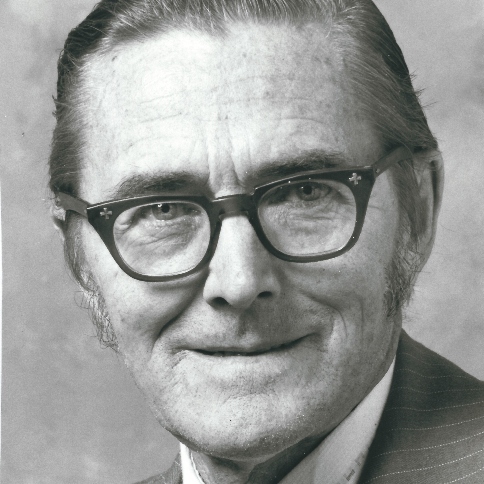
Ilan Chet

Wolf Prize Laureate in Agriculture 1998

Ilan Chet


Affiliation at the time of the award:

The Hebrew University of Jerusalem, Israel


Award citation:

“for their contributions to the environmentally safe development of world agriculture through innovative approaches in breeding and bio-control”.


Prize share:

Ilan Chet 

Baldur R. Stefansson


Prof. Ilan Chet is internationally recognized as a pioneer in the field of biological control of plant pathogens which cause major crop losses. This field is of primary importance in the protection of crops as an alternative to environmental contamination by hazardous pesticides. He has pioneered the application of fungal physiology and the use of micro-organisms for biological control of plant diseases. His research combines in-depth knowledge of the physiology and the biochemistry of the fungi at the cellular and molecular levels, seeking explanations for pathogenic processes.

Professor Chet’s ability to effectively link fundamental and applied aspects of such diverse fields as plant pathology, soil microbiology and biotechnology led to the development of novel biological control agents which are now successfully used as commercial products. Professor Chet has also trained and mentored a new generation of plant biologists and thus contributed to the wide- spread application of new biological approaches in agriculture.


Baldur R. Stefansson

Wolf Prize Laureate in Agriculture 1998

Baldur R. Stefansson


Affiliation at the time of the award:

University of Manitoba, Canada


Award citation:

“for their contributions to the environmentally safe development of world agriculture through innovative approaches in breeding and bio-control”.


Prize share:

Baldur R. Stefansson

Ilan Chet 


Baldur R. Stefansson (born in 1917, Canada) pursued his academic journey at the University of Manitoba, where he earned a Dip.Ag. in 1949, a B.S.A. in 1950, and an M.Sc. in 1952. Subsequently, he completed his Ph.D. in 1966. Stefanson worked at the Department of Plant Science at the University of Manitoba, serving as both a professor and researcher.

Professor Baldur R. Stefansson has made major contributions to the development of canola over a period of more than 30 years. It is mainly due to his influence and vision that oilseed rape has been transformed from a marginal edible oilseed covering 2.7 million hectares in 1950 to a leading oilseed crop in the world today covering in excess of 27 million hectares.

Prof. Stefansson has been one of the first to apply modern chemical analytical tools to monitor the composition of fatty acids of the canola oil, and thus to rapidly recognize and follow the development of new fatty acid compositions. This has eventually resulted in canola being one of the most nutritious oils for food use today. Canola is among the first crops presently undergoing a second revolution due to the advent of biotechnology. This second revolution will further advance the use of canola for the benefit of humanity.

Mary F. Lyon

Wolf Prize Laureate in Medicine 1996/7

Mary Frances Lyon


Affiliation at the time of the award:

Medical Research Council, Mammalian Genetics Unit, England


Award citation:

“for her hypothesis concerning the random inactivation of X-chromosomes in mammals.”


Prize share:

None


Dr. Mary Frances Lyon (born in 1925, England) commenced her academic journey at Girton College, part of the University of Cambridge, in 1943. Her coursework included zoology, physiology, organic chemistry, and biochemistry, with a primary focus on zoology. As she delved into her studies at Cambridge, her interest in embryology blossomed. Subsequently, she pursued her Ph.D. under the guidance of Ronald Fisher. Continuing her doctoral studies, she relocated to the University of Edinburgh, completing her research under the supervision of Douglas Falconer.

Mary Frances Lyon put forward early in 1961 a disarmingly simple yet elegant hypothesis regarding the random inactivation of one of the two X-chromosomes carried by female mammalian cells.

Somatic cells of male mammals carry only one X-chromosome, whereas cells of females carry two. Since many of the genes encoded on the X-chromosome must be expressed to the same extent in both male and female cells, some mechanism must exist to compensate for this imbalance in X-chromosome number. The Lyon Hypothesis was put forward as a means of achieving this dosage compensation for the genes encoded on the X-chromosome. In a concise one-page paper (Nature 190: 372, 1961), Lyon argued that this balance was brought about by the random inactivation of either the paternally or maternally inherited X-chromosome in each female cell and that this inactivation occurred early in embryonic development.

The original arguments were made on the basis of genes expressed in the mouse, including coat color genes, but this hypothesis explained X-chromosome behavior in many – if not all mammals. Over the years her hypothesis has been confirmed by much indirect and, more recently, direct evidence focusing on the gene(s) responsible for this behavior.

John A. Wheeler

Wolf Prize Laureate in Physics 1996/7

John A. Wheeler


Affiliation at the time of the award:

Princeton University, USA

University of Texas, USA


Award citation:

“for his seminal contributions to black holes physics, to quantum gravity, and to the theories of nuclear scattering and nuclear fission”.


Prize share:

None


With his analysis of the fate of cold massive objects, Professor John A. Wheeler catalyzed the emergence of black hole physics. Wheeler recognized that black holes are sinks of information, enunciated the highly influential principle of black hole uniqueness, “black holes have no hair”, and laid (with Regge) the foundations of black hole stability theory. To face the challenge posed by total gravitational collapse, he formulated the basis of canonical quantum gravity theory, including geometrodynamics, superspace, and (with B. DeWitt) the celebrated Wheeler-DeWitt equation. Well before the discovery of pulsars, he recognized that the Crab supernova remnant should be energized by a magnetized spinning neutron star. In the heyday of nuclear physics, he introduced the concept of the S-matrix (scattering matrix), which is now used in many branches of physical science, and (with Bohr) originated the theory of nuclear fission. His views of the role of the quantum principle in physics are among the most farseeing of our time. In the course of his long career, he trained and stimulated several generations of physicists.

John Archibald Wheeler of the Princeton University and the University of Texas at Austin, was cited in the Wolf Prize in Physics for leading the development of black hole physics . After recognizing that any large collection of cold matter has no choice but to yield to the pull of gravity and undergo total collapse, Wheeler in 1968 dubbed the resulting object a “black hole”. Black holes have since become focus in gravitation theory, astrophysics, and elementary particle theory. Many features of the modern theory of black holes were developed by Wheeler and his students.

When a cold mass is not big enough to collapse to a black hole, it forms, according to theory, a neutron star, a body of nuclear matter the size of a medium city, but with a mass of the sun. In 1966, Wheeler suggested that the energy required to power the Crab Nebula, a glowing gas cloud in the Taurus constellation, the Bull, known to be the remnant of the fatal explosion of a star observed in 1054, could come from a spinning neutron star, embedded in the Nebula. A year later radioastronomers discovered the first pulsars, which were quickly identified with the previously hypothetical neutron stars. The discovery of a pulsar in the Crab Nebula verified Wheeler’s imaginative prediction.

On the eve of World War II, Wheeler, working with Niels Bohr, developed the theory of nuclear fission, which quantifies the mechanism whereby heavy nuclei break apart to free energy and neutrons that can initiate a nuclear chain reaction. Both the atomic bomb and nuclear power reactors were designed in accordance with this theory.

John A. Wheeler is famous as a teacher, and during his long career has trained and stimulated generations of physicists. The great American theorist, Richard Feynman, was his first doctoral student.

Frei Otto

Wolf Prize Laureate in Architecture 1996/7

Frei Otto


Award citation:

“for their fundamental structural contributions to the advancement of contemporary architecture as a social and technical art form in the evolution of the twentieth Century”.


Prize share:

Frei Otto

Aldo Van Eyck


Professor Frei Otto, architect and engineer, has devoted his entire career to the invention, perfection and deployment of lightweight suspended tensile structures as a relatively unprecedented column-free form for the economic and poetic accommodation of large institutions, with particular emphasis upon sports facilities, exhibition halls and places of public assembly.

Educated at the Technical University of Berlin, he worked thereafter with engineer Fred Severud and Architect Matthew Novicki on the State Fair Arena in Raleigh, North Carolina. Dr. Otto opened his own office in 1953, designing both tented and cable network structures including “tents” for the West German Garden Exhibitions in Kassel and Cologne (1955 and 1957) and two path-breaking, large cable suspended roofs at the German Pavilion, Expo Montreal, 1967, and the Olympic Stadium in Munich, 1972.

He has combined his research with an equally pioneering approach to the development of ecological forms, compatible with the larger goal of building a sustainable environment for the future of humanity. He still continues his active structural research at the Institute for Light Surface Structures, University of Stuttgart.


Aldo Van Eyck

Wolf Prize Laureate in Architecture 1996/7

Aldo Van Eyck


Award citation:

“for their fundamental structural contributions to the advancement of contemporary architecture as a social and technical art form in the evolution of theTwentieth Century”.


Prize share:

Aldo Van Eyck

Frei Otto


Professor Aldo van Eyck, studied at ETH Zurich from 1938 to 1943 and then worked for the Public Works Department from 1946-1950. He opened his own office in 1952 and eight years later designed his canonical children’s orphanage in Amsterdam which was based on a form of cellular aggregation more commonly found in pre-industrial, vernacular culture than in the main stream of European architecture.

Influenced in some measure by certain tribal settlement patterns in North America – in particular the Dogon Society – van Eyck founded the school of Structural Rationalism, a movement that was to find a particular following in Holland. This approach was centered around the magazine Forum, which he edited from 1959 to 1967, and the School of Architecture of the Technical University of Delft, which he served as a professor throughout his career. These two centers of influence gained him a wide following among a younger generation of Dutch architects, including Piet Blom, Herman Hertzberger and Theo Bosch. At the age of 78, he continues active practice today, in partnership with his wife Hannie van Eyck.

Zubin Mehta

Wolf Prize Laureate in Music 1995/6

Zubin Mehta


Award citation:

“who is considered one of the world’s foremost conductors of our time. His humanitarian contributions to bring people together through the universal language of music and his constant encouragement of young artists, are unforgettable”.


Prize share:

Zubin Mehta 

Gyorgy Ligeti


Maestro Zubin Mehta (born in 1936, India) received early training in music from his father, Mehli Mehta, first concertmaster and later conductor of the Bombay Symphony. He studied violin and piano from the age of 7, and by the time he was 16 he was conducting concerto accompaniments for his father. He left Bombay for Vienna to study piano, composition, string bass and conducting at the Academy of Music. He played in various orchestras, graduating in 1957 with diploma in conducting. In the following year Mehta conducted the Musikverein in Vienna and won the first prize of the First International Conductors Competition, in Liverpool, England.

Substituting for Eugene Ormandy, Mehta became the youngest conductor ever to lead the Vienna Philharmonic. He was also the youngest man to conduct the then 25-year old Israel Philharmonic in 1961, which he has been invited to conduct each year since. He later became Music Director of the Israel Philharmonic, and in 1981 this appointment was extended for life.

Many important guest-conducting engagements followed. In 1962, at the age of 26, he was engaged to be Music Director of the Los Angeles Philharmonic. He has been Music Director of the Montreal Symphony, the New York Philharmonic and the Maggio Musicale Fiorentino.

Zubin Mehta has been awarded many international distinctions, including the “Order of the Lotus”, India´s highest cultural award for outstanding accomplishment in the arts and sciences. Mehta received Honorary Doctorate Degrees from the Hebrew University of Jerusalem, Tel Aviv University and the Weizmann Institute of Science.

Yakov G. Sinai

Wolf Prize Laureate in Mathematics 1996/7

Yakov G. Sinai


Affiliation at the time of the award:

Princeton University, USA

Landau Institute of Theoretical Physics, Russia


Award citation:

“for his fundamental contributions to mathematically rigorous methods in statistical mechanics and the ergodic theory of dynamical systems and their applications in physics”.


Prize share:

Yakov G. Sinai 

Joseph B. Keller


Professor Yakov G. Sinai brings to bear on the problems of mathematical physics the powerful tools of dynamical systems and probability theory, often developing new tools for this purpose. He is generally recognized as the world leader in the mathematics of statistical physics. Working in the tradition of the Kolmogorov school, he first formulated the rigorous definition of the invariant entropy for an arbitrary measure-preserving map. His subsequent work covers areas from the ergodicity of the motion of billiards to spectral properties of quasi-periodic Schrödinger operators. Statistical mechanics is one of the most active and rewarding areas of modern mathematics and Yakov Sinai is its recognized leader today.

Stanley B. Prusiner

Wolf Prize Laureate in Medicine 1995/6

Stanley B. Prusiner


Affiliation at the time of the award:

University of California, USA


Award citation:

“for discovering prions, new class of pathogens that cause important neurodegenerative disease by inducing changes in protein structute”.


Prize share:

None


Stanley B. Prusiner (born in 1942, USA) earned a Bachelor of Arts degree in chemistry from the University of Pennsylvania and later obtained his M.D. from the University of Pennsylvania School of Medicine. He completed an internship in medicine at the University of California, San Francisco, and then pursued research on glutaminases in E. coli at the National Institutes of Health under the supervision of Earl Stadtman. After three years at NIH, Prusiner returned to UCSF to finish a residency in neurology. In 1974, upon completing the residency, he joined the faculty of the UCSF neurology department. Since then, Prusiner has held various faculty and visiting faculty positions at both UCSF and UC Berkeley.

Before the work of Professor Stanley B. Prusiner, infectious diseases were regarded as exclusively caused by nucleic acid-containing agents such as viruses, bacteria and parasites. A series of neurodegenerative diseases, such as Creutzfeld-Jakob and Gerstmann-Straussler-Scheinker disease existed in humans and scrapie and bovine spongiform encephalopathy (mad cow disease) in farm animals, that had features suggesting they were transmittable but whose causative agents were not understood.
Prusiner demonstrated that the agents responsible for their transmission, which are called prions, were composed only of protein and were devoid of nucleic acid. After purifying prions from the brain, he discovered that they are composed of a special type of protein encoded by a chromosomal gene. In its normal form, this protein is called Prpc.

Prusiner showed that in lesions in animals with the neuro-degenerative disease scrapie, there is an abnormal form of this protein. This abnormal form has a unique structure and was called PrpSc. He discovered that PrpSc was derived from Prpc but differs in its three-dimensional conformation. PrpSc polymerizes to form amyloid. Amyloid plaques in the brains of animals and humans dying of prion diseases are composed of this abnormal protein. Prusiner found that PrpSc molecules can convert Prpc molecules into additional PrpSc molecules, the mechanism that accounts for the infectious nature of these diseases.

Prusiner’s studies have changed the way scientists and physicians think about central nervous system degenerative disorders. He has discovered a new principle of disease that has broad implications in biology and medicine.