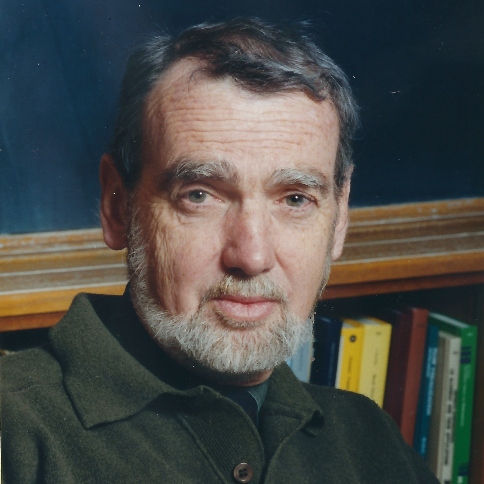
Neal L. First

Wolf Prize Laureate in Agriculture 1996/7

Neal L. First


Affiliation at the time of the award:

University of Wisconsin, USA


Award citation:

“for his pioneering research in the reproductive biology of livestock”.


Prize share:

None


Professor Neal L. First (born in 1930, USA) has made pioneering contributions to animal genetics by the development of systems of bovine embryo cloning, gene transfer, and in-vitro production of livestock embryos. His research has resulted in major advances in the application of biotechnology to reproduction in farm animals, eliminating the need for brood cows in beef cattle breeding.

Nuclear transfer of genetic material is being developed to clone farm animal embryos. His ground-breaking research in this field has led to significant discoveries in reproductive biology. Prof. First’s laboratory pioneered the application of this technique to the genetic selection of livestock. He and his colleagues defined the conditions leading to optimal in-vitro fertilization and high frequency embryo development. They developed the defined growth media that are widely used to culture bovine embryos. The procedures developed in Prof. First’s laboratory have led to major discoveries throughout the world concerning embryo development in domestic animals.

The new knowledge provided by Prof. First’s research is having a major impact on the production of genetically advanced strains of livestock throughout the world. Advances include improved reproduction, growth, lactation, and disease resistance.

Joseph B. Keller

Wolf Prize Laureate in Mathematics 1996/7

Joseph B. Keller


Affiliation at the time of the award:

Stanford University, USA


Award citation:

“for his profound and innovative contributions, in particular to electromagnetic, optical, acoustic wave propagation and to fluid, solid, quantum and statistical mechanics”.


Prize share:

Joseph B. Keller

Yakov G. Sinai 


Professor Joseph B. Keller is a preeminent applied mathematician in the classical tradition. He has brought a deep understanding of physics and a superb skill at asymptotics to an astonishing range of problems; these include reflection, scattering and diffraction of waves, whether acoustic, electro-magnetic, elastic or fluid. His outstanding contributions cover problems in mechanics, quantum mechanics, thermo-dynamics, statistical mechanics, and include the so-called Keller-Maslov index, the Keller-Rubinov formula for forward scattering and pioneering work on random media. He is really the model of what a mathematician interested in a wide variety of physical phenomena can and should be.


Gyorgy Ligeti

Wolf Prize Laureate in Music 1995/6

Gyorgy Ligeti


Award citation:

“One of the most outstanding composers of the second half of the 20th century. While based on musical tradition, he has brought new ways, original and innovative, and created models to inspire younger generations of composers”.


Prize share:

Gyorgy Ligeti

Zubin Mehta 


Maestro Gyorgy Ligeti (born in 1923, Romania) studied composition under Sandor Veress and Ferenc Farkas in the Liszt Academy of Music, Budapest. From 1950 to 1956 he lectured there on the theory of music. From 1957 to 1958 he lived in Cologne, working in the electronic music studio of the West-deutscher Rundfunk. In 1959 he settled in Vienna and in the 1960´s he lectured regularly at the Oarmstadt courses and in the Academy of Music in Stockholm. He has directed composition courses in Bilthoven, Essen, Jyvaskyla, Tanglewood, Siena and Aix-en-Provence.

Ligeti lived principally in West Berlin from 1969 to 1973. He spent the year 1972 at the University of Stanford in California, as a composer-in-residence. Since 1973 he has been Professor of Composition at the Hochschule fuer Musik in Hamburg. He has received many artistic awards, among them; the Berliner Kunstpreis, the Beethovenpreis der Stadt Bonn, the Bachpreis der Stadt Hamburg, the Prix Maurice Ravel, Prix Honegger, Prix Prince Pierre de Monaco and Commandeur dans I´Ordre National des Arts and Lettres, France. He is a member of the Academies of Arts of Berlin, Hamburg and Munich, the Swedish Royal Academy of Music and the American Academy and Institute of Arts and Letters.

His numerous compositions include works for wind quintet, string quartets, capella choirs, electronic music, organ, singers and instrumentalists, cello, harpsichord, string orchestra, concertos for piano, cello, flute, oboe and orchestra, women´s choir and orchestra, pieces for tape, for piano, for violin, the opera “Le Grand Macabre”, and many others.

Yoichiro Nambu

Wolf Prize Laureate in Physics 1994/5

Yoichiro Nambu


Affiliation at the time of the award:

University of Chicago, USA


Award citation:

“for his contribution to elementary particle theory, including recognition of the role played by spontaneous symmetry-breaking in analogy with superconductivity theory, and the discovery of the color symmetry of the strong interactions”.


Prize share:

Yoichiro Nambu  

Vitaly L. Ginzburg


Professor Yoichiro Nambu originated several of the key ideas of elementary particle physics. He introduced the concept of spontaneous symmetry breaking, which appears in superconductivity theory, into elementary particle theory. By these means he explained, for instance, the low pion mass, the pion being the (nearly) massless excitation resulting from the breaking of chiral symmetry. Nambu introduced the notion of a SU(3) symmetry of the color quantum number, by which means he rid the original quark model of a crucial weakness. This symmetry, in its gauged version, is the foundation of the modern theory of the strong force. Nambu also originated the action for a relativistic string, a key ingredient in modern string theory. All these ideas were critical for the development of contemporary particle physic.

Yasutomi Nishizuka

Wolf Prize Laureate in Medicine 1994/5

Yasutomi Nishizuka


Affiliation at the time of the award:

Kobe University School of Medicine, Japan


Award citation:

“for their discoveries concerning cellular transmembrane signalling involving phospholipids and calcium”.


Prize share:

Yasutomi Nishizuka

Michael J. Berridge  


Working independently, Professors Berridge and Nishizuka have dramatically advanced our understanding of signal transduction cascades that regulate a wide variety of cellular processes, including secretion, fertilization, cellular growth and differentiation, and information processing in the brain.

Yasutomi Nishizuka discovered the protein kinase C family and its activation by extracellular signalling agents via the breakdown of membrane hospholipids. Through meticulous enzymological studies Nishizuka and his colleagues demonstrated that protein kinase C is activated by diacylglycerol and calcium. Work fromhis laboratory and subsequently from many other laboratories has established that the enzymes in the protein kinase C family are involved in a wide variety of cellular processes. Protein kinase C also mediates certain pathological conditions, such as the promotion of tumours by phorbol esters. It is thus another of the fundamental mediators of cellular responses to environmental signals.

Vitaly L. Ginzburg

Wolf Prize Laureate in Physics 1994/5

Vitaly L. Ginzburg


Affiliation at the time of the award:

Lebedev Physical Institute, Russia


Award citation:

“for his contributions to the theory of superconductivity and to the theory of high-energy processes in astrophysics”.


Prize share:

Vitaly L. Ginzburg

Yoichiro Nambu  


Professor Vitaly L. Ginzburg has pioneered the theory of uperconductivity for 50 years. He contributed to the formulation of the celebrated Ginzburg-Landau phenomenological theory of superconductivity, the influence of which has been felt in condensed matter physics and elementary particle physics until today. The theory permitted the prediction by Abrikosov of two types of superconductors including the technologically important hard superconductors. And Ginzburg pioneered now standard ideas of astrophysics: that galactic radio emission is synchrotron radiation, that cosmic rays are of galactic halo origin, and that neutron star interiors are superfluid, to name a few. Ginzburg is remarkable for his scientific breadth, and his long career is punctuated by many strokes of genius.

Samuel J. Danishefsky

Wolf Prize Laureate in Chemistry 1995/6

Samuel J. Danishefsky


Affiliation at the time of the award:

Memorial Sloan-Kettering Cancer Center, USA

Columbia University, USA


Award citation:

“for designing and developing novel chemical reactions which have opened new avenues to the synthesis of the synthesis of complex molecules, particularly polysaccharides and many other biologically and medicinally important compounds.”


Prize share:

Samuel J. Danishefsky

Gilbert Stork 


Samuel J. Danishefsky (born in 1936, USA) completed his B.S. at Yeshiva University in 1956. He earned his Ph.D. in chemistry from Harvard University in 1962 under the guidance of Peter Yates, along with a National Institutes of Health postdoctoral fellowship at Columbia University with Gilbert Stork. After his doctoral studies, he became a professor at the University of Pittsburgh, where he achieved the rank of University Professor and taught until 1979. Subsequently, from 1979 to 1993, he held a professorship at Yale University, rising to the position of Sterling Professor of Chemistry. Concurrently, Danishefsky served at Memorial Sloan-Kettering Cancer Center from 1991, initially as the director of the Laboratory for Cancer Research Bioorganic Chemistry and later as the chair from 1993. In 1993, he accepted a professorial appointment at Columbia University, currently dividing his time between Columbia and Sloan-Kettering.

Over almost five decades, Professor Gilbert Stork has changed the face of organic chemistry , and organic synthesis in particular. Stork´s contributions to the development of theories of stereoelectronic control over chemical reactions, include the SN2´ reaction, polyene cyclizations, alkylation reactions with enolates and enolate equivalents, reactions involving enamines and metalloenamines, the paradigm of trapping kinetic enolates, and various annulation reactions. Stork´s pioneering studies into free radical cyclizations have been recognized as one of the most powerful and concise strategies for assembling polycyclic natural products. Once considered the least tractable of synthetic intermediates, free radical chemistry is now routinely practiced in synthetic laboratories throughout the world.

Professor Samuel J. Danishefsky has developed a number of new concepts in organic reactivity, thoroughly investigated the relevant stereochemical and mechanistic issues and subsequently provided new solutions to demanding problems in natural product synthesis. Examples include his polyannulating reagents in steroid synthesis, his now routinely employed dienes for Diels-Alder and hetero-Diels-Alder reactions, and more recently, his use of glycals for the synthesis of oligosaccharides. The capacity that these methodologies bring to the synthesis of complex structures which bear multiple asymmetric centers is a major triumph in chemistry.

The synthesis of complex polysaccharides has been one of the long-standing problems in synthesis. Such compounds play a crucial role in many biologically important phenomena, including cell adhesion, enzyme inhibition, determination of blood groups, immune response and cancer. Polysaccharides represent one of the three most important classes of biopolymers. While the synthesis of the other two – polynucleotides and polypeptides – has reached a satisfactory level of maturity with an immense impact on the study of biology and on medicine, the synthesis of polysaccharides has remained a formidable challenge.

In 1993 Danishefsky announced a highly efficient synthesis of oligosaccharides on a polymer support using same of the mutually developed tools. More recently, he has extended the method to the solid-phase synthesis of glycopeptides. This work has brought us to the threshold of a new era where complex carbohydrates can be assembled with an unprecedented selectivity and efficiency. Some of these fully synthetic compounds, such as the human breast cancer tumor antigen, are now being evaluated with respect to anticancer vaccines.

The influence of this mentor/disciple couple on several generations of chemists in organic synthesis and related bioorganic areas has been immense. Their noncompromising commitment to academic excellence has produced hundreds of top-class organic chemists, many of which are now university professors and key scientists in the chemical and bio-medical industries around the world.

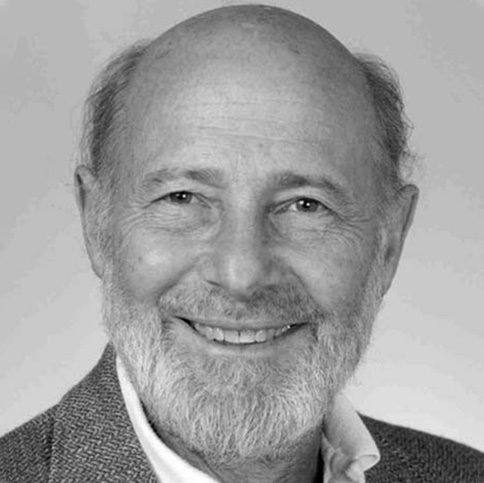
Robert P. Langlands

Wolf Prize Laureate in Mathematics 1995/6

Robert P. Langlands


Affiliation at the time of the award:

Institute for Advanced Study, USA


Award citation:

“for his path-blazing work and extraordinary insight in the fields of number theory, automorphic forms and group representation”.


Prize share:

Robert P. Langlands

Andrew J. Wiles 


Professors Langlands and Wiles share the Wolf Prize for their ground-breaking research in modern number theory which has led to the solution of long standing problems as well as defining important new directions.

Robert P. Langlands has shaped the modern theory of automorphic forms including ground-breaking works on: Eisenstein series, group representations, L-functions and the Artin conjectures, principle of functoriality, and the formulation of the far-reaching Langlands program. His contributions and insights provide a basis and an inspiration for present and future researchers in these fields.


Morris Schnitzer

Wolf Prize Laureate in Agriculture 1995/6

Morris Schnitzer


Affiliation at the time of the award:

Centre for land and Biological Resources Research, Agriculture Canada, Canada


Award citation:

“for their pioneering contributions to our understanding of the chemistry of soil organic matter and its application to agriculture”.


Prize share:

Morris Schnitzer

Frank J. Stevenson 


Dr. Morris Schnitzer and Professor Frank J. Stevenson are the pioneers of our understanding of the chemistry of soil organic matter. They have applied their discoveries to the improvement of agricultural practice. Their research has elucidated the composition and physicochemical properties of humic acids. Their utilization of modern analytic techniques has significantly improved our understanding of the structure of humic acids in soils. Their research has had a major impact on our knowledge of the behavior of nutrients and hazardous chemicals in soils.

Their lifetime of research in this field has greatly improved management of soil resources and maintenance of environmental quality.

Michael J. Berridge

Wolf Prize Laureate in Medicine 1994/5

Michael J. Berridge


Affiliation at the time of the award:

University of Cambridge, UK


Award citation:

“for their discoveries concerning cellular transmembrane signalling involving phospholipids and calcium”.


Prize share:

Michael J. Berridge  

Yasutomi Nishizuka


Working independently, Professors Berridge and Nishizuka have dramatically advanced our understanding of signal transduction cascades that regulate a wide variety of cellular processes, including secretion, fertilization, cellular growth and differentiation, and information processing in the brain.

Michael Berridge’s major achievement is the discovery of a novel, lipid-derived mediator of cell signalling, inositol trisphosphate, and its role in regulating intracellular calcium. This ubiquitous signalling system is involved in a wide variety of physiological processes. Berridge’s discovery has opened many new avenues of inquiry: the regulation of intracellular calcium, the metabolism and activities of inositol phosphates, the role of lipids in cell signalling, and the coupling of signalling agents to inositol phosphate formation. It thus ranks as one of the key contributions to understanding a fundamental property of living cells, their response to environmental signals.