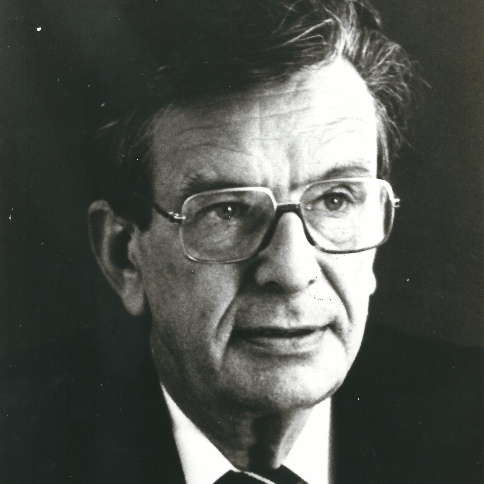
John W. Milnor

Wolf Prize Laureate in Mathematics 1989

John W. Milnor


Affiliation at the time of the award:

Institute for Advanced Study, USA


Award citation:

“for ingenious and highly original discoveries in geometry, which have opened important new vistas in topology from the algebraic, combinatorial, and differentiable viewpoint”.


Prize share:

John W. Milnor 

Alberto P. Calderon


During his undergraduate years at Princeton University, John W. Milnor (born in 1931, USA)  was named a  Putnam Fellow in both 1949 and 1950. Notably, at the youthful age of 19, he successfully proved the Fáry–Milnor theorem. Upon completing his studies, Milnor earned an A.B. in mathematics in 1951, presenting a senior thesis entitled “Link groups,” which was supervised by Robert H. Fox. Remaining at Princeton for his graduate studies, Milnor continued his academic pursuit and obtained his Ph.D. in mathematics in 1954. His doctoral dissertation, titled “Isotopy of links,” was also conducted under the guidance of Fox.

The highly original discoveries of Professor John W. Milnor in geometry have exerted a major influence on the development of contemporary mathematics. The current state of the classification of topological, piecewise linear, and differentiable manifolds rests in large measure on his work in topology and algebra.

Milnor’s discovery of differentiable structures on S7 (the 7-dimensional sphere) which are exotic, i.e. different from the standard structure, came as a complete surprise and marked the beginning of differential topology. Later, in joint work with Kervaire, Milnor turned these structures (on any Sn) into a group which could then (in part) be computed; it turns out that there are over sixteen million distinct differentiable structures on S31 In his important work in algebraic geometry on singular points of complex hypersurfaces, exotic spheres are related to links around singularities. In the combinatorial direction, Milnor disproved the long-standing conjecture of algebraic topology known as the Hauptvermutung, by constructing spaces with two polyhedral structures that cannot have a common subdivision. This was based on an unexpected use of the previously known concept of torsion, which has since become, in its various algebraic and geometric versions, a basic tool.

These are just some highlights of Milnor’s impressive body of work. Beyond the research papers, a wealth of new results are contained in his books. These are famous for their clarity and elegance and remain a source of continuing inspiration.
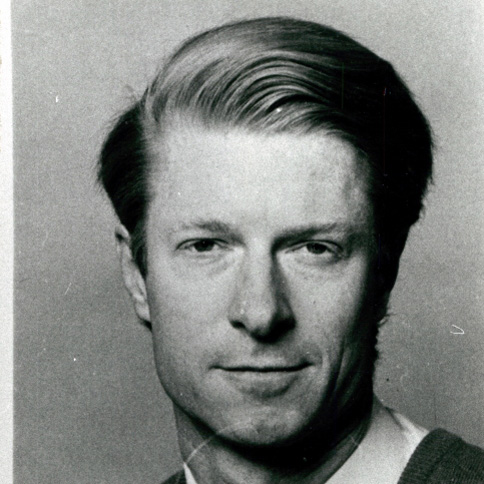
John B. Gurdon

Wolf Prize Laureate in Medicine 1989

John B. Gurdon 


Affiliation at the time of the award:

University of Cambridge, United Kingdom


Award citation:

“for his introduction of the xenopus oocyte into molecular biology and his demonstration that the nucleus of a differentiated cell and of the egg differ in expression but not in the content of genetic material”.


Prize share:

John B. Gurdon 

Edward B. Lewis


The contributions of Professor John B. Gurdon to molecular embryology span three decades and cover many of the exciting advances in this field. Perhaps the most influential of Gurdon´s work is the introduction of the frog oocyte injection technology. John Gurdon first showed that messenger RNA injected into the oocyte directs the synthesis of the cognate protein, and he used this method in one of the first demonstrations of the existence of mRNA in eukaryotic cells. Since that time translation in oocytes has been used by hundreds of laboratories in a wide variety of experiments. Gurdon expanded the technology to the injection of DNA into the oocyte nucleus, allowing him to obtain, in collaboration with Don Brown, the first accurate transcription of a eukaryotic gene in a reconstituted system. This method, too, has been used by many workers to great advantage.

The injection technology was a highly original and useful derivation from Dr. Gurdon´s important experiments in nuclear transplantation in the frog. This work, which stands as a key observation in modern embryology, demonstrated that highly differentiated somatic nuclei could support the development of a complete tadpole with all its different tissues. Thus, embryogenesis does not, involve in general any irreversible change in the genome of animal cells.

In recent years Gurdon has focused his attention on the traditional problem of embryonic induction. In this area his contributions have been seminal in introducing molecular techniques to the study of induction, especially through the analysis of muscle differentiation and a-actin gene expression in the embryo.


Edward B. Lewis

Wolf Prize Laureate in Medicine 1989

Edward B. Lewis


Affiliation at the time of the award:

California Institute of Technology, USA


Award citation:

“for his demonstration and exploration of the genetic control of the development of body segments by homeotic genes”.


Prize share:

Edward B. Lewis

John B. Gurdon 


Professor Edward B. Lewis, as a scholar and experimental scientist, has no peer in his field. With exemplary insight originality, personal commitment and ingenuity he pursued the genetic of morphogenesis in Drosophila for some four decades. During three of these decades his work attracted comparatively little attention, but this lack of trendiness did not discourage him. In recent years the rest of biology began to follow Lewis in his interest in homeatic genes, leading to the most important advances in developmental genetics in this time. These advances were fostered not only by Lewis insights but also by his wonderful generosity in providing stocks and counsel to all interested colleagues.

Lewis studied and continues to study homeotic genes, identified by mutations which change the body plan of the fly leading to the formation of body parts at ectopic sites. He concluded that the function of the Mild type genes must be the control of normal organization of the body, a conclusion that has been supported widely since. Lewis identified the Bithorax Complex (BX-C) as a major locus composed of several homeotic genes that are critical for the establishment of seg8ental identity in the fly. The extensive genetic characterization of the BX-C by Lewis encouraged David Hogness and his colleagues to choose this locus as the target for the first attempts at cloning of homeotic genes. The technique-s and concepts developed in the ensuing collaboration of the Lewis and Hogness laboratories have guided the entire field since then. One of the 1IIDSt important consequences of this work, and one that Lewis predicted in a general way long ago, was the finding of a region of homology between many homeotic genes, the so-called homebox. The study of homeotic genes and homeodomain-containing proteins is one of the most active areas in biology today and it owes its origins and growth to the remarkable work of Lewis.

Duilio Arigoni

Wolf Prize Laureate in Chemistry 1989

Duilio Arigoni


Affiliation at the time of the award:

Swiss Federal Institute of Technology (ETH), Switzerland


Award citation:

“for their fundamental contributions to the elucidation of the mechanism of enzymic reactions and of the biosynthesis of natural products, in particular the pigments of life”.


Prize share:

Duilio Arigoni

Alan R. Battersby


Professors Duilio Arigoni and Alan Battersby have performed pioneering studies on the elucidation of the mechanisms by which natural products are synthesized in biological organisms.

Duilio Arigoni has explored the detailed stereochemical pathways by which enzymes convert their substrates into products. In particular his strategy of penetrating into the structure of enzyme-substrate interactions by concentrating on the detailed stereochemical fate of isotopic substrate labels, led hill to make basic contributions to the mechanism of enzymic reactions requiring coenzyme B12, one of the “pigments of life”.


Claes T. Oldenburg

Wolf Prize Laureate in Arts 1989

Claes T. Oldenburg


Award citation:

“who, over some three decades has invested prosaic objects with historic and mythical allusions. For all the simplicity of their subject matter, they are statements about metamorphosis and invite the observer to reflect upon life’s processes “.


Prize share:

None


Claes T. Oldenburg (born in 1929, Sweden) pursued studies in literature and art history at Yale University from 1946 to 1950. Subsequently, he relocated to Chicago, where he attended classes at The School of the Art Institute of Chicago. While honing his artistic skills, Oldenburg concurrently served as a reporter at the City News Bureau of Chicago. In 1956, he made the move to New York, initially finding employment at the library of the Cooper Union Museum for the Arts of Decoration. During this period, he took the initiative to expand his knowledge independently by delving deeper into the history of art.

Oldenburg came to prominence in the late 1950s as part of a somewhat irreverent group of young artists determined to create a new imagery that reflected popular culture. For these brash American Pop Artists, objects of everyday life could provide an endless supply of subject matter. Over the years, Oldenburg has remained true to this conviction. By exploring the properties of mundane, ubiquitous and seemingly anti-artistic forms, such as electrical plugs, baseball bats, cigarette butts, clothespins, toothpaste tubes, flashlights and umbrellas, he has created an iconography that is at once remarkably universal and highly subjective.

Oldenburg’s objects, whether rendered in soft, pliable materials such as stuffed cloth, or in hard durable wood or metal, are his dramatis personae, and on occasion, take on human attributes. The apertures and prongs of a giant, soft three-way plug suggest a human figure in hapless balance. His forms seem always to be in the process of metamorphosis; so much so that they are filled with multiple meanings. A giant spoon, for example, when its bowl is seen head-on, subtly transforms itself into a ship´s prow. Through his unique alchemy, Oldenburg invests the most prosaic objects with historic and mythical allusions so they become talismans that invite endless associations on the part of the observer.

Though primarily known as a sculptor – and lately, one who with his wife and collaborator Coosje van Bruggen has been increasingly involved in creating large-scale works that have become part of urban contexts throughout the world-he is also a master draftsman, in fact, one of the century´s greatest. The origins of many of his large-scale works are in quick sketches on the pages of small notebooks, which are his visual diaries. Many of these notations are amplified in more fully realized drawings in which he explores the psychological as well as formal possibilities of particular themes. His is an art not only of gentle irony and extraordinary inventiveness, but also of considerable aesthetic accomplishment. Underlying his renditions of even the most prosaic of these is a sure and original sense of form, color, texture – the cardinal elements traditionally associated with artistic excellence. For over three decades, he has been an insightful commentator on the contemporary world, and through his art is a timeless student of its aspirations, values and contradictions. Through his lexicon of its mundane artifacts, he enables us to perceive this world in constantly fresh terms.

Alberto P. Calderon

Wolf Prize Laureate in Mathematics 1989

Alberto P. Calderon


Affiliation at the time of the award:

University of Chicago, USA


Award citation:

“for his groundbreaking work on singular integral operators and their application to and important problems in partial differential equations”.


Prize share:

Alberto P. Calderon

John W. Milnor 


Alberto P. Calderon (born in 1920, Argentina) commenced his academic journey at the University of Buenos Aires, focusing on engineering studies. Upon completing his degree in civil engineering in 1947, Calderon secured a position within the research laboratory of the geophysical division at YPF (Yacimientos Petrolíferos Fiscales), a state-owned oil company in Argentina. His work at the YPF Lab centered on exploring methods to determine the conductivity of a body by conducting electrical measurements at its boundary. Although he didn’t publish his findings until 1980 in a brief Brazilian paper, Calderon’s research marked an essential contribution to the field.Subsequently, Calderon transitioned to a role at the University of Buenos Aires. In 1948, Antoni Zygmund from the University of Chicago arrived at the university following an invitation by Alberto González Domínguez. Calderon was then designated as Zygmund’s assistant. Impressed by Calderon’s potential, Zygmund extended an invitation for Calderon to collaborate with him. In 1949, Calderon relocated to Chicago with the support of a Rockefeller Fellowship. Under the guidance of Marshall Stone’s encouragement to pursue a doctorate, Calderon utilized three recently published papers as his dissertation and earned his PhD in mathematics under Zygmund’s supervision in 1950.

The work of Professor Alberto P. Calderon has had a lasting impact on the shape of contemporary Fourier analysis and on its connections with real variables, complex analysis, and partial differential equations. In particular, his contributions to the theory of singular integral operators (SIO) have been decisive, both through the introduction of the sharpest technical tools into that theory and through its imaginative application to important problems in partial differential equations.

Together with his teacher, Antoni Zygmund, Calderon proved the famous theorem on the LP boundedness (1<P<∞) of SIO and introduced the important Calderon-Zygmund decomposition. Subsequently, he used SIO to establish the first general result on the uniqueness of the Cauchy problem. for higher order partial differential operators and systems. He then applied this machinery to obtain general results on local solvability for linear partial differential equations (independently of, and contemporaneously with, Hormander) and also gave the first general method of reducing elliptic boundary value problems for equations on the boundary. These papers provided the major stimulus for the development of pseudodifferential operators. At about the same time, he introduced the complex method of interpolation of operators in general banach spaces (contemporaneously with, J.L. Lions). with his celebrated theorem on the first commutator, Calderon initiated a new and fruitful attack on the theory of SIO, which reached a culmination in his paper on the Cauchy integral on Lipschitz curves, honored by the Bocher Prize. In this work, Calderon not only settled an important problem of long-standing in complex function theory but also apened up new vistas for research in classical analysis.


Alan R. Battersby

Wolf Prize Laureate in Chemistry 1989

Alan R. Battersby


Affiliation at the time of the award:

University of Cambridge, UK


Award citation:

“for their fundamental contributions to the elucidation of the mechanism of enzymic reactions and of the biosynthesis of natural products, in particular the pigments of life”.


Prize share:

Alan R. Battersby

Duilio Arigoni


Professors Duilio Arigoni and Alan Battersby have performed pioneering studies on the elucidation of the mechanisms by which natural products are synthesized in biological organisms.

The major efforts of Alan R. Battersby have been focused on the biosynthesis of the “pigments of life” haem, chlorophyll and vitamin B12, that are built on closely related tetrapyrrolic structural frameworks. He has demonstrated and elucidated the essential role played by two enzymes, deaminase and cosynthetase, in the construction of the tetrapyrrolic ring with its specific structural features.

Stephen W. Hawking

Wolf Prize Laureate in Physics 1988

Stephen W. Hawking


Affiliation at the time of the award:

University of Cambridge, United Kingdom


Award citation:

“for their brilliant development of the theory of general relativity, in which they have shown the necessity for cosmological singularities and have elucidated the physics of black holes. In this work they have greatly enlarged our understanding of the origin and possible fate of the Universe”.


Prize share:

Stephen W. Hawking

Roger Penrose 


Stephen W. Hawking (born in 1942, England) embarked on his university studies at the age of 17, attending University College, Oxford. He accomplished an exceptional first-class BA degree in physics. Continuing his academic pursuit, he commenced his graduate studies at Trinity Hall, Cambridge in October 1962. In March 1966, he achieved his PhD in applied mathematics and theoretical physics, specializing in general relativity and cosmology.

Following his studies, the main work of Professor Stephen W. Hawking is in general relativity and cosmology. Following the earlier work of Roger Penrose on collapsing stars, Hawking was the first to show that according to general relativity, without using quantum mechanics, the origin of the universe had to be singular. This means that the laws of physics break down at the origin of the universe and this created a major intellectual crisis for physics. The solution to this crisis is still unknown.

His next major work concerned the properties of black holes and general relativity. In the early 70’s he made major discoveries about the classical properties of black holes. However, in 1974 he astonished the scientific world by showing that when the surroundings of a black hole are treated quantum mechanically then the black hole turns out to have a temperature and an entropy, and to satisfy the laws of thermodynamics. In particular, a black hole would radiate as if it were a black body with a temperature inversely proportional to its mass. The final stages of this process would be violently explosive.

This work represented a new branch of physics in which general relativity, quantum mechanics and thermodynamics are combined.

Roger Penrose

Wolf Prize Laureate in Physics 1988

Roger Penrose


Affiliation at the time of the award:

University of Oxford, United Kingdom


Award citation:

“for their brilliant development of the theory of general relativity, in which they have shown the necessity for cosmological singularities and have elucidated the physics of black holes. In this work they have greatly enlarged our understanding of the origin and possible fate of the Universe”.


Prize share:

Roger Penrose 

Stephen W. Hawking


Professor Roger Penrose has made remarkable seminal contributions to the development of the general theory of relativity as well as to many other subjects in mathematical physics. He initiated the greatest discoveries in classical general relativity since its founding over seventy years ago by finding those conditions which must necessarily lead to “singularities” in any universe. These were applied to our own Universe to show that it must have began in a “big bang” and may end in a corresponding “crunch”. Related applications include the description of configurations in nature which lead inexorably to the formation of black holes. Penrose also showed how various natural processes may be extracting energy from the spin of such black holes. He has greatly enlarged our understanding of space – time by powerful analyses of its possible structure and by the invention of mathematical tools designed to allow an entirely new framework for the description of physical phenomena.

Raphael D. Levine

Wolf Prize Laureate in Chemistry 1988

Raphael D. Levine


Affiliation at the time of the award:

Hebrew University of Jerusalem, Israel


Award citation:

“for their incisive theoretical studies elucidating energy acquisition and disposal in molecular systems and mechanisms for dynamical selectivity and specificity”.


Prize share:

Raphael D. Levine

Joshua Jortner


Professor Raphael D. Levine is one of the pioneers, and a leader of worldwide recognition, in the modern theory of chemically reactive collisions and unimolecular reactions. He has played a central role in the application of the principles of quantum mechanics to the description of physical change in a reaction from a microscopic point of view, introducing many new concepts and terms which became standard to this area. His pioneering works include the quantum theory of absolute rates, the first quantal treatment of molecular photodissociation, elucidation of the role of resonances in reactive molecular collisions, the theory of collision- induced dissociation, and (most recently) the foundations of dynamical stereochemistry.

Recognizing the insufficiency of the microscopic approach to fully comprehend the dynamics of too complex systems, Levine formulated a novel theoretical method for analysing the dynamical selectivity and specificity of molecular reactions, based on ideas borrowed from thermodynamics and information theory. His “surprisal analysis” (brought forth in 1972 in collaboration with Richard Bernstein and Avinoam Ben-Shaul) became a major analytical tool in the study of reaction dynamics, and spread into diverse branches of science such as nuclear physics and molecular biology. Levine’s achievements in applying the ideas of quantum mechanics and thermodynamics culminated in their synthesis in his recent introduction of the algebraic approach to reaction dynamics, based on the maximum entropy principle.