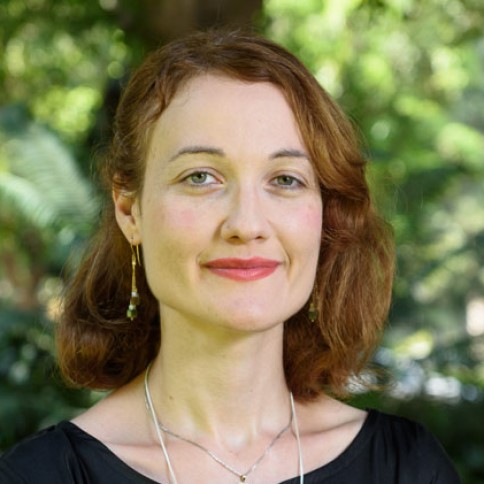
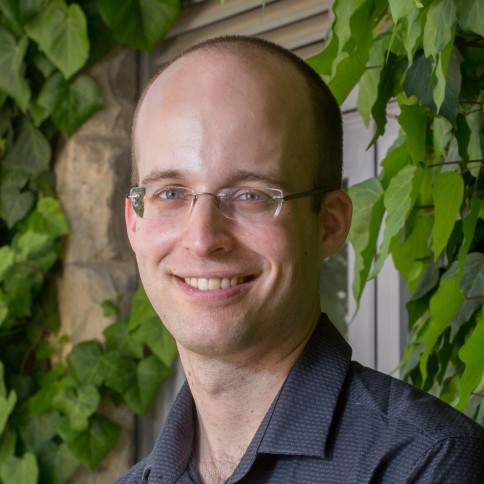
Ido Kaminer

Krill Prize 2021
Technion

Ido Kaminer – Explore the quantum nature of light and its applications.


Dr. Kaminer is a physicist that studies the foundations of
quantum mechanics, the frontiers of Photonics, Quantum
Optics, and Electron Microscopy by developing novel
theoretical and experimental methods. He is the head of
the AdQuanta Lab at the Technion, whose research leads
to applications of quantum electrodynamics (QED). Their
discoveries predict new phenomena that arise from
engineering the wavefunctions of matter and of photons in
specific ways that yield physical situations not encountered
in natural settings.

Dr. Kaminer’s lab employs femtosecond lasers in transmission
electron microscopes for new kinds of experiments – they
developed a unique microscope that combines record
resolution in space & time.
Their work on light–matter interactions in nanophotonics
and in 2D materials is leading to disruptive applications for
novel light sources and ultrafast detectors.

Tamir klein

Krill Prize 2021
Weizmann Institute

Tamir klein – Tree eco-physiology in a changing world.


The research in Dr. Klein’s lab is dedicated to tree intrinsic processes, enabling trees to survive under changing conditions. The research group under Dr. Klein focuses on dynamic processes of water and carbon transport inside the tree, and between the tree and its environment, including its soil microbial partners (fungi and bacteria). The rapid changes taking place in the environment today, such as the increase in atmospheric CO2, climate drying and warming, challenge trees in multiple ways. Due to their sheer size, trees and forests are a major compartment in Earth’s biosphere, taking part in its matter recycling.

Dr. Klein measure tree responses to these changes, in controlled experiments, and in a number of forest research sites in Israel and beyond. In these studies he characterized new mechanisms of tree drought resistance, including leaf and xylem responses, carbon storage as starch, and high light resistance.

Dr. Klein and his team mapped carbon allocation to different tree compartments and processes, in multiple trees species and along time, and found mechanisms facilitating trees to transfer carbon between them via common belowground mycorrhizal fungi.

Merav Parter

Krill Prize 2021
Weizmann Institute

Merav Parter – Distributed networks.


Merav’s research in Theoretical Computer Science (TCS) and
in particular, focuses on the Theory of Distributed Computing
(TDC) and algorithms for distributed networks. Her goal is
to go beyond devising better bounds for specific problems,
aiming at developing new tools, techniques, and structural
properties to tie together groups of problems that originate
in different subareas. Her most recent project addresses two
issues that have become major objectives in modern network
algorithms, namely, guarantee the fast and secure operation
of communication networks. Specifically, the goal of this
project is to develop a unified framework for obtaining fast,
resilient and secure distributed algorithms for fundamental
communication and computational problems.

Dr. Parter strives to develop new tools, techniques, and
structural features that bind together groups of computational
problems, which are explored in the theoretical framework
of computer science. Merav’s lab team strives to achieve
real-world applications that will increase the efficiency of
wireless networks – on phones, the Internet and more – thanks
to the more sophisticated algorithms.

Guy Katz

Krill Prize 2021
The Hebrew University

Guy Katz – Formal verification of Deep Neural Networks.


Dr. Guy Katz has developed a method that can verify the
accuracy of certain programs that “wrote” machines. These
programs are known as “Deep Neural Networks”, due to the
similarity between their structure and that of nerve cells in
the brain; they are produced by “machine learning” which
mimics the process of human learning. Deep machine learning
is revolutionizing computer science, allowing engineers to
automatically create (to “learn”) software. Learned software is
now being used in critical financial, medical and autonomous
driving systems, obtaining previously unimaginable results.
However, despite its remarkable achievements, machine-learned
software is opaque: it works, but we do not fully understand
how or why, and cannot prove its correctness. This issue
is urgent, as errors have already been observed in learned
systems: for example, a few stickers on a stop sign can make an
image-recognition software misclassify it as a speed limit sign.

In is research, Dr. Katz seek to bridge this crucial and urgent
gap through the development of novel techniques for formally
and rigorously verifying the correctness of machine-learned
software, making it safe for deployment in critical systems.


Naomi Habib

Krill Prize 2021
The Hebrew University

Naomi Habib – Uncovering disease mechanisms of the aging brain: cracking the code for healthy ageing.


Dr. Habib’s research focuses on uncovering the mechanisms
leading to devastating and currently uncurbable brain
diseases of advanced age, such as Alzheimer’s Disease. To
tackle this challenge, Dr. Habib’s group are applying cutting
edge technologies along with computational modeling to
map molecular changes in all cells of the ageing brain at high
resolution. Their cellular maps help uncover new triggers of
the disease and also protective molecules that may promote
healthy ageing.

Specifically, within the brain, Dr. Habib is exploring the
communication between different brain cells, and beyond
the brain, She is elucidating the impact of the immune system
and of environmental risk factors. Dr. Habib group strive to
bridge the knowledge gap in ageing research by developing
new experimental models and technologies that will help
find effective treatment or prevention strategies.

Liron Barak

Krill Prize 2021
Tel-Aviv University

Liron Barak – The search for new physics


Dr. Barak leads an experimental group looking for new physics
that will manifest itself either as a new elementary particle, or
as a Dark Matter.

Dr. Barak is developing new innovative algorithms in order to
discover new particles, using the ATLAS experiment at the Large
Hadron Collider at CERN.

In parallel, she has recently joined the SENSEI experiment at
Fermilab, looking for experimental evidence for the existence of
low mass Dark Matter. The research was done using innovative
detectors utilizing pixel technology, built specifically for this
purpose in the United States. If new particles or dark matter are
discovered, it will be the first evidence of the existence of new
physics, different from that known to scientists.

Joshua Baraban

Krill Prize 2021
Ben-Gurion University

Joshua Baraban – Spectroscopy of Reactive Molecules


Transient reactive intermediates are centrally important in
chemistry but notoriously difficult to study. Radicals especially
are also important to our fundamental understanding
of chemistry and physics, since their open-shell nature
challenges our most basic assumptions about quantum
molecular behavior.

The aim of Dr. Baraban’s research is to develop techniques,
principaly spectroscopic, to characterize these exotic species
in their native, highly energetic environments.
The group under Dr. Baraban design and build reactors to
produce reactive species and monitor them in situ, combining
high resolution optical and laser techniques across the
spectrum with sensitive, multiplexed detection methods.

These approaches will enable the acquisition of new classes of
information, such as isolated kinetics of elementary steps within
complex reaction networks, or vibronic spectra that reveal the
couplings of electronic and nuclear degrees of freedom in
non-adiabatic molecular systems.

Schraga Schwartz

Krill Prize 2020
Weizmann Institute

Schraga Schwartz


Cracking the Epitranscriptome


My research focuses on elucidating the fundamental building blocks of which our genetic code, the DNA, is comprised. The DNA is composed of only four building blocks. In order to translate the information stored in the DNA, it is at first ‘copied’ to a very similar, yet slightly different, molecule called RNA. For years, RNA was also thought to consist primarily of the same four building blocks as DNA. However, our research over the last decade is exposing a more complex landscape: We are finding that RNA is subjected to diverse chemical modifications, that can modulate the genetic message encoded by the RNA. Such modifications can regulate cellular decision making and  impact the ability of cells to develop and to differentiate, and their propensity to undergo tumorigenic transformation. To summarize, we are uncovering and characterizing an important regulatory layer impacting the manner through which our genetic code is organized, expressed and regulated.


Kfir Blum

Krill Prize 2020
Weizmann Institute

Kfir Blum


Research title: Outstanding questions in particle physics and particle-astrophysics

The identity of dark matter is an outstanding question in modern physics. We have evidence for the existence of dark matter via its gravitational pull in galaxies and cosmological large-scale structure. However, we do not know the fundamental nature of dark matter. I work on theoretical aspects of the search for dark matter. In particular, I use observable phenomena in the dynamics of galaxies as a probe of the wave mechanics signatures of ultra-light dark matter. Apart from dark matter I also study topics in astrophysics, such as the problem of the origin of cosmic ray particles; and in particle physics, such as the quest for fundamental understanding of the Higgs boson, and the nature of the state produced in heavy-ion collisions at the Large Hadron Collider (LHC).

Tomer Michaeli

Krill Prize 2020
Technion

Tomer Michaeli


Advanced Image Processing Algorithms.


Visual data plays key roles in numerous domains, ranging from medical imaging, microscopy, astronomy, security and autonomous vehicles, to personal photography and social media. Dr. Michaeli’s research addresses theoretical and algorithmic challenges relating to the acquisition, restoration, enhancement, manipulation, and editing of visual data. The last decade has seen tremendous progress in image processing methods, particularly with the surge of deep learning techniques. However, their widespread adoption, for example in scientific domains, is still hindered by fundamental limitations, like small training datasets, inherent ambiguities in the imaging processes, and lack of proper ways to incorporate physical knowledge into deep learning based methods. Dr. Michaeli strives to provide theoretical analyses of the inherent limits and tradeoffs that govern imaging problems, and to develop new algorithms that will lay the basis for the next generation of imaging systems.