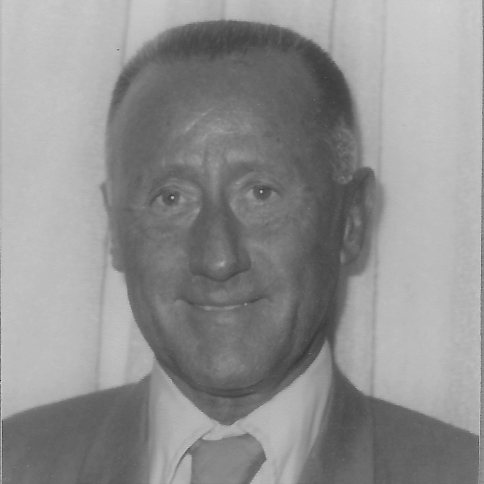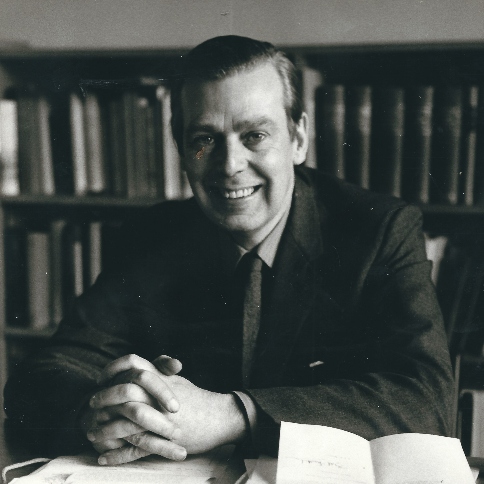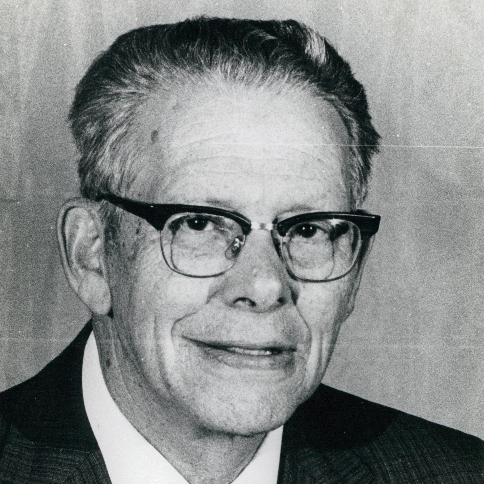
Don Kirkham

Wolf Prize Laureate in Agriculture 1984

Don Kirkham


Affiliation at the time of the award:

Iowa State University, USA


Award citation:

“for their innovative contributions to the quantitative understanding of soil-water and other environmental interactions influencing crop growth and yield”.


Prize share:

Don Kirkham

Cornelis T. de Wit


Don Kirkham (born in 1908, USA) pursued his studies in physics at Columbia University, accomplishing the attainment of bachelor’s, master’s, and Ph.D. degrees. Upon his return in 1937, he ventured into the realm of academia, teaching mathematics and physics at Utah State University. It was during this tenure that he encountered the domains of agricultural and soil sciences, spurred by the burgeoning discipline of soil physics. His newfound interests and insights emerged through the influential guidance of Professor Willard Gardner, a distinguished soil physicist affiliated with the Utah Agricultural Experiment Station.

His pioneering mathematical and physical analyses of the movement of water in the soil has provided solutions to a number of important practical problems. An outstanding example is the establishment, on a rigorous scientific basis, of efficient and economic designs for land drainage systems that have had a significant and worldwide impact on the maintenance of soil fertility and land productivity over a range of irrigated and rain-fed agricultural situations. Many of the standard techniques of measurement, as well as of analysis and design, now used in the study of soil-water relations, were developed initially by Kirkham. His combination of rigorous mathematical-physical analysis, carefully designed laboratory experimentation and extensive field trials and measurements has had a seminal influence on soil physics through his training of a large number of students, many of whom later attained distinction in this branch of science, as well as through his extensive folio of scientific publications, text books and manuals, and his lectures.

Kirkham’s long and productive career in soil physics, by its demonstration of the applicability of the fundamental laws of physics to soil and environmental problems and the advantages of mathematical analysis for their description and solution, heralded a new and productive era in soil science.

In coupling the names of Kirkham and de Wit, we believe that we have identified scientists who have been innovators in both theory and experiment and whose contributions to crop production systems have been both important and universal in nature.

Cornelis T. De Wit

Wolf Prize Laureate in Agriculture 1984

Cornelis T. de Wit


Affiliation at the time of the award:

Agricultural University, The Netherlands


Award citation:

“for their innovative contributions to the quantitative understanding of soil-water and other environmental interactions influencing crop growth and yield”.


Prize share:

Cornelis T. de Wit

Don Kirkham


Professor Cornelis T. de Wit. (born in 1924, The Netherlands) with his innovative application of computer simulation models to the study of the environmental determination of crop production, he introduced a new and powerful approach to agricultural research. His individual contributions have encompassed the whole hierarchy of models from individual physical processes such as ‘transpiration, photosynthesis, respiration and competition, to whole crop models allowing the growth and yields of particular crops to be simulated and predicted for a given environment. This integrated systems approach to modelling crop production has been applied to an almost world-wide range of soils, climates and crops and has been used successfully as a method for studying the interactions between a crop and its environment with the object of increasing production at either the local or regional scale.

In coupling the names of Kirkham and de Wit, we believe that we have identified scientists who have been innovators in both theory and experiment and whose contributions to crop production systems have been both important and universal in nature.
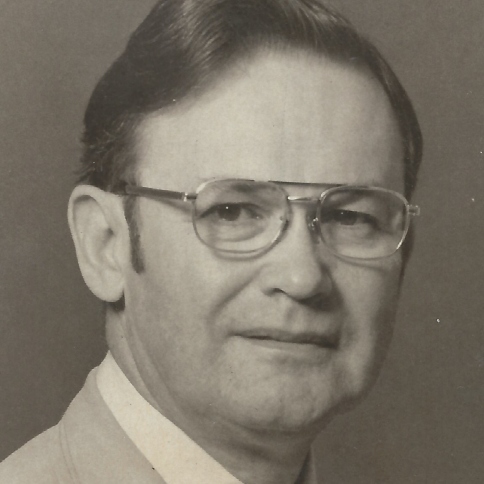
Wendell L. Roelofs

Wolf Prize Laureate in Agriculture 1982

Wendell L. Roelofs


Affiliation at the time of the award:

New York State Agricultural Experiment Station, College of Agriculture and Life Sciences, Cornell University, USA


Award citation:

“for his fundamental chemical and biological research on pheromones and their practical use in insect control”.


Prize share:

None


Wendell L. Roelofs (born in 1938, USA) has made outstanding contributions to fundamental knowledge of insect pheromones and carried out clear demonstrations of the potential value of pheromones in the development of more efficient and environmentally acceptable strategies for the control of pest insects. His original scientific findings may be applied, with success, to the monitoring and control of insect pests damaging to crops or livestock. Practical application of the results of this scientific research in ways benefiting humanity is then on records in a field of immense importance to the whole world: insect damage to crops during growth, or after harvest under poor storage conditions, produce losses variously estimated as between 20% and 50% of the potential harvest.

Pheromones are specific chemical compounds emitted by insects, which affect the behavior of other individuals of the same species. These compounds are responsible for the communication between conspecific insects. The most known ones are the sex pheromones, which are released by the young female insects, dispersed in space and attract males from distances of hundreds of meters.

Following the chemical identification of a number of such pheromones and the study of the biological activity, the road was open for implementation of this knowledge in two major practical ways: a) monitoring of insect pest populations by means of pheromone-baited traps and dispensers, whether of natural or synthetic origin. b) direct insect control by mass trapping, using traps as mentioned above and/or by disruption of the chemical communication of the insect population through over saturation of the environment with an overdose of pheromone preparations. Thus serious pests can be suppressed without recourse to dangerous toxic pesticides.

In various countries, including Israel, such methods are already applied inter alia for the control of major cotton pests, as well as in fruit tree orchards and citrus groves.

John O. Almquist

Wolf Prize Laureate in Agriculture 1981

John O. Almquist


Affiliation at the time of the award:

Pennsylvania State University, USA


Award citation:

“for his significant contributions to the application of artificial insemination to livestock improvement”.


Prize share:

John O. Almquist

Henry A. Lardy

Glenn W. Salisbury


Professor Almquist’s early work on the addition of antibiotics to bull semen resulted in substantial increases in breeding efficiency. This, coupled with his remarkable achievements in developing methods for processing, freezing, and thawing of frozen semen, significantly enhanced the practical utilization of artificial insemination in the livestock industry. Many techniques developed by him for cattle have been applied to other species, including the human male.

Henry A. Lardy

Wolf Prize Laureate in Agriculture 1981

Henry A. Lardy


Affiliation at the time of the award:

University of Wisconsin, USA


Award citation:

“for his pioneering research on storage and preservation of spermatozoa thus enabling artificial insemination to become a universal practice”.


Prize share:

Henry A. Lardy

John O. Almquist

Glenn W. Salisbury


Professor Lardy, with the late Professor Paul H. Phillips, made the basic discovery in the early forties that a nutrient medium of egg yolk dispersed in a phosphate buffer forms an ideal environment for the storage of spermatozoa of bull, ram, stallion, and turkey. This breakthrough paved the way to the rapid expansion of the practical use of artificial insemination in livestock breeding. Further, the ability to store semen made it possible to initiate fundamental studies on the metabolism of spermatozoa. The results of this outstanding research work enabled improvements to semen storage technique leading to more efficient and widespread utilization of semen.

Glenn W. Salisbury

Wolf Prize Laureate in Agriculture 1981

Glenn W. Salisbury


Affiliation at the time of the award:

University of Illinois, USA


Award citation:

“for his outstanding achievements in basic-and-applied research on artificial insemination”.


Prize share:

Glenn W. Salisbury

Henry A. Lardy

John O. Almquist


While working at Cornell University and the University of Illinois, Salisbury did extensive research on semen extendors, number of sperm per insemination, and insemination techniques. His contributions have been pivotal in the resolution of problems limiting successful reproduction following artificial insemination. He is known for his ability to stimulate thinking and interest in his field and for his bold scientific approach to the problems facing the animal industry.

Karl Maramorosch

Wolf Prize Laureate in Agriculture 1980

Karl Maramorosch


Affiliation at the time of the award:

Rutgers University, USA


Award citation:

“for his pioneering and wide-ranging studies on interactions between insects and disease agents in plants”.


Prize share:

None


Dr. Karl Maramorosh (born in 1915, Austria) has made outstanding contributions to an understanding of the interrelationships of plant diseases, their insect vectors and the pathogens that cause them, notably to the long contested problem of whether or not plant viruses can replicate within their insect vectors. He then turned his attention to viruses, which infect insects and can thus be utilized for the microbiological control of insect pests.

His pioneering studies with the novel ultramicroscopical agents, the mycoplasmas and spiroplasmas, once· thought erroneously to be viruses, have demonstrated unequivocally their importance as disease-producing agents in citrus and other crops.

This research has led to the study of these new pathogens far beyond agriculture, namely in human disease. In addition to these interdisciplinary contributions embracing three major areas of disease and its control, Dr. Maramorosch has found time to publish, or edit, some 25 major works on comparative virology methods in virology, diseases of tropical legumes and the roles of insects, viruses and other ultramicroscopical disease agents in agriculture, ecology and medicine. His world-wide influence on concepts in crop protection through his original papers and his books has been further enhanced by his notable leadership at numerous major scientific meetings devoted to viruses, mycoplasmas, the role of insects as vectors, and diseases of insects.

Kenneth Blaxter

Wolf Prize Laureate in Agriculture 1979

Sir Kenneth Blaxter


Affiliation at the time of the award:

Rowett Research Institute, United Kingdom


Award citation:

“for his fundamental contributions to the science and practice of ruminant nutrition and livestock production”.


Prize share:

Sir Kenneth Blaxter

Jay L. Lush


Sir Kenneth Blaxter has spent virtually the whole of his career in the British Agricultural Research Service. Nevertheless, he has disseminated his discoveries and ideas through the media of international conferences, farming meetings and via the many visiting scientists who have worked with him at his research institutes. He is particularly distinguished for the precise and detailed studies he has made on the energy requirements of ruminants and the ways once the necessary energy has been supplied to the diet, that it is utilized in the animal’s metabolism. This has lead to a new understanding, both of the nutritional needs of the animal and of the most effective ways in which the diet may be made up and varied, and utilized most efficiently by the ruminant to produce more meat, milk or both. Thus the farmer can now control this aspect of the animal’s environment with far greater efficiency to give a higher yield at the most economical price.

His approach and practical proposals have been widely adopted throughout the world and, because he has enunciated the fundamental principles so clearly, it has proved possible to adapt or modify them to a diversity of farming systems.

Jay L. Lush

Wolf Prize Laureate in Agriculture 1979

Jay L. Lush


Affiliation at the time of the award:

Iowa State University, USA


Award citation:

“for his outstanding and pioneering contributions to the application of genetics to livestock improvement”.


Prize share:

Jay L. Lush

Sir Kenneth Blaxter


Professor Lush has made major contributions to unravelling the hereditary contributions to animal production whereas Dr. Blaxter has unravelled the nutritional requirements of animals, especially ruminants. Thus their work has effectively contributed to both aspects of the factors regulating animal production: the control and exploitation of the genetic endowment, and the provision of the most favorable nutritional environment in which genetic endowment can be expressed.

Jay L. Lush has one more than any agricultural scientist both to investigate the genetic basis of traits important for animal production, to assess their value and to improve them by initiating breeding programmes of proven practical effectiveness. He has been responsible for inspiring a great band of graduate students and others who have disseminated his ideas and practical suggestions throughout the world and so led to the improvement of poultry, pigs, beef and dairy cattle. His contributions are of several kinds. First, he pioneered the value to the scientific breeder of adequate measurement of the performance of individuals, their progeny and their pedigree in order to assess the genetic worth of an animal. Secondly, he pioneered the assessment of the heritability of a trait, i.e. the degree to which its expression reflected a genetic basis rather than the effects of a favorable or unfavorable environment. Thirdly, having demonstrated how the inherited potentialities could be measured and distinguished from those due to non-heritable causes, he synthesized these ideas into practical and workable animal breeding plans to promote an inherited increase in the yield of meat, milk or eggs. He has exploited his ideas as a University teacher, at a diversity of national and international gatherings and enshrined much of it in his major and most influential text “Animal Breeding Plans”. He may truly be described as the ‘father’ of scientific animal breeding in the twentieth century.

John C. Walker

Wolf Prize Laureate in Agriculture 1978

John C. Walker


Affiliation at the time of the award:

University of Wisconsin, USA


Award citation:

“for his research in plant pathology, developing of disease-resistant varieties of major food plants”.


Prize share:

John C. Walker

George F. Sprague 


Professor Sprague (a geneticist – plant breeder) and Professor Walker (a plant pathologist -plant breeder) have achieved world eminence in the development of improved crop plants to the extent of greatly stabilizing the culture, increasing yields, and improving the quality of a number of major vegetable crops, and of maize – one of the world’s dominant grain crops. Each has developed novel and efficient methodology of breeding techniques and procedures. Both have been towering figures in contributing to both applied and basic research. Both have most enviable records of having trained scientific manpower for agriculture’s needs. Students of each are to be found throughout the world, many of them having established themselves as distinguished researchers, educators and/or administrators. Each awardee has served well the organizations of his respective science and agricultural industry, as well as the governments of the world.

Professor Emeritus Walker’s eminence as a plant pathologist would lead many to judge him to be among history’s 3 or 4 greatest plant pathologists. Central to his career have been his contributions to the control of plant diseases by the development of resistant varieties of crop plants, the development of novel and effective breeding methodology, the demonstration of the role of environmental factors, particularly host nutrition and soil temperature, in the epidemiology of plant diseases, the physiological nature of diseases, and the chemical basis of disease resistance in plants.

He is, perhaps, the World’s best example of a scientist combining applied research oriented to food production and fundamental research directed to advancing the frontiers of knowledge, integrated and organized around specific problems of agriculture. Similarly, other disease control studies led to the discovery of much fundamental information regarding the role of aerial and soil environal factors in the incidence and severity of disease.

As an educator, he is without peer in the training of scientists in the profession of plant pathology. His classic text book: “Plant Pathology”, which has been translated into several languages, has been the standard treatise on the subject. It is today the most widely used classroom text in university schools of agriculture everywhere.