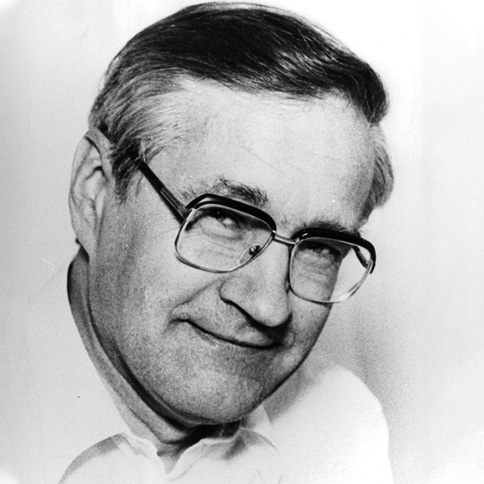
Gilbert Stork

Wolf Prize Laureate in Chemistry 1995/6

Gilbert Stork


Affiliation at the time of the award:

Columbia University, USA


Award citation:

“for designing and developing novel chemical reactions which have opened new avenues to the synthesis of the synthesis of complex molecules, particularly polysaccharides and many other biologically and medicinally important compounds”.


Prize share:

Gilbert Stork 

Samuel J. Danishefsky


Gilbert Stork (born in 1921, Belgium) studied his Bachelor of Science degree at the University of Florida from 1940 to 1942. He later obtained his Ph.D. in 1945 from the University of Wisconsin–Madison under the supervision of Samuel M. McElvain. During his time at Wisconsin, Stork developed a lasting friendship with Carl Djerassi.

Over almost five decades, Professor Gilbert Stork has changed the face of organic chemistry, and organic synthesis in particular. Stork’s contributions to the development of theories of stereoelectronic control over chemical reactions, include the SN2′ reaction, polyene cyclizations, alkylation reactions with enolates and enolate equivalents, reactions involving enamines and metalloenamines, the paradigm of trapping kinetic enolates, and various annulation reactions. Stork’s pioneering studies into free radical cyclizations have been recognized as one of the most powerful and concise strategies for assembling polycyclic natural products. Once considered the least tractable of synthetic intermediates, free radical chemistry is now routinely practiced in synthetic laboratories throughout the world.

Professor Samuel J. Danishefsky has developed a number of new concepts in organic reactivity, thoroughly investigated the relevant stereochemical and mechanistic issues and subsequently provided new solutions to demanding problems in natural product synthesis. Examples include his polyannulating reagents in steroid synthesis, his now routinely employed dienes for Diels-Alder and hetero-Diels-Alder reactions, and more recently, his use of glycals for the synthesis of oligosaccharides. The capacity that these methodologies bring to the synthesis of complex structures which bear multiple asymmetric centers is a major triumph in chemistry.

The synthesis of complex polysaccharides has been one of the long-standing problems in synthesis. Such compounds play a crucial role in many biologically important phenomena, including cell adhesion, enzyme inhibition, determination of blood groups, immune response and cancer. Polysaccharides represent one of the three most important classes of biopolymers. While the synthesis of the other two – polynucleotides and polypeptides – has reached a satisfactory level of maturity with an immense impact on the study of biology and on medicine, the synthesis of polysaccharides has remained a formidable challenge.

In 1993 Danishefsky announced a highly efficient synthesis of oligosaccharides on a polymer support using same of the mutually developed tools. More recently, he has extended the method to the solid-phase synthesis of glycopeptides. This work has brought us to the threshold of a new era where complex carbohydrates can be assembled with an unprecedented selectivity and efficiency. Some of these fully synthetic compounds, such as the human breast cancer tumor antigen, are now being evaluated with respect to anticancer vaccines.

The influence of this mentor/disciple couple on several generations of chemists in organic synthesis and related bioorganic areas has been immense. Their noncompromising commitment to academic excellence has produced hundreds of top-class organic chemists, many of which are now university professors and key scientists in the chemical and bio-medical industries around the world.

Richard A. Lerner

Wolf Prize Laureate in Chemistry 1994/5

Richard Lerner


Affiliation at the time of the award:

Scripps Research Institute, USA


Award citation:

“for converting antibodies into enzymes, thus permitting the catalysis of chemical reactions considered impossible to achieve by classical chemical procedures”.


Prize share:

Richard Lerner

Peter G. Schultz 


Richard A. Lerner (born in 1938, USA) showed talent in both chemistry and wrestling during his school years, attending Hirsch High School. After completing his undergraduate studies at Northwestern University, Lerner earned an MD from Stanford Medical School in 1964. He proceeded to undertake postdoctoral training at Scripps Clinic and Research Foundation. During the 1970s, Lerner conducted research at the Wistar Institute in Philadelphia before returning to La Jolla to the Research Institute of Scripps Clinic. In 1982, he assumed the role of chairman of the Department of Molecular Biology, and five years later, he took on the position of director. In 1991, when the TSRI (The Scripps Research Institute) was established as a nonprofit entity, Lerner became its inaugural president.

Dr. Richard A. Lerner and Professor Peter G. Schultz independently and almost simultaneously in 1986, conceived and demonstrated the idea that antibodies could selectively catalyze chemical reactions. Lerner´s research group raised antibodies against negatively charged phosphate transition-state analogues, and showed that these selectively catalyzed the hydrolysis of carbonates. Schultz´s group did likewise with phosphonates, thereby hydrolysing esters. Their recognition of the importance of the transition state in the thermodynamics and kinetics of enzyme reactions, and the understanding of the diversity of the immune system, were essential to the development of this advance.

The earliest experiments involved simple reactions with well-studied mechanisms. Since that pioneering event antibodies have been developed that catalyze a wide range of chemical and biological reactions. Recent work, under the separate leadership of Lerner and of Schultz, has focused on selective chemical transformations that are difficult to achieve by existing chemical methods. These include disfavoured chemical reactions, reactions along one of many nearly equivalent reaction coordinates, and reactions in which the inherent reactivity or molarity of the reactants is reversed. In each case the binding energy of the immunogen and the antibody was used to accelerate and control the reaction. The specificity, and in some cases the rates, of these antibody catalyzed reactions rival those of natural enzymatic reactions, which have only reached their high efficiency through the slow processes of evolution.

This work is of high importance for the future of synthetic organic chemistry. It is a marvellous illustration of how a deep knowledge of biological processes, combined with very sophisticated chemistry, produced a result which practitioners in only one of these two disciplines would have been unlikely to reach.

Peter G. Schultz

Wolf Prize Laureate in Chemistry 1994/5

Peter G. Schultz


Affiliation at the time of the award:

University of California, USA


Award citation:

“for converting antibodies into enzymes, thus permitting the catalysis of chemical reactions considered impossible to achieve by classical chemical procedures”.


Prize share:

Peter G. Schultz 

Richard Lerner


Peter G. Schultz (born in 1956, USA) earned his undergraduate degree at Caltech in 1979, where he continued for his doctoral degree in 1984 under the guidance of Peter Dervan. Following this, Schultz spent a year at the Massachusetts Institute of Technology under Christopher Walsh before joining the chemistry faculty at the University of California, Berkeley. In 1985, he became a Principal Investigator at Lawrence Berkeley National Laboratory and, in 1994, an investigator of the Howard Hughes Medical Institute.

Dr. Richard A. Lerner and Professor Peter G. Schultz independently and almost simultaneously in 1986, conceived and demonstrated the idea that antibodies could selectively catalyze chemical reactions. Lerner´s research group raised antibodies against negatively charged phosphate transition-state analogues, and showed that these selectively catalyzed the hydrolysis of carbonates. Schultz´s group did likewise with phosphonates, thereby hydrolysing esters. Their recognition of the importance of the transition state in the thermodynamics and kinetics of enzyme reactions, and the understanding of the diversity of the immune system, were essential to the development of this advance.

The earliest experiments involved simple reactions with well-studied mechanisms. Since that pioneering event antibodies have been developed that catalyze a wide range of chemical and biological reactions. Recent work, under the separate leadership of Lerner and of Schultz, has focused on selective chemical transformations that are difficult to achieve by existing chemical methods. These include “disfavoured” chemical reactions, reactions along one of many nearly equivalent reaction coordinates, and reactions in which the inherent reactivity or molarity of the reactants is reversed. In each case the binding energy of the immunogen and the antibody was used to accelerate and control the reaction. The specificity, and in some cases the rates, of these antibody catalyzed reactions rival those of natural enzymatic reactions, which have only reached their high efficiency through the slow processes of evolution.

This work is of high importance for the future of synthetic organic chemistry. It is a marvellous illustration of how a deep knowledge of biological processes, combined with very sophisticated chemistry, produced a result which practitioners in only one of these two disciplines would have been unlikely to reach.

Ahmed H. Zewail

Wolf Prize Laureate in Chemistry 1993

Ahmed H. Zewail


Affiliation at the time of the award:

California institute of Technology, USA


Award citation:

“for using ultrafast lasers in femtosecond time resolved measurements of the evolution of chemical reactions – thus obtaining the first direct observation of bond breakage in a molecule”.


Prize share:

None


Ahmed H. Zewail (born in 1946, Egypt) earned Bachelor of Science and Master of Science degrees in chemistry from Alexandria University. He then pursued his PhD at the University of Pennsylvania under the guidance of Robin M. Hochstrasser. After completing his doctoral studies, Zewail conducted postdoctoral research at the University of California, Berkeley, under the supervision of Charles B. Harris. Subsequently, in 1976, he secured a faculty appointment at the California Institute of Technology (Caltech) and later attained the distinction of becoming the first Linus Pauling Chair in Chemical Physics at Caltech.

Professor Ahmed H. Zewail has pioneered the development of femtosecond chemistry in molecular beams. With ultrafast lasers and molecular beam technology, Zewail´s landmark research is uncovering the real-time dynamics of chemical reactions at their most fundamental level. Quantum state-to-state rates, energy redistribution in molecules, and femtosecond spectroscopy, can now be observed directly. With these techniques, Zewail has made major contributions to chemical physics in the following research areas:

Femtochemistry and transition states. With an ingenious time/wavelength technique for recording the femtosecond dynamics of a molecule in the process of falling apart, Zewail and coworkers have followed the transition region from reagent to products in a variety of reactions. For the first time, femtosecond real-time observations of wave-packet dynamics were made directly for bound, quasibound, repulsive, and saddle-point potentials; Bimolecular reactions. Using real-time clocking of a bimolecular reaction initiated within a van der Waals complex, his studies provided a direct measurement of the lifetime of a collision complex; Unimolecular reactions. His work on picosecond photofragment spectroscopy and state-to-state measurements of reaction rates in a variety of systems has provided critical tests of statistical and dynamical theories; Intramolecular energy redistribution. Novel methods have been conceived and used by lewail for probing vibrational and rotational energy redistribution in molecules. This work has established the presence of coherence and selectivity of vibrational energy flow in large polyatomic molecules; The development of femtosecond molecular beam chemistry by Zewail and his group has initiated the new field of real-time molecular reaction dynamics in this time regime. He has aptly coined the name “femtochemistry’ to this new field.

John A. Pople

Wolf Prize Laureate in Chemistry 1992

John A. Pople


Affiliation at the time of the award:

Carnegie-Mellon University, USA


Award citation:

“for his outstanding contributions to Theoretical Chemistry, particularly in developing effective and widely used modern quantum – chemical methods”.


Prize share:

None


John Anthony Pople (born in 1925, UK) received a scholarship to Trinity College, Cambridge, in 1943, earning his Bachelors degree in 1946. From 1945 to 1947, he worked at the Bristol Aeroplane Company. Returning to the University of Cambridge, he obtained his Ph.D. in mathematics in 1951, focusing on lone pair electrons. After completing his doctorate, he served as a research fellow at Trinity College, Cambridge, and from 1954, he held a lecturer position in the mathematics faculty at Cambridge. In 1958, Pople assumed the role of head of the new basics physics division at the National Physical Laboratory near London.

Professor John Anthony Pople is most probably the major contributor of this generation to modern quantum Chemistry. His work in the area of molecular orbital calculations had, and still has, a tremendous impact on the entire chemical community, by providing it with valuable and easily applicable theoretical tools.

Specifically: Professor Pople was the first to include specific electron interactions in the theory of π electron systems, creating the basis for the P.P.P. (Pariser-Parr-Pople) semi-empirical molecular orbital theory. Later, the inclusion of σ – electron interactions created the basis for CNDO and INDO semi-empirical molecular orbital theories which are widely used for interpreting EPR spectra, for inferring chemical functionality via Mulliken population analysis for large molecules and for estimating chemical shifts in NMR spectra.

Professor Pople has later laid the foundations for ab-initio molecular orbital calculations, extending them to polyatomic molecules and including basis sets and an approximate treatment of electron correlation. Computer packages such as the Gaussian-70/80 are widely used by chemists throughout the world.

The Wolf Prize is awarded for such outstanding work and for its extensive impact on the chemical sciences.

Richard R. Ernst

Wolf Prize Laureate in Chemistry 1991

Richard R. Ernst


Affiliation at the time of the award:

Swiss Federal Institute of Technology (ETH), Switzerland


Award citation:

“for their revolutionary contributions to NMR spectroscopy, especially Fourier-transform and two-dimensional NMR by Ernst, and multiple-quantum and high-spin NMR by Pines”.


Prize share:

Richard R. Ernst

Alexander Pines


Richard R. Ernst (born in 1933, Switzerland) initially aspired to become a composer, however, at the age of 13 his plans took a different turn when he discovered a box of chemicals in the attic, left by a late uncle. Intrigued, he started conducting experiments, and his interest in chemistry was ignited. Following his studies in chemistry at the Swiss Federal Institute of Technology (ETH) in Zurich, Ernst delved into doctoral studies in the emerging field of NMR (Nuclear Magnetic Resonance).

The field of Nuclear Magnetic Resonance (NMR), which revolutionized the practice of chemistry during the fifties and sixties, has undergone more recently far-reaching developments that have vastly expanded its usage to hitherto inaccessible systems and have had numerous implications in the pharmaceutical and chemical industries, in medical diagnosis, and in materials science. Foremost leaders in conceiving and implementing these prominent achievements are Richard Ernst and Alexander Pines, who have consistently and creatively pointed the way for others to follow.

Professor Richard R. Ernst brought about in 1965 a complete change in the practice of NMR that has dramatically increased its usage by transforming NMR spectroscopy from the frequency domain to the time domain by Hans of Fourier-transform techniques. This innovation opened up the field to the study of biomolecules and of low-sensitivity nuclei in liquid solutions. During the seventies, he literally added a second dimension to NMR spectroscopy, thus leading to its unprecedented success as one of the most versatile techniques in chemistry, physics, biochemistry and biology. Two-dimensional NMR developed by Ernst enabled several groups using Ernst’s methods to obtain three-dimensional structures of biomolecules in solution. The resulting technique for obtaining NMR images in an efficient way is exploited today in most NMR imaging systems widely used for medical diagnostics. Many other innovations of Ernst were rapidly introduced into commercial instruments that are in widespread use throughout the world.


Alexander Pines

Wolf Prize Laureate in Chemistry 1991

Alexander Pines


Affiliation at the time of the award:

University of California, USA


Award citation:

“for their revolutionary contributions to NMR spectroscopy, especially Fourier-transform and two-dimensional NMR by Ernst, and multiple-quantum and high-spin NMR by Pines”.


Prize share:

Alexander Pines

Richard R. Ernst


Alexander Pines (born in 1945, Israel) grew up in Rhodesia (now Zimbabwe) and studied undergraduate mathematics and chemistry in The Hebrew University of Jerusalem, Israel.  Coming to the United States in 1968, Pines obtained his Ph.D. in chemical physics at M.I.T. in 1972  and joined the Berkeley faculty later that year.

The field of Nuclear Magnetic Resonance (NMR), which revolutionized the practice of chemistry during the fifties and sixties, has undergone more recently far-reaching developments that have vastly expanded its usage to hitherto inaccessible systems and have had numerous implications in the pharmaceutical and chemical industries, in medical diagnosis, and in materials science. Foremost leaders in conceiving and implementing these prominent achievements are Richard Ernst and Alexander Pines, who have consistently and creatively pointed the way for others to follow.

Professor Alexander Pines, while still a graduate student, helped engineer in 1972 (together with John Waugh) one of the most important revolutions in modern NMR. Their cross-polarization magic-angle spinning technique opened the field of solid-state NMR to applications of enormous impact in materials science. His later works in Berkeley have continued to profoundly influence modern NMR spectroscopy. Among his most notable achievements is the method of selective multiple-quantum excitations, which has led to a truly coherent picture of nuclear spin dynamics, and has opened up new exciting possibilities for studying the structures of molecules and molecular clusters in solids. More recently, Professor Pines has led another fundamental development in NMR. By introducing the techniques of dynamic-angle spinning and double-rotation, he was able to extend high-resolution solid-state NMR to nuclei with spins higher than one half, where resolutions have been severely impeded by quadrupole effects. His brilliant solution allowed, for the first time, access to various nuclei of critical importance to the study of materials of high interest for technological and catalytic uses.

Duilio Arigoni

Wolf Prize Laureate in Chemistry 1989

Duilio Arigoni


Affiliation at the time of the award:

Swiss Federal Institute of Technology (ETH), Switzerland


Award citation:

“for their fundamental contributions to the elucidation of the mechanism of enzymic reactions and of the biosynthesis of natural products, in particular the pigments of life”.


Prize share:

Duilio Arigoni

Alan R. Battersby


Professors Duilio Arigoni and Alan Battersby have performed pioneering studies on the elucidation of the mechanisms by which natural products are synthesized in biological organisms.

Duilio Arigoni has explored the detailed stereochemical pathways by which enzymes convert their substrates into products. In particular his strategy of penetrating into the structure of enzyme-substrate interactions by concentrating on the detailed stereochemical fate of isotopic substrate labels, led hill to make basic contributions to the mechanism of enzymic reactions requiring coenzyme B12, one of the “pigments of life”.


Alan R. Battersby

Wolf Prize Laureate in Chemistry 1989

Alan R. Battersby


Affiliation at the time of the award:

University of Cambridge, UK


Award citation:

“for their fundamental contributions to the elucidation of the mechanism of enzymic reactions and of the biosynthesis of natural products, in particular the pigments of life”.


Prize share:

Alan R. Battersby

Duilio Arigoni


Professors Duilio Arigoni and Alan Battersby have performed pioneering studies on the elucidation of the mechanisms by which natural products are synthesized in biological organisms.

The major efforts of Alan R. Battersby have been focused on the biosynthesis of the “pigments of life” haem, chlorophyll and vitamin B12, that are built on closely related tetrapyrrolic structural frameworks. He has demonstrated and elucidated the essential role played by two enzymes, deaminase and cosynthetase, in the construction of the tetrapyrrolic ring with its specific structural features.

Raphael D. Levine

Wolf Prize Laureate in Chemistry 1988

Raphael D. Levine


Affiliation at the time of the award:

Hebrew University of Jerusalem, Israel


Award citation:

“for their incisive theoretical studies elucidating energy acquisition and disposal in molecular systems and mechanisms for dynamical selectivity and specificity”.


Prize share:

Raphael D. Levine

Joshua Jortner


Professor Raphael D. Levine is one of the pioneers, and a leader of worldwide recognition, in the modern theory of chemically reactive collisions and unimolecular reactions. He has played a central role in the application of the principles of quantum mechanics to the description of physical change in a reaction from a microscopic point of view, introducing many new concepts and terms which became standard to this area. His pioneering works include the quantum theory of absolute rates, the first quantal treatment of molecular photodissociation, elucidation of the role of resonances in reactive molecular collisions, the theory of collision- induced dissociation, and (most recently) the foundations of dynamical stereochemistry.

Recognizing the insufficiency of the microscopic approach to fully comprehend the dynamics of too complex systems, Levine formulated a novel theoretical method for analysing the dynamical selectivity and specificity of molecular reactions, based on ideas borrowed from thermodynamics and information theory. His “surprisal analysis” (brought forth in 1972 in collaboration with Richard Bernstein and Avinoam Ben-Shaul) became a major analytical tool in the study of reaction dynamics, and spread into diverse branches of science such as nuclear physics and molecular biology. Levine’s achievements in applying the ideas of quantum mechanics and thermodynamics culminated in their synthesis in his recent introduction of the algebraic approach to reaction dynamics, based on the maximum entropy principle.