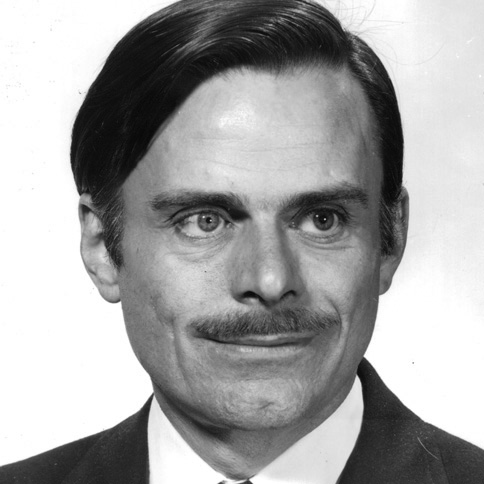
Joshua Jortner

Wolf Prize Laureate in Chemistry 1988

Joshua Jortner


Affiliation at the time of the award:

Tel-Aviv University, Israel


Award citation:

“for their incisive theoretical studies elucidating energy acquisition and disposal in molecular systems and mechanisms for dynamical selectivity and specificity”.


Prize share:

Joshua Jortner

Raphael D. Levine


Joshua Jortner (born in 1933, Poland) earned his Ph.D. from the Hebrew University of Jerusalem in 1960. Following his doctoral studies, Jortner served as a lecturer in the Department of Physical Chemistry at the Hebrew University of Jerusalem from 1961 to 1963. Between 1962 and 1964, he worked as a research associate at the University of Chicago.In 1964, Jortner was appointed as a professor in the Department of Chemistry at Tel Aviv University, also serving as its inaugural chairman. Between 1966 and 1972, he held various administrative roles at Tel Aviv University, including deputy rector, acting rector, and vice president.

Professor Joshua Jortner is one of the most influential theoretical physical chemists of his time. His works cover a vast range of fields, such as the theory of solvated electrons, properties of excited electronic states of molecules, coherent multiphoton processes, charge transfer in polar solvents and in biophysical systems, and the dynamics of supercooled large molecules and molecular clusters. His impact on each of these fields would have been enough to earn him worldwide recognition.

However, Jortner’s most impressive achievement is undoubtedly his recognition and elucidation of the intramolecular nature of radiationless dissipation of energy in molecules of large and medium size. Based on a simple theoretical model (proposed in 1968 in collaboration with Mordechai Bixon), the basic notions specifying the energy acquisition process, the interstate coupling modes, and the mechanisms of energy disposal, were laid open.

Jortner’s ideas and terminology became seminal to the study of laser chemistry, multiphoton processes in molecules, relaxation phenomena in condensed phases and the dynamics of biophysical systems, and had an indelible impact on the modern development of chemical physics and theoretical chemistry.

.

David C. Phillips

Wolf Prize Laureate in Chemistry 1987

David C. Phillips


Affiliation at the time of the award:

University of Oxford, United Kingdom


Award citation:

“for their contributions to protein X-ray crystallography and to the elucidation of structures of enzymes and their mechanisms of action”.


Prize share:

Sir David C. Phillips

David M. Blow 


The first enzymes whose 3-dimensional structures were solved by X-ray crystallography were lysozyme by David Phillips in 1965, and chymotrypsin, a larger molecule, by David Blow in 1967. These studies showed how enzymes perform biological catalysis by mobilising their substrates at the active site of the enzyme and gave definite information and ideas about the detailed chemistry of their action. Thus, for the first time it was possible to interpret the catalytic mechanism in stereochemical terms. Both men have also made significant contributions to the tecniques of protein crystallography.

Phillips and Blow have between them pioneered experimental and analytical methods that have contributed to the developments of protein crystallography.

Professor David C. Phillips (born in 1924), UK introduced the use of an automatic diffractometer (together with Arndt) for the precise measurements of the large amount of X-ray data given by a protein, which was the precursor for further automation in the field. Phillips and his team solved not only the structure of lysozyme, but also the complex with its substrate which led to the identification of a specific site and showed a distortion of the substrate towards the transition state. (Many features of the local chemistry of the interaction have since been found in other enzymes). In subsequent work Phillips has determined the structure of their enzymes, most notably triosephosphate isomerase, which was another land-mark in complex enzyme structure.

David M. Blow

Wolf Prize Laureate in Chemistry 1987

David M. Blow


Affiliation at the time of the award:

Imperial College of Science and Technology, UK


Award citation:

“for their contributions to protein X-ray crystallography and to the elucidation of structures of enzymes and their mechanisms of action”.


Prize share:

David M. Blow 

Sir David C. Phillips


The first enzymes whose 3-dimensional structures were solved by X-ray crystallography were lysozyme by David Phillips in 1965, and chymotrypsin, a larger molecule, by David Blow in 1967. These studies showed how enzymes perform biological catalysis by mobilising their substrates at the active site of the enzyme and gave definite information and ideas about the detailed chemistry of their action. Thus, for the first time it was possible to interpret the catalytic mechanism in stereochemical terms. Both men have also made significant contributions to the tecniques of protein crystallography.

Phillips and Blow have between them pioneered experimental and analytical methods that have contributed to the astounding developments of protein crystallography.

Professor David M. Blow (born in 1931, UK) was the first person to solve the phase ambiguity for non-centrosymmetric reflections in protein X-ray crystallography and thus paved the way for the solution of the first protein structure. Together with Crick, Blow intruduced the procedures for phase determination which have been used in all protein structure analysis to the present day, and with Rossmann demonstrated how the use of non-crystallographic symmetry could be used to solve multi-subunit structures. At the time, chymotrypsin was the largest and also the most difficult structure to be solved. This work led to a proposal for the “charge relay mechanism” which explained how a serine oxygen becomes activated and has been the key to an understanding of the catalytic activity of all serine proteinases found in nature. In a comparative study of two other related proteinases, Blow discovered the stereo-chemical basis of their different specificities by showing that the cavity in the enzyme selected particular amino acid residues for recognition. Blow has solved the structure of a tRNA synthetase (the only such molecule solved to date) and whose structure has formed the basis for recent studies of its catalytic mechanism by directed mutagenesis (in collaboration with A.R. Fersht and G. Winter).

Elias J. Corey

Wolf Prize Laureate in Chemistry 1986

Elias J. Corey


Affiliation at the time of the award:

Harvard University Cambridge, USA


Award citation:

“for outstanding research on the synthesis of many highly complex natural products and the demonstration of novel ways of thinking about such syntheses.”


Prize share:

Elias J. Corey

Albert Eschenmoser


Elias James Corey (born in 1928, USA) enrolled at MIT at the remarkable age of 16. At MIT, he earned both a bachelor’s degree in 1948 and subsequently pursued a Ph.D. under the mentorship of Professor John C. Sheehan, graduating in 1951. Initially inclined towards engineering, Corey’s introduction to science was primarily through mathematics. However, his perspective shifted after his sophomore year when he took his first chemistry course. This led him to reconsider his academic trajectory, prompting him to graduate with a bachelor’s degree in chemistry. Following this, Corey was invited by Professor John C. Sheehan to continue his studies at MIT for his Ph.D.After completing his doctoral studies, Corey received an appointment at the University of Illinois at Urbana–Champaign, where, at the remarkable age of 27, he ascended to the position of full professor of chemistry in 1956.

Elias James Corey was the first to synthesize the major-representatives of the two classes of natural products, the prostaglandins and the leukotrienes. The basic strategies, which he set are still those followed in current research programs. The great advances made on the biology of these important substances would not have been possible without his work. His continued efforts in the leukotriene field have revolutionized our knowledge of the molecular basis of inflammation, immunology, and other areas of medicine.

There is scarcely a laboratory involved in complex organic synthesis, which does not use one of Corey’s reagents, diimides, sulfonium ylides, and organometallics on a daily basis. The present wide use in organic synthesis of the many organometallic reagents first introduced by him is indicative of his remarkable vision in the field of synthesis.

Very important has been Corey’s influence in teaching organic chemists to think in novel ways about synthesis. An example of his innovative approaches is his introduction of the concept of retrosynthesis which lent itself well to translation into computer language. His pioneering work has laid the foundation for computer assisted synthesis.

Albert Eschenmoser

Wolf Prize Laureate in Chemistry 1986

Albert Eschenmoser


Affiliation at the time of the award:

Swiss Federal Institute of Technology (ETH), Switzerland


Award citation:

“for outstanding research on the synthesis, stereochemistry, and reaction mechanisms for formation of natural products, especially Vitamin-B12”.


Prize share:

Albert Eschenmoser

Elias J. Corey


Albert Eschenmoser has shown a remarkably keen insight-into-the-stereochemistry and mechanisms of the reactions used in his synthetic studies. His most spectacular successes have been in the Vitamin-B12 field. He achieved a total synthesis of this compound that was completed in collaboration with Professor R.B. Woodward and at the same time also developed another novel approach leading to a second synthesis of Vitamin-B12. Later his interest in this system has led him to formulate new ideas concerning the mode of formation of Vitamin-B12 and other tetrapyrrolic pigments, the “key molecules of life”, in pre-biotic times. His beautiful series of model experiments, elegantly designed, very well thought-out, and brilliantly executed, led to a substantiation of these ideas.

Rudolph A. Marcus

Wolf Prize Laureate in Chemistry 1985

Rudolph A. Marcus


Affiliation at the time of the award:

Noyes Laboratory of Chemical Physics, California Institute of Technology, USA


Award citation:

“for his contribution to chemical kinetics, especially the theories of unimolecular reactions and electron transfer reactions”.


Prize share:

None


Rudolph A. Marcus (born in 1923, Canada) fostered an early fascination with the sciences, displaying a strong aptitude for mathematics during his education at Baron Byng High School. His academic journey continued at McGill University under the tutelage of Carl A. Winkler. At McGill, Marcus diverged from the conventional path of a chemistry student, delving extensively into mathematics courses, a decision that would later underpin his formulation of the theory on electron transfer. His academic pursuits culminated in the attainment of a B.Sc. in 1943 and a Ph.D. in 1946, both from McGill University.

Following his graduation, Marcus commenced his professional career in 1946, initially working at the National Research Council (Canada), subsequently advancing to positions at the University of North Carolina and the Polytechnic Institute of Brooklyn. It was during his tenure at the University of North Carolina in 1952 that he innovatively developed the Rice–Ramsperger–Kassel–Marcus theory by amalgamating RRK theory with transition state theory. In 1964, Marcus transitioned to a teaching role at the University of Illinois, furthering his academic contributions.

Professor Rudolph A. Marcus has made many important contributions to a wide range of fields in theoretical chemical kinetics. His work has been fundamental and stimulating and has set the tone for all of the modern work in this field, starting with his initial work on RRKM theory in 1951 and continuing through his present work on semi-classical dynamics and chaos. Some of these theories are currently referred to as the Marcus theory. Many fields of chemistry have been greatly influenced by his work.

His theory of unimolecular reactions unified earlier ideas on the reactions of vibrationally excited molecules, based them on statistical notions, and related them to molecular properties. The so-called RRKM theory has become a standard textbook theory, and enjoyed many recent applications.

Marcus theory of electron-transfer reactions in solution has also become a standard theory. It is based on the recognition of the changes undergone by reactant and solvent molecules during the transfer of electrons. Quantitative relations derived by Marcus have been widely tested and are widely used by chemists. He has also extended his theory to electron transfer on electrodes, and to proton transfer in solution.

Other important contributions to theoretical chemistry include the semi classical theory of molecular collisions (in parallel with Professor W. H. Miller), the introduction of the concept of collision coordinates, and the semi-classical theory of quantization of bound states.

John S. Waugh

Wolf Prize Laureate in Chemistry 1984

John S. Waugh


Affiliation at the time of the award:

Massachusetts Institute of Technology, USA


Award citation:

“for his fundamental theoretical and experimental contributions to high resolution nuclear magnetic resonance spectroscopy in solids”.


Prize share:

John S. Waugh

Herbert S. Gutowsky

Harden M. McConnell


Magnetic resonance spectroscopy has made a singular contribution to chemistry in theory, structure and dynamics of molecules in liquids and solids. This is reflected in the choice of the recipients of the Wolf Prize in Chemistry for 1984.

Professor John S. Waugh extended the use of high resolution nuclear magnetic resonance spectroscopy from liquids to solids. He succeeded to sharpen the spectrum in solids, which is naturally broad and diffuse, by effectively averaging the spin Hamiltonian, using special combinations of externally oscillating fields. His studies have significantly deepened the physical and theoretical insights into the nature of the spin Hamiltonian and its role in nuclear magnetic resonance. In particular his method for enhancing the signal of diluted spins in the presence of abundant ones became extremely useful for carbon thirteen nuclear magnetic resonance in organic solids, where polarization transfer from the abundant protons to the rare carbon spins occurs, while at the same time broadening effects are eliminated.

Herbert S. Gutowsky

Wolf Prize Laureate in Chemistry 1984

Herbert S. Gutowsky


Affiliation at the time of the award:

University of Illinois at Urbana, USA


Award citation:

“for his pioneering work in the development and applications of nuclear magnetic resonance spectroscopy in chemistry”.


Prize share:

Herbert S. Gutowsky

Harden M. McConnell

John S. Waugh


Magnetic resonance spectroscopy has made a singular contribution to chemistry in theory, structure and dynamics of molecules in liquids and solids. This is reflected in the choice of the recipients of the Wolf Prize in Chemistry for 1984.

Professor Herbert S. Gutowsky was the first to apply the nuclear magnetic resonance method to chemical research. His experimental and theoretical work on the chemical shift effect and its relation to molecular structure has provided the chemist with working tools to study molecular conformation and molecular interactions in solutions. Gutowsky’s pioneering work on the spin-spin coupling effect developed this phenomenon into a “finger print” method for the identification and characterization of organic compounds. He was also the first to observe the effect of dynamic processes on the lineshape of high resolution nuclear magnetic resonance spectra, and exploited it for the studies of hindered rotation in molecules, Simultaneously with others he discovered the effect of the scalar and dipolar interaction with unpaired electrons in solutions of paramagnetic ions.

Harden M. McConnell

Wolf Prize Laureate in Chemistry 1984

Harden M. McConnell


Affiliation at the time of the award:

Stanford University California, USA


Award citation:

“for his studies of the electronic structure of molecules through paramagnetic resonance spectroscopy and for the introduction and biological applications of spin label techniques”.


Prize share:

Harden M. McConnell

Herbert S, Gutowsky

John S. Waugh


Magnetic resonance spectroscopy has made a singular contribution to chemistry in theory, structure and dynamics of molecules in liquids and solids. This is reflected in the choice of the recipients of the Wolf Prize in Chemistry for 1984.

Professor Harden M. McConnell recognized that the discovery of nuclear hyperfine interactions in aromatic free radicals represented a major breakthrough in the study of the electronic structure of unsaturated hydrocarbons. His theoretical and experimental studies of nuclear hyperfine interactions in such compounds showed conclusively that this interaction gave a measure of the unpaired electron spin densities on the carbon atoms. McConnell’s theoretical and experimental investigations of the anisotropic nuclear hyperfine interaction laid a firm foundation for the analysis of the paramagnetic resonance spectra of organic free radicals in. molecular crystals. His work also provided the first experimental demonstration of a negative spin density at a proton. Finally, McConnell realized that certain nitroxide free radicals had the potential of providing labels for studying molecular motions. His introduction of ‘spin labels’ has led to a deep understanding of such motions, and to extensive applications in many biological systems of great interest.


John C. Polanyi

Wolf Prize Laureate in Chemistry 1982

John C. Polanyi


Affiliation at the time of the award:

University of Toronto, Canada


Award citation:

“for his studies of chemical reactions in unprecedented detail through development of the infrared chemiluminescence technique, and for envisaging the principles underlying the chemical laser”.


Prize share:

John C. Polanyi

George C. Pimentel


Professor John Charles Polanyi has made outstanding contributions to modern chemical dynamics. In 1959 he developed the field of infrared chemiluminescence. Using this technique he was able to measure, for the first time, the distribution of individual quantum states resulting from an elementary chemical reaction. In the early sixties he predicted the infrared chemical laser. He then proceeded to develop the theory of energy disposal and of energy requirements in chemical reactions. He succeeded in achieving direct spectroscopic detection of transition states. Through these contributions he has been a prime innovator in shaping the field of chemical dynamics, as we now know it.