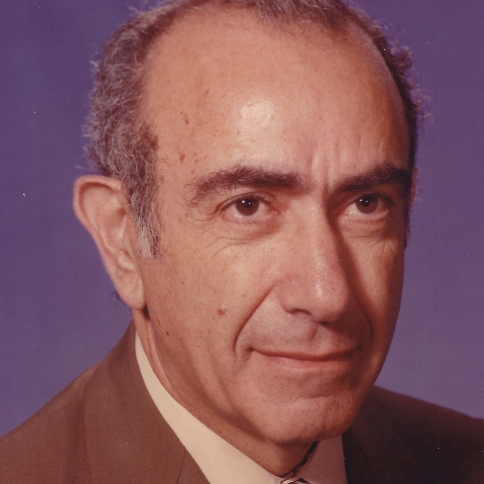
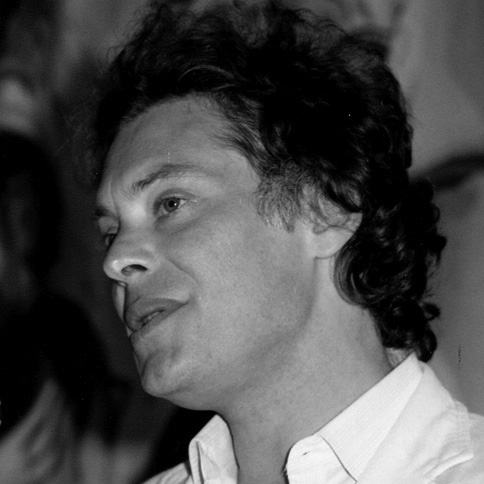
David J. Thouless

Wolf Prize Laureate in Physics 1990

David J. Thouless


Affiliation at the time of the award:

University of Washington, USA


Award citation:

“for a wide variety of pioneering contributions to our understanding of the organization of complex condensed matter systems, de Gennes especially for his work on macromolecular matter and liquid crystals and Thouless for his on disordered and low-dimensional systems”.


Prize share:

David J. Thouless 

Pierre-Gilles de Gennes


Professor David J. Thouless has provided major theoretical contributions to our understanding of extended systems of atoms and electrons, and of nucleons. These have involved especially superconductivity phenomena, properties of nuclear matter, and excited collective motions within nuclei. His work on disordered systems provided key ideas for understanding electronic transport processes in systems where Anderson localization plays an important role, and indicated measurable consequences of this localization in thin wires. His contributions to spin glass theory have been substantial and·important. With J. M. Kosterlitz, he developed a theory of vortex-unbinding transitions in two-dimensional systems with continuous symmetry. This has had remarkable consequences and many applications in other areas of physics. He has made clearly apparent the significance of topological concepts (and their related variables) in condensed matter physics and demonstrated their importance for the Quantum Hall effect.

Stephen W. Hawking

Wolf Prize Laureate in Physics 1988

Stephen W. Hawking


Affiliation at the time of the award:

University of Cambridge, United Kingdom


Award citation:

“for their brilliant development of the theory of general relativity, in which they have shown the necessity for cosmological singularities and have elucidated the physics of black holes. In this work they have greatly enlarged our understanding of the origin and possible fate of the Universe”.


Prize share:

Stephen W. Hawking

Roger Penrose 


Stephen W. Hawking (born in 1942, England) embarked on his university studies at the age of 17, attending University College, Oxford. He accomplished an exceptional first-class BA degree in physics. Continuing his academic pursuit, he commenced his graduate studies at Trinity Hall, Cambridge in October 1962. In March 1966, he achieved his PhD in applied mathematics and theoretical physics, specializing in general relativity and cosmology.

Following his studies, the main work of Professor Stephen W. Hawking is in general relativity and cosmology. Following the earlier work of Roger Penrose on collapsing stars, Hawking was the first to show that according to general relativity, without using quantum mechanics, the origin of the universe had to be singular. This means that the laws of physics break down at the origin of the universe and this created a major intellectual crisis for physics. The solution to this crisis is still unknown.

His next major work concerned the properties of black holes and general relativity. In the early 70’s he made major discoveries about the classical properties of black holes. However, in 1974 he astonished the scientific world by showing that when the surroundings of a black hole are treated quantum mechanically then the black hole turns out to have a temperature and an entropy, and to satisfy the laws of thermodynamics. In particular, a black hole would radiate as if it were a black body with a temperature inversely proportional to its mass. The final stages of this process would be violently explosive.

This work represented a new branch of physics in which general relativity, quantum mechanics and thermodynamics are combined.

Roger Penrose

Wolf Prize Laureate in Physics 1988

Roger Penrose


Affiliation at the time of the award:

University of Oxford, United Kingdom


Award citation:

“for their brilliant development of the theory of general relativity, in which they have shown the necessity for cosmological singularities and have elucidated the physics of black holes. In this work they have greatly enlarged our understanding of the origin and possible fate of the Universe”.


Prize share:

Roger Penrose 

Stephen W. Hawking


Professor Roger Penrose has made remarkable seminal contributions to the development of the general theory of relativity as well as to many other subjects in mathematical physics. He initiated the greatest discoveries in classical general relativity since its founding over seventy years ago by finding those conditions which must necessarily lead to “singularities” in any universe. These were applied to our own Universe to show that it must have began in a “big bang” and may end in a corresponding “crunch”. Related applications include the description of configurations in nature which lead inexorably to the formation of black holes. Penrose also showed how various natural processes may be extracting energy from the spin of such black holes. He has greatly enlarged our understanding of space – time by powerful analyses of its possible structure and by the invention of mathematical tools designed to allow an entirely new framework for the description of physical phenomena.

Riccardo Giacconi

Wolf Prize Laureate in Physics 1987

Riccardo Giacconi


Affiliation at the time of the award:

Space Telescope Science Institute, USA

Johns Hopkins University, USA


Award citation:

“for the discovery of extra-solar X-ray sources and the elucidation of their physical processes”.


Prize share:

Riccardo Giacconi

Herbert Friedman

Bruno B. Rossi


Friedman, Rossi, and Giacconi are universally recognized as the principal founders of X-ray astrophysics, a new field of astronomical science which has proved to be a prolific source of fundamental discoveries and deeper physical understanding about high energy processes in the universe. Their work has profoundly influenced virtually every area of astronomical research, from the study of the sun and other stars of all types and luminosity classes to investigations of the interstellar medium, galaxies, clusters of galaxies and the distant quasars. Their brilliant insights, technical inventiveness, and bold leadership stimulated the rapid growth of X-ray astronomy from its early stages of speculation and exploration in the 1950’s and 1960’s to its recent high level of productive research. All agencies engaged in space science are now developing major orbiting facilities for X-ray observations which will playa vital role in the future of astronomical science.

Professor Bruno B. Rossi initiated in 1959 research aimed at utilizing the burgeoning space technologies in a search for extra-solar X-ray sources. Motivated by a lifelong interest in the nature and origins of cosmic radiations, a field of study to which he had been making major contributions since the early 1930’s, Rossi persuaded the management and scientists at American Science and Engineering, Inc. to undertake a study of the theoretical and experimental prospects for X-ray astronomy. This study, carried out under the leadership of Riccardo Giacconi, led to proposals for new forms of X-ray optics utilizing grazing incidence reflection, and exploratory rocket experiments to scan the sky with X-ray detectors of much greater sensitivity than had previously been used. In a series of four flights, sponsored by the United States Air Force and carried out from 1961 to 1963, the AS&E group discovered discrete extra- solar X-ray sources and the X-ray background. In discussing the origin of X rays in celestial bodies, Rossi drew attention to the process of thermal bremstrahlung emission by extremely hot low-density gas, now known to be the production mechanism in most X-ray sources,

Upon completing a study of the prospects for X-ray astronomy, initiated in 1959 at the suggestion of Bruno Rossi, Professor Riccardo Giacconi undertook the development at American Science and Engineering, Inc. of improved methods for the detection and analysis of X rays of very low intensities with the goal of conducting an exploratory search for non-solar X-ray sources, He proposed, with Rossi, the use of grazing incidence reflection from parabolic mirrors to concentrate X rays for more sensitive detection. He also proposed the adaptation of the principles of image-forming X-ray optics, developed previously in connection with X-ray microscopy, to the construction of high resolution Xray telescopes. With his associates at AS&E, Giacconi carried out a series of rocket flights which discovered the first discrete extra-solar X-ray sources, including Sco X-I, and the diffuse X-ray background. He conducted additional rocket investigations, and conceived and directed the NASA sponsored projects which produced the solar X-ray spectrographic telescope on Skylab, the first orbiting X-ray observatory, Uhuru, and the orbiting Einstein Observatory carrying the first high resolution X-ray telescope for extra-solar observations. Among the most important discoveries made with these satellite facilities were coronal holes and X-ray bright points in the sun’s atmosphere, accretion powered binary X-ray pulsars, X-ray emitting gas in clusters of galaxies, and ubiquitous X-ray emissions by stars of all types and luminosity classes.

Herbert Friedman

Wolf Prize Laureate in Physics 1987

Herbert Friedman


Affiliation at the time of the award:

United States Naval Research Laboratory, USA


Award citation:

“for pioneering investigations in solar X-rays”.


Prize share:

Herbert Friedman

Bruno B. Rossi

Riccardo Giacconi


Friedman, Rossi, and Giacconi are universally recognized as the principal founders of X-ray astrophysics, a new field of astronomical science which has proved to be a prolific source of fundamental discoveries and deeper physical understanding about high energy processes in the universe. Their work has profoundly influenced virtually every area of astronomical research, from the study of the sun and other stars of all types and luminosity classes to investigations of the interstellar medium, galaxies, clusters of galaxies and the distant quasars. Their brilliant insights, technical inventiveness, and bold leadership stimulated the rapid growth of X-ray astronomy from its early stages of speculation and exploration in the 1950´s and 1960´s to its recent high level of productive research. All agencies engaged in space science are now developing major orbiting facilities for X-ray observations which will playa vital role in the future of astronomical science.

Using novel ultraviolet and X-ray photon counters in a rocket experiment carried out in 1948, Dr. Herbert Friedman (born in 1916, USA) and his associates at the United States Naval Research Laboratory detected X rays from the sun, thereby directly confirming the earlier hypothesis of Edward Hulburt that such radiation is a principal cause of ionization in the E region of the earth’s ionosphere. This pioneering research opened the field of solar X-ray astronomy which was explored extensively and almost exclusively during the 1950’s by the Friedman group. Among their achievements were the discovery of X-ray emissions from solar flares, the measurement of wide variations in the spectrum of solar X rays correlated with changes in solar activity, the first sustained observations of solar X-ray emissions by satellite-borne detectors, and the first imaging of the sun in X rays with a pinhole camera. Beginning in 1963 Friedman and his associates made important contributions to the rapidly growing field of extra-solar X-ray astronomy, including the identification of supernova remnants as powerful X-ray sources, and the first detection of X rays from an extragalactic source.

Bruno B. Rossi

Wolf Prize Laureate in Physics 1987

Bruno B. Rossi


Affiliation at the time of the award:

Massachusetts Institute of Technology, USA


Award citation:

“for the discovery of extra-solar X-ray sources and the elucidation of their physical processes”.


Prize share:

Bruno B. Rossi

Herbert Friedman

Riccardo Giacconi


All three scientists are honored for seminal contributions to X-ray astrophysics.

Friedman, Rossi, and Giacconi are universally recognized as the principal founders of X-ray astrophysics, a new field of astronomical science which has proved to be a prolific source of fundamental discoveries and deeper physical understanding about high energy processes in the universe. Their work has profoundly influenced virtually every area of astronomical research, from the study of the sun and other stars of all types and luminosity classes to investigations of the interstellar medium, galaxies, clusters of galaxies and the distant quasars. Their brilliant insights, technical inventiveness, and bold leadership stimulated the rapid growth of X-ray astronomy from its early stages of speculation and exploration in the 1950´s and 1960´s to its recent high level of productive research. All agencies engaged in space science are now developing major orbiting facilities for X-ray observations which will playa vital role in the future of astronomical science.

Professor Bruno B. Rossi (born in 1905, Italy) initiated in 1959 research aimed at utilizing the burgeoning space technologies in a search for extra-solar X-ray sources. Motivated by a lifelong interest in the nature and origins of cosmic radiations, a field of study to which he had been making major contributions since the early 1930’s, Rossi persuaded the management and scientists at American Science and Engineering, Inc, to undertake a study of the theoretical and experimental prospects for X-ray astronomy. This study, carried out under the leadership of Riccardo Giacconi, led to proposals for new forms of X-ray optics utilizing grazing incidence reflection, and exploratory rocket experiments to scan the sky with X-ray detectors of much greater sensitivity than had previously been used. In a series of four flights, sponsored by the United States Air Force and carried out from 1961 to 1963, the AS&E group discovered discrete extra- solar X-ray sources and the X-ray background. In discussing the origin of X rays in celestial bodies, Rossi drew attention to the process of thermal bremstrahlung emission by extremely hot low-density gas, now known to be the production mechanism in most X-ray sources,

Upon completing a study of the prospects for X-ray astronomy, initiated in 1959 at the suggestion of Bruno Rossi, Professor Riccardo Giacconi undertook the development at American Science and Engineering, Inc. of improved methods for the detection and analysis of X rays of very low intensities with the goal of conducting an exploratory search for non-solar X-ray sources, He proposed, with Rossi, the use of grazing incidence reflection from parabolic mirrors to concentrate X rays for more sensitive detection. He also proposed the adaptation of the principles of image-forming X-ray optics, developed previously in connection with X-ray microscopy, to the construction of high resolution Xray telescopes. With his associates at AS&E, Giacconi carried out a series of rocket flights which discovered the first discrete extra-solar X-ray sources, including Sco X-I, and the diffuse X-ray background. He conducted additional rocket investigations, and conceived and directed the NASA sponsored projects which produced the solar X-ray spectrographic telescope on Skylab, the first orbiting X-ray observatory, Uhuru, and the orbiting Einstein Observatory carrying the first high resolution X-ray telescope for extra-solar observations. Among the most important discoveries made with these satellite facilities were coronal holes and X-ray bright points in the sun’s atmosphere, accretion powered binary X-ray pulsars, X-ray emitting gas in clusters of galaxies, and ubiquitous X-ray emissions by stars of all types and luminosity classes.

Mitchell J. Feigenbaum

Wolf Prize Laureate in Physics 1986

Mitchell J. Feigenbaum


Affiliation at the time of the award:

Cornell University, USA


Award citation:

“for his pioneering theoretical studies demonstrating the universal character of non-linear systems, which has made possible the systematic study of chaos”.


Prize share:

Mitchell J. Feigenbaum  

Albert J. Libchaber


Professor Mitchell J. Feigenbaum (born in 1944, USA) commenced his postgraduate studies at the Massachusetts Institute of Technology (MIT). Initially enrolled in the field of electrical engineering, he subsequently shifted his focus to physics. In 1970, he successfully attained his doctorate for a thesis centered on dispersion relations, guided by Professor Francis E. Low.

Mitchell J. Feigenbaum is a highly original mathematical physicist whose work over the last decade has opened up a whole new field of human endeavor – the systematic study of chaos -that quite transcends the traditional disciplinary boundaries. His mathematical discoveries have led to the realization that one approach to chaotic behavior, by what is known as “period doubling”, is common to a wide class of systems. Examples are simple one-dimensional quadratic maps (a subject accessible to a bright high school student), complex chemical reactions, the onset of turbulence in convecting fluids under appropriate conditions, and the dynamics of growth of competing biological populations.

With the help of a computer Feigenbaum discovered the bifurcations which double the period of orbits (in phase space) take place in cascades that exhibit striking regularities: the bifurcations converge to a limit at a fixed rate given by a universal constant. He then constructed a powerful theoretical explanation for this phenomenon in terms of self-similarity and renormalization group techniques, thereby (incidentally) providing one of the few non-trivial applications of K. G. Wilson’s remarkable work, which can be put onto an entirely rigorous mathematical footing.

The impact of Feigenbaum’s discoveries has been phenomenal. It has spawned new fields of theoretical and “experimental” mathematics; it has led to a major new area of endeavor in the theoretical physics of condensed matter; it has changed the way people think about the onset of turbulence in hydrodynamic systems; it has implications for plasma physics, biology, and chemistry that are only beginning to be explored.

Albert J. Libchaber

Wolf Prize Laureate in Physics 1986

Albert J. Libchaber


Affiliation at the time of the award:

University of Chicago, USA


Award citation:

“for his brilliant experimental demonstration of the transition to turbulence and chaos in dynamical systems”.


Prize share:

Albert J. Libchaber

Mitchell J. Feigenbaum  


Mitchell J. Feigenbaum and Albert J. Libchaber together have opened up an entirely new field of research.

Professor Albert J. Libchaber is one of the leading figures in experimental condensed matter physics. He has made the first experimental observation of the bifurcation cascade that leads to chaos and turbulence in convective Rayleigh-Benard systems. Considering the complexity of all past work on turbulence, Libchaber’s experiments are astounding in their simplicity and elegance. Using microbolometers (scale 1ч) engraved in the convective cell he was able to observe temperature fluctuations without perturbing the environment. In that way, he clearly observed the bifurcations that lead to chaos: period doubling, possibly accompanied by locking of several incommensurate frequencies. The theoretical predictions of Feigenbaum are thus entirely confirmed. His first work was done on 4He;  he has been using mercury, in which an applied magnetic field provides an additional degree of freedom. The experiment is so perfect that it can measure quantitatively the Feigenbaum critical exponents that characterize the cascade to chaos.

Philippe Nozières

Wolf Prize Laureate in Physics 1985

Philippe Nozières


Affiliation at the time of the award:

Institut Laue-Langevin, France


Award citation:

“for their major contributions to the fundamental theory of solids, especially of the behavior of electrons in metals”.


Prize share:

Conyers Herring

Philippe Nozières


These two great physicists have played parallel roles in the brief history of solid state physics. Each of them, in his own way, could be thought of as being the conscience of his field, as a central figure who has contributed by his personal work as well as by his strong influence and valuable suggestions to his colleagues.

Philippe Nozières (born in 1932, France) initiated his scientific journey by delving into semiconductor experiments within Pierre Aigrain’s group at the École Normale Supérieure in Paris. There, he authored a master’s thesis centered on the point-contact transistor. In 1955, he secured a fellowship to study under David Pines at Princeton University, engaging in research on many-body theory. During the summer of 1956, he spent time at Bell Labs, where he actively exchanged ideas with various condensed matter theorists, notably including Philip W. Anderson and Walter Kohn. His Ph.D., based on the research conducted at Princeton, was conferred upon him by the University of Paris in 1957.

Professor Philippe Nozières has made major impact on the knowledge of the fundamental theory of solids, especially to the behavior of electrons in metals. In a short period, he has contributed profoundly to the concept of quasiparticles and its relation to Fermi liquids, to the dynamics of local systems in metals, to irreversible phenomena in quantum physics. His insight and clear exposition has stimulated many different and novel experiments.

Through his book (N-body problem) and his research he has established a French school in solid state physics whose influence extends all over the world.

Conyers Herring

Wolf Prize Laureate in Physics 1985

Conyers Herring


Affiliation at the time of the award:

Stanford University, USA


Award citation:

“for their major contributions to the fundamental theory of solids, especially of the behavior of electrons in metals”.


Prize share:

Conyers Herring

Philippe Nozières


These two great physicists have played parallel roles in the brief history of solid state physics. Each of them, in his own way, could be thought of as being the conscience of his field, as a central figure who has contributed by his personal work as well as by his strong influence and valuable suggestions to his colleagues.

Conyers Herring (born in 1914, USA) earned his Ph.D. in physics from Princeton University in 1937, presenting a dissertation titled “On Energy Coincidences in the Theory of Brillouin Zones” under the guidance of Eugene Wigner. Transitioning to the technical staff at Bell Laboratories in Murray Hill, New Jersey, in 1946, he continued his tenure there until 1978. Later, he became part of the faculty at Stanford University.

Professor Conyers Herring has laid the foundations of band structure calculations of metals and semiconductors, culminating in the discovery of the Orthogonalized Plane Wave Method (O.P.W.). He was years ahead of his time in this contribution. A great deal of modern solid state physics as produced today stems from this original and early paper.

His influence on the development of solid state physics extends to a deep understanding of many facets such as surface physics, of thermionic emission, of transport phenomena in semiconductors and of collective excitations in solids such as spin waves.

He created the theoretical physics division at Bell Telephone Laboratory, which influenced the total research effort at this institution and brought about much of the most original research in condensed matter physics . He has been most influential in promoting international cooperation among scientists and through his character and his personal example, he has exemplified a somewhat unattainable ideal of how a research scholar in any field should operate.