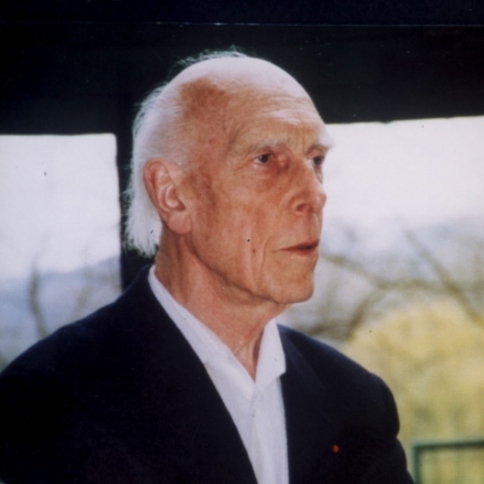
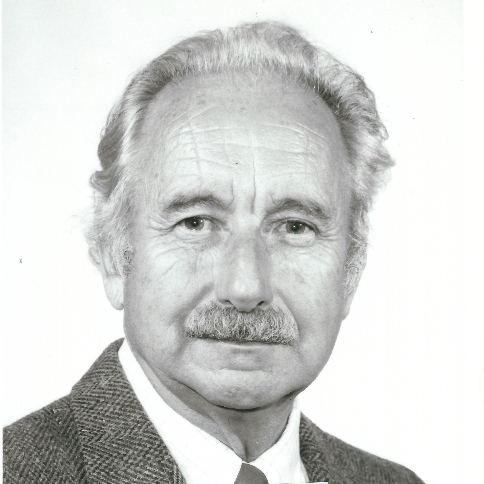
Friedrich Hirzebruch

Wolf Prize Laureate in Mathematics 1988

Friedrich Hirzebruch


Affiliation at the time of the award:

Max-Planck-Institut fuer Mathematik, Germany

University of Bonn, Germany


Award citation:

“for outstanding work combining topology, algebraic and differential geometry, and algebraic number theory; and for his stimulation of mathematical cooperation and research”.


Prize share:

Friedrich Hirzebruch 

Lars Hörmander


Friedrich Hirzebruch (born in 1927, Germany) pursued his studies at the University of Münster from 1945 to 1950, with an interlude of one year at ETH Zürich. Following this, he held a position at Erlangen and subsequently spent the years 1952 to 1954 at the Institute for Advanced Study in Princeton, New Jersey. After a year at Princeton University from 1955 to 1956, he attained a professorship at the University of Bonn. He remained there, eventually assuming the role of director at the Max-Planck-Institut für Mathematik in 1981.

The name of Professor Friedrich Hirzebruch has been connected with famous results in the areas of topology, algebraic geometry, and global differential geometry, results which all mark the beginning of important theories and which have had an enormous influence on the development of modern mathematics.

Hirzebruchws achievements include- the discovery of the signature theorem for differentiable manifolds and the formulation and proof of the Riemann-Roch theorem for algebraic varieties; the integrality theorem for characteristic classes of differentiable manifolds; the proportionality theorem for complex homogeneous manifolds and (with A. Borel) the general theory of characteristic classes of homogeneous spaces of compact Lie groups; complex K-theory and its spectral sequence and various geometrical applications (with M.F. Atiyah); the “topological” proof of the Dedekind reciprocity theorem through 4-manifold theory and other fascinating relations between differential topology and algebraic number theory; the systematic study of Hilbert modular-forms and-surfaces and their relation to class numbers.

Many mathematicians have expanded and generalized Hirzebruch’s ideas. He himself has always been interested in the beautiful particular case and concrete problem, which he solves by creating new methods that combine unusual geometric, algebraic, and arithmetic intuition. Moreover, through his brilliant lecturing and writing, through the “Arbeitstagung Bonn” (yearly international meetings at the highest level), and through his dedicated work in scientific organizations he has greatly stimulated world-wide cooperation in research.

Christopher Polge

Wolf Prize Laureate in Agriculture 1988

Ernest John Christopher Polge


Affiliation at the time of the award:

Animal Biotechnology Cambridge Ltd., UK


Award citation:

“for pioneering work in reproductive physiology including cell preservation, fertilization processes, egg biology and embryo manipulations for domestic animal improvement”.


Prize share:

Ernest John Christopher Polge  

Charles Thibault


Dr. Ernest John Christopher Polge is renowned for his pioneering work on the cryopreservation of living cells, such as sperm and in embryos. His work in this area promoted the development of the science of cryobiology. He has also contributed significantly to our understanding of embryonic development, in vitro fertilization and embryo transplants. In addition, he led a group to international recognition for pioneering techniques in cloning livestock animals by embryo division and nuclear transfer, and initiated transgenic research by insertion of gene constructs into pronuclei of recently fertilized eggs.

Throughout his career he has been concerned with the transfer and application of science for the improvement of livestock production.

The combined contributions of Polge and Thibault have had a major impact on reproductive biology, livestock production and related reproductive issues on other mammals as well as in humans. In addition both have had a major role in the training of other scientists and their leadership roles in reproductive biology.

Elizabeth F. Neufeld

Wolf Prize Laureate in Medicine 1988

Elizabeth F. Neufeld


Affiliation at the time of the award:

UCLA School of Medicine, USA


Award citation:

“for the biochemical elucidation of lysosomal storage diseases and the resulting contributions to biology, pathology, prenatal diagnosis, and therapeutics”.


Prize share:

Elizabeth F. Neufeld 

Henri-Géry Hers


The whole field of genetic storage diseases (thesaurismoses) except for a few glycogen storage conditions (nonlysosomal) was a complete mystery. The diseases were known mostly by the names of the clinicians who first described them: Hunter, Hurler, Tay-Sachs, Niemann-Pick, Gaucher, Pompe, Fabry, etc. Morphological studies had shown the presence of abundant abnormal deposits in the tissues of the patients, hence the term “storage disease”, and in some cases the chemical composition of the deposits had been identified, at least roughly. The underlying enzymic deficiencies were unknown, but were generally believed to affect some biosynthetic pathway.

Thanks to the work of Professors Hers and Neufeld and to the investigations they have sparked, more than 30 genetic storage diseases are now known to be deficiencies of lysosomal digestion and a common pathological pattern with unique features has been recognized. These discoveries have led to major advances in cell biology, including the identification of a number of new lysosomal enzymes, the recognition of the importance of lysosomal autophagy, and the elucidation of the remarkable mechanism whereby lysosomal enzymes are targeted to their destination. From the medical point of view it has now become possible, in this group of rare but diverse and tragically crippling diseases, against which no prevention or therapy was available, to provide genetic counselling through the detection of heterozygotes, to effect prenatal diagnosis in time for therapeutic abortion, and even to seriously consider and investigate the possibility of replacement therapy.

The work of Professor Elizabeth F. Neufeld (born in 1928, France) is characterized by its perfectly systematic and logical progression: Starting with the chance observation that two cell lines from patients suffering from different genetic storage disease “correct” each other’s defect when cultured together, she has moved unerringly to the recognition of the “correcting factors” as being lysosomal hydrolases,and hence to the elucidation of the precise enzymatic defect responsible for several mucopoly saccharidoses. In addition, by studying the selective uptake of the factors she has discovered that, during their biosynthesis, lysosomal enzymes receive a specific “recognition marker” that serves to target them selectively to lysosomes, and she has identified I-cell disease as a genetic deficiency of this targeting process.

Charles Thibault

Wolf Prize Laureate in Agriculture 1988

Charles Thibault


Affiliation at the time of the award:

University of Paris VI, France


Award citation:

“for pioneering work in reproductive physiology including cell preservation, fertilization processes, egg biology and embryo manipulations for domestic animal improvement”.


Prize share:

Charles Thibault

Ernest John Christopher Polge


Professor Emeritus Charles Thibault is renowned for his pioneering research on the maturation of the egg and its fertilization. In this regard he had a major role in characterizing the control of meiosis in the egg and providing the first cytological descriptions of fertilization events leading up to the first cleavage. His work progressed from these studies to in vitro fertilization and the conditions for culturing eggs, the study of sperm capacitation and gamete ageing in a number of different species. The results of his work improved our understanding of embryonic mortality differences among species, elevating conception rates and factors involved in the successful use of in vitro fertilization. Throughout his career he has been recognized for his leadership in reproductive biology.

The combined contributions of Polge and Thibault have had a major impact on reproductive biology, livestock production and related reproductive issues on other mammals as well as in humans. In addition both have had a major role in the training of other scientists and their leadership roles in reproductive biology.

Joshua Jortner

Wolf Prize Laureate in Chemistry 1988

Joshua Jortner


Affiliation at the time of the award:

Tel-Aviv University, Israel


Award citation:

“for their incisive theoretical studies elucidating energy acquisition and disposal in molecular systems and mechanisms for dynamical selectivity and specificity”.


Prize share:

Joshua Jortner

Raphael D. Levine


Joshua Jortner (born in 1933, Poland) earned his Ph.D. from the Hebrew University of Jerusalem in 1960. Following his doctoral studies, Jortner served as a lecturer in the Department of Physical Chemistry at the Hebrew University of Jerusalem from 1961 to 1963. Between 1962 and 1964, he worked as a research associate at the University of Chicago.In 1964, Jortner was appointed as a professor in the Department of Chemistry at Tel Aviv University, also serving as its inaugural chairman. Between 1966 and 1972, he held various administrative roles at Tel Aviv University, including deputy rector, acting rector, and vice president.

Professor Joshua Jortner is one of the most influential theoretical physical chemists of his time. His works cover a vast range of fields, such as the theory of solvated electrons, properties of excited electronic states of molecules, coherent multiphoton processes, charge transfer in polar solvents and in biophysical systems, and the dynamics of supercooled large molecules and molecular clusters. His impact on each of these fields would have been enough to earn him worldwide recognition.

However, Jortner’s most impressive achievement is undoubtedly his recognition and elucidation of the intramolecular nature of radiationless dissipation of energy in molecules of large and medium size. Based on a simple theoretical model (proposed in 1968 in collaboration with Mordechai Bixon), the basic notions specifying the energy acquisition process, the interstate coupling modes, and the mechanisms of energy disposal, were laid open.

Jortner’s ideas and terminology became seminal to the study of laser chemistry, multiphoton processes in molecules, relaxation phenomena in condensed phases and the dynamics of biophysical systems, and had an indelible impact on the modern development of chemical physics and theoretical chemistry.

.

Theodor O. Diener

Wolf Prize Laureate in Agriculture 1987

Theodor O. Diener


Affiliation at the time of the award:

Plant Protection Institute, Agricultural Research Service, USA


Award citation:

“for his discovery and pioneering fundamental research on viroids, the smallest subviral pathogens, and his applied work on viroid detection in crops.”


Prize share:

None


His fundamental and applied studies have firmly established the existence of viroids, a new group of subviral pathogens.

Dr. Diener discovered that the pathogen causing potato spindle tuber disease is not a virus, as previously believed, but a much smaller, free RNA molecule, which he named viroid. The discovery by Diener and his colleagues of other viroids affecting various cultivated plants such as chrysanthemum stunt, coconut cadang-cadang and planta macho viroid of tomato soon followed; so that today viroids are considered to be an important group of disease agents affecting potatoes, tomatoes, citrus, avocado, etc. His pioneering studies on isolation and purification showed inequivocally that viroids have a unique molecular structure, different from any other pathogen. Dr. Diener found that viroids replicate without helper virus; that viroid-complementary DNA, produced by insertion into bacteria, are themselves infectious and that the RNA transcribed in potato cells is identical with the viroid. Cloned viroid-specific cDNAs were also developed by him for novel diagnostic tests.

Dr. Diener’s work has direct application to the control of viroid diseases of many crops, as well as to the elucidation of the unique biological and molecular properties of these small disease agents.

David C. Phillips

Wolf Prize Laureate in Chemistry 1987

David C. Phillips


Affiliation at the time of the award:

University of Oxford, United Kingdom


Award citation:

“for their contributions to protein X-ray crystallography and to the elucidation of structures of enzymes and their mechanisms of action”.


Prize share:

Sir David C. Phillips

David M. Blow 


The first enzymes whose 3-dimensional structures were solved by X-ray crystallography were lysozyme by David Phillips in 1965, and chymotrypsin, a larger molecule, by David Blow in 1967. These studies showed how enzymes perform biological catalysis by mobilising their substrates at the active site of the enzyme and gave definite information and ideas about the detailed chemistry of their action. Thus, for the first time it was possible to interpret the catalytic mechanism in stereochemical terms. Both men have also made significant contributions to the tecniques of protein crystallography.

Phillips and Blow have between them pioneered experimental and analytical methods that have contributed to the developments of protein crystallography.

Professor David C. Phillips (born in 1924), UK introduced the use of an automatic diffractometer (together with Arndt) for the precise measurements of the large amount of X-ray data given by a protein, which was the precursor for further automation in the field. Phillips and his team solved not only the structure of lysozyme, but also the complex with its substrate which led to the identification of a specific site and showed a distortion of the substrate towards the transition state. (Many features of the local chemistry of the interaction have since been found in other enzymes). In subsequent work Phillips has determined the structure of their enzymes, most notably triosephosphate isomerase, which was another land-mark in complex enzyme structure.

Riccardo Giacconi

Wolf Prize Laureate in Physics 1987

Riccardo Giacconi


Affiliation at the time of the award:

Space Telescope Science Institute, USA

Johns Hopkins University, USA


Award citation:

“for the discovery of extra-solar X-ray sources and the elucidation of their physical processes”.


Prize share:

Riccardo Giacconi

Herbert Friedman

Bruno B. Rossi


Friedman, Rossi, and Giacconi are universally recognized as the principal founders of X-ray astrophysics, a new field of astronomical science which has proved to be a prolific source of fundamental discoveries and deeper physical understanding about high energy processes in the universe. Their work has profoundly influenced virtually every area of astronomical research, from the study of the sun and other stars of all types and luminosity classes to investigations of the interstellar medium, galaxies, clusters of galaxies and the distant quasars. Their brilliant insights, technical inventiveness, and bold leadership stimulated the rapid growth of X-ray astronomy from its early stages of speculation and exploration in the 1950’s and 1960’s to its recent high level of productive research. All agencies engaged in space science are now developing major orbiting facilities for X-ray observations which will playa vital role in the future of astronomical science.

Professor Bruno B. Rossi initiated in 1959 research aimed at utilizing the burgeoning space technologies in a search for extra-solar X-ray sources. Motivated by a lifelong interest in the nature and origins of cosmic radiations, a field of study to which he had been making major contributions since the early 1930’s, Rossi persuaded the management and scientists at American Science and Engineering, Inc. to undertake a study of the theoretical and experimental prospects for X-ray astronomy. This study, carried out under the leadership of Riccardo Giacconi, led to proposals for new forms of X-ray optics utilizing grazing incidence reflection, and exploratory rocket experiments to scan the sky with X-ray detectors of much greater sensitivity than had previously been used. In a series of four flights, sponsored by the United States Air Force and carried out from 1961 to 1963, the AS&E group discovered discrete extra- solar X-ray sources and the X-ray background. In discussing the origin of X rays in celestial bodies, Rossi drew attention to the process of thermal bremstrahlung emission by extremely hot low-density gas, now known to be the production mechanism in most X-ray sources,

Upon completing a study of the prospects for X-ray astronomy, initiated in 1959 at the suggestion of Bruno Rossi, Professor Riccardo Giacconi undertook the development at American Science and Engineering, Inc. of improved methods for the detection and analysis of X rays of very low intensities with the goal of conducting an exploratory search for non-solar X-ray sources, He proposed, with Rossi, the use of grazing incidence reflection from parabolic mirrors to concentrate X rays for more sensitive detection. He also proposed the adaptation of the principles of image-forming X-ray optics, developed previously in connection with X-ray microscopy, to the construction of high resolution Xray telescopes. With his associates at AS&E, Giacconi carried out a series of rocket flights which discovered the first discrete extra-solar X-ray sources, including Sco X-I, and the diffuse X-ray background. He conducted additional rocket investigations, and conceived and directed the NASA sponsored projects which produced the solar X-ray spectrographic telescope on Skylab, the first orbiting X-ray observatory, Uhuru, and the orbiting Einstein Observatory carrying the first high resolution X-ray telescope for extra-solar observations. Among the most important discoveries made with these satellite facilities were coronal holes and X-ray bright points in the sun’s atmosphere, accretion powered binary X-ray pulsars, X-ray emitting gas in clusters of galaxies, and ubiquitous X-ray emissions by stars of all types and luminosity classes.

Peter D. Lax

Wolf Prize Laureate in Mathematics 1987

Peter D. Lax


Affiliation at the time of the award:

Courant Institute of Mathematical Sciences, USA


Award citation:

“for his outstanding contributions to many areas of analysis and applied mathematics”.


Prize share:

Peter D. Lax

Kiyoshi Ito


Professor Peter D. Lax, a graduate of the Courant Institute, embodies the best traditions of D. Hilbert as continued by R. Courant. Among his many contributions are the solution of the Cauchy problem with oscillatory data, the clarification of the role of stability of a numerical scheme, the comprehensive development of scattering theory, the theory of non-linear conservation laws and a deep insight into the Korteweg-de Vries equation. Prof. Lax’s influence has been profound and decisive in both pure and applied mathematic

Pedro Cuatrecasas

Wolf Prize Laureate in Medicine 1987

Pedro Cuatrecasas


Affiliation at the time of the award:

Glaxo Inc., USA


Award citation:

“for the invention and development of affinity chromatography and its applications to biomedical sciences”.


Prize share:

Pedro Cuatrecasas

Meir Wilchek


Pedro Cuatrecasas (born in 1936, Spain) graduated with an A.B. from Washington University in St. Louis in 1958. He later earned his M.D. from Washington University School of Medicine in 1962.

Affinity chromatography is a novel technique which was conceived by Cuatrecasas and Wilchek and has become a powerful tool for the isolation and purification of many biologically important molecules. Few if any other new techniques have so markedly and rapidly affected the growth of biomedical sciences.

The principle of affinity chromatography is based on the covalent attachment to agarose beads of molecules that can selectively bind and thereby remove specific constituents from a mixture. This permits novel approaches to the study of enzyme mechanisms and the properties of cell surfaces, and enables separations of numerous other biological constituents to be carried out. This technique has also been employed in clinical diagnosis and therapeutics.

Professor Pedro Cuatrecasas has done much to develop and perfect the methodology of affinity chromatography. He himself, has elegantly applied the technique to study a number of enzymes and receptors. For example, he has used affinity to purify insulin receptors and estrogen receptors. Prof. Cuatrecasas has used the purified receptors to determine their structure, and to produce antibodies with which he studied their biosynthesis, regulation, function, and role in disease states (i.e. diabetes in the case of insulin receptors and breast cancer in the case of estrogen receptors).