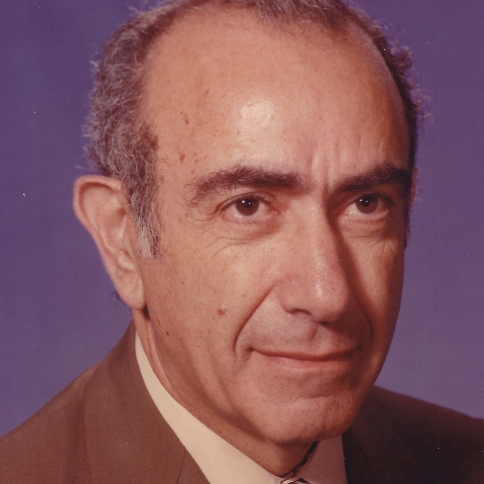
Meir Wilchek

Wolf Prize Laureate in Medicine 1987

Meir Wilchek


Affiliation at the time of the award:

Weizmann Institute of Science, Israel


Award citation:

“for the invention and development of affinity chromatography and its applications to biomedical sciences”.


Prize share:

Meir Wilchek

Pedro Cuatrecasas


Meir Wilchek (born in 1935, Poland) attained a B.Sc. in chemistry from Bar Ilan University, followed by a Ph.D. in biochemistry from the prestigious Weizmann Institute of Science. His extensive academic contributions include the publication of over 400 scientific papers, and he has served as a consultant for numerous biotech companies.

Affinity chromatography is a novel technique which was conceived by Cuatrecasas and Wilchek and has become a powerful tool for the isolation and purification of many biologically important molecules. Few if any other new techniques have so markedly and rapidly affected the growth of biomedical sciences.

The principle of affinity chromatography is based on the covalent attachment to agarose beads of molecules that can selectively bind and thereby remove specific constituents from a mixture. This permits novel approaches to the study of enzyme mechanisms and the properties of cell surfaces, and enables separations of numerous other biological constituents to be carried out. This technique has also been employed in clinical diagnosis and therapeutics.

Professor Meir Wilchek was the first to use antibody columns for the isolation of antigenic peptides from proteins. This approach has proved essential for the field of synthetic vaccines. Antibody columns are also being used currently for the isolation of proteins synthesized by genetic engineering (e.g. interferon, growth hormone and other lymphokines).

Krzysztof Penderecki

Wolf Prize Laureate in Music 1987

Krzysztof Penderecki


Award citation:

“for his achievements and innovations in the field of composition”.


Prize share:

Krzysztof Penderecki

Isaac Stern


Because of his achievements and innovations in the field of composition, Krzysztof Penderecki is justifiably being regarded as one of the most noted contemporary composers. His significance and world-wide fame are not less founded on the choice of themes for several of his major works. In them, Penderecki specifically points out the difficulties of human life and draws the attention to wrong and injustice. At the same time, he tries to sensitize the listener to concern for humanism, communication, tolerance towards the phenomena of life, as well as possibly for a “cultural religiosity” in the ecumenical sense.

Kiyoshi Ito

Wolf Prize Laureate in Mathematics 1987

Kiyoshi Ito


Affiliation at the time of the award:

Research Institute for Mathematical Sciences, Kyoto University, Japan


Award citation:

“for his fundamental contributions to pure and applied probability theory, especially the creation of the stochastic differential and integral calculus”.


Prize share:

Kiyoshi Ito

Peter D. Lax


Professor Kiyoshi Ito has given us a full understanding of the infinitesimal development of Markovian sample paths. This may be viewed as Newton’s law in the stochastic realm, providing a direct translation between the governing partial differential equation and the underlying probabilistic mechanism. Its main ingredient is the differential and integral calculus of functions of Brownian motion. The resulting theory is a cornerstone of modern probability, both pure and applied. In addition, Prof. Ito has been the inspirer and teacher of a whole generation of Japanese probabilists.

Isaac Stern

Wolf Prize Laureate in Music 1987

Isaac Stern


Award citation:

“for his everlasting humanistic contribution to society as an artist and educator, which transcends the boundaries of musical performance”.


Prize share:

Isaac Stern

Krzysztof Penderecki


Isaac Stern has given the art of performance an ever- lasting contribution. His art transcends the boundaries of music and is universally recognized as a great humanistic contribution to society. He is not only an outstanding artist but an educator who has always given unselfishly help, encouragement and inspiration to new talent everywhere in the world.

Herbert Friedman

Wolf Prize Laureate in Physics 1987

Herbert Friedman


Affiliation at the time of the award:

United States Naval Research Laboratory, USA


Award citation:

“for pioneering investigations in solar X-rays”.


Prize share:

Herbert Friedman

Bruno B. Rossi

Riccardo Giacconi


Friedman, Rossi, and Giacconi are universally recognized as the principal founders of X-ray astrophysics, a new field of astronomical science which has proved to be a prolific source of fundamental discoveries and deeper physical understanding about high energy processes in the universe. Their work has profoundly influenced virtually every area of astronomical research, from the study of the sun and other stars of all types and luminosity classes to investigations of the interstellar medium, galaxies, clusters of galaxies and the distant quasars. Their brilliant insights, technical inventiveness, and bold leadership stimulated the rapid growth of X-ray astronomy from its early stages of speculation and exploration in the 1950´s and 1960´s to its recent high level of productive research. All agencies engaged in space science are now developing major orbiting facilities for X-ray observations which will playa vital role in the future of astronomical science.

Using novel ultraviolet and X-ray photon counters in a rocket experiment carried out in 1948, Dr. Herbert Friedman (born in 1916, USA) and his associates at the United States Naval Research Laboratory detected X rays from the sun, thereby directly confirming the earlier hypothesis of Edward Hulburt that such radiation is a principal cause of ionization in the E region of the earth’s ionosphere. This pioneering research opened the field of solar X-ray astronomy which was explored extensively and almost exclusively during the 1950’s by the Friedman group. Among their achievements were the discovery of X-ray emissions from solar flares, the measurement of wide variations in the spectrum of solar X rays correlated with changes in solar activity, the first sustained observations of solar X-ray emissions by satellite-borne detectors, and the first imaging of the sun in X rays with a pinhole camera. Beginning in 1963 Friedman and his associates made important contributions to the rapidly growing field of extra-solar X-ray astronomy, including the identification of supernova remnants as powerful X-ray sources, and the first detection of X rays from an extragalactic source.

David M. Blow

Wolf Prize Laureate in Chemistry 1987

David M. Blow


Affiliation at the time of the award:

Imperial College of Science and Technology, UK


Award citation:

“for their contributions to protein X-ray crystallography and to the elucidation of structures of enzymes and their mechanisms of action”.


Prize share:

David M. Blow 

Sir David C. Phillips


The first enzymes whose 3-dimensional structures were solved by X-ray crystallography were lysozyme by David Phillips in 1965, and chymotrypsin, a larger molecule, by David Blow in 1967. These studies showed how enzymes perform biological catalysis by mobilising their substrates at the active site of the enzyme and gave definite information and ideas about the detailed chemistry of their action. Thus, for the first time it was possible to interpret the catalytic mechanism in stereochemical terms. Both men have also made significant contributions to the tecniques of protein crystallography.

Phillips and Blow have between them pioneered experimental and analytical methods that have contributed to the astounding developments of protein crystallography.

Professor David M. Blow (born in 1931, UK) was the first person to solve the phase ambiguity for non-centrosymmetric reflections in protein X-ray crystallography and thus paved the way for the solution of the first protein structure. Together with Crick, Blow intruduced the procedures for phase determination which have been used in all protein structure analysis to the present day, and with Rossmann demonstrated how the use of non-crystallographic symmetry could be used to solve multi-subunit structures. At the time, chymotrypsin was the largest and also the most difficult structure to be solved. This work led to a proposal for the “charge relay mechanism” which explained how a serine oxygen becomes activated and has been the key to an understanding of the catalytic activity of all serine proteinases found in nature. In a comparative study of two other related proteinases, Blow discovered the stereo-chemical basis of their different specificities by showing that the cavity in the enzyme selected particular amino acid residues for recognition. Blow has solved the structure of a tRNA synthetase (the only such molecule solved to date) and whose structure has formed the basis for recent studies of its catalytic mechanism by directed mutagenesis (in collaboration with A.R. Fersht and G. Winter).

Bruno B. Rossi

Wolf Prize Laureate in Physics 1987

Bruno B. Rossi


Affiliation at the time of the award:

Massachusetts Institute of Technology, USA


Award citation:

“for the discovery of extra-solar X-ray sources and the elucidation of their physical processes”.


Prize share:

Bruno B. Rossi

Herbert Friedman

Riccardo Giacconi


All three scientists are honored for seminal contributions to X-ray astrophysics.

Friedman, Rossi, and Giacconi are universally recognized as the principal founders of X-ray astrophysics, a new field of astronomical science which has proved to be a prolific source of fundamental discoveries and deeper physical understanding about high energy processes in the universe. Their work has profoundly influenced virtually every area of astronomical research, from the study of the sun and other stars of all types and luminosity classes to investigations of the interstellar medium, galaxies, clusters of galaxies and the distant quasars. Their brilliant insights, technical inventiveness, and bold leadership stimulated the rapid growth of X-ray astronomy from its early stages of speculation and exploration in the 1950´s and 1960´s to its recent high level of productive research. All agencies engaged in space science are now developing major orbiting facilities for X-ray observations which will playa vital role in the future of astronomical science.

Professor Bruno B. Rossi (born in 1905, Italy) initiated in 1959 research aimed at utilizing the burgeoning space technologies in a search for extra-solar X-ray sources. Motivated by a lifelong interest in the nature and origins of cosmic radiations, a field of study to which he had been making major contributions since the early 1930’s, Rossi persuaded the management and scientists at American Science and Engineering, Inc, to undertake a study of the theoretical and experimental prospects for X-ray astronomy. This study, carried out under the leadership of Riccardo Giacconi, led to proposals for new forms of X-ray optics utilizing grazing incidence reflection, and exploratory rocket experiments to scan the sky with X-ray detectors of much greater sensitivity than had previously been used. In a series of four flights, sponsored by the United States Air Force and carried out from 1961 to 1963, the AS&E group discovered discrete extra- solar X-ray sources and the X-ray background. In discussing the origin of X rays in celestial bodies, Rossi drew attention to the process of thermal bremstrahlung emission by extremely hot low-density gas, now known to be the production mechanism in most X-ray sources,

Upon completing a study of the prospects for X-ray astronomy, initiated in 1959 at the suggestion of Bruno Rossi, Professor Riccardo Giacconi undertook the development at American Science and Engineering, Inc. of improved methods for the detection and analysis of X rays of very low intensities with the goal of conducting an exploratory search for non-solar X-ray sources, He proposed, with Rossi, the use of grazing incidence reflection from parabolic mirrors to concentrate X rays for more sensitive detection. He also proposed the adaptation of the principles of image-forming X-ray optics, developed previously in connection with X-ray microscopy, to the construction of high resolution Xray telescopes. With his associates at AS&E, Giacconi carried out a series of rocket flights which discovered the first discrete extra-solar X-ray sources, including Sco X-I, and the diffuse X-ray background. He conducted additional rocket investigations, and conceived and directed the NASA sponsored projects which produced the solar X-ray spectrographic telescope on Skylab, the first orbiting X-ray observatory, Uhuru, and the orbiting Einstein Observatory carrying the first high resolution X-ray telescope for extra-solar observations. Among the most important discoveries made with these satellite facilities were coronal holes and X-ray bright points in the sun’s atmosphere, accretion powered binary X-ray pulsars, X-ray emitting gas in clusters of galaxies, and ubiquitous X-ray emissions by stars of all types and luminosity classes.

Ralph Riley

Wolf Prize Laureate in Agriculture 1986

Ralph Riley


Affiliation at the time of the award:

Agricultural and Food Research Council, UK


Award citation:

“for their fundamental research in cytogenetics of wheat, providing the basis for genetic improvement of cereal grains”.


Prize share:

Sir Ralph Riley

Ernest R. Sears


Sir Ralph Riley (born in 1924, UK) led a research group, which increased precision of plant breeding by experimentally describing the chromosomal architecture of wheat and related species, and by comparing genetic activities of corresponding chromosomes. During investigations which Dr. Riley started in 1958, he and his colleagues described the genetic systems by which pairing of wheat chromosomes at meiosis is limited to those which are fully homologous, and by which pairing between distantly related chromosomes is precluded. This basic knowledge allowed Dr. Riley to pair and recombine chromosomes in a way that is normally illegitimate.

The 1986 Wolf prize in agriculture is awarded to two eminent plant cytogeneticists tor their basic plant breeding research which has provided the foundation for improved cereal grain varieties.

The prize is presented to both scientists to recognize their independent but related work which led to the finding that the 5B chromosome controls chromosome pairing in wheat. This discovery allowed insertion of genes from alien species into wheat. It permits plant breeders to take desirable characteristics from alien plants, such as wild grasses, and insert them in wheat to vastly improve wheat germ plasms and cultivars.

Together, the work of these two brilliant and dedicated scientists has led to enormously improved understanding of plant cytogenetics, thus allowing plant breeders to vastly improve cereal grain varieties to feed the world’s growing and hungry population.

Samuel Eilenberg

Wolf Prize Laureate in Mathematics 1986

Samuel Eilenberg


Affiliation at the time of the award:

Columbia University, USA


Award citation:

“for his fundamental work in algebraic topology and homological algebra”.


Prize share:

Samuel Eilenberg

Atle Selberg


Professor Samuel Eilenberg began his mathematical education in the Polish School of point set topology, and has since made basic contributions to algebraic topology. Among his many seminal works are those in obstruction theory and in the creation of singular homology theory. His study of the relations between homology and homotopy is fundamental. He was one of the creators of the cohomology of groups and of the cohomology of Lie algebras and in fact of homological algebra. Each of these subjects has had many applications. His work has been central in several major developments of modern mathematics.

Osamu Hayaishi

Wolf Prize Laureate in Medicine 1986

Osamu Hayaishi


Affiliation at the time of the award:

Osaka Medical College, Japan


Award citation:

“for the discovery of the oxygenase enzymes and elucidation of their structure and biological importance”.


Prize share:

None


Professor Osamu Hayaishi (born in 1920, USA) made outstanding and pioneering contributions to biomedical sciences and enzymology by his discovery of oxygenases. These enzymes are widely distributed in nature and represent a unique group of respiratory enzymes that catalyze the direct incorporation of molecular oxygen into various substrates. They play crucial roles in:biosynthesis and degradation of certain amino acids, metabolic disposal of synthetic compounds such as various drugs and food additives, and decomposition of various compounds responsible for pollution by air, water or soil microorganisms.

Prior to the discovery of oxygenases by Hayaishi in 1955, the only known mechanism of biological oxidation was the “dehydrogenation” theory proposed by Wieland in 1920, namely the transfer of hydrogen atoms, or electrons. With Hayaishi’s demonstration of the biological fixation of molecular oxygen, a new concept of oxidation was introduced. The existance of “oxygenases”,as Hayaishi termed the enzymes which catalyze such oxygen-fixation reactions, has been confirmed in a large number of laboratories and the number of known oxygenases now exceeds several hundreds.

Hayaishi and coworkers discovered and characterized more than 20 oxygenases, crystallized four of them and made extensive studies concerning their structure and properties. Some of these enzymes, have been shown to be widely distributed in soil and air-born microorganisms and to playa vital role in the degradation of a variety of synthetic and natural compounds in nature. Thus, Hayaishi not only opened up a new area of research but also made fundamental contributions to our understanding of the structure and the reaction mechanism of the unique group of enzymes.

A number of oxygenases characterized by Hayaishi play crucial roles in the metabolism of amino acids such as tryptophan, lysine, histidine and others. His studies on these amino acids have resulted in the elucidation of several new and physiologically important metabolic pathways, both in mammals and microorganisms. Furthermore, studies on the individual oxygenases involved have yielded basic information on the regulatory mechanism, which controls their activities. In addition to these studies, his work extends to oxygenases involved in the metabolism of other biologically important compounds, such as prostaglandins, vitamin A and carcinogenic hydrocarbons, that incite the development of malignancy.

His work demonstrated that interferon (a protein produced by intact animal cells when infected with viruses) induces indoleamine 2,3 dioxygenase, which degrades and depletes tryptophan, thereby inhibiting the growth of viruses and tumors. These experiments clearly demonstrated that oxygenase plays a crucial role in the interferon action, which acts to inhibit viral reproduction and to induce resistance in host cells.