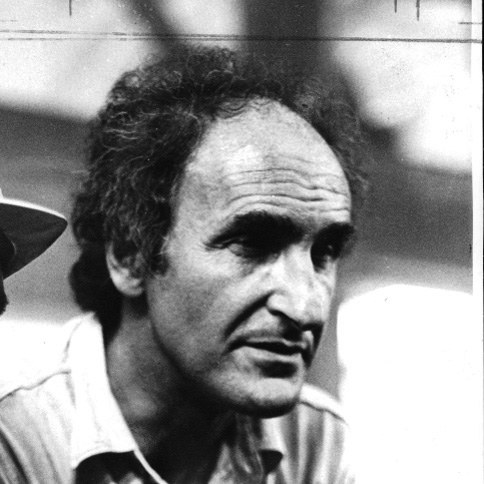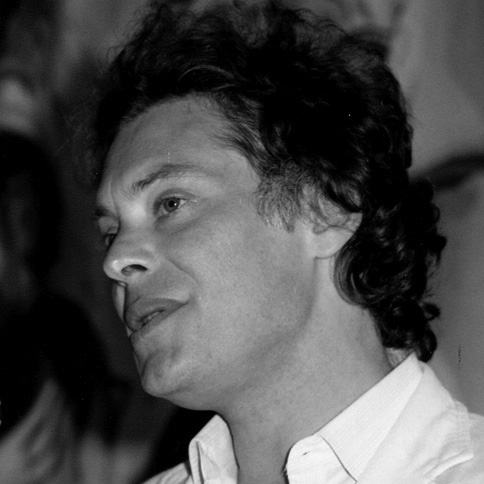
Mitchell J. Feigenbaum

Wolf Prize Laureate in Physics 1986

Mitchell J. Feigenbaum


Affiliation at the time of the award:

Cornell University, USA


Award citation:

“for his pioneering theoretical studies demonstrating the universal character of non-linear systems, which has made possible the systematic study of chaos”.


Prize share:

Mitchell J. Feigenbaum  

Albert J. Libchaber


Professor Mitchell J. Feigenbaum (born in 1944, USA) commenced his postgraduate studies at the Massachusetts Institute of Technology (MIT). Initially enrolled in the field of electrical engineering, he subsequently shifted his focus to physics. In 1970, he successfully attained his doctorate for a thesis centered on dispersion relations, guided by Professor Francis E. Low.

Mitchell J. Feigenbaum is a highly original mathematical physicist whose work over the last decade has opened up a whole new field of human endeavor – the systematic study of chaos -that quite transcends the traditional disciplinary boundaries. His mathematical discoveries have led to the realization that one approach to chaotic behavior, by what is known as “period doubling”, is common to a wide class of systems. Examples are simple one-dimensional quadratic maps (a subject accessible to a bright high school student), complex chemical reactions, the onset of turbulence in convecting fluids under appropriate conditions, and the dynamics of growth of competing biological populations.

With the help of a computer Feigenbaum discovered the bifurcations which double the period of orbits (in phase space) take place in cascades that exhibit striking regularities: the bifurcations converge to a limit at a fixed rate given by a universal constant. He then constructed a powerful theoretical explanation for this phenomenon in terms of self-similarity and renormalization group techniques, thereby (incidentally) providing one of the few non-trivial applications of K. G. Wilson’s remarkable work, which can be put onto an entirely rigorous mathematical footing.

The impact of Feigenbaum’s discoveries has been phenomenal. It has spawned new fields of theoretical and “experimental” mathematics; it has led to a major new area of endeavor in the theoretical physics of condensed matter; it has changed the way people think about the onset of turbulence in hydrodynamic systems; it has implications for plasma physics, biology, and chemistry that are only beginning to be explored.

Jasper Johns

Wolf Prize Laureate in Arts 1986

Jasper Johns


Award citation:

“one of the leading and most influential figures of Pop Art in the world since its inception”.


Prize share:

None


Jasper Johns (born in 1930, USA) is among the world leaders of Pop Art since its origin. At the same time, his work is highly individual in subject as well as in style, and puts him in a place apart from the other artists of this important trend in modern art.

He studied at the University of South Carolina before moving to New York in 1949. From the mid-1950’s, he was closely associated with the composer John Cage, the dancer Merce Cunningham and the painter Robert Rauschenberg.

They all aimed at the democratization of art, by using contemporary popular subjects, symbols, objects and materials. In this direction Johns created in 1954-55 new iconography, suited for the modern world; putting the object as a symbolic reflection of events or occurrences as a focus of his work, rather than painting a story or a scenery. In paintings like the “Flag”, the “Target” and the “Number”, Johns formed new symbols taken from our contemporary environment. This won him immediate recognition, and led to his first one-man show at the Leo Castelli Gallery of New York in 1958.

Using both the painting as well as the graphic techniques, Johns’ work helped in breaking the long traditional attitude to the artist’s “masterpiece” as a singular work of art. The Wolf Prize is given to Jasper Johns for his courageous attempts in creating modern icons, and for the manner and style these were presented.

Ernest R. Sears

Wolf Prize Laureate in Agriculture 1986

Ernest R. Sears


Affiliation at the time of the award:

University of Missouri, USA


Award citation:

“for their fundamental research in cytogenetics of wheat, providing the basis for genetic improvement of cereal grains”.


Prize share:

Ernest R. Sears

Sir Ralph Riley


Ernest R. Sears (born in 1910, USA) synthesized for the first time in 1946 a hexaploid wheat. In 1950, he completed work, which established the monosomic series in wheat, and later created a mullisomic series, a trisomic series, and a telesomic series of chromosomes in wheat. These have greatly enhanced development and breeding of modern wheat varieties.

The 1986 Wolf prize is awarded to two eminent plant cytogeneticists tor their basic plant breeding research which has provided the foundation for improved cereal grain varieties.

The prize is presented to both scientists to recognize their independent but related work which led-to. the finding that the 5B chromosome controls chromosome pairing in wheat. This discovery allowed insertion of genes from alien species into wheat. It permits plant breeders to take desirable characteristics from alien plants, such as wild grasses, and insert them in wheat to vastly improve wheat germ plasms and cultivars.

Together, the work of these two brilliant and dedicated scientists has led to enormously improved understanding of plant cytogenetics, thus allowing plant breeders to vastly improve cereal grain varieties to feed the world´s growing and hungry population.

Elias J. Corey

Wolf Prize Laureate in Chemistry 1986

Elias J. Corey


Affiliation at the time of the award:

Harvard University Cambridge, USA


Award citation:

“for outstanding research on the synthesis of many highly complex natural products and the demonstration of novel ways of thinking about such syntheses.”


Prize share:

Elias J. Corey

Albert Eschenmoser


Elias James Corey (born in 1928, USA) enrolled at MIT at the remarkable age of 16. At MIT, he earned both a bachelor’s degree in 1948 and subsequently pursued a Ph.D. under the mentorship of Professor John C. Sheehan, graduating in 1951. Initially inclined towards engineering, Corey’s introduction to science was primarily through mathematics. However, his perspective shifted after his sophomore year when he took his first chemistry course. This led him to reconsider his academic trajectory, prompting him to graduate with a bachelor’s degree in chemistry. Following this, Corey was invited by Professor John C. Sheehan to continue his studies at MIT for his Ph.D.After completing his doctoral studies, Corey received an appointment at the University of Illinois at Urbana–Champaign, where, at the remarkable age of 27, he ascended to the position of full professor of chemistry in 1956.

Elias James Corey was the first to synthesize the major-representatives of the two classes of natural products, the prostaglandins and the leukotrienes. The basic strategies, which he set are still those followed in current research programs. The great advances made on the biology of these important substances would not have been possible without his work. His continued efforts in the leukotriene field have revolutionized our knowledge of the molecular basis of inflammation, immunology, and other areas of medicine.

There is scarcely a laboratory involved in complex organic synthesis, which does not use one of Corey’s reagents, diimides, sulfonium ylides, and organometallics on a daily basis. The present wide use in organic synthesis of the many organometallic reagents first introduced by him is indicative of his remarkable vision in the field of synthesis.

Very important has been Corey’s influence in teaching organic chemists to think in novel ways about synthesis. An example of his innovative approaches is his introduction of the concept of retrosynthesis which lent itself well to translation into computer language. His pioneering work has laid the foundation for computer assisted synthesis.

Atle Selberg

Wolf Prize Laureate in Mathematics 1986

Atle Selberg


Affiliation at the time of the award:

Institute for Advanced Study, USA


Award citation:

“for his profound and original work on number theory and on discrete groups and automorphic forms”.


Prize share:

Atle Selberg

Samuel Eilenberg


In early work, Professor Atle Selberg proved that the zeros of the Riemann zeta function on the critical line have positive density. He conceived and developed the general sieve method, which has become a fundamental tool in analytic number theory. His ideas on sieves led him to his celebrated “Selberg formula” which is the basis of his elementary proof of the prime number theorem. He discovered the trace formula, which bears his name. Out of it grew a new interaction of group representations and number theory. He initiated the study of the arithmeticity of lattices. His contributions are so deep and so many that his name is already part of the history of mathematic

Albert J. Libchaber

Wolf Prize Laureate in Physics 1986

Albert J. Libchaber


Affiliation at the time of the award:

University of Chicago, USA


Award citation:

“for his brilliant experimental demonstration of the transition to turbulence and chaos in dynamical systems”.


Prize share:

Albert J. Libchaber

Mitchell J. Feigenbaum  


Mitchell J. Feigenbaum and Albert J. Libchaber together have opened up an entirely new field of research.

Professor Albert J. Libchaber is one of the leading figures in experimental condensed matter physics. He has made the first experimental observation of the bifurcation cascade that leads to chaos and turbulence in convective Rayleigh-Benard systems. Considering the complexity of all past work on turbulence, Libchaber’s experiments are astounding in their simplicity and elegance. Using microbolometers (scale 1ч) engraved in the convective cell he was able to observe temperature fluctuations without perturbing the environment. In that way, he clearly observed the bifurcations that lead to chaos: period doubling, possibly accompanied by locking of several incommensurate frequencies. The theoretical predictions of Feigenbaum are thus entirely confirmed. His first work was done on 4He;  he has been using mercury, in which an applied magnetic field provides an additional degree of freedom. The experiment is so perfect that it can measure quantitatively the Feigenbaum critical exponents that characterize the cascade to chaos.

Albert Eschenmoser

Wolf Prize Laureate in Chemistry 1986

Albert Eschenmoser


Affiliation at the time of the award:

Swiss Federal Institute of Technology (ETH), Switzerland


Award citation:

“for outstanding research on the synthesis, stereochemistry, and reaction mechanisms for formation of natural products, especially Vitamin-B12”.


Prize share:

Albert Eschenmoser

Elias J. Corey


Albert Eschenmoser has shown a remarkably keen insight-into-the-stereochemistry and mechanisms of the reactions used in his synthetic studies. His most spectacular successes have been in the Vitamin-B12 field. He achieved a total synthesis of this compound that was completed in collaboration with Professor R.B. Woodward and at the same time also developed another novel approach leading to a second synthesis of Vitamin-B12. Later his interest in this system has led him to formulate new ideas concerning the mode of formation of Vitamin-B12 and other tetrapyrrolic pigments, the “key molecules of life”, in pre-biotic times. His beautiful series of model experiments, elegantly designed, very well thought-out, and brilliantly executed, led to a substantiation of these ideas.

Philippe Nozières

Wolf Prize Laureate in Physics 1985

Philippe Nozières


Affiliation at the time of the award:

Institut Laue-Langevin, France


Award citation:

“for their major contributions to the fundamental theory of solids, especially of the behavior of electrons in metals”.


Prize share:

Conyers Herring

Philippe Nozières


These two great physicists have played parallel roles in the brief history of solid state physics. Each of them, in his own way, could be thought of as being the conscience of his field, as a central figure who has contributed by his personal work as well as by his strong influence and valuable suggestions to his colleagues.

Philippe Nozières (born in 1932, France) initiated his scientific journey by delving into semiconductor experiments within Pierre Aigrain’s group at the École Normale Supérieure in Paris. There, he authored a master’s thesis centered on the point-contact transistor. In 1955, he secured a fellowship to study under David Pines at Princeton University, engaging in research on many-body theory. During the summer of 1956, he spent time at Bell Labs, where he actively exchanged ideas with various condensed matter theorists, notably including Philip W. Anderson and Walter Kohn. His Ph.D., based on the research conducted at Princeton, was conferred upon him by the University of Paris in 1957.

Professor Philippe Nozières has made major impact on the knowledge of the fundamental theory of solids, especially to the behavior of electrons in metals. In a short period, he has contributed profoundly to the concept of quasiparticles and its relation to Fermi liquids, to the dynamics of local systems in metals, to irreversible phenomena in quantum physics. His insight and clear exposition has stimulated many different and novel experiments.

Through his book (N-body problem) and his research he has established a French school in solid state physics whose influence extends all over the world.

Eduardo Chillida

Wolf Prize Laureate in Art 1985

Eduardo Chillida


Prize share:

None


His fruitful imagination, expressing a practical beauty of forms in his sculpture, appears in a contemporary guise, combining tradition and innovation.

Eduardo Chillida is one of the major sculptors of our times, with highly distinguished accomplishments in the three-dimension medium to his credit.

Chillida’s solid iron sculptures, as well as his alabaster blocks, are deeply rooted in the modern sculptural traditions and, at the same time, reached out experimentally toward new and as yet untested technical as well as aesthetic dimensions.

While enjoyable within a context of contemporary aesthetics, Chillida’s work has also radical and demanding dimensions, expressed through its weight and its assertiveness. His bold outdoor sculpture is at once part of nature and a challenge to it.

His debt to the past as well as his uncompromising contemporary posture marked him as an extraordinarily deserving, indeed a most admirable contemporary creator.

Donald F. Steiner

Wolf Prize Laureate in Medicine 1985

Donald F. Steiner


Affiliation at the time of the award:

University of Chicago Medical Center, USA


Award citation:

“for discoveries concerning the biosynthesis and processing of insulin which have had profound implications for basic biology and clinical medicine”.


Prize share:

None


Donald F. Steiner (born in 1930, USA) obtained his B.S. in Chemistry and Zoology from the University of Cincinnati in 1952, followed by the completion of his M.S. in biochemistry and M.D. from the University of Chicago in 1956. His medical and research training encompassed an internship at King County Hospital and residency/post-doctoral research at the University of Washington. Subsequently, he re-joined the University of Chicago as a faculty member in 1960.

Professor Donald F. Steiner found that insulin is synthesized from a larger precursor protein in the beta cells of the pancreas. This led the way to elucidation of how the islet cells function, and how peptide hormones, in general, are synthesized and metabolized Steiner and his colleagues have also devised methods for measuring insulin and its precursors in human serum.

The understanding of the biochemical nature of insulin and its production and the development of methods for measurement have had profound clinical implications. The understanding of the action of insulin has been enhanced, the treatment of diabetes has been improved, and the diagnosis of insulin secreting tumors of the pancreas made simpler and more accurate. His discoveries paved the way for the recent findings of the polypeptide nature of hormones and neurotransmitters.

Steiner has extended his studies of peptide hormone biosynthesis to the level of the insulin gene and its aberrations.

His accomplishments have provided the framework for a great many past and future endeavors in molecular and clinical endocrinology, including the recent development and production of cloned human insulin.