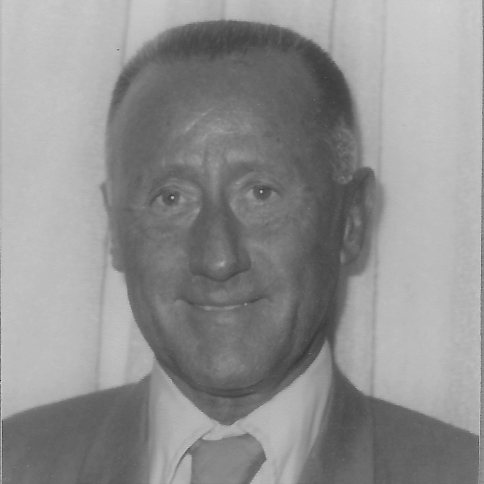
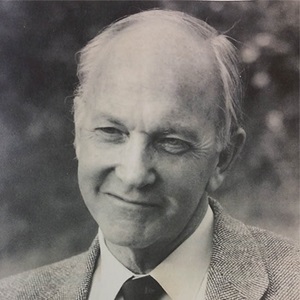
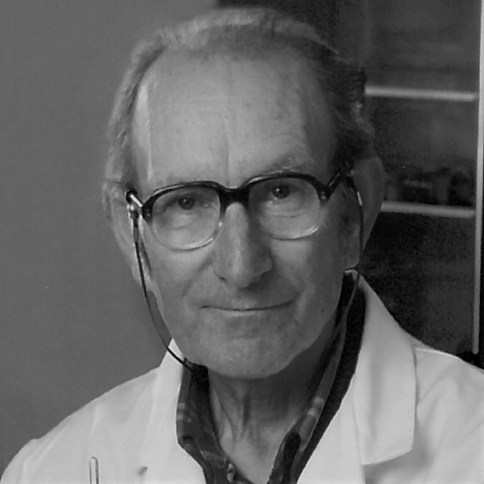
Michael E. Fisher

Wolf Prize Laureate in Physics 1980

Michael E. Fisher


Affiliation at the time of the award:

Cornell University, USA


Award citation:

“for path breaking developments culminating in the general theory of the critical behavior at transitions between the different thermodynamic phases of matter”.


Prize share:

Michael E. Fisher

Kenneth G. Wilson

Leo P. Kadanoff


The set of theoretical ideas, which these three men have had the central roles in developing are of the most fundamental importance to physics and chemistry. They constitute the long hoped-for solution, in an unexpected and exciting form, to questions about critical points and critical fluctuations first formulated in the early 1930´s and later brought into sharper focus by an increasing body of experimental data and numerical analyses, much of it done by or under the stimulus of Fisher. To chemistry these ideas contribute new insights to the nature of thermodynamic phases as well as the solution of one of its oldest problems; to physics a new and elegant methodology which Kadanoff and especially Wilson have shown to be relevant to many important and apparently unrelated problems of quantum physics, especially the gauge theory of strong interactions between elementary particles and the quantum theory of magnetic impurity systems. The power and generality of this new conceptual structure is only beginning to be properly tested by these extensions to new fields.

Professor Michael E. Fisher has been an extraordinarily productive scientist, and one still at the height of his powers and creativity. Fisher´s major contributions have been in equilibrium statistical mechanics, and have spanned the full range of that subject. He was mainly responsible for bringing together, and teaching a common language to, chemists and physicists working on diverse problems of phase transitions.


Leo Sachs

Wolf Prize Laureate in Medicine 1980

Leo Sachs


Affiliation at the time of the award:

The Weizmann Institute of Science, Israel


Award citation:

“for their contributions to knowledge of the function and disfunction of the body cells through their studies on the immunological role of the lymphocytes, the development of specific antibodies and the elucidation of mechanisms governing the control and differentiation of normal and cancer cells”.


Prize share:

Leo Sachs

Sir James L. Gowans

César Milstein


Professor Leo Sachs is one of the leading pioneers in cancer research and cell biology. He has made original and pioneer contributions to elucidating the control of growth and differentiation in normal and cancer cells. His pioneering achievements in the use of cells in culture, to study the differentiation of normal and malignant white blood cells and the change of normal into cancer cells by chemicals, x-irradiation and DNA viruses, have opened completely new approaches to research in this field. Professor Sachs has trained many students and founded new schools of biology in Israel and abroad.

Leo P. Kadanoff

Wolf Prize Laureate in Physics 1980

Leo P. Kadanoff


Affiliation at the time of the award:

University of Chicago, USA


Award citation:

“for path breaking developments culminating in the general theory of the critical behavior at transitions between the different thermodynamic phases of matter”.


Prize share:

Leo P. Kadanoff

Michael E. Fisher

Kenneth G. Wilson


The set of theoretical ideas, which these three men have had the central roles in developing are of the most fundamental importance to physics and chemistry. They constitute the long hoped-for solution, in an unexpected and exciting form, to questions about critical points and critical fluctuations first formulated in the early 1930’s and later brought into sharper focus by an increasing body of experimental data and numerical analyses, much of it done by or under the stimulus of Fisher. To chemistry these ideas contribute new insights to the nature of thermodynamic phases as well as the solution of one of its oldest problems; to physics a new and elegant methodology which Kadanoff and especially Wilson have shown to be relevant to many important and apparently unrelated problems of quantum physics, especially the gauge theory of strong interactions between elementary particles and the quantum theory of magnetic impurity systems. The power and generality of this new conceptual structure is only beginning to be properly tested by these extensions to new fields.

Professor Leo P. Kadanoff has made excellent theoretical research, which he is still carrying on, in several fields of physics, but more particularly on phase transitions and critical-point phenomena. The latter work was seminal to an understanding of these matters, inspiring a great deal of further study by many theorists.

Kenneth G. Wilson

Wolf Prize Laureate in Physics 1980

Kenneth G. Wilson


Affiliation at the time of the award:

Cornell University, USA


Award citation:

“for path breaking developments culminating in the general theory of the critical behavior at transitions between the different thermodynamic phases of matter”.


Prize share:

Kenneth G. Wilson

Michael E. Fisher

Leo P. Kadanoff


The set of theoretical ideas, which these three men have had the central roles in developing are of the most fundamental importance to physics and chemistry. They constitute the long hoped-for solution, in an unexpected and exciting form, to questions about critical points and critical fluctuations first formulated in the early 1930’s and later brought into sharper focus by an increasing body of experimental data and numerical analyses, much of it done by or under the stimulus of Fisher. To chemistry these ideas contribute new insights to the nature of thermodynamic phases as well as the solution of one of its oldest problems; to physics a new and elegant methodology which Kadanoff and especially Wilson have shown to be relevant to many important and apparently unrelated problems of quantum physics, especially the gauge theory of strong interactions between elementary particles and the quantum theory of magnetic impurity systems. The power and generality of this new conceptual structure is only beginning to be properly tested by these extensions to new fields.

Professor Kenneth G. Wilson Wilson’s work is characterized by astonishing range and depth. His research and discoveries have revealed hitherto unperceived connections between several areas of great interest to contemporary physics. His major works have ranged over areas that had appeared to be totally disconnected. in each of which he has made major advances, most particularly in the field of phase transitions where his work has revolutionized the subject.

Karl Maramorosch

Wolf Prize Laureate in Agriculture 1980

Karl Maramorosch


Affiliation at the time of the award:

Rutgers University, USA


Award citation:

“for his pioneering and wide-ranging studies on interactions between insects and disease agents in plants”.


Prize share:

None


Dr. Karl Maramorosh (born in 1915, Austria) has made outstanding contributions to an understanding of the interrelationships of plant diseases, their insect vectors and the pathogens that cause them, notably to the long contested problem of whether or not plant viruses can replicate within their insect vectors. He then turned his attention to viruses, which infect insects and can thus be utilized for the microbiological control of insect pests.

His pioneering studies with the novel ultramicroscopical agents, the mycoplasmas and spiroplasmas, once· thought erroneously to be viruses, have demonstrated unequivocally their importance as disease-producing agents in citrus and other crops.

This research has led to the study of these new pathogens far beyond agriculture, namely in human disease. In addition to these interdisciplinary contributions embracing three major areas of disease and its control, Dr. Maramorosch has found time to publish, or edit, some 25 major works on comparative virology methods in virology, diseases of tropical legumes and the roles of insects, viruses and other ultramicroscopical disease agents in agriculture, ecology and medicine. His world-wide influence on concepts in crop protection through his original papers and his books has been further enhanced by his notable leadership at numerous major scientific meetings devoted to viruses, mycoplasmas, the role of insects as vectors, and diseases of insects.

James L. Gowans

Wolf Prize Laureate in Medicine 1980

Sir James L. Gowans


Affiliation at the time of the award:

Medical Research Council, UK


Award citation:

“for their contributions to knowledge of the function and disfunction of the body cells through their studies on the immunological role of the lymphocytes, the development of specific antibodies and the elucidation of mechanisms governing the control and differentiation of normal and cancer cells”.


Prize share:

Sir James L. Gowans

Leo Sachs

César Milstein  


Professor Sir James L. Gowans demonstrated that lymphocytes circulate continuously around the body and the route by which they do so. Modern concepts of the functional anatomy of lymphoid tissues, and of the distinct pathways taken by subsets of lymphocytes, is another area of his important contribution, which has had an impact in fields as leukemia, autoimmune diseases, dermatology and prophylactic immunization.

Henry Eyring

Wolf Prize Laureate in Chemistry 1980

Henry Eyring


Affiliation at the time of the award:

University of Utah, USA


Award citation:

“for his development of absolute rate theory and its imaginative applications to chemical and physical processes”.


Prize share:

None


Professor Henry Eyring has dedicated a lifetime being involved in the many ramifications of this powerful approach to chemical dynamics. He has shown that the absolute rate theory is equally valid in detonations of gases, corrosion of metal surfaces, nerve action, marine biology, etc. The list of applications rapidly becomes legion. The universality of the theory is its greatest strength.

The award of the 1980 Wolf Prize in Chemistry to Henry Eyring is a fitting and proper recognition for the work of this unique and gifted scientist. His transition state or absolute rate theory of treating chemical reaction kinetics and other rate processes has become the guiding principle behind everyday thinking in this area. The successful application by Henry Eyring of this theory to diverse phenomena in chemistry, biology, engineering, geology and physics over a fifty year period constitutes the basis for this award.

He is the holder of 15 Honorary Doctorates, has received numerous awards, has authored 590 scientific publications and is a member of a great number of Academies of Sciences and scientific associations all over the world.

Henri Cartan

Wolf Prize Laureate in Mathematics 1980

Henri Cartan


Affiliation at the time of the award:

Universite de Paris, France


Award citation:

“for pioneering work in algebraic topology, complex variables homological algebra and inspired leadership of a generation of mathematicians”.


Prize share:

Henri cartan 

Andrey N. Kolmogorov


Both mathematicians are noteworthy for their breadth of interests and for the depth of the results they have obtained in the various fields of mathematics in which they have been active. Their interests were complementary and, taken together, span almost the whole range of mathematics.

Professor (Emeritus) Henri Cartan began his career in several complex variables when, along with Oka and Thullen, he laid the foundation for the general theory, culminating in the characterization of domains of holomorphy.

During the post-war period for about 15 years, Cartan was the leader of the famous Seminaire Cartan which, attracted mathematicians from all over the world. In this seminar he also turned to algebraic topology and soon made the seminar the center of new developments in this field. The new methods which were introduced by him and by others, formed the basis of an entirely new branch of mathematics, homological algebra, which has grown beyond all expectation. In addition to the above, Cartan has contributed to various theories such as potential theory and harmonic analysis. He was one of the founding fathers of the Bourbaki Circle of French Mathematicians, who have definitely stamped the image of the present science of Mathematics.

Andrey N. Kolmogorov

Wolf Prize Laureate in Mathematics 1980

Andrey N. Kolmogorov


Affiliation at the time of the award:

Moscow State University, U.S.S.R


Award citation:

“for deep and original discoveries in Fourier analysis, probability theory, ergodic theory and dynamical systems”.


Prize share:

Andrey N. Kolmogorov

Henri cartan 


Both mathematicians are noteworthy for their breadth of interests and for the depth of the results they have obtained in the various fields of mathematics in which they have been active. Their interests were complementary and, taken together, span almost the whole range of mathematics.

The work of Professor Andrey N. Kolmogorov is characterized above all by great power. One of his first achievements was to give an example of an L1 function whose Fourier Series diverges everywhere. In addition the Kolmogorov-Seliverstov theorem remained for many years the deepest result on convergence of Fourier Series for L2 functions. However, it was his work in probability theory, which truly earned his reputation. In 1933 he wrote a fundamental book on the foundations of probability theory, which for the first time put probability theory on a completely secure footing, comparable to the rest of mathematics. He later introduced the critical concept of entropy, which enabled one to solve the famous isomorphism problem for Bernoulli shifts, and essentially revived the entire field of ergodic theory.

His interests include logic, approximation theory, and the theory of real variables, as well as many other subjects. His influence on students has also been very extensive.

César Milstein

Wolf Prize Laureate in Medicine 1980

César Milstein


Affiliation at the time of the award:

Medical Research Council, United Kingdom


Award citation:

“for their contributions to knowledge of the function and disfunction of the body cells through their studies on the immunological role of the lymphocytes, the development of specific antibodies and the elucidation of mechanisms governing the control and differentiation of normal and cancer cells”.


Prize share:

César Milstein

Leo Sachs

Sir James L. Gowans


Dr. César Milstein is one of the few immunologists who have outstanding contributions in three major areas of immunology: nucleic acids (antibody genes), proteins (immunoglobulins) and cells (lymphocytes). By fusing myeloma cells to antigen stimulated mouse lymphocytes he was able to generate continuous cell lines secreting the antibody of choice with the specificity of choice.

This discovery is an important contribution to specific serology. The technique of generating continuously growing hybrid cell lines that secrete monoclonal antibodies of defined specificity has an impact on basic research in immunology in particular and in molecular biology in general, and on clinical research.