Kenneth Blaxter

Wolf Prize Laureate in Agriculture 1979

Sir Kenneth Blaxter


Affiliation at the time of the award:

Rowett Research Institute, United Kingdom


Award citation:

“for his fundamental contributions to the science and practice of ruminant nutrition and livestock production”.


Prize share:

Sir Kenneth Blaxter

Jay L. Lush


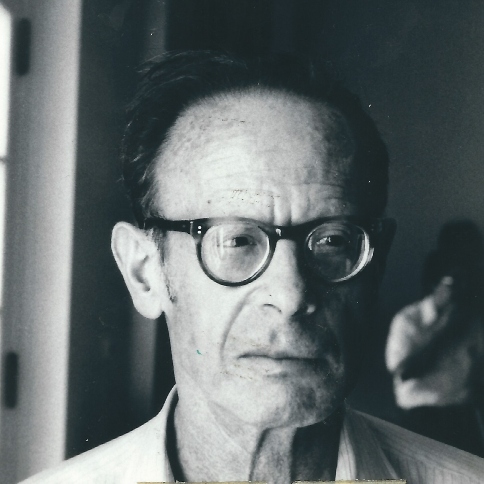
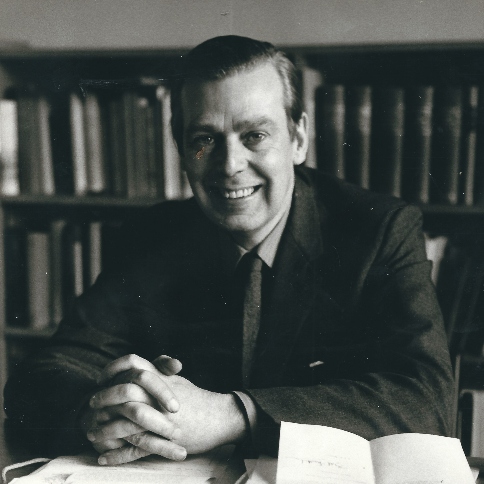
Sir Kenneth Blaxter has spent virtually the whole of his career in the British Agricultural Research Service. Nevertheless, he has disseminated his discoveries and ideas through the media of international conferences, farming meetings and via the many visiting scientists who have worked with him at his research institutes. He is particularly distinguished for the precise and detailed studies he has made on the energy requirements of ruminants and the ways once the necessary energy has been supplied to the diet, that it is utilized in the animal’s metabolism. This has lead to a new understanding, both of the nutritional needs of the animal and of the most effective ways in which the diet may be made up and varied, and utilized most efficiently by the ruminant to produce more meat, milk or both. Thus the farmer can now control this aspect of the animal’s environment with far greater efficiency to give a higher yield at the most economical price.

His approach and practical proposals have been widely adopted throughout the world and, because he has enunciated the fundamental principles so clearly, it has proved possible to adapt or modify them to a diversity of farming systems.

Roger W. Sperry

Wolf Prize Laureate in Medicine 1979

Roger W. Sperry


Affiliation at the time of the award:

California Institute of Technology, USA


Award citation:

“for his studies on the functional differentiation of the right and left hemispheres of the brain”.


Prize share:

Roger W. Sperry

Arvid Carlsson

Oleh Hornykiewicz


These scientists had made outstanding contributions in brain physiology and physio-pathology.

Professor Roger W. Sperry is honored for his studies on the functional differentiation of the right and left hemispheres of the brain. Since 1954, Professor at the California Institute of Technology, Dr. Sperry is a member of the National Academy of Sciences, American Philosophical Society, The Royal Society and others. He received honorary doctorates from Cambridge University (1972) and from the University of Chicago (1976), and was elected California Scientist of the Year in 1972.


Oleh Hornykiewicz

Wolf Prize Laureate in Medicine 1979

Oleh Hornykiewicz


Affiliation at the time of the award:

University of Vienna, Austria


Award citation:

“for opening a new approach in the control of Parkinson’s disease by L-Dopa”.


Prize share:

Oleh Hornykiewicz

Arvid Carlsson

Roger W. Sperry


These scientists had made outstanding contributions in brain physiology and physio-pathology.

Professor Oleh Hornykiewicz receives the prize for opening a new approach in the control of Parkinson’s disease by L-Dopa. Professor of Biochemical Pharmacology at the University of Vienna and Professor at the University of Toronto, Canada, member of Professional Societies in Austria, Canada, U.S.A, Germany, etc., he has received the Gold Medal – Canadian Parkinson´s Disease Association, a Special Tribute from Columbia University, New York, and several other Prizes and awards.

Jean Leray

Wolf Prize Laureate in Mathematics 1979

Jean Leray


Affiliation at the time of the award:

College de France, France


Award citation:

“for pioneering work on the development and application of topological methods to the study of differential equations”.


Prize share:

Jean Leray

André Weil


Both these mathematicians have made outstanding contributions in many different areas of mathematics and their work has had very great impact on the development of mathematics over the past decades.

Professor (Emeritus) Jean Leray’s major contributions include his work on the equations of fluid mechanics, his use of topological methods in analytical problems, his development of entirely new techniques, which have altered the whole direction of algebraic topology, and very significant work on the theory of hyperbolic differential equations. He is a member of the Academies of Science of Paris, Belgium, U.S.A., U.S.S.R., Italy, Poland and others, and Doctor Honoris Causa of many Universities. His work is of very unusual broadness, spanning from the most abstract part of Mathematics – where Leray himself invented extremely general abstract tools – to very concrete applications and at the same time of a remarkable unity; all the new concepts and methods are applied to very specific problems taken amongst the most challenging of the science of our time.

Jay L. Lush

Wolf Prize Laureate in Agriculture 1979

Jay L. Lush


Affiliation at the time of the award:

Iowa State University, USA


Award citation:

“for his outstanding and pioneering contributions to the application of genetics to livestock improvement”.


Prize share:

Jay L. Lush

Sir Kenneth Blaxter


Professor Lush has made major contributions to unravelling the hereditary contributions to animal production whereas Dr. Blaxter has unravelled the nutritional requirements of animals, especially ruminants. Thus their work has effectively contributed to both aspects of the factors regulating animal production: the control and exploitation of the genetic endowment, and the provision of the most favorable nutritional environment in which genetic endowment can be expressed.

Jay L. Lush has one more than any agricultural scientist both to investigate the genetic basis of traits important for animal production, to assess their value and to improve them by initiating breeding programmes of proven practical effectiveness. He has been responsible for inspiring a great band of graduate students and others who have disseminated his ideas and practical suggestions throughout the world and so led to the improvement of poultry, pigs, beef and dairy cattle. His contributions are of several kinds. First, he pioneered the value to the scientific breeder of adequate measurement of the performance of individuals, their progeny and their pedigree in order to assess the genetic worth of an animal. Secondly, he pioneered the assessment of the heritability of a trait, i.e. the degree to which its expression reflected a genetic basis rather than the effects of a favorable or unfavorable environment. Thirdly, having demonstrated how the inherited potentialities could be measured and distinguished from those due to non-heritable causes, he synthesized these ideas into practical and workable animal breeding plans to promote an inherited increase in the yield of meat, milk or eggs. He has exploited his ideas as a University teacher, at a diversity of national and international gatherings and enshrined much of it in his major and most influential text “Animal Breeding Plans”. He may truly be described as the ‘father’ of scientific animal breeding in the twentieth century.

Giuseppe Occhialini

Wolf Prize Laureate in Physics 1979

Giuseppe Occhialini


Affiliation at the time of the award:

University of Milan, Italy


Award citation:

“for his contributions to the discovery of electron pair production and of the charged pion”.


Prize share:

Giuseppe Occhialini

George E. Uhlenbeck


Professor Giuseppe Occhialini has contributed to the discovery of electron pair production, jointly with P.M.S. Blackett and J. Chadwick, and to the discovery of the charged pion, jointly with C.M.G. Lattes, H. Muirhead and C.F. Powell. Giuseppe Occhialini has also contributed to major research techniques including cloud chambers triggered by counters and the use of special photographic emulsions to study cosmic rays.

George E. Uhlenbeck

Wolf Prize Laureate in Physics 1979

George E. Uhlenbeck


Affiliation at the time of the award:

Rockefeller University, USA


Award citation:

“for his discovery, jointly with the late Samuel A .Goudsmit, of the electron spin”.


Prize share:

George E. Uhlenbeck

Giuseppe Occhialini


Professor George Uhlenbeck’s discovery, jointly with the late Samuel A. Goudsmit, of the electron spin, not only had major implications in physics and chemistry, but also provided the first example of an internal degree of freedom for an elementary particle. Uhlenbeck is also an outstanding figure in statistical mechanics.

André Weil

Wolf Prize Laureate in Mathematics 1979

André Weil


Affiliation at the time of the award:

Institute for Advanced Study, Princeton, USA


Award citation:

“for his inspired introduction of algebro-geometry to the theory of numbers”.


Prize share:

André Weil

Jean Leray


Both these mathematicians have made outstanding contributions in many different areas of mathematics and their work has had very great impact on the development of mathematics over the past decades.

Professor (Emeritus) André Weil has made important contributions in harmonic analysis, differential geometry, and aspects of Lie group theory, but his most outstanding achievement has been in the development of algebraic geometry and its application to important problems in number theory. Since 1957, he is Professor at the Institute for Advanced Study in Princeton and his career is singularly rich in achievements. Among his contemporaries, he has long occupied a unique position by combining originality and creativity to the highest degree, with an encyclopedic knowledge and deep understanding of most areas of contemporary mathematics. He is furthermore a formidable scholar of classical mathematics, whose historical insight and perspective -particularly in the field of number theory- is unequaled among mathematicians today.

Herman F. Mark

Wolf Prize Laureate in Chemistry 1979

Herman F. Mark


Affiliation at the time of the award:

Polytechnic Institute of New York, USA


Award citation:

“for his contributions to understanding the structure and behavior of natural and synthetic polymers”.


Prize share:

None


Professor (Emeritus) Mark’s contribution has had a major effect upon the academic understanding of this important class of materials, which in nature play a central role not only in the structure of the living cell but in its function as well. Herman Mark’s scientific contribution and personal interest have played a major role in the development of synthetic materials on a huge scale everywhere. Today´s use of these synthetic materials has changed the style of life throughout the world.

Since 1940 Professor of Organic Chemistry at the Polytechnic Institute of New York, Prof. Mark has published over 500 original and review articles and has written about 20 books on various topics related to polymer chemistry. Doctor Honoris Causa at 17 Universities and Polytechnics, member of 18 Academies of Science throughout the world, among them U.S.A., U.S.S.R., Holland, Germany, Austria and India. Professor Mark has received a great number of medals and awards since 1928.

Jon J.van Rood

Wolf Prize Laureate in Medicine 1978

Jon J. van Rood


Affiliation at the time of the award:

University of Leiden, The Netherlands


Award citation:

“for his contribution to the understanding of the complexity of the HL-A system in man and its implications in transplantation and in disease”.


Prize share:

Jon J. van Rood

George D. Snell

Jean Dausset


Dr. George Snell discovered and described in mice the H-2 antigens, the structure which codes for major transplantation antigens carrier genes. These genes are essential in the onset of the immune response and therefore mechanism of defense.

The investigation of histocompatibility antigens in humans, led Professor J. Dausset in Paris and Professor Van Rood in Leiden to the discovery and description of a model similar to that in mice, the HL-A system. This is the major histocompatibility complex in man, and its primordial role in organ transplantation has been extensively established and evaluated. Moreover, the association of HL-A antigens to the mechanisms governing the incidence of a number of diseases is under active research.

These investigations are a major breakthrough in the understanding of modern genetics and have opened new avenues for adequate matching of organ and tissue transplantation and for possible control and prevention of certain diseases.

The name of the late Peter Gorer, the British scientist who was among the founders of this field will be linked forever to the pillars of medical genetics.