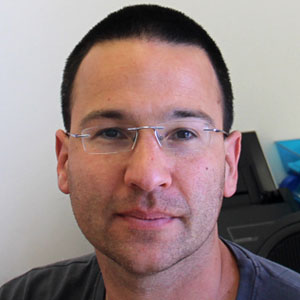
Barak Dayan

Krill Prize 2015
Weizmann Institute

Barak Dayan

Research Topic:
Controlling Single Photons

Photons – the particles of light – are one of the most fundamental and basic elements in nature, and play a central and crucial role in nearly all the fields of science and modern technology. Modern digital communication relies almost solely on photons guided in optical fibers, and lasers are an elementary, indispensable part of scientific experiments, medical treatments, industry and more. Yet surprisingly, our ability to control light, especially at the level of single photons, is incredibly limited. As an example consider the seemingly trivial and fundamental problem of separating two incoming photons that arrive in a single laser pulse. Surprisingly – this task has been beyond the ability of even cutting-edge optical labs. Other seemingly trivial tasks like generation of just one photon, or counting the number of photons in a pulse without destroying them, or creating a switch for photons that is controlled just by photons – have been a long-standing goal and a subject of intense research efforts worldwide in the last couple of decades. In my group we have set the goal to achieve exactly such control over single photons, and in particular to attain deterministic photon-photon interactions, namely to demonstrate the ability of one photon to control another photon. To do so we built the technology to make single photons interact strongly, and therefor deterministically, with a system that naturally changes its behavior in response to interaction with just one photon – a single atom. Specifically, in our lab we use laser-cooling of atoms to bring single 87Rb atoms to the vicinity of chip-based, fiber-coupled high-quality optical microresonators. These microresonators enable confinement of light to micron-sized volumes for a long time, thereby enhancing the electric field associated even with a single photon to the level that allows fast and deterministic interaction with a single atom. The attainment of such state-of-the-art technologies have led to Using this technology, and based on a theoretical work we performed that studied the fundamental properties of such single-photon-single-atom interactions (published in PRA 84,033854 (2011)), we have succeeded in achieving for the first time the goal of making one photon control another one without any other control fields. In this work (Science 345, 903 (2014)) we demonstrate a single-atom based all optical switch, which reflects or transmits a single photon depending on the “command” given by a previous single-photon pulse. In particular, this photonic device also accomplished, for the first time, the task described above, of separating two incoming photons, as even within the same pulse the first photon is reflected, and the second is transmitted. Based on this mechanism we then demonstrated for the first time deterministic single-photon extraction, (submitted for publication). This is the strongest possible single-photon nonlinearity, yet the prospect of photon-photon interactions bears tremendous significance in physics, far beyond the mere technological achievement of controlling light by light. Photon-photon interactions are inherently non-classical, and are an enabling building block for fundamental tasks in quantum optics (for example, for the generation of optical Schrodinger-cat states) and quantum information science (for example, the realization of optical quantum logic gates and more). In particular, the potential of our scheme lies in its compatibility with scalable photonic architectures. The device is operated only by the single-photon pulses, which are all in-fiber, identical, and routed to the output ports. This means that a routed target photon can serve as the control photon in the next device, or that the same control photon could activate a few devices. The scheme we demonstrated therefore provides a versatile, robust, and simple building block for a variety of all-optical photonic devices, from quantum memory through singlephoton add/drop filters, to photonic quantum gates, all of which being completely passive and compatible with scalable quantum networks.

Oded Rechavi

Krill Prize 2015
Tel Aviv University

Oded Rechavi

Research Topic:
Epigenetic inheritance and its effect on the process of evolution

We use the relative simplicity and genetic tractability of different model organisms, mostly the nematode C.elegans, to discover novel biological principles by which RNA affects formation and inheritance of complex traits, and to study memory encoding in the nervous system. In general, the human genome project has failed so far to revolutionize diagnosis (Danchin et al. 2011). While linking rare Mendelian traits to specific sequence variations has been accelerated, the genetic basis of many common diseases is not understood despite the undertaking of many genome wide association studies. It appears that our current genetic models fall short of faithfully explaining the inheritance of most complex traits. The inheritance of acquired characteristics is a topic of long-standing interest and controversy. While some of the classic Lamarckian ideas have been dismissed (Weismann 1889), more recent studies suggest that certain traits acquired by an animal during its lifetime may be transmitted to next generations. Using a viral infection model I discovered in my post doc that C.elegans inherit acquired antiviral resistance (in a “Lamarckian” fashion) and also deciphered the molecular mechanisms that underlie this inheritance (Rechavi al, Cell 2011). Such unusual genetics occurs through transgenerational transmission of small RNAs, which mediate RNA interference (RNAi). My study showed that antiviral RNAs (viRNAs), which protect the worm from viral propagation, can be transmitted from the soma to the germline and pass down to many ensuing generations in a non- Mendelian manner, in the absence of their DNA template, and thus protect (“vaccinate”) RNAi-deficient progeny from viral propagation. Most genes are regulated by different endogenous regulatory small RNA species (Salmena et al.
2011), and therefore small RNA inheritance might affect the inheritance of many traits. Indeed, in my new lab in Tel Aviv we recently found that starvation-induced developmental arrest produces a transgenerational signal in the form of small RNAs, which prolongs for multiple generations, regulates nutrition-related genes, and as a result extends the progeny’s lifespan (Cell, 2014). We discovered that the RNA binding protein RDE-4 is required for the production of the implicated small RNAs in the starved eneration and that the argonaute protein HRDE-1 (heritable RNAi deficient) is required for inheritance of these small RNAs. In the past we identified RRF-1 as the RNA dependent RNA polymerase that amplifies heritable small RNAs in every inheriting generation to prevent dilution of the heritable small RNA response. We are currently characterizing additional components in the RNA inheritance machinery (papers in preparation), define additional environmental conditions that produce heritable effects (several papers in preparation), and also extend our findings to additional organisms (protists, daphnia and others). In addition, we are preforming lab evolution experiments in a number of species to catch “in the act” the long-term effects of heritable RNAi. Also, we define the genetic boundaries between interacting organisms, or the conditions that allow breaching of such barriers. For example, we recently found that piRNAs, unlike other genes, cannot be cloned in E.coli, an organism on which C.elegans worms feeds in the lab, which is capable of transmitting small RNAs to C.elegans (Frontiers in genetics, 2014). We examine the intriguing possibility that worms and bacteria naturally exchange small RNAs between them both as a defense mechanism, and as a form of interspecies communication. The worm’s immune system is coordinated by its nervous system (Kao et al, 2008), therefore, we examine whether systemic spreading of small RNAs is involved in such coordination, and if so, whether such regulation transmits transgenerationally. To
study these complex phenomena, we developed novel methods for single-cell transcriptome profiling, and functional assays for dissecting neuronal circuits. We previously showed that small RNAs (Rechavi et al, 2009 Genes & Development) and
other macromolecules (Rechavi et al, 2010 Nature Methods) are exchanged between human immune cells when immunological synapses are transiently formed. Therefore, transgenerational inheritance of acquired traits may be widely conserved

Prof. Ehud Keinan

Council member

Prof. Ehud Keinan of the Schulich Faculty of Chemistry at the Technion, was born and educated in Israel, obtained PhD from the Weizmann Institute of Science and postdoc at the University of Wisconsin. He has published nearly 200 research papers, 20 patents and 3 books on biocatalysis, organic synthesis, molecular-computing, supra-molecular chemistry, improvised explosives and drug discovery. He was Dean of the Schulich Faculty of Chemistry, Adjunct Professor at The Scripps Research Institute in California, founder and first Head of the Institute of Catalysis in the Technion and founded two startup companies. Since 2009, he is President of the Israel Chemical Society and Editor-in-Chief of the Israel Journal of Chemistry.

Prof. Hagai Netzer

Council member

Hagai Netzer is a Professor Emeritus at Tel Aviv University. He joined the university in 1977 and over the years served as the chair of the Astrophysics Department, the director of the Wise Observatory, and a member of the Board of Trustees. He also held central positions in the ministry of education and the Wolf Foundation.
Netzer research includes massive black holes and galaxies of various types. He published more than 250 papers and several professional and popular books. He is a fellow of the Israel Physical Society and an associate member of the Royal Astronomical Society in the U.K.

Dr. Sefy Hendler

Council member

Sefy Hendler is a senior lecture in early modern Italian art the Art History department of the Faculty of the Arts, Tel Aviv University where he also heads the undergraduate honors program in Art History. He graduated in both Art History and Law studies from Tel Aviv University and obtained his PhD. in 2009 in Paris from the Université de Paris I (Panthéon-Sorbonne). He specializes in the Paragone (competitive comparison) between painting and sculpture, the subject of his book La guerre des Arts : Le Paragone peinture-sculpture en Italie XVe-XVIIe siècle (L’Erma di Bretscneider, Rome, 2013) winner of the l’Erma per l’arte best manuscript prize for the year 2010. Hendler published among other in Studiolo, La revue de l’Art, Sculpture Journal, Seizième Siècle and different exhibition catalogues as the Bronzino artist and poet in the court of the Medici (Palazzo Storzzi, 2010) and Pontormo and Rosso Fiorentino: diverging paths of Mannerism (Palazzo Strozzi 2014). He was a boursier (scholarship holder) of the École francaise de Rome – Villa Médicis, and borsista (scholarship holder) at the Kunsthistorisches Institut in Florenz (Max Planck Institut). He is a member of the Centre d’Histoire de l’Art de la Renaissance (CHAR) at the French National institute of Art History (INHA). His forthcoming book: Gracious and beautiful monster: the literary universe of Bronzino’s Nano Morgante is forthcoming in English and in Italian (Maschietto editore, Iconologia collection edited by Antonio Natali) examines links between literature, painting and botany at the court of the Medici in 16th century Florence.

Alex Retzker

Krill Prize 2015
Hebrew University

Alex Retzker

Research Topic:
Quantum Technologies

My current research interests are focused in the fields of quantum optics and quantum technologies. In particular, I am interested in theory which is strongly connected to experiments and I am actively pursuing collaborations with experimentalists.

This relation between theory and experiment manifests itself in dealing with theoretical schemes which help in realising quantum information objectives, like quantum processing and quantum simulation. Moreover, I am interested in applying quantum information ideas to the benefit of other areas of physics such as novel ideas for quantum sensing, to name one example. The field of quantum technologies has dramatically developed in recent years both theoretically and experimentally and the scope of quantum technology exploration has naturally extended to many areas of physics, including atomic physics, condensed-matter and quantum field theory. I have worked on several of these areas of quantum technologies, specifically, NV centres in diamond, linear ion traps, BECs, condensed matter systems and entanglement in quantum field theory. I used tools and concepts from quantum entanglement to study the structure of the vacuum state of quantum field theories, to obtain a better understanding of condensed matter properties and to design novel laser cooling schemes and quantum sensing protocols. I have always been driven by realistic experimental conditions, and this has motivated my collaborations with experimentalists. These collaborations have led to the proposal of novel schemes which many of them are now being realised by experimental teams. In the following I present briefly the current state of my research.

Quantum sensing—The ability to sense and image minute magnetic and electric fields with atomic scale resolution is one of the major challenges of modern science and technology and may have profound impact on medicine, biology, chemistry, physics and material science. The basic units of magnetic moments in nature are the dipole moments associated with the spin of nuclei and single electrons. Large part of my research is aimed at detecting these single spins at ambient conditions with the goal to revolutionise the state of the art to create novel sensing technologies that provide unprecedented access and insight into the structure and function of individual bio-molecules under physiological conditions and apply these to the observation of biological processes down to the quantum level and with atomic resolution. The proposed spin-microscopy can be used to understand and appreciate the molecular structure and dynamics of individual specimens under physiological conditions. The ability to observe single molecules overcomes a key limitation of liquid state NMR and X-Ray based structure determinationprotocols. In order to achieve this I am concentrating on the NV centre in diamond which is the most promising candidate to realise this goal. The broad challenges that this ambitious programme presents must be tackled by scientists with broad expertise and thus I am collaborating with many groups worldwide. In the past year, since I had arrived in Jerusalem, I have recruited seven research students and postdocs when four of them are working full time on this project and the other three invest part of their time on these goals. I anticipate that in the next few years a large part of my group will work on this subject. Quantum simulations—Various systems have been proposed for the realisation of a quantum computer, including trappedions, optical lattices, linear optics and solid state devices. However, despite enormous experimental progress, due to the high degree of precision that is required, the realisation of a large scale quantum computer is still not within reach. Instead, the realisation of quantum simulators which are much less demanding have recently become a target of growing interest. I have helped to drive the development of this growing field with several significant contributions. Since I came to Jerusalem, in the past year, I have had a few contributions in the field, mostly on the subjects of the study of nonlinear physics and topological defects in particular, and in the study of frustrated spin models. I have concentrated on NV centres in diamond and trappedions. Despite the fact that these are recent proposals, many of these contributions were realised and others are being currently pursued. Two members of my group are working on this subject. Robust operations — In the past two years I got interested in the field of dynamical decoupling and error correction, in particular, in the utilisation of these methods for the benefit of quantum computing and quantum sensing. In the quantum computing part I had a few contributions which had drawn a lot of interest by the ion trap and NV community. In particular the ion trap proposal was realised by the group of Dave Wineland, the last year Nobel laureate, who realised one of my proposals for a robust quantum gate and has achieved a record breaking fidelity. I believe that this novel gate scheme would be used by many other groups in the next few years. Currently, one member of my group is working on this subject.

Michael Schapira

Krill Prize 2015
Hebrew Univ.

Michael Schapira

Research Topic:
Improving the Internet Infrastructure

Despite the crucial societal role of the Internet, the core Internet infrastructure, i.e., the protocols that handle the fundamental networking tasks such as routing, congestion control, etc. (TCP/IP, DNS,BGP), has remained essentially stagnant for over two decades. Consequently, today’s Internet often fails to cope gracefully with modern-day challenges, e.g., alarming security vulnerabilities, exponential growth in scale and complexity, increasingly heavy traffic loads, frequent equipment failures, and more. My research aims to (1) understand the existing Internet infrastructure and the fundamental tradeoffs that should guide the design of the future Internet, and (2) “fix” today’s infrastructure and design lasting, long-term solutions. To accomplish this, my research
• takes a principled approach, drawing inspiration from theory (e.g., algorithmics, distributed computing, learning, microeconomics) in search of practical approaches that go beyond context-specific, ad hoc solutions.
• breaks traditional disciplinary barriers (both within and without Computer Science) to
tackle the above challenges from a holistic point of view.

I next briefly discuss several of my research agendas along the above lines.
New Paradigms for Securing the Internet. The Internet’s core protocols were not designed with security in mind and are, consequently, alarmingly vulnerable to attacks. While secure versions of these protocols were proposed over a decade ago, adoption is either not even on the horizon or frustratingly slow. A particularly stubborn problem is that of securing routing between the smaller networks that make up the Internet (e.g., Google, AT&T, Hebrew University, etc.). My research focuses on eliminating operational, political and economic obstacles to securing the Internet infrastructure and, in particular, on exploring new paradigms for securing Internet routing. New Architectures for High-Performance Networks. The rapid growth of Internet services (from e-mail to social networks and streaming media) is placing tremendous demands on communication networks. To meet this challenge, my research aims to devise high-performance network architectures and, in particular, new network topologies and new protocols for routing, congestion control, traffic engineering, and more. To accomplish this, I strive to turn deep ideas from theory (graph theory, algorithmics and computational learning theory) into an operational reality. Beyond the important practical implications of this research direction, it also motivates new theoretical questions. New Horizons. Software-Defined Networking (SDN) is a new paradigm that is revolutionizing networking, fueled by adoption by major technology companies, e.g., Google and Amazon. SDN enables logically-centralized control over network devices through software that operates independently from the network hardware. My research explores exciting SDN-motivated questions regarding the “right” abstractions for “programming networks” and how to defend the network against harmful SDN programs. Answering these questions involves exploring the interface of traditional networking research with other disciplines in Computer Science, e.g., programming languages, software analysis and databases.

Sharon Ruthstein

Krill Prize 2015
Bar-Ilan University

Sharon Ruthstein

Research Topic:
Exploring the human copper transfer mechanism by electron paramagnetic resonance spectroscopy

Sharon Ruthstein’s research aims to shed light on biological pathways that involve metal ions by using Electron Paramagnetic Resonance Spectroscopy (EPR). More than 30% of all proteins in the cell exploit one or more metals to perform their specific functions, and over 40% of all enzymes contain metals. Metals are commonly found as natural constituents of proteins; however, many metal ions can be toxic when free in biological fluids. Hence, humans and microorganisms have evolved a regulatory machinery to acquire, utilize traffic, detoxify, and otherwise manage the intracellular and extracellular concentrations and types of metal ions. Despite the high regulation of metal ions in the human body, diseases such as Menkes, Wilson, Alzheimer’s, Parkinson’s and Prion’s have been linked with metal binding to proteins. It is therefore vitally important to understand each step of the copper cycle, in order to build a fundamental understanding of sources of the disruption of copper homeostasis that can lead eventually to neurological diseases and disorders. Dr. Ruthstein’s lab is looking into some of the least understood biological processes that are related to metal ion transport and intracellular distribution.

Some of the ongoing projects in her lab are:
(i) Explore metal ion import and export mechanism of the human copper transporter CTR1, from the blood carrier copper protein, albumin, through the CTR1, and to the metallochaperone Atox1.
(ii) Help understand metal binding mechanism of various metal sensors in bacterial cells (CueR and CsoR systems), in order to shed light on the metal regulatory machinery of the bacteria.
(iii) Explore the role of the copper efflux system in E.coli, in particular the Cus system.
(iv) Characterize the role of copper and mutations on the aggregation and folding of proteins, in order to illuminate the microscopic origins of neurological diseases.
To comprehend such processes it is necessary to be sensitive to the structural changes that occur in the protein upon metal binding. The main biophysical tool that is used in the lab of Dr. Ruthstein’s lab is pulsed electron Paramagnetic Resonance (EPR) spectroscopy. The power of EPR lies in the sensitivity to both atomic level changes and nanoscale fluctuations. EPR can characterize properties such as redox state and ligand geometry for different functional states of the protein. The data collected by the EPR experiments is complement by various other biophysical and biochemical approaches, as well as computational methods, such as: CD, NMR, run-off transcription assays, ultra-centrifuge experiments, ITC, and MD simulations, to provide a complete picture on the cellular copper cycle. Dr. Ruthstein’s lab also has several fruitful collaborations in Israel and abroad. One collaboration is with Prof. Hamza (University of Maryland) where the heme’s transfer mechanism by the metallochaperone, HRG-3, in c.elegans is being explored. Additional collaboration is with the lab of Prof. Haim Cohen, Ariel University/BGU. In this collaboration, EPR spectroscopy is used together with other physical methods to characterize the surface radical’s nature in coals. It was revealed that several radical species are observed, and their nature is dependent on the coal rank, and micropores surface area. This work was summarized in three PCCP papers, and the experimental work was published in JoVE. Other collaborations are together with Prof. Lellouche and Dr. Goobes on characterizing the oxidation process of graphene’s surfaces. Additional collaboration is together with Dr. Lior Elbaz (BIU). In this study, Dr. Ruthstein is studying at the molecular level the coordination of heme molecules on graphene surfaces, as well as the interaction of the studied graphene surfaces with oxygen molecules.