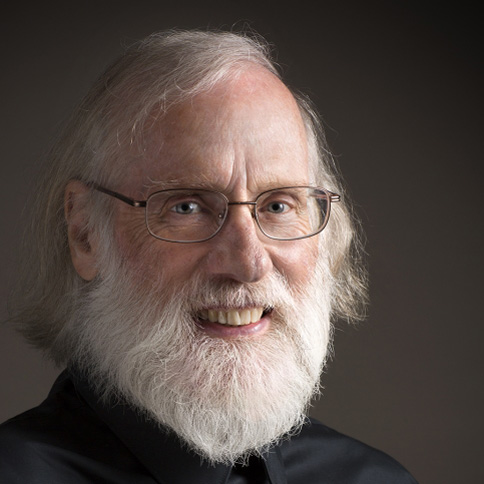
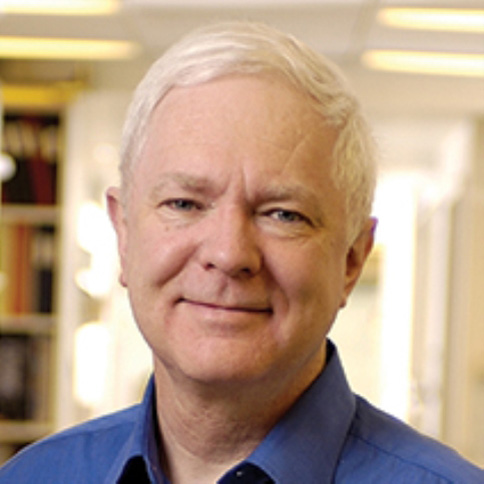
George Feher

Wolf Prize Laureate in Chemistry 2006/7

George Feher


Affiliation at the time of the award:

University of California, San Diego, USA


Award citation:

“for ingenious structural discoveries of the ribosomal machinery of peptide-bond formation and the light-driven primary processes in photosynthesis”.


Prize share:

George Feher 

Ada Yonath


The work of both scientists has led to a unified picture of basic biological machinery. Ada Yonath was the first to determine against all odds the structure of the ribosome, which is the large protein-synthesis machinery of living cells. George Feher pioneered the structure/function relations of the simplest reaction centre in photosynthesis, revealing the basic principles of light energy conversion in biology.

Professor George Feher ingenious contributions to science are centered on two recurrent themes, which address the development of novel and revolutionary spectroscopic tools, on the one hand, and their applications, in particular, to problems in biochemistry and biophysics, on the other.

George Feher´s invention of electron-nuclear double resonance ENDOR, as an example of only one of the novel methods, opened a field of applications, the enormous breadth of which only became apparent in the course of time. This method allows one to obtain detailed information on structure both for polycrystalline and for amorphous materials. Due to these features ENDOR has become a great asset in the study of biological systems with paramagnetic centers.

Although the existence of a “reaction center” in photosynthesis was postulated as early as 1952, its true nature became apparent only through the work of a later generation of scientists from all over the world. Feher was the first to identify the amino acid sequence of a membrane protein, and built the essential steps of developments that led to the present detailed understanding of the reaction center, including its structure. Feher’s impressive work in research on photosynthesis rests on his extraordinarily vivid imagination and on the sustained discipline with which he forced himself to master the underlying biochemistry in a brilliant and systematic manner. These qualities allowed him to view the complex problems related to the primary steps of photosynthetic energy conversion in their entirety, while many specialists tended to concentrate only on individual pieces of the puzzle.

Since insight into the structure and the charge separation mechanism of the reaction center has provided the principles of optimized light energy conversion in biology, Feher’s work is seminal for the construction of synthetic and semi-synthetic molecular energy converters, which may have profound implications in an energy-demanding world.

Ada Yonath

Wolf Prize Laureate in Chemistry 2006/7

Ada Yonath


Affiliation at the time of the award:

Weizmann Institute of Science, Israel


Award citation:

“for ingenious structural discoveries of the ribosomal machinery of peptide-bond formation and the light-driven primary processes in photosynthesis”.


Prize share:

Ada Yonath

George Feher 


The work of both scientists has led to a unified picture of basic biological machinery. Ada Yonath was the first to determine against all odds the structure of the ribosome, which is the large protein-synthesis machinery of living cells. George Feher pioneered the structure/function relations of the simplest reaction centre in photosynthesis, revealing the basic principles of light energy conversion in biology.

The ribosome is the universal mega-Dalton highly complex riboprotein assembly that translates the genetic code into proteins. The recent emergence of ribosome structures in the crystallographic community is mainly due to Ada Yonath, who uniquely and single-handedly pioneered ribosomal crystallography over more than two decades ago, when others could not even conceive its possibility. By pushing crystallography to its limits, she demonstrated the feasibility of ribosomal crystallography, thus inspiring prominent groups to repeat her experiments. Throughout, she has been the leading force in all stages of structure determination and has introduced fundamental methodological innovations that have greatly impacted the entire field of structural biology.

Yonath´s achievements in protein crystallography were based on the introduction of state-of-the-art ultra-cold bio-crystallography, an innovative method for minimizing the extreme sensitivity of the ribosomal crystal to irradiation. Yonath’s strength, persistence, skills and daring in approaching problems considered insurmountable at the time, let her to explore new experimental and conceptual approaches, later adopted by the scientific community at large.

Ada Yonath was the first to discover the unified ribosomal mechanism leading to the production of proteins. However, Ada Yonath´s recent endeavour also comprises applied aspects, as it sheds light on targeting antibiotics toward a ribosome complex. She is the first and only person to determine, in an incredibly short time, the structures of over a dozen different complexes of antibiotics, reveal the ribosome-antibiotics binding sites on the molecular level and provide insight into antibiotics selectivity.
Her work paves the way to deal with the crucial issue of drug activity and resistance mechanisms, thus touching on a central problem in medicine.

Stephen Smale

Wolf Prize Laureate in Mathematics 2006/7

Stephen Smale


Affiliation at the time of the award:

University of California at Berkeley, USA


Award citation:

“for his groundbreaking contributions that have played a fundamental role in shaping differential topology, dynamical systems, mathematical economics, and other subjects in mathematics”.


Prize share:

Stephen Smale

Harry Furstenberg 


Professor Stephen Smale contributed greatly, in the late 50’s and early 60’s, to the development of differential topology, a field then in its infancy. His results of immersions of spheres in Euclidean spaces still intrigue mathematicians, as witnessed by recent films and pictures on his so-called “eversion” of the sphere. His proof of the Poincaré Conjecture for dimensions bigger or equal to 5 is one of the great mathematical achievements of the 20th Century. His h-cobordism theorem has become probably the most basic tool in differential geometry.

During the 60’s Smale reshaped the view of the world of dynamical systems. His theory of hyperbolic systems remains one of the main developments on the subject after Poincaré, and the mathematical foundations of the so-called “chaos-theory” are his work as well. In the early 60’s, Smale’s work contributed dramatically to change in the study of the topology and analysis of infinite-dimensional manifolds. This was achieved through his infinite-dimensional version of Morse’s critical point theory (known today as “Palais-Smale Theory”) and his infinite-dimensional version of Sard’s theorem.

In the 70’s Smale attention turned to mechanics and economics, to which he applied his ideas on topology and dynamics. For instance, his notion of “amended potential” in mechanics plays a key role in current developments in stability and bifurcation of relative equilibria. In economics, Smale applied an abstract theory of optimization for several functions, which he developed, to provide conditions for the existence of Pareto optima and to characterize this set of optima as a sub-manifold of diffeomorphic states to the set of Pareto equilibria. He also proved the existence of general equilibria under very weak assumptions and contributed to the development of algorithms for the computation of such equilibria.

It is this last activity that led Smale in the early 80’s to the longest segment of his career, his work on the theory of computation and computational mathematics. Against mainstream research on scientific computation, which focused on immediate solutions to concrete problems, Smale developed a theory of continuous computation and complexity (akin to that developed by computer scientists for discrete computations), and designed and analyzed algorithms for a number of specific problems. Some of these analyses constitute models for the use of deep mathematics in the study of numerical algorithms.


Richard Zare

Wolf Prize Laureate in Chemistry 2005

Richard N. Zare


Affiliation at the time of the award:

Stanford University, USA


Award citation:

“for his ingenious applications of laser techniques, for identifying complex mechanisms in molecules, and their use in analytical chemistry”.


Prize share:

None


In making seminal contributions to the theory and practice of both physical and analytical chemistry, Professor Zare has profoundly influenced developments in these two areas of science. He is an outstanding spokesman for science. In addition to his eminent contributions, he has worked relentlessly and successfully for chemistry on the national and international stage.

Zare’s highly productive scientific career has been built around two recurrent themes: the use of lasers for probing details of how electrons distribute themselves within atoms and molecules, and hence dictate their chemical properties; and the application of high resolution and ultra-sensitive physical techniques, to both biochemical, and chemical analysis. A fundamental understanding of electronic configurations in molecules, led to pioneering work in chemical dynamics and energy-induced molecular fragmentations. Zare’s inventions and discoveries have generated an impressive collection of new spectroscopic tools, for scientific communities investigating chemical dynamics and studying biochemical processes. His research also initiated the development of a series of novel techniques in applied physical chemistry. These techniques have become indispensable to progress in chemical and biochemical analysis, particularly in relation to detection at the single-molecule, area-selective, and sub-cellular levels.

Zare’s seminal contributions include the angular analysis of photodissociation fragments, laser-induced fluorescence and chemiluminescence, to probe internal state distributions, multiphoton ionization in molecular beams, and two-step laser mass spectrometry. A major thrust of his research has been the use of photochemical techniques to select reactants, enhance specific reactions, and probe chemical processes at the single-molecule level. Of particular importance, is the fact that laser-induced fluorescence, led to the use of lasers as detectors in capillary electrophoresis, and subsequently in numerous biological systems, where Zare, for example, coupled laser fluorescence with the detection of molecules in mammalian cells.

He has pursued the themes of very efficient separation and ultra-sensitive detection, to their chemical limit, namely the single molecule. He has also demonstrated that, at sufficiently high levels of power, he could carry out optical trapping of single molecules – once again demonstrating the ultimate limit of this technique in chemistry.

There is no doubt that Zare has taken chemistry to its limits, in more ways than one.

Jean Nouvel

Wolf Prize Laureate in Architecture 2005

Jean Nouvel


Award citation:

“for providing a new model of contextualism and redefining the dialectic between the two salient characteristics of contemporary architecture: concreteness and ephemerality”.


Prize share:

None


With his “principle of inclusion”, Jean Nouvel deploys the richest of palettes available to the contemporary architect. In each of his proposals and works, the result is exceptional. Nouvel does not impose a priori forms or materials. For him, architectural form follows neither from the architect’s vocabulary, nor from a predictable response to context. Rather, the proposed and the pre-existing interact to produce a result characterized by new material assemblages. His buildings acquire a life of their own, by establishing surprising atmospheric contrasts between interior and surroundings, and between discrete architectural spaces and the metropolitan network in which they are situated.

Rapidly changing modes of computational communication imply an astonishing range of spatial variables. Nouvel responds by giving definition to a variety of programmatic demands. He demonstrates the distinctive capacity of architecture to test and sustain technological advancements in spatial and material terms. His architecture is infused with hitherto unforeseen potentials of a new, digitally transformed world. Experimental engineering and inventive methods of assembly are combined to produce a three-dimensional reality that shares an affinity with the virtual, imaginary one. The production of images, light and sound, is unified with the plastic definition of space, to create a distinctively ‘ambiguous’ situation. Ultimately, what is uniquely effective in the work of Nouvel is the role it has played in forming a new model of contextualism. It distinguishes itself from more traditional models by means of novel interventions, aimed at reformulating the dialectic between the two reigning parameters of the digital universe: concreteness and ephemerality.

Gregory Margulis

Wolf Prize Laureate in Mathematics 2005

Gregory A. Margulis


Affiliation at the time of the award:

Yale University, USA


Award citation:

“for his monumental contributions to algebra, in particular to the theory of lattices in semi-simple Lie groups, and striking applications of this to ergodic theory, representation theory, number theory, combinatorics and measure theory.”


Prize share:

Gregory A. Margulis  

Sergei P. Novikov


At the center of Professor Gregory A. Margulis’s work lies his proof of the Selberg-Piatetskii-Shapiro Conjecture, affirming that lattices in higher rank Lie groups are arithmetic, a question whose origins date back to Poincaré. This was achieved by a remarkable tour de force, in which probabilistic ideas revolving around a non-commutative version of the ergodic theorem were combined with p-adic analysis and with algebraic geometric ideas showing that “rigidity” phenomena, earlier established by Margulis and others, could be formulated in such a way (“super-rigidity”) as to imply arithmeticity. This work displays stunning technical virtuosity and originality, with both algebraic and analytic methods. The work has subsequently reshaped the ergodic theory of general group actions on manifolds.

In a second tour de force, Margulis solved the 1929 Oppenheim Conjecture, stating that the set of values at integer points of an indefinite irrational non-degenerate quadratic form in ≥ 3 variables is dense in Rn. This had been reduced (by Rhagunathan) to a conjecture about unipotent flows on homogeneous spaces, proved by Margulis. This method transformed to this ergodic setting a family of questions till then investigated only in analytic number theory.

A third dramatic breakthrough came when Margulis showed that Kazhdan’s “Property T” (known to hold for rigid lattices) could be used in a single arithmetic lattice construction to solve two apparently unrelated problems. One was the solution to a problem posed by Rusiewicz, about finitely additive measures on spheres and Euclidean spaces. The other was the first explicit construction of infinite families of expander graphs of bounded degree, a problem of practical application in the design of efficient communication networks.

Margulis’ work is characterized by extraordinary depth, technical power, creative synthesis of ideas and methods from different areas of mathematics, and a grand architectural unity of its final form. Though his work addresses deep unsolved problems, his solutions are housed in new conceptual and methodological frameworks, of broad and enduring application. He is one of the mathematical giants of the last half a century.

Daniel Kleppner

Wolf Prize Laureate in Physics 2005

Daniel Kleppner


Affiliation at the time of the award:

Massachusetts Institute of Technology (MIT), USA


Award citation:

“for groundbreaking work in atomic physics of hydrogenic systems, including research on the hydrogen maser, Rydberg atoms and Bose-Einstein condensation”.


Prize share:

None


Professor Daniel Kleppner has made fundamental contributions to atomic physics and quantum optics, mainly using hydrogen and hydrogen-like atoms. He built new devices, performed spectroscopic tests of extreme precision and investigated novel quantum phenomena.

In 1960, along with Norman Ramsey, he developed the Hydrogen maser, later used as an atomic clock of unprecedented stability. Applications of this early work range from coordination of radio-signals in long base-line radio astronomy, to satellite-based global positioning systems.

In the 1970’s Kleppner was a pioneer in the physics of Rydberg atoms. These very excited atoms have a wide range of remarkable properties. His proposal and demonstration of the inhibition of spontaneous emission from Rydberg atoms was an early step in Cavity Quantum Electrodynamics, concerned with the radiative properties of atoms in confined spaces. Kleppner’s investigations of Rydberg atom spectra in high electric and magnetic fields provided deep physical insight into the implications of classical chaos for quantum systems.

Kleppner and MIT colleague Thomas Greytak, were among the first to look for quantum degeneracy effects in ultra-cold gases. After a 20-year long quest, in 1998, they achieved Bose-Einstein condensation (BEC) in hydrogen. In the meanwhile, they developed tools instrumental to the 1995 discovery, by Eric Cornell, Carl Weiman and Wolfgang Ketterle, of BEC in alkali atoms. These include the technique of evaporative cooling, demonstrated in collaboration with Harald Hess. In their tour de force hydrogen BEC work, Kleppner and his colleagues pioneered a whole new field of physics. Bose-Einstein condensates and fermionic degenerate samples of cold atoms, currently created under various forms in many laboratories around the world, represent a new form of matter at the lowest temperatures ever achieved. Their study opens fascinating perspectives for applications in both fundamental and applied research.

In addition to his outstanding research achievements, Kleppner has been a dedicated teacher, advising many Ph.D. students who have gone on to attain prestigious positions in major universities. Some of these students have received the highest scientific awards for their own work, including a Nobel Prize (William Phillips, 1997). Kleppner, a statesman of science who is always willing to serve the common good, has served on numerous committees charged with investigating key scientific or social issues.

Anthony R. Hunter

Wolf Prize Laureate in Medicine 2005

Anthony R. Hunter


Affiliation at the time of the award:

The Salk Institute, USA


Award citation:

“for the discovery of protein kinases that phosphorylate tyrosine residues in proteins, critical for the regulation of a wide variety of cellular events, including malignant transformation”.


Prize share:

Anthony R. Hunter

Alexander Levitzki

Anthony J. Pawson


Over recent decades, an understanding of the biological bases of cancers and the provision of rational therapies to combat them, has proved a major challenge for medical science. Two recipients of the 2005 Wolf Prize in Medicine, Professors Hunter and Pawson, have each independently contributed to an understanding of the tyrosine kinase signaling pathways in biology and the effect of their disruption on the development of certain cancers. The third recipient, Professor Levitzki, has pioneered the development of small molecule inhibitors of tyrosine phosphorylation that block the disrupted pathways associated with cancer and thus provide effective therapies.

Anthony R. Hunter’s contributions lie at the heart of signaling pathways and their disorders. He discovered that tyrosine phosphorylation is a fundamental mechanism for transmembrane-signal transduction in response to growth factor stimulation and that disregulation of such tyrosine phosphorylation, by activated oncogenic protein tyrosine kinases, is a pivotal mechanism utilized in the malignant transformation of cells.

Anthony Pawson

Wolf Prize Laureate in Medicine 2005

Anthony J. Pawson


Affiliation at the time of the award:

The Samuel Lunenfeld Research Institute of Mount Sinai Hospital, Canada


Award citation:

“for his discovery of protein domains essential for mediating protein-protein interactions in cellular signaling pathways, and the insights this research has provided into cancer”.


Prize share:

Anthony J. Pawson

Alexander Levitzki

Anthony R. Hunter


Over recent decades, an understanding of the biological bases of cancers and the provision of rational therapies to combat them, has proved a major challenge for medical science. Two recipients of the 2005 Wolf Prize for Medicine, Professors Hunter and Pawson, have each independently contributed to an understanding of the tyrosine kinase signaling pathways in biology and the effect of their disruption on the development of certain cancers. The third recipient, Professor Levitzki, has pioneered the development of small molecule inhibitors of tyrosine phosphorylation that block the disrupted pathways associated with cancer and thus provide effective therapies.

Anthony J. Pawson demonstrated that a conserved sequence domain is required for an oncogene to transform, as it directs the cellular activity of the kinase domain. He showed that the SH2 domain binds specifically to phosphotyrosine, leading to a completely new way of connecting signal transduction to cell transformation.

Alexander Levitzki

Wolf Prize Laureate in Medicine 2005

Alexander Levitzki


Affiliation at the time of the award:

The Hebrew University, Israel


Award citation:

“for pioneering signal transduction therapy and for developing tyrosine kinase inhibitors as effective agents against cancer and a range of other diseases.”


Prize share:

Alexander Levitzki

Anthony R. Hunter

Anthony J. Pawson


Over recent decades, an understanding of the biological bases of cancers and the provision of rational therapies to combat them, has proved a major challenge for medical science. Two recipients of the 2005 Wolf Prize for Medicine, Professors Hunter and Pawson, have each independently contributed to an understanding of the tyrosine kinase signaling pathways in biology and the effect of their disruption on the development of certain cancers. The third recipient, Professor Levitzki, has pioneered the development of small molecule inhibitors of tyrosine phosphorylation that block the disrupted pathways associated with cancer and thus provide effective therapies.

Alexander Levitzki developed specific chemical inhibitors of cancer-induced protein kinases. He demonstrated that such an inhibitor to Bcr-Abl kinase induces death of chronic myeloid leukemia cells. This is used, with great success, for therapy of patients afflicted by this disease. Levitzki is in the process of developing additional tyrosine kinase inhibitors for treatment of other malignant disorders.