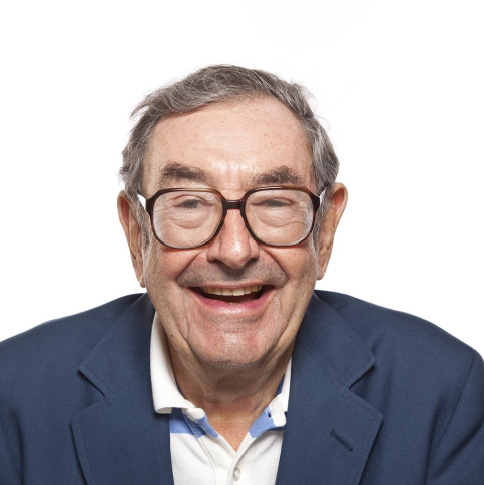
Sergei Novikov

Wolf Prize Laureate in Mathematics 2005

Sergei P. Novikov


Affiliation at the time of the award:

University of Maryland, USA

The L.D. Landau Institute for Theoretical Physics, Russia


Award citation:

“for his fundamental and pioneering contributions to algebraic and differential topology, and to mathematical physics, notably the introduction of algebraic-geometric methods”.


Prize share:

Sergei P. Novikov

Gregory A. Margulis


Professor Sergei P. Novikov is awarded the Wolf Prize for his fundamental and pioneering contributions to topology and to mathematical physics. His early work in algebraic and differential topology includes such milestones as the calculation of cobordism rings and stable homotopy groups, proof of the topological invariance of rational Pontrjagin Classes, formulation of the “Novikov Conjecture” on higher signature invariants, and proof of the existence of closed leaves in two-dimensional foliations of the 3-sphere.

In the early 1970s, Novikov turned his attention to mathematical physics, initially contributing to general relativity and conductivity of metals. He constructed a global version of Morse Theory on manifolds and loop spaces that had novel applications to quantum field theory (multi-valued action functionals). His most significant achievements in mathematical physics flow from his introduction of algebraic-geometric methods to the study of completely integrable systems. These include a systematic study of finite-gap solutions of two-dimensional integrable systems, formulation of the equivalence of the classification of algebraic-geometric solutions of the KP equation with the conformal classification of Riemann surfaces, and work (with Krichever) on “almost commuting” operators, that appear in string theory and matrix models (“Krichever-Novikov algebras”, now widely used in physics).

Novikov made a fundamental and striking contribution to two separate fields in mathematics, while he is one of those rare mathematicians who brings deep, key mathematical ideas to bear on difficult pivotal problems of physics, in ways that are stunning and compelling for both mathematicians and physicists.

Steven D. Tanksley

Wolf Prize Laureate in Agriculture 2004

Steven D. Tanksley


Affiliation at the time of the award:

Cornell University, USA


Award citation:

“for innovative development of hybrid rice and discovery of the genetic basis of heterosis in this important food staple”.


Prize share:

Steven D. Tanksley

Yuan Longping


Professor Steven D. Tanksley is one of the world leaders in plant genomic research. He has contributed to the understanding of heterosis in rice by identifying genes in a wild ancestor that significantly increased yields.

Tanksley has demonstrated that quantitatively inherited traits spanning an entire genome, can be dissected into their corresponding Mendelian factors, called quantitative trait loci (QTL). This enables identification of rate-limiting genes associated with crop performance. His demonstration has led to a cascade of experiments by other researchers, who detected and mapped QTLs in a wide array of other organisms. Within Tanksley’s own group, QTL analysis in rice led to the discovery of the genetic basis of hybrid vigor in this important food staple, allowing further developments to increase rice yields. These advances have profound implications in promoting the science of plant breeding for the benefit of humankind.

Roger Y. Tsien

Wolf Prize Laureate in Medicine 2004

Roger Y. Tsien


Affiliation at the time of the award:

University of California San Diego, USA


Award citation:

“for his seminal contribution to the design and biological application of novel fluorescent and photolabile molecules to analyze and perturb cell signal transduction”.


Prize share:

Roger Y. Tsien

Robert A. Weinberg 


Professor Roger Y. Tsien has made unique contributions to two major areas of research, biomolecular engineering and signal transduction. Biomolecular engineering is the rational design, synthesis, and improvement of artificial molecules to interact with or modify biological systems in a controlled manner. Tsien’s contributions began with the rational design and synthesis of extremely useful calcium chelators and indicators for intracellular applications. His group pioneered, or improved, biologically useful indicators for sodium and for cAMP, membrane potential indicators, chelators that release or take up Ca2+ upon photoactivation, organic molecules to release nitric oxide intracellularly upon photoactivation, a general approach to making membrane-permeant, extracellularly-effective derivatives of phosphate-containing intracellular messengers and caged molecules that can perturb signal transduction with unprecedented three-dimensional spatial resolution.

He is also a leader in protein engineering, particularly in understanding and improving the Green Fluorescent Protein (GFP), a remarkable macromolecule that spontaneously synthesizes a fluorophore inside itself and thus enables strong visible fluorescence to be encoded genetically. Most of the huge number of applications of GFP in cell biology use mutations discovered in Prof. Tsien’s lab, to confer improved spectral properties, or altered colors. His group has used pairs of differently colored GFPs to build transfectable fluorescent indicators of cytosolic and organellar Ca2+ and to monitor dynamic protein-protein interactions in individual live cells. Prof. Tsien’s fluorescent indicators enable ultra-high-throughput the screening of large numbers of candidate compounds on mammalian cells. These are revolutionizing the pharmaceutical drug discovery process.

Tsien is also a leader in the cell biology signal transduction. His major accomplishments in this area include: the first direct measurements of the important increase in cytosolic free Ca2+ associated with immune cell activation secretion and the cell cycle; pioneer investigations on the occurrence and mechanism of Ca2+ oscillations; evidence that a major function of such oscillations may be to optimize gene expression; the discovery that intracellular Ca2+ gradients (and perhaps localized protein kinase C activation) may predict and control the directionality of toxin secretion from cytotoxic T lymphocytes. Elucidation of primary intracellular signaling pathways, involving synergism between nitric oxide, cGMP and Ca2+ for the induction of cerebellar long-term depression, one of the most important cellular models for mammalian synaptic plasticity.

Robert Brout

Wolf Prize Laureate in Physics 2004

Robert Brout


Affiliation at the time of the award:

Universite Libre de Bruxelles, Belgium


Award citation:

“for pioneering work that has led to the insight of mass generation, whenever a local gauge symmetry is realized asymmetrically in the world of sub-atomic particles”.


Prize share:

Robert Brout

Peter W. Higgs

François Englert


Four fundamental forces are presently known. Two of them have a long range: electromagnetism and gravity. Weak interactions have a short range, the composite hadronic-nuclear forces are also short-ranged although color interactions among their constituents, the quarks, grow with distance.

The carriers of the interactions are themselves particles–gauge particles. They have zero mass when the forces have a long range. Such is the photon. They are massive, when the forces have a short range. Electromagnetic interactions are very successfully described by a theory, which has a very large degree of symmetry, a local symmetry called gauge symmetry. On the one hand, it seemed that gauge symmetry necessarily implied that gauge particles have zero mass; on the other, in the absence of a local gauge symmetry, the weak and hadronic short-ranged interactions were ill defined.

Professor Robert Brout, in collaboration with Professors Francois Englert and Peter W. Higgs, have discovered how mass can be generated for gauge particles in the presence of a local abelian and non-abelian gauge symmetry. This was demonstrated by them, both classically and quantum mechanically, successfully avoiding theorems initiated by J. Goldstone while indication that the theory would remain well defined (renormalizable). Similar ideas have been developed in the domain of condensed matter physics.

The work has deeply shaped the understanding of the fundamental interactions. It has allowed to unify the long-range electromagnetic forces with the short-range weak ones. This was manifested in the works of Glashow, Salam and Weinberg, determining the laws of the electro-weak forces. The discovery of Brout, Englert and Higgs, was essential to the proof of G. ‘t Hooft that the theory with massive gauge particles is well defined; and subsequent calculations in that theory, verified experimentally, culminating in the discovery of the massive W and Z particles.

Mass generation has been the cornerstone of many key theoretical results, including cosmology at high temperature and density, grand unified theories and the possible realization of the Dirac monopole. Mass generation is independent of the detailed short-distance physics. It could be driven, among others, by an elementary scalar, or by an effective composite scalar. Near future experiments are constructed to shed light on this fundamental question. The above indicates the far- reaching fundamental nature of the Brout-Englert-Higgs contribution.

Robert A. Weinberg

Wolf Prize Laureate in Medicine 2004

Robert A. Weinberg


Affiliation at the time of the award:

Whitehead Institute for Biomedical Research, Massachusetts Institute of Technology (MIT), USA


Award citation:

“for his discovery that cancer cells including human tumor cells, carry somatically mutated genes-oncogenes that operate to drive their malignant proliferation”.


Prize share:

Robert A. Weinberg 

Roger Y. Tsien


In the 1970’s, it was widely believed that infection of normal cells, including cells in human tissues, by a variety of tumor viruses led to their transformation into cancer cells. Indeed, Dr. Weinberg’s research in the 1970’s focused on viral oncogenes and the role they play in cell transformation. However, in the late 1970’s it became increasingly apparent that many types of human cancer cells lack any trace of tumor viral infections or viral oncogenes. This suggested an alternative mechanistic explanation for cancer pathogenesis: that carcinogenic agents including mutagens inflict somatic mutations on cells in target tissues, leading in turn to the creation of mutant genes that subsequently function to provoke cell transformation and to drive the malignant proliferation of the mutant cells. However, evidence was lacking that tumor cells, including those derived from human tumors, carried such transforming, cancer-inducing genes.

In 1979, Dr. Weinberg’s lab reported that they were able to detect the presence of such transforming oncogenes in the DNA’s of chemically transformed rodent cells. This discovery depended upon exploitation of the gene transfer (transfection) technique, to introduce DNA from tumor cells into untransformed mouse NIH3T3 cells. This gene transfer resulted in the transformation of the recipient NIH3T3 cells, and thus proved that the DNA extracts from the tumor cells carried transforming sequences. In the following year, the Weinberg lab extended this observation to human tumor DNA’s, including one initially prepared from a human bladder carcinoma. The Weinberg lab then demonstrated that the transforming genes (i.e. oncogenes) from four independently transformed mouse sarcoma cell lines were all related in sequence structure, indicating that they all derived from a common precursor gene residing in the normal cell genome.

In 1982, Dr. Weinberg’s group reported the isolation by molecular cloning of the first human oncogene, derived from the DNA of the human bladder carcinoma. The Weinberg group soon reported that this gene was closely related to the ras oncogenes known to be transduced by acutely transforming rodent retroviruses. This led to the realization that a common repertoire of normal mammalian growth-regulating genes (proto-oncogenes) could be converted into active oncogenes, either by intervention of a transducing retrovirus, or by somatic mutations. Shortly thereafter, the Weinberg group elucidated on the nature of the somatic mutation leading to the creation of the human bladder carcinoma oncogene. They found that a single-base substitution (point mutation) was responsible for the conversion of a normal ras proto-oncogene into an active oncogene. In the subsequent decade, a number of research groups found that similarly mutated ras oncogenes were present in about 25 percent of all human tumors, from a variety of tissue sites. The finding of a point mutation was the first documentation of a mutant cancer-promoting gene in the genome of a human tumor cell.

In 1999, Dr. Weinberg’s group reported the creation, for the first time, of genetically defined human tumor cells. Until this advance, all experimentally manipulated human tumor cells derived from human tumor biopsies and were thus, of unknown genetic constitution.

Peter Higgs

Wolf Prize Laureate in Physics 2004

Peter W. Higgs


Affiliation at the time of the award:

University of Edinburgh, United Kingdom


Award citation:

“for pioneering work that has led to the insight of mass generation, whenever a local gauge symmetry is realized asymmetrically in the world of sub-atomic particles”.


Prize share:

Peter W. Higgs

Robert Brout

François Englert


Four fundamental forces are presently known. Two of them have a long range: electromagnetism and gravity. Weak interactions have a short range, the composite hadronic-nuclear forces are also short-ranged although color interactions among their constituents, the quarks, grow with distance.

The carriers of the interactions are themselves particles–gauge particles. They have zero mass when the forces have a long range. Such is the photon. They are massive, when the forces have a short range. Electromagnetic interactions are very successfully described by a theory, which has a very large degree of symmetry, a local symmetry called gauge symmetry. On the one hand, it seemed that gauge symmetry necessarily implied that gauge particles have zero mass; on the other, in the absence of a local gauge symmetry, the weak and hadronic short-ranged interactions were ill defined.

Professor Robert Brout, in collaboration with Professors Francois Englert and Peter W. Higgs, have discovered how mass can be generated for gauge particles in the presence of a local abelian and non-abelian gauge symmetry. This was demonstrated by them, both classically and quantum mechanically, successfully avoiding theorems initiated by J. Goldstone while indication that the theory would remain well defined (renormalizable). Similar ideas have been developed in the domain of condensed matter physics.

The work has deeply shaped the understanding of the fundamental interactions. It has allowed to unify the long-range electromagnetic forces with the short-range weak ones. This was manifested in the works of Glashow, Salam and Weinberg, determining the laws of the electro-weak forces. The discovery of Brout, Englert and Higgs, was essential to the proof of G. ‘t Hooft that the theory with massive gauge particles is well defined; and subsequent calculations in that theory, verified experimentally, culminating in the discovery of the massive W and Z particles.

Mass generation has been the cornerstone of many key theoretical results, including cosmology at high temperature and density, grand unified theories and the possible realization of the Dirac monopole. Mass generation is independent of the detailed short-distance physics. It could be driven, among others, by an elementary scalar, or by an effective composite scalar. Near future experiments are constructed to shed light on this fundamental question. The above indicates the far- reaching fundamental nature of the Brout-Englert-Higgs contribution.

Mstislav Rostropovich

Wolf Prize Laureate in Music 2004

Mstislav Rostropovich


Award citation:

“a cellist, conductor, pianist and exceptional human being, who has created a career of monumental proportions”.


Prize share:

Mstislav Rostropovich

Daniel Barenboim


Mstislav Rostropovich has nurtured an entirely new repertory for the violoncello and brought the joy of music to millions of people worldwide. Rostropovich is a living testimony to the way in which music can have a positive and transforming impact on the inhabitants of this bruised and troubled planet.

Internationally acclaimed as one of the great cellists and musicians of our time, Rostropovich has performed worldwide and has worked diligently to enlarge the cello repertory, by commissioning works from many of the 20th century’s great composers. His extraordinary technique and passionate performances have set a standard for cellists worldwide.

Rostropovich is one of the world’s most outspoken defenders of human and artistic freedom. In 1974, after a period of four years during which Aleksandr Solzhenitsyn resided in their home, Rostropovich and his wife, the celebrated soprano Galina Vishnevskaya, decided to leave the Soviet Union. Since then he has devoted much time, and given numerous performances, in support of humanitarian efforts around the world. His total involvement in both music and society makes him the quintessential citizen artist.

Rostropovich is one of the most active recording artists of the 20th century. He also won acclaim as an outstanding conductor, appearing with many of the world’s leading orchestras, as well as conducting and recording many operas.

As a musician and as citizen of the world, Mstislav Rostropovich personifies the triumph of artistic endeavor and humanity over social oppression.

Harry B. Gray

Wolf Prize Laureate in Chemistry 2004

Harry B. Gray


Affiliation at the time of the award:

California Institute of Technology, USA


Award citation:

“for pioneering work in bio-inorganic chemistry, unravelling novel principles of structure and long-range electron transfer in proteins”.


Prize share:

None


A pioneer of bio-inorganic chemistry, Professor Harry Gray has made a critical contribution to our understanding of electron transfer in proteins and their folding.

To work its decipherable miracles, to effect change, and to create complexity and difference, life needs electrons, ions, atoms, and energy. From these, it constructs molecules of defined shapes and precise functions. The critical role of inorganic chemistry in these processes was recognized only recently.

In biological systems, inorganic components are essential. In hemoglobin, out of a total 9,072 atoms, there are only four iron atoms. These, however, play a critical role. Similarly, minute amounts of zinc, magnesium, calcium, copper and manganese, as well as other metal ions, play critical roles. When nature needs to accomplish a task that requires electron transfer, or where big energy jumps are essential, this is made possible by metal ion chemistry. From hemoglobin to chlorophyll, from zinc fingers to respiration, one finds important bio-inorganic chemistry in the service of life. Electron transfer reactions in proteins provide the basis for energy production and much of the intermediary metabolism in cells of all living organisms and plants. Until Gray’s work, little was known about the chemical factors, which govern electron transfer in biological systems.

Gray has made seminal contributions to the understanding of chemical bonding of metal complexes, mechanisms of inorganic reactions, spectroscopy and magneto-chemistry of inorganic compounds. His study of the first trigonal prismatic complexes is one such example. Through these achievements alone, coupled with a vivacious, interactive personality (that has also served him well as he brought, with enthusiasm, chemistry to the general public), he has established himself as one of the world’s leading chemists.

But Harry Gray’s most significant work lies at the interface between chemistry and biology. As a pioneer of the important and thriving field of bio-inorganic chemistry, he has made many key contributions, the most important of which is the development of fundamental understanding of electron transfer in biological systems, at the atomic level.

Harry Gray has developed methods for binding electron transfer-active metal complexes to the surface of proteins and has prepared proteins (variants of myoglobin and cytochromes) in which ruthenium complexes, amenable to activation by light, were placed at defined locations. Using these systems, he reported the first measurement of an electron transfer rate between two sites located at a fixed known distance in a protein; and has. systematically investigated the distance dependence of long range protein electron transfer and its free energy dependence. Gray has experimentally established, the mechanism of tunnelling as the transport of holes through the protein’s covalent bonds. He has demonstrated that electron transfer in proteins can occur with significant rates between centers separated by distances of up to 20 Ångströms. Gray’s work has provided insight into how the electron transfer rate depends on the separation of the redox centers and on the composition of the intervening material. Further, using laser-induced electron transfer as a tool, he has developed a method for triggering protein folding by light, enabling the study of early events of protein folding, which is central to protein structure and function. Gray’s work on electron transfer in biomolecules, is a striking demonstration of the power of modern physical tools and inorganic chemistry, applied to a critical biological problem. Ingenious chemistry, meticulously executed, has given us real understanding, for the first time, of biological processes of great significance for life.

François Englert

Wolf Prize Laureate in Physics 2004

François Englert


Affiliation at the time of the award:

Universite Libre de Bruxelles, Belgium


Award citation:

“for pioneering work that has led to the insight of mass generation, whenever a local gauge symmetry is realized asymmetrically in the world of sub-atomic particles”.


Prize share:

François Englert

Robert Brout

Peter W. Higgs


Four fundamental forces are presently known. Two of them have a long range: electromagnetism and gravity. Weak interactions have a short range, the composite hadronic-nuclear forces are also short-ranged although color interactions among their constituents, the quarks, grow with distance.

The carriers of the interactions are themselves particles–gauge particles. They have zero mass when the forces have a long range. Such is the photon. They are massive, when the forces have a short range. Electromagnetic interactions are very successfully described by a theory, which has a very large degree of symmetry, a local symmetry called gauge symmetry. On the one hand, it seemed that gauge symmetry necessarily implied that gauge particles have zero mass; on the other, in the absence of a local gauge symmetry, the weak and hadronic short-ranged interactions were ill defined.

Professor Robert Brout, in collaboration with Professors François Englert and Peter W. Higgs, have discovered how mass can be generated for gauge particles in the presence of a local abelian and non-abelian gauge symmetry. This was demonstrated by them, both classically and quantum mechanically, successfully avoiding theorems initiated by J. Goldstone while indication that the theory would remain well defined (renormalizable). Similar ideas have been developed in the domain of condensed matter physics.

The work has deeply shaped the understanding of the fundamental interactions. It has allowed to unify the long-range electromagnetic forces with the short-range weak ones. This was manifested in the works of Glashow, Salam and Weinberg, determining the laws of the electro-weak forces. The discovery of Brout, Englert and Higgs, was essential to the proof of G. ‘t Hooft that the theory with massive gauge particles is well defined; and subsequent calculations in that theory, verified experimentally, culminating in the discovery of the massive W and Z particles.

Mass generation has been the cornerstone of many key theoretical results, including cosmology at high temperature and density, grand unified theories and the possible realization of the Dirac monopole. Mass generation is independent of the detailed short-distance physics. It could be driven, among others, by an elementary scalar, or by an effective composite scalar. Near future experiments are constructed to shed light on this fundamental question. The above indicates the far- reaching fundamental nature of the Brout-Englert-Higgs contribution.

Daniel Barenboim

Wolf Prize Laureate in Music 2004

Daniel Barenboim


Award citation:

“a person of profound musical and humanitarian commitment, who has distinguished himself as one of the great musicians of our time.”


Prize share:

Daniel Barenboim

Mstislav Rostropovich


Whether conducting an opera or performing the 32 Beethoven piano sonatas, Daniel Barenboim brings a protean ability to all his endeavors. His deep belief that music humanizes sound is manifested in his ongoing efforts to bring peace to all peoples. Through prodigious talent and energy, Barenboim leads an artistic life remarkable in its breadth and wholeness. He has built a brilliant and unique career as an orchestral and operatic conductor, while at the same time pursuing his calling as an exceptional pianist and accompanist to distinguished singers.

Barenboim first found fame on the world’s concert stages as a greatly gifted pianist. He has gained a well-deserved reputation as an outstanding interpreter of Beethoven and Mozart, and has provided many sensitive and imaginative renditions and recordings of their piano works, as well as those of diverse composers spanning three centuries.

Barenboim’s career as a conductor was firmly established with debuts in London, which eventually led to performances on podiums around the world. He has complemented his orchestral leadership with distinguished appearances at the world’s major opera houses.

His combined career as pianist and conductor has enabled Barenboim to enrich the entire music profession and the world at large. His dedication to human rights causes and to world peace has helped to bring together individuals of all races and creeds. He is committed to the notion that people can more thoughtfully listen to each other through the artistry of music.