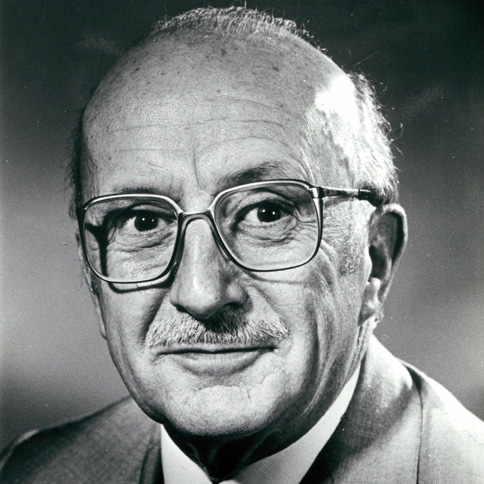
Shang-Fa Yang

Wolf Prize Laureate in Agriculture 1991

Shang-Fa Yang


Affiliation at the time of the award:

University of California, USA


Award citation:

“for remarkable contributions to the understanding of the mechanism of biosynthesis, mode of action and applications of the plant hormone, Ethylene”.


Prize share:

None


Shang-Fa Yang (born in 1932, Taiwan) received his bachelor’s and master’s degrees in agricultural chemistry from the National Taiwan University. He then pursued his doctoral degree in plant biochemistry at Utah State University in the United States. Following the completion of his PhD, he engaged in postdoctoral research at the University of California, Davis, New York Medical School, and the University of California, San Diego. In 1966, Shang-Fa Yang became a faculty member at the University of California, Davis.

Professor Shang-Fa Yang has studied the pathway of ethylene biosynthesis and proved unequivocally the central role of methionine as a precursor of ethylene. Ethylene represents one of the five major hormones affecting plant development and maturation.

Yang was the first to report S-adenosylmethionine as an intermediate in methionine conversion to ethylene. Later in 1979, he discovered aminocylopropane-1-carboxylic acid (ACC) as an intermediate. The discovery of ACC-synthase opened the way to the understanding of the regulating process of ethylene biosynthesis. Moreover, the finding of malonyl-ACC was followed by the understanding of the mechanism of autocatalytic production and suppression of this hormone in the plant tissues.

This research has also opened up further investigations leading to the understanding of ethylene action. At the same time these studies have emphasized the important role played by ethylene in plant growth, development and senescence. This enhanced the application of ethylene in agriculture mainly for optimization of fruit ripening and inhibition of abscission of leaves and flowers. These findings have significantly contributed to economic benefits by prolonging shelf life of fruits, flowers and vegetables after harvest.

Since ethylene has such profound effects, genetic modification of the ACC synthase will now permit scientists to regulate the production of ethylene for prolonging the life span of plants and the modification of flower and fruit development, thus leading to even greater economic advantages for food production.

Pierre-Gilles de Gennes

Wolf Prize Laureate in Physics 1990

Pierre-Gilles de Gennes


Affiliation at the time of the award:

College de France, France


Award citation:

“for a wide variety of pioneering contributions to our understanding of the organization of complex condensed matter systems, de Gennes especially for his work on macromolecular matter and liquid crystals and Thouless for his on disordered and low-dimensional systems”.


Prize share:

Pierre-Gilles de Gennes

David J. Thouless 


Among his important contributions to many different parts of condensed matter physics, including magnetism, superconductivity and scattering studies, Professor Pierre-Gilles de Gennes has provided fundamental concepts for the development of macromolecular science. These have provided a firm foundation for analyzing complicated but important processes. He analyzed the dynamics of correlated motions of polymers in their complex environment and predicted their critical phenomena by extending the use of path-integral methods, developing applications of scaling ideas and introducing the concept of reptation. This work has stimulated many experiments which have confirmed his concepts and their relevance. It has energized the whole field of the physics of long chained macromolecules, much of the new work being done by former students and young colleagues. These achievements also hold promise for future applications to biological systems.


Maclyn McCarty

Wolf Prize Laureate in Medicine 1990

Maclyn McCarty


Affiliation at the time of the award:

Rockefeller University, USA


Award citation:

“for his part in the demonstration that the transforming factor in bacteria is due to deoxyribonucleic acid (DNA) and the concomitant discovery that the genetic material is composed of DNA”.


Prize share:

None


Maclyn McCarty (born in 1911, USA) has been associated with Rockefeller Institute since 1941. He is a graduate of Stanford University, received his M.D fron Johns Hopkins University in 1937, and was a fellow of medicine at New York University.

In the 1940’s when Drs. Avery, Macleod and McCarty first began to work on transformation of pneumococcus, not very much was known about the chemical nature of genetic material. It was known that heredity is determined by chromosomes and that c chromosomes contain DNA and proteins in about equal amounts. Since proteins are complex molecules composed of many different amino acids, while DNA is composed of only four different nucleotides, the general feeling in the early 1940’s was that proteins were intrincate enough to contain the genetic information, and DNA with its simplistic structure was considered to be almost irrelevant to genetics. Drs. Avery, Macleod and McCarty studied the two types of pneumococci giving rough and smooth colonies. They succeeded in making extracts of one bacterial type and to treat cells of the other bacterial type with the extracts, with the result that bacteria previously giving rough colonies now gave smooth colonies. This change of phenotype was called transformation. Although the chemistry of proteins and nucleic acids was not particularly developed at that time, McCarty was able to show that the only material required for transformation was deoxyribonucleic acid. These papers, published in 1944 and 1945, laid the foundation of our knowledge on the chemical basis of genetic information.

It is also not too much to say, that modern molecular biology is totally dependent on the knowledge of what the genetic material is. When it became known that it was deoxyribonucleic acid, it then became possible to do a whole variety of experillel1ts which have led to precise identification of the structure and functions of many genes in a variety of species, including man. Molecular genetic research carried out in the past decades fundamentally broadened our understanding of the processes of life.

Ilya Piatetski-Shapiro

Wolf Prize Laureate in Mathematics 1990

Ilya Piatetski-Shapiro


Affiliation at the time of the award:

Tel Aviv University, Israel


Award citation:

“for his fundamental contributions in the fields of homogeneous complex domains, discrete groups, representation theory and automorphic forms”.


Prize share:

Ilya Piatetski-Shapiro

Ennio De Giorgi 


Ilya Piatetski-Shapiro (born in 1929, Russia) developed a fascination for mathematics at the age of 10. His curiosity was ignited by the  unique beauty of negative numbers, a subject introduced to him by his father, a Ph.D. in chemical engineering. While still an undergraduate at Moscow University, Piatetski-Shapiro’s mathematical prowess earned him the Moscow Mathematical Society Prize for a Young Mathematician in 1952. The winning paper he presented contained a solution to the problem posed by the French analyst Raphaël Salem regarding sets of uniqueness of trigonometric series.

For almost 40 years Professor Ilya Piatetski-Shapiro has been making major contributions in mathematics by solving outstanding open problems and by introducing new ideas in the theory of automorphic functions and its connections with number theory, algebraic geometry and infinite dimensional representations of Lie groups. His work has been a major, often decisive factor in the enormous progress in this theory during the last three decades.

Among his main achievements are: the solution of Salem’s problem about the uniqueness of the expansion of a function into a trigonometric series; the example of a non symmetric homogeneous domain in dimension 4 answering Cartan´s question, and the complete classification (with E. Vinberg and G. Gindikin) of all bounded homogeneous domains; the solution of Torelli´s problem for K-3 surfaces (with I. Shafarevich); a solution of a special case of Selberg´s conjecture on unipotent elements, which paved the way for important advances in the theory of discrete groups, and many important results in the theory of automorphic functions, e.g., the extension of the theory to the general context of semi-simple Lie groups (with I. Gelfand), the general theory of arithmetic groups operating on bounded symmetric domains, the first “converse theorem” for GL(3), the construction of L-functions for automorphic representations for all the classical groups (with S. Rallis) and the proof of the existence of non arithmetic lattices in hyperbolic spaces of arbitrary large dimension (with M. Gromov).

Ennio De Giorgi

Wolf Prize Laureate in Mathematics 1990

Ennio De Giorgi


Affiliation at the time of the award:

Scuola Normale Superiore, Italy


Award citation:

“for his innovating ideas and fundamental achievements in partial differential equations and calculus of variations”.


Prize share:

Ennio De Giorgi 

Ilya Piatetski-Shapiro


The work of Professor Ennio De Giorgi is among the most important and creative accomplishments in the theory of partial differential equations and the calculus of variations. At the time he began his studies, mathematicians were not able to handle anything beyond second order nonlinear elliptic equations in two variables. In his first major break-through in 1957, De Giorgi proved that solutions of uniformly elliptic second order equations of divergence form with only measurable coefficients were Holder continuous. Probably his greatest contribution cue in 1960; this was a regularity theory for minimal hypersurfaces. Such surfaces arise as surfaces of smallest area spanning a given boundary. The proof required De Giorgi to develop his own version of what we now call geometric measure theory along with a related key compactness theorem. He was then able to conclude that a minimal hypersurface is analytic outside a closed subset of codimension at least two. Since then he and his school have settled litany of the outstanding problems in this area.


David J. Thouless

Wolf Prize Laureate in Physics 1990

David J. Thouless


Affiliation at the time of the award:

University of Washington, USA


Award citation:

“for a wide variety of pioneering contributions to our understanding of the organization of complex condensed matter systems, de Gennes especially for his work on macromolecular matter and liquid crystals and Thouless for his on disordered and low-dimensional systems”.


Prize share:

David J. Thouless 

Pierre-Gilles de Gennes


Professor David J. Thouless has provided major theoretical contributions to our understanding of extended systems of atoms and electrons, and of nucleons. These have involved especially superconductivity phenomena, properties of nuclear matter, and excited collective motions within nuclei. His work on disordered systems provided key ideas for understanding electronic transport processes in systems where Anderson localization plays an important role, and indicated measurable consequences of this localization in thin wires. His contributions to spin glass theory have been substantial and·important. With J. M. Kosterlitz, he developed a theory of vortex-unbinding transitions in two-dimensional systems with continuous symmetry. This has had remarkable consequences and many applications in other areas of physics. He has made clearly apparent the significance of topological concepts (and their related variables) in condensed matter physics and demonstrated their importance for the Quantum Hall effect.

Anselm Kiefer

Wolf Prize Laureate in Arts 1990

Anselm Kiefer


Award citation:

“for his epic and physically compelling paintings, in which he creates a continuum, linking current life with history and mythology”.


Prize share:

None


Anselm Kiefer (born in 1945, Germany) Originally enrolled at the University of Freiburg with a focus on pre-law and Romance languages, he transitioned to the realm of art after three semesters. He continued his artistic education at art academies in both Freiburg and Karlsruhe. Under the tutelage of Peter Dreher, a renowned realist and figurative painter, who honed his skills. He earned his art degree in 1969.

Anselm Kiefer has created an art that synthesizes human history and the present condition of life in epic canvases that inspire gravity and awe. For him, almost alone in this century, art is an endeavor of enormous ambition and symbolic importance.

Kiefer first came to prominence in the 1970’s with subjects that dealt derisively with his German heritage, and most particularly with the Nazi period. Not only was this history mocked, the artist unselfconsciously examined the degree to which he was an heir of its character. Gradually he added to his narrative the victims of this ghastly past, as epitomized by the personage called Shulamit in a poem by Paul Celan.

In 1980, Kiefer’s work took a dramatic turn through his increasing use of diverse materials added to the surfaces of the canvases. Sand, straw, photographs, and lead produced a rich physical reality which enhanced the expressiveness of the imagery. As the 1980´s evolved, Kiefer began to transform his earlier subjects, as if to suggest the possibility of a new, though not necessarily brave, world. His art is as much about metamorphosis as it is a haunting commentary on false dreams. It is both accusative and elegiac. It addresses such universal themes as the power of myth in history and its persistence in modern life.

The best of Kiefer’s paintings are epic elegies to the human condition, which pulsate with profoundly felt emotions, complex thematic subtlety, and extraordinary surface excitement.

Kiefer’s paintings often touch raw nerves and have the potential to elicit emotional responses. By the provocative nature of his work, it is evident that Kiefer accepts and embraces the notion of the modern artist who stands outside society, taunting it, its history, norms, taboos, myths, and ideas about art and craft. Though hardly untouched by his period´s ironical outlook and experimental practices, he signals a dramatic break with prevailing, 2Oth century notions that art exists for its own sake alone; instead, he proposes that art might speak to the general concerns of humanity.

Jozef S. Schell

Wolf Prize Laureate in Agriculture 1990

Jozef S. Schell


Affiliation at the time of the award:

Max-Planck-Institute for Plant Breeding, Germany


Award citation:

“For his pioneering work in genetic transformation of plants, thereby opening up new horizons in basic plant science and breeding”.


Prize share:

None


Jozef Stefaan Schell (born in 1935, Belgium) studied zoology and microbiology at the University of Ghent, Belgium. Schell is the director of the Max Planck Institute for plant breeding in Koln, West Germany.

Professor Jozef Stefaan Schell played a key role in the development of Agrobacterium and its Ti plasmid as a vector for inserting genes into plants.

His subsequent work has moved to the use of transgenic plants to bring a new dimension into the study of classical problems in plant physiology, particularly in relation to hormone receptors and the mechanisms of hormone action.

Another particularly notable feature of Professor Schell’s work has been his orchestration of collaborative efforts to spread the knowledge and use of these techniques around the world.

The impact of his pioneering contribution and leadership is now beginning to appear as companies are developing transgenic plants for pest and disease resistance and for effecting a range of compositional changes of potential industrial importance.

Ti-plasmid-derived genetic constructions are the only proven vehicles for the introduction of foreign DNA into plants. The newly acquired DNA integrates into the plant´s genome and becomes a stable constituent of the genetic make-up of the transformed plant.

Professor Schell’s studies and research work of over many years led to the elucidation of the molecular basis of crown gall formation on plants by Agrobacterium tumefaciens and the mechanism of DNA transfer to higher plants, and formed the basis for the development of sophisticated vectors and methods for the introduction of novel or modified genes into plants. These developments now allow the stable introduction of desirable genetic traits into plants, also those of agricultural interest. Furthermore, the techniques and vector systems originating from this work are being used to study gene expression in higher plants, in response to hormones, heat shock, pathogens, light and symbiotically nitrogen fixing bacteria and in a tissue specific manner. This led to the identification of tissue specific promoters which can be used to direct the expression of newly introduced genes in the desired tissue (organ) of the plant.

The work of Schell and his coworkers, therefore, represents a major contribution not only to a scientific (molecular) understanding of gene transfer to and gene expression in higher plants, but also offers major new tools for modern plant breeding.

Peter M. Biggs

Wolf Prize Laureate in Agriculture 1989

Peter M. Biggs


Affiliation at the time of the award:

Agricultural and Food Research Council

Institute for Animal Health, United Kingdom


Award citation:

“for distinguished contributions to basic science and its successful translation into practice in the fields of animal health and crop protection”.


Prize share:

Peter M. Biggs

Michael Elliott


Dr. Peter M. Biggs has carried out pioneering work on virus-induced tumors in domestic poultry, which were a major problem in intensive production systems. Work in his laboratory showed that both retroviruses and herpes viruses were implicated in these diseases. Work in other laboratories over the same period showed that the avian retroviruses could be divided into several sub-groups with resistance in the last being controlled by a single recessive gene. This work led to the development of methods for the selection of genetically determined resistant breeding stocks. Work on the epidemiology and pathology of the most severe forms of lymphoids tumors in poultry known as Marek´s disease after the author of the initial description of the condition, showed it to be due to an unusual type of herpes virus with a high affinity for cell binding. Further development of these findings led to the development of a novel vaccine which was in fact the first effective vaccine against a tumor condition in any species. This vaccine is now used for protection against Marek´s disease throughout the world where extensive poultry production is carried out. Throughout his career Professor Biggs has made major contributions and is a recognized leader in the field of animal health, having established and encouraged the use of the techniques of genetic engineering and biotechnology for the study of infectious diseases.


Michael Elliott

Wolf Prize Laureate in Agriculture 1989

Michael Elliott


Affiliation at the time of the award:

Agricultural and Food Research Council

Institute of Arable Crops Research, United Kingdom


Award citation:

“for distinguished contributions to basic science and its successful translation into practice in the fields of animal health and crop protection”.


Prize share:

Michael Elliott

Peter M. Biggs


Michael Elliot (born in 1924, England) received his education at Skinners County School in Tunbridge Wells, followed by attending University College, Southampton, and later King’s College London. His Ph.D. research at King’s College focused on the synthesis of natural pyrethrins, sparking an enduring interest that would shape his scientific career. In 1948, Elliot took on the role of a scientific officer in the Insecticides and Fungicides Department at Rothamsted, where he delved into studying the connections between molecular structure and biological activity. The innovative work of his team led to the discovery of two sets of new compounds, earning Rothamsted Queen’s Awards for Technological Achievement in 1976 and 1980. In recognition of his significant contributions, Elliott was elected a fellow of the Royal Society in 1979 and was appointed Commander of the Order of the British Empire (CBE) in 1982.

Dr. Michael Elliot has demonstrated scientific vision in the field of crop protection against insects. In the 1940´s he recognized that the naturally occurring insecticidal compounds of plant in the Composite (Sunflower family) Chrysanthemum cinevariaefolium known as pyrethroids had important crop protective potential but suffered from serious disadvantages of lack of potency, stability and selectivity. He, therefore, embarked on an imaginative program for the development of synthetic analogues of the naturally occurring compounds and produced two, resmethrin (1962) and bioresmethrin (1985) which had greatly enhanced potency and insect specificity, combined with low mammalian toxicity. These compounds were particularly effective for use in domestic and stored products, but were photodegradable and therefore relatively ineffective under the field conditions. By 1973 Dr. Elliott had produced further analogues which combined crop surface stability and insecticidal potency with exceptionally low mammalian toxicity; they also had the advantage over the organochlorine insecticides of being readily biodegradable in the soil without the formation of toxic residues. These compounds have proved to be of enormous economic Importance in the protection of a very wide variety of herbaceous and tree crops. At the fundamental level Dr. Elliott’s work has made possible the establishment of relationships between chemical structure and insecticidal activity in pyrethroids; improved the understanding of factors which determine photostability selectivity and mammalian toxicity and provided a series of steroisomers with contrasting insecticidal activities which are proving to be powerful tools for neurophysiological “site of action’ studies.