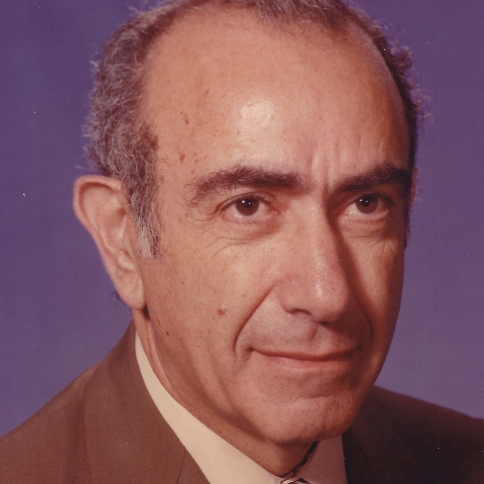
David C. Phillips

Wolf Prize Laureate in Chemistry 1987

David C. Phillips


Affiliation at the time of the award:

University of Oxford, United Kingdom


Award citation:

“for their contributions to protein X-ray crystallography and to the elucidation of structures of enzymes and their mechanisms of action”.


Prize share:

Sir David C. Phillips

David M. Blow 


The first enzymes whose 3-dimensional structures were solved by X-ray crystallography were lysozyme by David Phillips in 1965, and chymotrypsin, a larger molecule, by David Blow in 1967. These studies showed how enzymes perform biological catalysis by mobilising their substrates at the active site of the enzyme and gave definite information and ideas about the detailed chemistry of their action. Thus, for the first time it was possible to interpret the catalytic mechanism in stereochemical terms. Both men have also made significant contributions to the tecniques of protein crystallography.

Phillips and Blow have between them pioneered experimental and analytical methods that have contributed to the developments of protein crystallography.

Professor David C. Phillips (born in 1924), UK introduced the use of an automatic diffractometer (together with Arndt) for the precise measurements of the large amount of X-ray data given by a protein, which was the precursor for further automation in the field. Phillips and his team solved not only the structure of lysozyme, but also the complex with its substrate which led to the identification of a specific site and showed a distortion of the substrate towards the transition state. (Many features of the local chemistry of the interaction have since been found in other enzymes). In subsequent work Phillips has determined the structure of their enzymes, most notably triosephosphate isomerase, which was another land-mark in complex enzyme structure.

Riccardo Giacconi

Wolf Prize Laureate in Physics 1987

Riccardo Giacconi


Affiliation at the time of the award:

Space Telescope Science Institute, USA

Johns Hopkins University, USA


Award citation:

“for the discovery of extra-solar X-ray sources and the elucidation of their physical processes”.


Prize share:

Riccardo Giacconi

Herbert Friedman

Bruno B. Rossi


Friedman, Rossi, and Giacconi are universally recognized as the principal founders of X-ray astrophysics, a new field of astronomical science which has proved to be a prolific source of fundamental discoveries and deeper physical understanding about high energy processes in the universe. Their work has profoundly influenced virtually every area of astronomical research, from the study of the sun and other stars of all types and luminosity classes to investigations of the interstellar medium, galaxies, clusters of galaxies and the distant quasars. Their brilliant insights, technical inventiveness, and bold leadership stimulated the rapid growth of X-ray astronomy from its early stages of speculation and exploration in the 1950’s and 1960’s to its recent high level of productive research. All agencies engaged in space science are now developing major orbiting facilities for X-ray observations which will playa vital role in the future of astronomical science.

Professor Bruno B. Rossi initiated in 1959 research aimed at utilizing the burgeoning space technologies in a search for extra-solar X-ray sources. Motivated by a lifelong interest in the nature and origins of cosmic radiations, a field of study to which he had been making major contributions since the early 1930’s, Rossi persuaded the management and scientists at American Science and Engineering, Inc. to undertake a study of the theoretical and experimental prospects for X-ray astronomy. This study, carried out under the leadership of Riccardo Giacconi, led to proposals for new forms of X-ray optics utilizing grazing incidence reflection, and exploratory rocket experiments to scan the sky with X-ray detectors of much greater sensitivity than had previously been used. In a series of four flights, sponsored by the United States Air Force and carried out from 1961 to 1963, the AS&E group discovered discrete extra- solar X-ray sources and the X-ray background. In discussing the origin of X rays in celestial bodies, Rossi drew attention to the process of thermal bremstrahlung emission by extremely hot low-density gas, now known to be the production mechanism in most X-ray sources,

Upon completing a study of the prospects for X-ray astronomy, initiated in 1959 at the suggestion of Bruno Rossi, Professor Riccardo Giacconi undertook the development at American Science and Engineering, Inc. of improved methods for the detection and analysis of X rays of very low intensities with the goal of conducting an exploratory search for non-solar X-ray sources, He proposed, with Rossi, the use of grazing incidence reflection from parabolic mirrors to concentrate X rays for more sensitive detection. He also proposed the adaptation of the principles of image-forming X-ray optics, developed previously in connection with X-ray microscopy, to the construction of high resolution Xray telescopes. With his associates at AS&E, Giacconi carried out a series of rocket flights which discovered the first discrete extra-solar X-ray sources, including Sco X-I, and the diffuse X-ray background. He conducted additional rocket investigations, and conceived and directed the NASA sponsored projects which produced the solar X-ray spectrographic telescope on Skylab, the first orbiting X-ray observatory, Uhuru, and the orbiting Einstein Observatory carrying the first high resolution X-ray telescope for extra-solar observations. Among the most important discoveries made with these satellite facilities were coronal holes and X-ray bright points in the sun’s atmosphere, accretion powered binary X-ray pulsars, X-ray emitting gas in clusters of galaxies, and ubiquitous X-ray emissions by stars of all types and luminosity classes.

Peter D. Lax

Wolf Prize Laureate in Mathematics 1987

Peter D. Lax


Affiliation at the time of the award:

Courant Institute of Mathematical Sciences, USA


Award citation:

“for his outstanding contributions to many areas of analysis and applied mathematics”.


Prize share:

Peter D. Lax

Kiyoshi Ito


Professor Peter D. Lax, a graduate of the Courant Institute, embodies the best traditions of D. Hilbert as continued by R. Courant. Among his many contributions are the solution of the Cauchy problem with oscillatory data, the clarification of the role of stability of a numerical scheme, the comprehensive development of scattering theory, the theory of non-linear conservation laws and a deep insight into the Korteweg-de Vries equation. Prof. Lax’s influence has been profound and decisive in both pure and applied mathematic

Pedro Cuatrecasas

Wolf Prize Laureate in Medicine 1987

Pedro Cuatrecasas


Affiliation at the time of the award:

Glaxo Inc., USA


Award citation:

“for the invention and development of affinity chromatography and its applications to biomedical sciences”.


Prize share:

Pedro Cuatrecasas

Meir Wilchek


Pedro Cuatrecasas (born in 1936, Spain) graduated with an A.B. from Washington University in St. Louis in 1958. He later earned his M.D. from Washington University School of Medicine in 1962.

Affinity chromatography is a novel technique which was conceived by Cuatrecasas and Wilchek and has become a powerful tool for the isolation and purification of many biologically important molecules. Few if any other new techniques have so markedly and rapidly affected the growth of biomedical sciences.

The principle of affinity chromatography is based on the covalent attachment to agarose beads of molecules that can selectively bind and thereby remove specific constituents from a mixture. This permits novel approaches to the study of enzyme mechanisms and the properties of cell surfaces, and enables separations of numerous other biological constituents to be carried out. This technique has also been employed in clinical diagnosis and therapeutics.

Professor Pedro Cuatrecasas has done much to develop and perfect the methodology of affinity chromatography. He himself, has elegantly applied the technique to study a number of enzymes and receptors. For example, he has used affinity to purify insulin receptors and estrogen receptors. Prof. Cuatrecasas has used the purified receptors to determine their structure, and to produce antibodies with which he studied their biosynthesis, regulation, function, and role in disease states (i.e. diabetes in the case of insulin receptors and breast cancer in the case of estrogen receptors).

Meir Wilchek

Wolf Prize Laureate in Medicine 1987

Meir Wilchek


Affiliation at the time of the award:

Weizmann Institute of Science, Israel


Award citation:

“for the invention and development of affinity chromatography and its applications to biomedical sciences”.


Prize share:

Meir Wilchek

Pedro Cuatrecasas


Meir Wilchek (born in 1935, Poland) attained a B.Sc. in chemistry from Bar Ilan University, followed by a Ph.D. in biochemistry from the prestigious Weizmann Institute of Science. His extensive academic contributions include the publication of over 400 scientific papers, and he has served as a consultant for numerous biotech companies.

Affinity chromatography is a novel technique which was conceived by Cuatrecasas and Wilchek and has become a powerful tool for the isolation and purification of many biologically important molecules. Few if any other new techniques have so markedly and rapidly affected the growth of biomedical sciences.

The principle of affinity chromatography is based on the covalent attachment to agarose beads of molecules that can selectively bind and thereby remove specific constituents from a mixture. This permits novel approaches to the study of enzyme mechanisms and the properties of cell surfaces, and enables separations of numerous other biological constituents to be carried out. This technique has also been employed in clinical diagnosis and therapeutics.

Professor Meir Wilchek was the first to use antibody columns for the isolation of antigenic peptides from proteins. This approach has proved essential for the field of synthetic vaccines. Antibody columns are also being used currently for the isolation of proteins synthesized by genetic engineering (e.g. interferon, growth hormone and other lymphokines).

Krzysztof Penderecki

Wolf Prize Laureate in Music 1987

Krzysztof Penderecki


Award citation:

“for his achievements and innovations in the field of composition”.


Prize share:

Krzysztof Penderecki

Isaac Stern


Because of his achievements and innovations in the field of composition, Krzysztof Penderecki is justifiably being regarded as one of the most noted contemporary composers. His significance and world-wide fame are not less founded on the choice of themes for several of his major works. In them, Penderecki specifically points out the difficulties of human life and draws the attention to wrong and injustice. At the same time, he tries to sensitize the listener to concern for humanism, communication, tolerance towards the phenomena of life, as well as possibly for a “cultural religiosity” in the ecumenical sense.

Kiyoshi Ito

Wolf Prize Laureate in Mathematics 1987

Kiyoshi Ito


Affiliation at the time of the award:

Research Institute for Mathematical Sciences, Kyoto University, Japan


Award citation:

“for his fundamental contributions to pure and applied probability theory, especially the creation of the stochastic differential and integral calculus”.


Prize share:

Kiyoshi Ito

Peter D. Lax


Professor Kiyoshi Ito has given us a full understanding of the infinitesimal development of Markovian sample paths. This may be viewed as Newton’s law in the stochastic realm, providing a direct translation between the governing partial differential equation and the underlying probabilistic mechanism. Its main ingredient is the differential and integral calculus of functions of Brownian motion. The resulting theory is a cornerstone of modern probability, both pure and applied. In addition, Prof. Ito has been the inspirer and teacher of a whole generation of Japanese probabilists.

Isaac Stern

Wolf Prize Laureate in Music 1987

Isaac Stern


Award citation:

“for his everlasting humanistic contribution to society as an artist and educator, which transcends the boundaries of musical performance”.


Prize share:

Isaac Stern

Krzysztof Penderecki


Isaac Stern has given the art of performance an ever- lasting contribution. His art transcends the boundaries of music and is universally recognized as a great humanistic contribution to society. He is not only an outstanding artist but an educator who has always given unselfishly help, encouragement and inspiration to new talent everywhere in the world.

Herbert Friedman

Wolf Prize Laureate in Physics 1987

Herbert Friedman


Affiliation at the time of the award:

United States Naval Research Laboratory, USA


Award citation:

“for pioneering investigations in solar X-rays”.


Prize share:

Herbert Friedman

Bruno B. Rossi

Riccardo Giacconi


Friedman, Rossi, and Giacconi are universally recognized as the principal founders of X-ray astrophysics, a new field of astronomical science which has proved to be a prolific source of fundamental discoveries and deeper physical understanding about high energy processes in the universe. Their work has profoundly influenced virtually every area of astronomical research, from the study of the sun and other stars of all types and luminosity classes to investigations of the interstellar medium, galaxies, clusters of galaxies and the distant quasars. Their brilliant insights, technical inventiveness, and bold leadership stimulated the rapid growth of X-ray astronomy from its early stages of speculation and exploration in the 1950´s and 1960´s to its recent high level of productive research. All agencies engaged in space science are now developing major orbiting facilities for X-ray observations which will playa vital role in the future of astronomical science.

Using novel ultraviolet and X-ray photon counters in a rocket experiment carried out in 1948, Dr. Herbert Friedman (born in 1916, USA) and his associates at the United States Naval Research Laboratory detected X rays from the sun, thereby directly confirming the earlier hypothesis of Edward Hulburt that such radiation is a principal cause of ionization in the E region of the earth’s ionosphere. This pioneering research opened the field of solar X-ray astronomy which was explored extensively and almost exclusively during the 1950’s by the Friedman group. Among their achievements were the discovery of X-ray emissions from solar flares, the measurement of wide variations in the spectrum of solar X rays correlated with changes in solar activity, the first sustained observations of solar X-ray emissions by satellite-borne detectors, and the first imaging of the sun in X rays with a pinhole camera. Beginning in 1963 Friedman and his associates made important contributions to the rapidly growing field of extra-solar X-ray astronomy, including the identification of supernova remnants as powerful X-ray sources, and the first detection of X rays from an extragalactic source.

David M. Blow

Wolf Prize Laureate in Chemistry 1987

David M. Blow


Affiliation at the time of the award:

Imperial College of Science and Technology, UK


Award citation:

“for their contributions to protein X-ray crystallography and to the elucidation of structures of enzymes and their mechanisms of action”.


Prize share:

David M. Blow 

Sir David C. Phillips


The first enzymes whose 3-dimensional structures were solved by X-ray crystallography were lysozyme by David Phillips in 1965, and chymotrypsin, a larger molecule, by David Blow in 1967. These studies showed how enzymes perform biological catalysis by mobilising their substrates at the active site of the enzyme and gave definite information and ideas about the detailed chemistry of their action. Thus, for the first time it was possible to interpret the catalytic mechanism in stereochemical terms. Both men have also made significant contributions to the tecniques of protein crystallography.

Phillips and Blow have between them pioneered experimental and analytical methods that have contributed to the astounding developments of protein crystallography.

Professor David M. Blow (born in 1931, UK) was the first person to solve the phase ambiguity for non-centrosymmetric reflections in protein X-ray crystallography and thus paved the way for the solution of the first protein structure. Together with Crick, Blow intruduced the procedures for phase determination which have been used in all protein structure analysis to the present day, and with Rossmann demonstrated how the use of non-crystallographic symmetry could be used to solve multi-subunit structures. At the time, chymotrypsin was the largest and also the most difficult structure to be solved. This work led to a proposal for the “charge relay mechanism” which explained how a serine oxygen becomes activated and has been the key to an understanding of the catalytic activity of all serine proteinases found in nature. In a comparative study of two other related proteinases, Blow discovered the stereo-chemical basis of their different specificities by showing that the cavity in the enzyme selected particular amino acid residues for recognition. Blow has solved the structure of a tRNA synthetase (the only such molecule solved to date) and whose structure has formed the basis for recent studies of its catalytic mechanism by directed mutagenesis (in collaboration with A.R. Fersht and G. Winter).