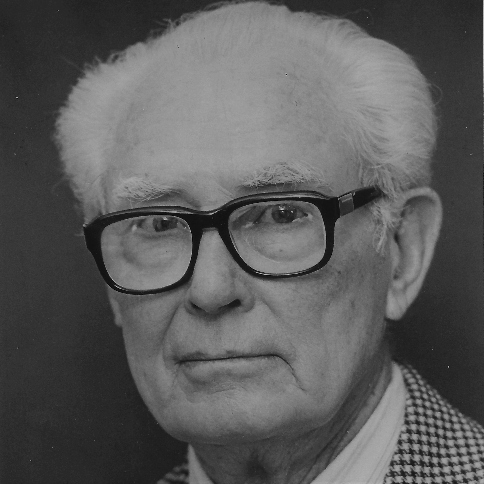
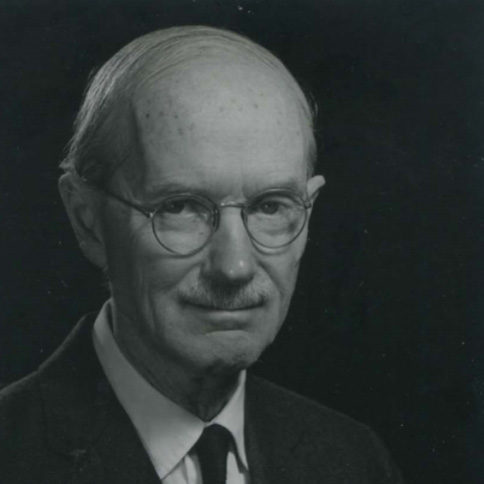
George E. Uhlenbeck

Wolf Prize Laureate in Physics 1979

George E. Uhlenbeck


Affiliation at the time of the award:

Rockefeller University, USA


Award citation:

“for his discovery, jointly with the late Samuel A .Goudsmit, of the electron spin”.


Prize share:

George E. Uhlenbeck

Giuseppe Occhialini


Professor George Uhlenbeck’s discovery, jointly with the late Samuel A. Goudsmit, of the electron spin, not only had major implications in physics and chemistry, but also provided the first example of an internal degree of freedom for an elementary particle. Uhlenbeck is also an outstanding figure in statistical mechanics.

André Weil

Wolf Prize Laureate in Mathematics 1979

André Weil


Affiliation at the time of the award:

Institute for Advanced Study, Princeton, USA


Award citation:

“for his inspired introduction of algebro-geometry to the theory of numbers”.


Prize share:

André Weil

Jean Leray


Both these mathematicians have made outstanding contributions in many different areas of mathematics and their work has had very great impact on the development of mathematics over the past decades.

Professor (Emeritus) André Weil has made important contributions in harmonic analysis, differential geometry, and aspects of Lie group theory, but his most outstanding achievement has been in the development of algebraic geometry and its application to important problems in number theory. Since 1957, he is Professor at the Institute for Advanced Study in Princeton and his career is singularly rich in achievements. Among his contemporaries, he has long occupied a unique position by combining originality and creativity to the highest degree, with an encyclopedic knowledge and deep understanding of most areas of contemporary mathematics. He is furthermore a formidable scholar of classical mathematics, whose historical insight and perspective -particularly in the field of number theory- is unequaled among mathematicians today.

Herman F. Mark

Wolf Prize Laureate in Chemistry 1979

Herman F. Mark


Affiliation at the time of the award:

Polytechnic Institute of New York, USA


Award citation:

“for his contributions to understanding the structure and behavior of natural and synthetic polymers”.


Prize share:

None


Professor (Emeritus) Mark’s contribution has had a major effect upon the academic understanding of this important class of materials, which in nature play a central role not only in the structure of the living cell but in its function as well. Herman Mark’s scientific contribution and personal interest have played a major role in the development of synthetic materials on a huge scale everywhere. Today´s use of these synthetic materials has changed the style of life throughout the world.

Since 1940 Professor of Organic Chemistry at the Polytechnic Institute of New York, Prof. Mark has published over 500 original and review articles and has written about 20 books on various topics related to polymer chemistry. Doctor Honoris Causa at 17 Universities and Polytechnics, member of 18 Academies of Science throughout the world, among them U.S.A., U.S.S.R., Holland, Germany, Austria and India. Professor Mark has received a great number of medals and awards since 1928.

Jon J.van Rood

Wolf Prize Laureate in Medicine 1978

Jon J. van Rood


Affiliation at the time of the award:

University of Leiden, The Netherlands


Award citation:

“for his contribution to the understanding of the complexity of the HL-A system in man and its implications in transplantation and in disease”.


Prize share:

Jon J. van Rood

George D. Snell

Jean Dausset


Dr. George Snell discovered and described in mice the H-2 antigens, the structure which codes for major transplantation antigens carrier genes. These genes are essential in the onset of the immune response and therefore mechanism of defense.

The investigation of histocompatibility antigens in humans, led Professor J. Dausset in Paris and Professor Van Rood in Leiden to the discovery and description of a model similar to that in mice, the HL-A system. This is the major histocompatibility complex in man, and its primordial role in organ transplantation has been extensively established and evaluated. Moreover, the association of HL-A antigens to the mechanisms governing the incidence of a number of diseases is under active research.

These investigations are a major breakthrough in the understanding of modern genetics and have opened new avenues for adequate matching of organ and tissue transplantation and for possible control and prevention of certain diseases.

The name of the late Peter Gorer, the British scientist who was among the founders of this field will be linked forever to the pillars of medical genetics.

John C. Walker

Wolf Prize Laureate in Agriculture 1978

John C. Walker


Affiliation at the time of the award:

University of Wisconsin, USA


Award citation:

“for his research in plant pathology, developing of disease-resistant varieties of major food plants”.


Prize share:

John C. Walker

George F. Sprague 


Professor Sprague (a geneticist – plant breeder) and Professor Walker (a plant pathologist -plant breeder) have achieved world eminence in the development of improved crop plants to the extent of greatly stabilizing the culture, increasing yields, and improving the quality of a number of major vegetable crops, and of maize – one of the world’s dominant grain crops. Each has developed novel and efficient methodology of breeding techniques and procedures. Both have been towering figures in contributing to both applied and basic research. Both have most enviable records of having trained scientific manpower for agriculture’s needs. Students of each are to be found throughout the world, many of them having established themselves as distinguished researchers, educators and/or administrators. Each awardee has served well the organizations of his respective science and agricultural industry, as well as the governments of the world.

Professor Emeritus Walker’s eminence as a plant pathologist would lead many to judge him to be among history’s 3 or 4 greatest plant pathologists. Central to his career have been his contributions to the control of plant diseases by the development of resistant varieties of crop plants, the development of novel and effective breeding methodology, the demonstration of the role of environmental factors, particularly host nutrition and soil temperature, in the epidemiology of plant diseases, the physiological nature of diseases, and the chemical basis of disease resistance in plants.

He is, perhaps, the World’s best example of a scientist combining applied research oriented to food production and fundamental research directed to advancing the frontiers of knowledge, integrated and organized around specific problems of agriculture. Similarly, other disease control studies led to the discovery of much fundamental information regarding the role of aerial and soil environal factors in the incidence and severity of disease.

As an educator, he is without peer in the training of scientists in the profession of plant pathology. His classic text book: “Plant Pathology”, which has been translated into several languages, has been the standard treatise on the subject. It is today the most widely used classroom text in university schools of agriculture everywhere.

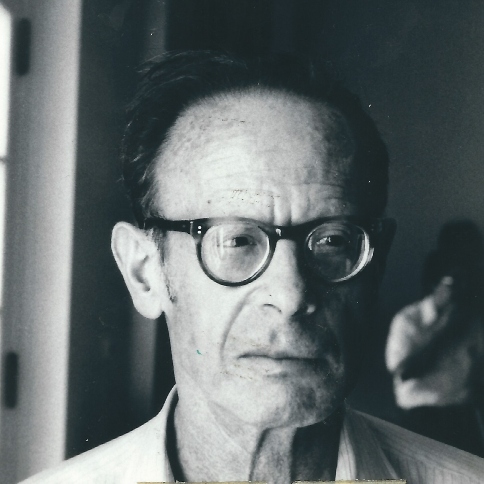
Jean Dausset

Wolf Prize Laureate in Medicine 1978

Jean Dausset


Affiliation at the time of the award:

Saint Louis Hospital Paris, Frace


Award citation:

“for discovering the HL-A system, the major histocompatibility complex in man and its primordial role in organ transplantation”.


Prize share:

Jean Dausset

George D. Snell

Jon J. van Rood


Dr. George Snell discovered and described in mice the H-2 antigens, the structure which codes for major transplantation antigens carrier genes. These genes are essential in the onset of the immune response and therefore mechanism of defense.

The investigation of histocompatibility antigens in humans, led Professor J. Dausset in Paris and Professor Van Rood in Leiden to the discovery and description of a model similar to that in mice, the HL-A system. This is the major histocompatibility complex in man, and its primordial role in organ transplantation has been extensively established and evaluated. Moreover, the association of HL-A antigens to the mechanisms governing the incidence of a number of diseases is under active research.

These investigations are a major breakthrough in the understanding of modern genetics and have opened new avenues for adequate matching of organ and tissue transplantation and for possible control and prevention of certain diseases.

The name of the late Peter Gorer, the British scientist who was among the founders of this field will be linked forever to the pillars of medical genetics.

Izrail M. Gelfand

Wolf Prize Laureate in Mathematics 1978

Izrail M. Gelfand


Affiliation at the time of the award:

Moscow State University, U.S.S.R


Award citation:

“for his work on functional analysis, group representation, and for his seminal contributions to many areas of mathematics and its applications”.


Prize share:

Izrail M. Gelfand

Carl L. Siegel


Professor Izrail M. Gelfand (born in 1913, USSR) was a student of Kolmogorov, and some of his most important work was done in the 1940´s. Since the early 1950´s he has been Head of the Section of the Institute of Applied Mathematics of the USSR Academy of Sciences. He was a member of the editorial board of “Uspekhi Matematicheskikh Nauk”, chief editor of the journal “Functional Analysis”. From 1968-1970, he was President of the Moscow Mathematical Society. He was awarded the Order of Lenin three times, and the Lenin Prize, and received many other honors and recognition such as Honorary Membership in the American National Academy of Sciences, the American Mathematical Society, the London Mathematical Society, and many more.

George F.Sprague

Wolf Prize Laureate in Agriculture 1978

George F. Sprague


Affiliation at the time of the award:

University of Illinois, USA


Award citation:

“for his outstanding research on the genetic amelioration of maize for human welfare”.


Prize share:

George F. Sprague 

John C. Walker


Professor Sprague (a geneticist – plant breeder) and Professor Walker (a plant pathologist -plant breeder) have achieved world eminence in the development of improved crop plants to the extent of greatly stabilizing the culture, increasing yields, and improving the quality of a number of major vegetable crops, and of maize – one of the world´s dominant grain crops. Each has developed novel and efficient methodology of breeding techniques and procedures. Both have been towering figures in contributing to both applied and basic research. Both have most enviable records of having trained scientific manpower for agriculture´s needs. Students of each are to be found throughout the world, many of them having established themselves as distinguished researchers, educators and/or administrators. Each awardee has served well the organizations of his respective science and agricultural industry, as well as the governments of the world.

In the annals of world agriculture, hybrid maize is the most spectacular example of the exploitation of a genetic phenomenon heterosis for increasing food production. Unquestionably Professor Sprague´s name ranks foremost in the 40-year-long history of this great achievement of agricultural science. Moreover, many of the concepts, much of the theory and, any of the breeding models, which he developed for maize, have influenced the improvement of other crop plants.

Throughout his long and distinguished scientific career, Professor Sprague has worked untiringly to link theoretical quantitative genetic theory to practical plant breeding. Among his most fruitful basic studies was the development of a mathematical genetic model for selection that led to the development of an improved gene pool of maize germ plasm. Professor Sprague´s genetic research laid the ground work, for improvement in nutritional quality in maize. A fact, which holds great promise to maize-eating nations. He conducted investigations, which demonstrated that protein quality of maize was genetically modifiable.

In summary, few people in the history of agriculture have had such a profound impact on the improvement of a major crop as has Professor Sprague.

George D. Snell

Wolf Prize Laureate in Medicine 1978

George D. Snell


Affiliation at the time of the award:

Jackson Laboratory, USA


Award citation:

“for discovery of H-2 antigens, which codes for major transplantation antigens and the onset of the immune response”.


Prize share:

George D. Snell

Jean Dausset

Jon J. van Rood


Dr. George Snell discovered and described in mice the H-2 antigens, the structure which codes for major transplantation antigens carrier genes. These genes are essential in the onset of the immune response and therefore mechanism of defense.

The investigation of histocompatibility antigens in humans, led Professor J. Dausset in Paris and Professor Van Rood in Leiden to the discovery and description of a model similar to that in mice, the HL-A system. This is the major histocompatibility complex in man, and its primordial role in organ transplantation has been extensively established and evaluated. Moreover, the association of HL-A antigens to the mechanisms governing the incidence of a number of diseases is under active research.

These investigations are a major breakthrough in the understanding of modern genetics and have opened new avenues for adequate matching of organ and tissue transplantation and for possible control and prevention of certain diseases.

The name of the late Peter Gorer, the British scientist who was among the founders of this field will be linked forever to the pillars of medical genetics.

Chien-Shiung Wu

Wolf Prize Laureate in Physics 1978

Chien-Shiung Wu


Affiliation at the time of the award:

Columbia University, USA


Award citation:

“for her persistent and successful exploration of the weak interaction which helped establish the precise form and the non conservation of parity for this new natural force.”


Prize share:

None


Professor Chien-Shiung Wu (born in 1912, China)  has done outstanding experimental work on the mechanism of beta disintegration, and thereby, of weak interactions generally. This work extended mostly from 1948 to 1963. In addition, she has made important contributions to several other fields of fundamental physics, to physics Instrumentation, and recently, to biology.

In her most famous work, she demonstrated that the direction of emission of beta rays is strongly correlated with the direction of the spin of the emitting nucleus. This showed that parity is not conserved in beta disintegration, in accord with the epochal theory of Lee and Yang, which had been developed just a few months before.

The success of this theory raised the problem of the exact coupling between the nucleon, which undergoes beta decay, and the electron and neutrino, which are emitted in this decay.

Among Wu’s other contributions we want to mention her demonstration that the two quanta from the annihilation of positrons and electrons are polarized at right angles to each other, as they should be according to Dirac’s theory. This proves that electron and positron have opposite parity. In recent years (1966 to 1971), Wu has made a thorough study of the X ray spectra of muonic atoms and has become interested in biological problems, especially the structure of hemoglobin. Her Moessbauer studies of this substance have given surprising results, and have considerably clarified its structure.