Emmanuelle Charpentier

Wolf Prize Laureate in Medicine 2020

Emmanuelle Charpentier


Affiliation at the time of the award:

The Max Planck Unit for the Science of Pathogens, Germany 


Award citation:

“for deciphering and repurposing the bacterial CRISPR/Cas9 immune system for genome editing.”


Prize Share:

Emmanuelle Charpentier

Jennifer Doudna


Emmanuelle Charpentier (Born 1968) is a French biochemist, microbiologist and geneticist that is recognized as a world-leading expert in regulatory mechanisms underlying processes of infection and immunity in bacterial pathogens.

Together with Jennifer Doudna, led the discovery of the revolutionary gene-editing tool, CRISPR. They used this existing defense mechanism in bacteria to turn CRISPR-Cas9 into a real tool for cleaving the DNA of bacterial and also human cells. These “genetic scissors” can be used for targeting any gene in a cell in order to modify it. With this revolutionary technology, it is much easier to modify gene expression, to switch a gene “on” or “off,” or to change, repair, or remove genes. This new tool is now used in molecular biology laboratories around the world and has the potential to revolutionize medicine by paving the way to finding new forms of treatment for currently incurable diseases.

Charpentier studied biochemistry, microbiology and genetics at the University Pierre and Marie Curie, Paris, France and obtained her Ph.D. in Microbiology for her research performed at the Pasteur Institute, Paris, France. She then continued her work in the US, at The Rockefeller University, New York University Langone Medical Center and the Skirball Institute of Biomolecular Medicine (all in New York) and at St. Jude Children’s Research Hospital (in Memphis). Charpentier returned to Europe to establish her own research group as Associate Professor at The University of Vienna in Austria. She was then appointed Associate Professor at The Laboratory for Molecular Infection Medicine Sweden at Umeå University in Sweden where she habilitated in the field of Medical Microbiology. Between 2013 -2015, Charpentier was Head of the Department of Regulation in Infection Biology at the Helmholtz Centre for Infection Research, Braunschweig, and Professor at the Medical School of Hannover in Germany. In 2013, she was awarded an Alexander von Humboldt Professorship. In 2015, she was appointed Scientific Member of the Max Planck Society. From 2015 to 2018, Charpentier was Director of the Department of Regulation in Infection Biology at the Max Planck Institute for Infection Biology in Berlin, Germany. Since 2018, she is Scientific and Managing Director of the Max Planck Unit for the Science of Pathogens in Berlin, an institute that she founded together with the Max Planck Society.

The bacterial CRISPR-Cas9 system is based on an immune-like defense mechanism of action that bacteria used to protect themselves from viruses. The genome editing technique resulting from their findings immediately allowed researchers to target and cut DNA with great precision and has therefore improved the speed, efficiency and flexibility of genome editing at an unprecedented speed and ease. This new understanding already enables world-wide researchers to rapidly model human disease genes in the laboratory, accelerating the search for new drug leads and opening new doors for the treatment of human genetic disorders. These same features also call for extreme care in employing this novel technology, highlighting the need for continuous exchange of information between research scientists and policy makers for avoiding the risks involved in careless use of these unprecedented research tools.

Emmanuelle Charpentier is awarded the Wolf Prize for engaging her experties in bacterial pathogens for deciphering and repurposing the bacterial CRISPR/Cas9 immune system and its pathogen defense role for genome editing which enables its use in all live organisms on earth.
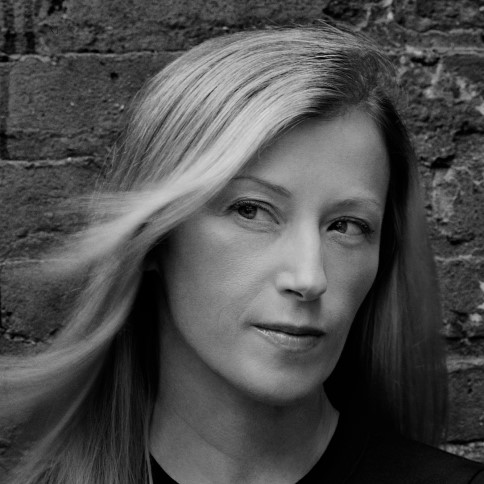
Cindy Sherman

Wolf Prize Laureate in Art 2020

Cindy Sherman


Award citation:

“for redefining the concept of art made with a camera”.


Prize Share:

None


Cindy Sherman (born in 1954) is one of the most important and influential artists of the past decades. Her selection by the jury panel, which comprises senior curators from leading international museums, has been unanimous. Sherman’s works have been displayed over the years in dozens of solo and group exhibitions in the world’s prime museums. They can be found in museums and private collections. Sherman was recognized with numerous awards and prizes celebrating her outstanding achievements as a distinct, original and meaningful creator. Sherman’s performative actions are documented by her camera. She transforms in front of the camera while providing a critical reflection of the values of the changing contemporary culture. Sherman’s works emphasize the gender and age discourse, reviews the history of art and popular culture, and deliberates ethics in an age of digital manipulation.

For five decades, Cindy Sherman has redefined the concept of art made with a camera with trailblazing originality. From her earliest work as a student in the mid-1970s, to her digital experiments today, Sherman has continually explored the construction of identity, probing its relation to mass media, popular culture, and visual codes.

The artist’s acclaimed “Untitled Film Stills” series, 1977-80, transformed portraiture. Began when she was just 23, the series comprises 70 black-and-white photographs of Sherman in various female guises: the new-to-the-city ingénue, the vulnerable wife, the flirtatious librarian. Compiled from 1950s and ’60s B movies, and media absorbed by the artist, the characters are immediately recognizable, yet without distinction. “Untitled Film Stills” suggests the limited, media-framed identities available for women, and has remained a touchstone of 20th century photography.

At the core of her practice, Sherman holds a mirror to society and the culture around her. In her work since “Untitled Film” Stills, Sherman has staged herself as withering socialites, uneasy centerfolds, and grotesque clowns – alluding at the obedience and capitulation to the ongoing performance of the “self” in the social role-play. She addressed the representations of sexuality, seduction, objectification, and sexual violence.

Her recent work challenges the concept of personal authenticity. She takes the photographic manipulation of the portrait into the virtual-digital world, one of the social networks, or aesthetic medicine consumption and the structured distortion beget by software image processing. In her later works, Sherman’s greatness becomes even more apparent as she continues to innovate and challenge the spectators. No artist has achieved the psychological shape-shifting of Sherman, as she time and time again expands the potential of the photographic image, as well as art’s role in serving as a mirror and a sophisticated, challenging critical tool of its time.

Pablo Jarillo-Herrero

Wolf Prize Laureate in Physics 2020

Pablo Jarillo-Herrero


Affiliation at the time of the award:

Massachusetts Institute of Technology, USA


Award citation:

“For pioneering theoretical and experimental work on twisted bilayer graphene.”


Prize Share:

Pablo Jarillo-Herrero

Allan H. MacDonald 

Rafi Bistritzer


Since the 2004 groundbreaking experiments regarding the two-dimensional material-graphene, several research groups were soon studying the properties of twisted bilayer graphene. Graphene is a significant foundation for an entirely new generation of technologies. The hope is that graphene-based applications will benefit the environment and reduce costs. Electronic and computer industry requires materials whose conductance can be controlled.

The work of Jarillo-Herrero, MacDonald and Bistrizer has shown that the conductance properties of graphene interfaces can be controlled via the spatial misfit angle between the layers and then at certain angles the electrons exhibit surprising physical behavior. This physical discovery has the potential of leading to an energy revolution.

In 2011, a group led by Allan Macdonald, a theoretical physicist from the University of Texas, researched an intriguing behavior of twisted bilayer graphene, where the atomic lattices of two stacked graphene layers are laterally rotated with respect to each other by a small misfit angle. According to the calculations of MacDonald and Bistrizer (who did his post-doctoral thesis under the supervision of MacDonald at that time), the tunneling velocity of electrons between the layers depends on the misfit angle and completely vanishes at the “magic angle” of 1.1 degrees. It was hoped that this discovery would lead to the creation of a new type of super-conductor, namely a material that allows electrical current to pass with no impedance and with no energy loss.

The original paper by MacDonald and Bistrizer, which describes their discovery, was not received with enthusiasm by the scientific community and was even forgotten for several years.

At the same time, Jarillo-Herrero was working on twisted bilayer graphene in his lab at MIT. He became convinced that the ideas expressed by Macdonald and Bistrizer had substance.

His research team therefore invested considerable efforts in creating and measuring twisted bilayer graphene of various twist angles. The experiments proved successful in 2017 when it was found that positioning the layers at an angle of 1.1 degrees relative to one another (“the magic angle”) resulted in unusual electrical properties, precisely as MacDonald and Bistrizer have suggested. In this position, at sufficiently low temperatures, the electrons move from one layer to the other, creating a lattice with unusual qualities. The paper that described the phenomenon, which was published in Nature in 2018, revolutionized physics and triggered a flood of additional papers.

The discovery opens the door to building a super-conductor from bilayer graphene, in which electron movement is completely controlled by external electrical current.

This electrical behavior resembles the behavior of copper-based superconductors called Cuprates. Cuprates demonstrate electrical conductivity with no resistance in relatively high temperatures compared with other super-conductors. For this reason, Cuprates now form a source of hope for realizing the dream of electrical conductivity with no energy loss at temperatures close to room temperature. If this mission is achieved, it would lead to a far-reaching energy revolution. However, one obstacle that prevents this revolution is that we do not yet have a theory that explains the behavior of superconductors at high temperatures. In the absence of a solid theoretical foundation, it is difficult to develop new, better materials. This is one of the reasons for the excitement around the discovery of bilayer graphene and the magic angle, which allows us to understand better what happens on the microscopic level when transitioning from a conductor to a superconductor state.

Pablo Jarillo-Herrero (1976, Valencia) is an experimental condensed matter physicist who works on quantum electronic transport and optoelectronics in novel two-dimensional materials. His lab investigates their superconducting, magnetic, and topological properties. Jarillo-Herrero joined MIT in 2008 and was promoted to full professor in 2018. He received his ”licenciatura” in physics from the University of Valencia in Spain, in 1999; a master of science degree from the University of California at San Diego in 2001; and his PhD from the Delft University of Technology in the Netherlands, in 2005.

Rafi Bistritzer

Wolf Prize Laureate in Physics 2020

Rafi Bistritzer


Affiliation at the time of the award:

Applied Materials, Israel


Award citation:

“For pioneering theoretical and experimental work on twisted bilayer graphene.”


Prize Share:

Rafi Bistritzer

Allan H. MacDonald 

Pablo Jarillo-Herrero


Since the 2004 groundbreaking experiments regarding the two-dimensional material -graphene, several research groups were soon studying the properties of twisted bilayer graphene. Graphene is a significant foundation for an entirely new generation of technologies. The hope is that graphene-based applications will benefit the environment and reduce costs. Electronic and computer industry requires materials whose conductance can be controlled.

The work of Jarillo-Herrero, MacDonald and Bistrizer has shown that the conductance properties of graphene interfaces can be controlled via the spatial misfit angle between the layers and then at certain angles the electrons exhibit surprising physical behavior. This physical discovery has the potential of leading to an energy revolution.

In 2011, a group led by Allan Macdonald, a theoretical physicist from the University of Texas, researched an intriguing behavior of twisted bilayer graphene, where the atomic lattices of two stacked graphene layers are laterally rotated with respect to each other by a small misfit angle. According to the calculations of MacDonald and Bistrizer (who did his post-doctoral thesis under the supervision of MacDonald at that time), the tunneling velocity of electrons between the layers depends on the misfit angle and completely vanishes at the “magic angle” of 1.1 degrees. It was hoped that this discovery would lead to the creation of a new type of super-conductor, namely a material that allows electrical current to pass with no impedance and with no energy loss.

The original paper by MacDonald and Bistrizer, which describes their discovery, was not received with enthusiasm by the scientific community and was even forgotten for several years.

At the same time, Jarillo-Herrero was working on twisted bilayer graphene in his lab at MIT. He became convinced that the ideas expressed by Macdonald and Bistrizer had substance.

His research team therefore invested considerable efforts in creating and measuring twisted bilayer graphene of various twist angles. The experiments proved successful in 2017 when it was found that positioning the layers at an angle of 1.1 degrees relative to one another (“the magic angle”) resulted in unusual electrical properties, precisely as MacDonald and Bistrizer have suggested. In this position, at sufficiently low temperatures, the electrons move from one layer to the other, creating a lattice with unusual qualities. The paper that described the phenomenon, which was published in Nature in 2018, revolutionized physics and triggered a flood of additional papers.

The discovery opens the door to building a super-conductor from bilayer graphene, in which electron movement is completely controlled by external electrical current. This electrical behavior resembles the behavior of copper-based superconductors called Cuprates. Cuprates demonstrate electrical conductivity with no resistance in relatively high temperatures compared with other super-conductors. For this reason, Cuprates now form a source of hope for realizing the dream of electrical conductivity with no energy loss at temperatures close to room temperature. If this mission is achieved, it would lead to a far-reaching energy revolution. However, one obstacle that prevents this revolution is that we do not yet have a theory that explains the behavior of superconductors at high temperatures. In the absence of a solid theoretical foundation, it is difficult to develop new, better materials. This is one of the reasons for the excitement around the discovery of bilayer graphene and the magic angle, which allows us to understand better what happens on the microscopic level when transitioning from a conductor to a superconductor state.

Rafi Bistritzer (1974, Israel) received his bachelor’s degree in physics from Tel Aviv University and his M.Sc. and Ph.D. degrees in physics from the Weizmann Institute of Science. In 2007, Bistritzer moved to Austin, where he completed a postdoctoral fellowship at the University of Texas, under the guidance of Professor McDonald. In 2012, he returned to Israel and worked on research and development in the fields of electromagnetsm and algorithms. Bistritzer is currently the manager of an algorithm group at Applied Materials. Bistritzer’s group specializes in computer-vision and machine learning algorithms.


Simon K. Donaldson

Wolf Prize Laureate in Mathematics 2020

Sir Simon Kirwan Donaldson


Affiliation at the time of the award:

Imperial College London, UK

Simons Center, Stony Brook, UK


Award citation:

“for their contributions to differential geometry and topology”


Prize Share:

Simon Donaldson 

Yakov Eliashberg


Sir Simon Kirwan Donaldson (born 1957, Cambridge, U.K.) is an English mathematician known for his work on the topology of smooth (differentiable) four-dimensional manifolds and Donaldson–Thomas theory.

Donaldson’s passion of youth was sailing. Through this, he became interested in the design of boats, and in turn in mathematics. Donaldson gained a BA degree in mathematics from Pembroke College, Cambridge in 1979, and in 1980 began postgraduate work at Worcester College, Oxford.

As a graduate student, Donaldson made a spectacular discovery on the nature or 4-dimensional geometry and topology which is considered one of the great events of 20th century mathematics. He showed there are phenomena in 4-dlmenslons which have no counterpart in any other dimension. This was totally unexpected, running against the perceived wisdom of the time.

Not only did Donaldson make this discovery but he also produced new tools with which to study it, involving deep new ideas in global nonlinear analysis, topology, and algebraic geometry.

After gaining his DPhil degree from Oxford University in 1983, Donaldson was appointed a Junior Research Fellow at All Souls College, Oxford, he spent the academic year 1983–84 at the Institute for Advanced Study in Princeton, and returned to Oxford as Wallis Professor of Mathematics in 1985. After spending one year visiting Stanford University, he moved to Imperial College London in 1998. Donaldson is currently a permanent member of the Simons Center for Geometry and Physics at Stony Brook University and a Professor in Pure Mathematics at Imperial College London.

Donaldson’s work is remarkable in its reversal of the usual direction of ideas from mathematics being applied to solve problems in physics.

A trademark of Donaldson’s work is to use geometric ideas in infinite dimensions, and deep non-linear analysis, to give new ways to solve partial differential equations (PDE). In this way he used the Yang-Mills equations, which has its origin in quantum field theory, to solve problems in pure mathematics (Kähler manifolds) and changed our understanding of symplectic manifolds. These are the phase spaces of classical mechanics, and he has shown that large parts of the powerful theory of algebraic geometry can be extended to them.

Applying physics to problems or pure mathematics was a stunning reversal of the usual interaction between the subjects and has helped develop a new unification of the subjects over the last 20 years, resulting in great progress in both. His use of moduli (or parameter) spaces of solutions of physical equations – and the interpretation of this technique as a form of quantum field theory – is now pervasive throughout many branches of modem mathematics and physics as a way to produce “Donaldson-type Invariants” of geometries of all types. In the last 5 years he has been making great progress with special geometries crucial to string theory in dimensions six (“Donaldson-Thomas theory”), seven and eight.

Professor Simon Donaldson is awarded the Wolf Prize for his leadership in geometry in the last 35 years. His work has been a unique combination of novel ideas in global non-linear analysis, topology, algebraic geometry, and theoretical physics, following his fundamental work on 4-manifolds and gauge theory. Especially remarkable is his recent work on symplectic and Kähler geometry.


Jennifer Doudna

Wolf Prize Laureate in Medicine 2020

Jennifer Doudna


Affiliation at the time of the award:

University of California, Berkeley, USA


Award citation:

“for revealing the medicine-revolutionizing mechanism of bacterial immunity via RNA-guided genome editing.”


Prize Share:

Jennifer Doudna

Emmanuelle Charpentier


Jennifer Doudna, together with the French microbiologist Emmanuelle Charpentier, led the discovery of the gene-editing tool CRISPR-Cas9. This transformative technology has the potential to eradicate previously incurable diseases and revolutionizing the fields of genetics, molecular biology and medicine.

Doudna (Born 1964) grew up in rural Hawaii, where she first became interested in the chemistry of living systems. Dr Doudna is currently the Li Ka Shing Chancellor’s Chair in Biomedical and Health Sciences and she is Professor of Molecular and Cell Biology and Professor of Chemistry at UC Berkeley and an Investigator of the Howard Hughes Medical Institute.  Professor Doudna’s research seeks to understand how RNA molecules control the expression of genetic information. Early in her career, Dr Doudna’s lab determined some of the first crystal structures of RNA and RNA-protein complexes, providing unprecedented insights into molecular function of non-protein-coding RNAs.

More recently she and her collaborator Emmanuelle Charpentier determined the mechanism of RNA-guided bacterial adaptive immunity by the CRISPR-Cas9 system, enabling them to harness this system for efficient genome engineering in animals and plants. These “genetic scissors” can be used for targeting any gene in a cell in order to modify it. With this revolutionary technology, it is much easier to modify gene expression, to switch a gene “on” or “off,” or to change, repair, or remove genes. This new tool is now used in molecular biology laboratories around the world, and has the potential to revolutionize medicine by paving the way to finding new forms of treatment for currently incurable diseases.

The bacterial CRISPR-Cas9 system is based on an immune-like defense mechanism of action that bacteria use to protect themselves from viruses.

The genome editing technique resulting from their findings immediately allowed researchers to target and cut DNA with great precision and has therefore improved the speed, efficiency and flexibility of genome editing at an unprecedented speed and ease. This new understanding already enables world-wide researchers to rapidly model human disease genes in the laboratory, accelerating the search for new drug leads and opening new doors for the treatment of human genetic disorders. These same features also call for extreme care in employing this novel technology, highlighting the need for continuous exchange of information between research scientists and policy makers for avoiding the risks involved in careless use of these unprecedented research tools.

Jennifer Doudna is awarded the Wolf Prize for her continuous research excellence which has led to her leading work that has systematically revealed both the structural elements and the medicine-revolutionizing mechanism of bacterial immunity via RNA-guided genome editing in collaboration with Emanuelle Charpentier; and for her important contribution to the ethical discussion of how this technology should best be used for ensuring successful yet humane and considerate prospects for human health and well-being.

Dr. Zipi Landau

Trustee

Dr. Zipi Landau has a PhD in Education (Anglia University), MA in fine art (Pratt institute, New York), BA in History of Art (TAU). Officer in the IDF for education.
Was the principle of Arthur James Balfour elementary school in Tel Aviv. Now the principle of Alon high school in Ramat Gan. Chairperson of the management committee of Gutman Museum, Member of the council of the Wolf foundation, management member of Shenkar university for fashion and design, Board member of Davidson Institute at the Weitzman Institute and a member at the International women foundation (IWF).

Itzhak Tamo

Krill Prize 2018
Tel-Aviv University

Itzhak Tamo

Coding theory for distributed storage systems and memory devices

The information era we all live in is characterized by an exponential growth in the amount of data generated on a daily basis. As a result, computers, storage systems, and cloud computing are facing new challenges that did not exist previously in the areas of data management, data protection, data analysis, and more. These challenges define new problems of fault tolerance, data integrity, systems scalability, energy consumption and thermal dissipation. Therefore, new data management techniques are in the need to be developed for large data centers (for example those of Facebook, Google and Microsoft), cloud computing, and new memory devices, for the purpose of complying with the increasing demand for cheap and fast computing power by the end users.

Broadly speaking, our main research goal is to face these new challenges and demands by developing new strategies for fault-tolerance, and improving the current strategies for distributed and non-distribute computer systems. As a result, these systems will become more resilient to failure, and data loss. Another aspect of our research is developing new data management techniques for memory devices that better comply with the device’s physical limitations. The expected outcome of this research is an increased reliability of the device, its life expectancy, and the availability of the stored data. Furthermore, we expect significant savings in energy consumption and electronic waste.