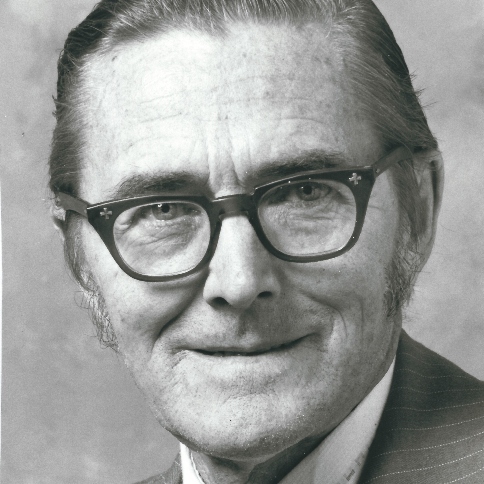
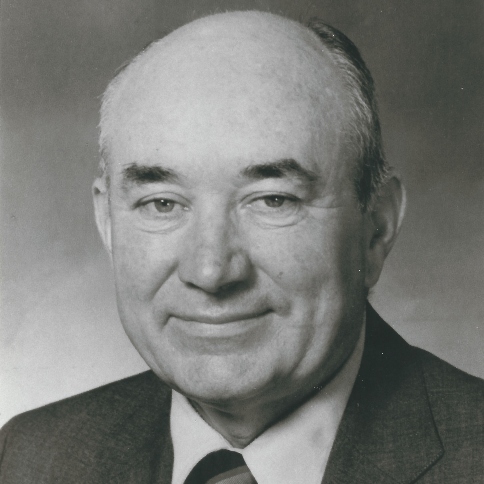
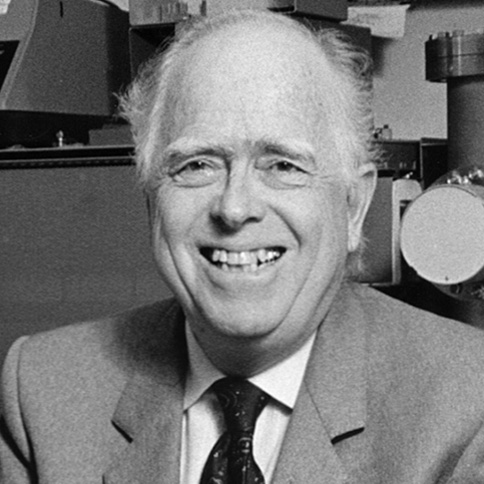
James E. Womack

Wolf Prize Laureate in Agriculture 2001

James E. Womack


Affiliation at the time of the award:

Texas A&M University, USA


Award citation:

“for the use of recombinant DNA technology, to revolutionize plant (Beachy) and animal (Womack) sciences, paving the way for applications to neighboring fields”.


Prize share:

James E. Womack

Roger N. Beachy


The development, by Professor James E. Womack, of a whole genome cattle-hamster radiation hybrid (RH) panel, has fueled a new thrust in cattle genomics and comparative gene mapping. RH mapping has become an effective tool for building ordered maps of conserved sequences, derived from genes, thus integrating linkage and physical maps of mammalian chromosomes. The recent construction of a cattle-human whole-genome comparative map, on the basis of parallel RH mapping, will play a vital role in the genetic dissection of multigenic traits and the characterization of important agricultural loci.

Professor Womack has taken special interest in assisting the careers of young scientists, particularly those in developing countries. Many of his students have gone on to positions of international leadership in animal genomics. A whole new generation of scientists will use the chromosomal coordinates, provided by Womack,to positionally clone the genes affecting economically important traits in mammals.

Gurdev S. Khush

Wolf Prize Laureate in Agriculture 2000

Gurdev S. Khush


Affiliation at the time of the award:

International Rice Research Institute, Philippines


Award citation:

“for his extraordinary contribution to theoretical research in plant genetics, evolution and breeding especially of rice, with regard to food production and alleviation of hunger”.


Prize share:

None


Dr. Gurdev S. Khush has had a marked impact in several research spheres in genetics and breeding. Below are three spheres of his long-term, sustained, innovative and exceptional scientific activity:

The area of cytogenetics, genomic constitution, evolutionary studies, chromosome additions (trisomics) and deletions (haplo), interspecific relations, linkage maps and their relation and orientation to specific chromosomes in the genome. Dr. Khush began his research in this area with rye (Secale), then continued with tomato (Lycopersicon) and for the last quarter of a century or so, he has focused on cultivated rice and related wild species (Oryza spp.). Dr. Khush has made remarkable contributions on the above, by developing new approaches and mobilizing new techniques, culminating with molecular ones. His contributions to rice cytogenetics and genetics are seminal. The genetic maps of molecular and traditional markers in rice are now very advanced. They also serve in synteny studies of the origins and evolution of other grain crops (e.g. wheat, maize and barley).

Over many years, Dr. Khush has developed an outstanding line of research focusing on understanding of the nature of plant resistance, mainly rice, to diseases and especially to insects. The latter is a much more problematic area, in which Dr. Khush´s achievements are exceptional. Using his basic genetic and biological research findings, he has been able to produce rice varieties resistant to several major insect pests, such as brown planthopper (Nilaparvata lugens), green leafhopper (Nephotettix virescens), whitebacked planthopper (Sogatella purcifera) and gall midge (Orseolia oryzae). Such verieties are more productive and also more eco-friendly. His research on the genetics of host-parasites interactions has led to the identification of numerous genes for disease and insect resistance, now utilized by IRRI and diverse national programs for developing pest resistant varieties. Khush has established complete series of primary trisomics of rice, utilized for the first time, for associating linkage groups with cytologically identifiable chromosomes. From the progenies of primary trisomics, he selected secondary and telotrisomics used for determining the orientation of linkage groups, positions of centromeres and arm location of genes and molecular markers. With his colleagues, Khush established the first molecular genetic map of rice, and has tagged many genes for disease and insect resistance and stress tolerance, with molecular markers. These advances are now used to apply molecular marker-aided selection in rice improvement. Dr. Khush has also investigated species relationships in genus Oryza, through cytogenetic and molecular approaches and transferred useful genes from wild species to cultivated rice.

The far-seeding aspect of Dr. Khush’s research activities centers on the development of a New Plant Type (NPT) of rice (sometimes labeled “super rice”). This calls for the design and mobilization of genes from cultivated rice and various wild species, to produce genotypes with more efficient photosynthesis, a better ratio of seed yield to straw and thus much higher yields and of better quality. A prototype in this NPT has already been developed and it is now being bred to diseases and pests.

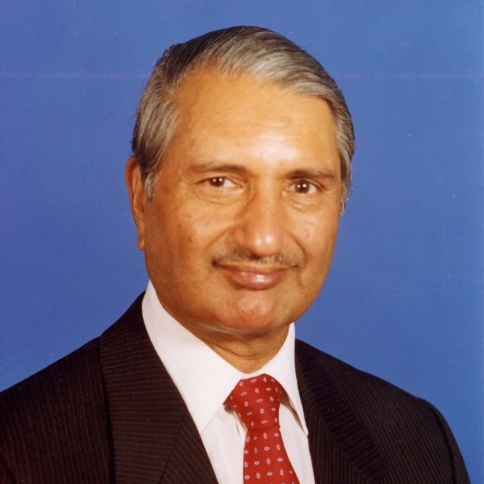
Ilan Chet

Wolf Prize Laureate in Agriculture 1998

Ilan Chet


Affiliation at the time of the award:

The Hebrew University of Jerusalem, Israel


Award citation:

“for their contributions to the environmentally safe development of world agriculture through innovative approaches in breeding and bio-control”.


Prize share:

Ilan Chet 

Baldur R. Stefansson


Prof. Ilan Chet is internationally recognized as a pioneer in the field of biological control of plant pathogens which cause major crop losses. This field is of primary importance in the protection of crops as an alternative to environmental contamination by hazardous pesticides. He has pioneered the application of fungal physiology and the use of micro-organisms for biological control of plant diseases. His research combines in-depth knowledge of the physiology and the biochemistry of the fungi at the cellular and molecular levels, seeking explanations for pathogenic processes.

Professor Chet’s ability to effectively link fundamental and applied aspects of such diverse fields as plant pathology, soil microbiology and biotechnology led to the development of novel biological control agents which are now successfully used as commercial products. Professor Chet has also trained and mentored a new generation of plant biologists and thus contributed to the wide- spread application of new biological approaches in agriculture.


Baldur R. Stefansson

Wolf Prize Laureate in Agriculture 1998

Baldur R. Stefansson


Affiliation at the time of the award:

University of Manitoba, Canada


Award citation:

“for their contributions to the environmentally safe development of world agriculture through innovative approaches in breeding and bio-control”.


Prize share:

Baldur R. Stefansson

Ilan Chet 


Baldur R. Stefansson (born in 1917, Canada) pursued his academic journey at the University of Manitoba, where he earned a Dip.Ag. in 1949, a B.S.A. in 1950, and an M.Sc. in 1952. Subsequently, he completed his Ph.D. in 1966. Stefanson worked at the Department of Plant Science at the University of Manitoba, serving as both a professor and researcher.

Professor Baldur R. Stefansson has made major contributions to the development of canola over a period of more than 30 years. It is mainly due to his influence and vision that oilseed rape has been transformed from a marginal edible oilseed covering 2.7 million hectares in 1950 to a leading oilseed crop in the world today covering in excess of 27 million hectares.

Prof. Stefansson has been one of the first to apply modern chemical analytical tools to monitor the composition of fatty acids of the canola oil, and thus to rapidly recognize and follow the development of new fatty acid compositions. This has eventually resulted in canola being one of the most nutritious oils for food use today. Canola is among the first crops presently undergoing a second revolution due to the advent of biotechnology. This second revolution will further advance the use of canola for the benefit of humanity.

Neal L. First

Wolf Prize Laureate in Agriculture 1996/7

Neal L. First


Affiliation at the time of the award:

University of Wisconsin, USA


Award citation:

“for his pioneering research in the reproductive biology of livestock”.


Prize share:

None


Professor Neal L. First (born in 1930, USA) has made pioneering contributions to animal genetics by the development of systems of bovine embryo cloning, gene transfer, and in-vitro production of livestock embryos. His research has resulted in major advances in the application of biotechnology to reproduction in farm animals, eliminating the need for brood cows in beef cattle breeding.

Nuclear transfer of genetic material is being developed to clone farm animal embryos. His ground-breaking research in this field has led to significant discoveries in reproductive biology. Prof. First’s laboratory pioneered the application of this technique to the genetic selection of livestock. He and his colleagues defined the conditions leading to optimal in-vitro fertilization and high frequency embryo development. They developed the defined growth media that are widely used to culture bovine embryos. The procedures developed in Prof. First’s laboratory have led to major discoveries throughout the world concerning embryo development in domestic animals.

The new knowledge provided by Prof. First’s research is having a major impact on the production of genetically advanced strains of livestock throughout the world. Advances include improved reproduction, growth, lactation, and disease resistance.

Morris Schnitzer

Wolf Prize Laureate in Agriculture 1995/6

Morris Schnitzer


Affiliation at the time of the award:

Centre for land and Biological Resources Research, Agriculture Canada, Canada


Award citation:

“for their pioneering contributions to our understanding of the chemistry of soil organic matter and its application to agriculture”.


Prize share:

Morris Schnitzer

Frank J. Stevenson 


Dr. Morris Schnitzer and Professor Frank J. Stevenson are the pioneers of our understanding of the chemistry of soil organic matter. They have applied their discoveries to the improvement of agricultural practice. Their research has elucidated the composition and physicochemical properties of humic acids. Their utilization of modern analytic techniques has significantly improved our understanding of the structure of humic acids in soils. Their research has had a major impact on our knowledge of the behavior of nutrients and hazardous chemicals in soils.

Their lifetime of research in this field has greatly improved management of soil resources and maintenance of environmental quality.

Frank J. Stevenson

Wolf Prize Laureate in Agriculture 1995/6

Frank J. Stevenson


Affiliation at the time of the award:

University of Illinois, USA


Award citation:

“for their pioneering contributions to our understanding of the chemistry of soil organic matter and its application to agriculture”.


Prize share:

Frank J. Stevenson 

Morris Schnitzer


Dr. Morris Schnitzer and Professor Frank J. Stevenson are the pioneers of our understanding of the chemistry of soil organic matter. They have applied their discoveries to the improvement of agricultural practice. Their research has elucidated the composition and physicochemical properties of humic acids. Their utilization of modern analytic techniques has significantly improved our understanding of the structure of humic acids in soils. Their research has had a major impact on our knowledge of the behavior of nutrients and hazardous chemicals in soils.

Their lifetime of research in this field has greatly improved management of soil resources and maintenance of environmental quality.

Perry L. Adkisson

Wolf Prize Laureate in Agriculture 1994/5

Perry L. Adkisson


Affiliation at the time of the award:

Texas A&M University, USA


Award citation:

“for their contributions to the development and implementation of environmentally beneficial integrated pest management systems for the protection of agricultural crops”.


Prize share:

Perry L. Adkisson 

Carl B. Huffaker


Perry L. Adkisson (born in 1929, USA) is Chancellor Emeritus of Texas A&M University, and Regents Professor of Entomology. He recently served as Executive Director of the George Bush Presidential Library Center. He received his M.Sc. degree from the University of Arkansas and Ph.D. from Kansas State Univeristy.

Professors Carl B. Huffaker and Perry L. Adkisson performed basic research on crop pests, and subsequently broadened their work to develop biologically-based systems for pest control. Both were major contributors to the development and implementation of integrated pest anagement, or IPM, systems for crop production. Huffaker successfully demonstrated the efficacy of biological control agents for the control of weeds and insects. Adkisson studied the life cycles and seasonal dormancy of cotton insect pests.

Both Huffaker and Adkisson were leaders in large-scale programs that demonstrated the effectiveness of IPM systems for crop protection, and that led to the establishment of IPM as an environmentally beneficial and economically favorable system for crop production that is today used throughout the world.

Carl B. Huffaker

Wolf Prize Laureate in Agriculture 1994/5

Carl B. Huffaker


Affiliation at the time of the award:

University of California, USA


Award citation:

“for their contributions to the development and implementation of environmentally beneficial integrated pest management systems for the protection of agricultural crops”.


Prize share:

Carl B. Huffaker

Perry L. Adkisson 


Carl B. Huffaker (born in 1914, USA) received his M.Sc. degree from the University of Tennessee and Ph.D form Ohio State University, and has been associated with the University of California, Berkley, since 1946. He is a past president of the Entomological Society of America.

Professors Carl B. Huffaker and Perry L. Adkisson performed basic research on crop pests, and subsequently broadened their work to develop biologically-based systems for pest control. Both were major contributors to the development and implementation of integrated pest management, or IPM, systems for crop production. Huffaker successfully demonstrated the efficacy of biological control agents for the control of weeds and insects. Adkisson studied the life cycles and seasonal dormancy of cotton insect pests.

Both Huffaker and Adkisson were leaders in large-scale programs that demonstrated the effectiveness of IPM systems for crop protection, and that led to the establishment of IPM as an environmentally beneficial and economically favorable system for crop production that is today used throughout the world.

John E. Casida

Wolf Prize Laureate in Agriculture 1993

John E. Casida


Affiliation at the time of the award:

University of California, USA


Award citation:

“for pioneering studies on the mode of action of insecticides, design of safer pesticides and contributions to the understanding of nerve and muscle function in insects”.


Prize share:

None


John E. Casida (born in 1929, USA) obtained his Bachelor of Science degree from the University of Wisconsin–Madison in 1951. He continued his academic pursuits at the same university, completing his Master of Science in 1951 and earning his PhD in 1954. His research serves as the basis of evaluating the benefits and risks of established pesticides and for the rational design and use of safer and more effective replacements. the success of pest control practices and pesticide resistance management depends on fundamental knowledge of chemical-organismal interactions at the molecular level. Prof. Casida and he’s research team, combining the fields of biology, biochemistry and chemistry focuses on the mode of action, metabolism and structure-activity relationships of highly potent agrochemicals. The knowledge gained on enzyme and receptor targents and on metabolic activation or de-toxification is used to devise better methods for control of pests and protection of crops and livestock. 

Professor Casida has pioneered research on almost all the major insecticides and is directly or indirectly through his students responsible for most of the basic knowledge of the mode of action of the various pesticides and their synergists. His laboratory not only investigates fundamental aspects of the action, metabolism, interactions and fate of pesticides and toxicants, but the research also has provided a rational basis for the evaluation of their risks and benefits. 

In about 530 publications and 26 patents, he describes his discoveries that span much of the history of organic pesticides and account for several of the fundamental breakthroughs in the fields of entomology, neurobiology, toxicology and biochemistry. He continues to work closely with students and colleagues to discover better agrochemicals and safer ways of using the current compounds. 

John Casida is an inspiring teacher and eminent leader of research teams. All his co-workers and students have benefited immensely from his wide experience and sagacity, and many of them have become leading figures in pesticide sciences in various parts of the world. His books and reviews are the basis of pesticide teaching and research at numerous universities and institutes.