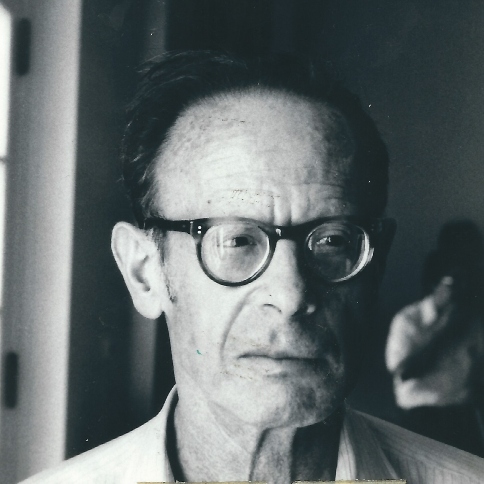
Mark G. Krein

Wolf Prize Laureate in Mathematics 1982

Mark G. Krein


Affiliation at the time of the award:

Institute of Physical Chemistry of Ukrainian S.S.R. Academy of Sciences, USSR


Award citation:

“for his fundamental contributions to functional analysis and its applications”.


Prize share:

Mark G. Krein  

Hassler Whitney


The work of Mark Grigorevich Krein is the culmination of the noble line of research began by Chebyshev, Stieltjes, S. Bernstein and Markov and continued by F. Riesz, Banach and Szego. Krein brought the full force of mathematical analysis to bear on problems of function theory, operator theory, probability and mathematical physics. His contributions led to important developments in the applications of mathematics to different fields ranging from theoretical mechanics to electrical engineering. His style in mathematics and his personal leadership and integrity have set standards of excellence.
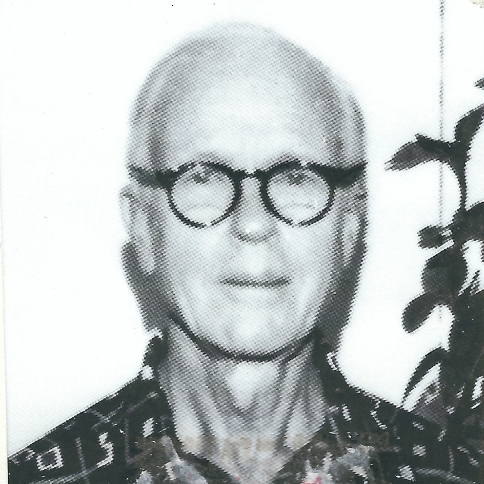
Hassler Whitney

Wolf Prize Laureate in Mathematics 1982

Hassler Whitney


Affiliation at the time of the award:

Institute for Advanced Study, USA


Award citation:

“for his fundamental work in algebraic topology, differential geometry and differential topology”.


Prize share:

Hassler Whitney

Mark G. Krein  


The innovative ideas of Professor Hassler Whitney have been the seed from which contemporary work in combinatorics, topology and differential geometry have grown to maturity. Matroids, differentiable manifolds, fiber bundles, characteristic classes, classifying spaces, stratifications, rational homotopy are only some of the concepts that trace their parentage to Whitney. His work inaugurates the style of geometric and combinatorial reasoning that has become the standard for the second half of the Twentieth Century.

Oscar Zariski

Wolf Prize Laureate in Mathematics 1981

Oscar Zariski


Affiliation at the time of the award:

Harvard University, USA


Award citation:

“Creator of the modern approach to Algebraic geometry, by its fusion, with Commutative algebra”.


Prize share:

Oscar Zariski

Lars V. Ahlfors


Professor (Emeritus) Oscar Zariski harnessed the power of modern algebra to serve the needs of algebraic geometry. This made possible to do algebraic geometry over arbitrary fields and to apply it to deep problems in number theory. Zariski put algebraic geometry on a secure foundation, retaining the intuitive language and insight of the Italian school, in whose tradition, he was trained. He showed that purely algebraic notions, like local rings, valuations, normality, etc., are intimately connected with basic properties of algebraic ,varieties. His wonderful algebraic intuition led him to a number of fundamental theorems and concepts, including the resolution of singularities in two and three dimensions in characteristic zero, minimal models and criterion of rationality in dimension two, the “Zariski topology”, holomorphic functions in abstract algebraic geometry, the connectedness theorem and the famous “Zariski main theorem”.

Zariski’s papers and teachings had a tremendous impact. Algebraic geometry is one of the most active fields in modern mathematics, and perhaps half of its leading practitioners are his former students. He is a leader in studying equi-singularity, a concept he created.

Lars V. Ahlfors

Wolf Prize Laureate in Mathematics 1981

Lars V. Ahlfors


Affiliation at the time of the award:

Harvard University, USA


Award citation:

“for seminal discoveries and the creation of powerful new methods in geometric function theory”.


Prize share:

Lars V. Ahlfors

Oscar Zariski


For over half a century the theory of functions of a complex variable was guided by the thought and work of Professor (Emeritus) Lars Ahlfors. His achievements include the proof of the Denjoy conjecture, the geometric derivation of the Nevanlinna theory, an important generalization of the Schwarz lemma, the development (with Beurling) of the method of extremal length, and numerous decisive results in the theories of Riemann surfaces, quasi-conformal mappings and Teichmuller spaces. Ahlfors celebrated finiteness theorem for Kleinian groups, and his work on the limit set, revitalized an important area of research. He is now doing pioneering work on quasiconformal deformations in higher dimensions.

Ahlfors influence was pervasive and beneficial. His methods combine deep geometric insight with subtle analytic skill; he presents them with utter clarity and simplicity. Time and again he attacked and solved the central problem in a discipline. Time and again other mathematicians were inspired by work he did many years earlier.

Henri Cartan

Wolf Prize Laureate in Mathematics 1980

Henri Cartan


Affiliation at the time of the award:

Universite de Paris, France


Award citation:

“for pioneering work in algebraic topology, complex variables homological algebra and inspired leadership of a generation of mathematicians”.


Prize share:

Henri cartan 

Andrey N. Kolmogorov


Both mathematicians are noteworthy for their breadth of interests and for the depth of the results they have obtained in the various fields of mathematics in which they have been active. Their interests were complementary and, taken together, span almost the whole range of mathematics.

Professor (Emeritus) Henri Cartan began his career in several complex variables when, along with Oka and Thullen, he laid the foundation for the general theory, culminating in the characterization of domains of holomorphy.

During the post-war period for about 15 years, Cartan was the leader of the famous Seminaire Cartan which, attracted mathematicians from all over the world. In this seminar he also turned to algebraic topology and soon made the seminar the center of new developments in this field. The new methods which were introduced by him and by others, formed the basis of an entirely new branch of mathematics, homological algebra, which has grown beyond all expectation. In addition to the above, Cartan has contributed to various theories such as potential theory and harmonic analysis. He was one of the founding fathers of the Bourbaki Circle of French Mathematicians, who have definitely stamped the image of the present science of Mathematics.

Andrey N. Kolmogorov

Wolf Prize Laureate in Mathematics 1980

Andrey N. Kolmogorov


Affiliation at the time of the award:

Moscow State University, U.S.S.R


Award citation:

“for deep and original discoveries in Fourier analysis, probability theory, ergodic theory and dynamical systems”.


Prize share:

Andrey N. Kolmogorov

Henri cartan 


Both mathematicians are noteworthy for their breadth of interests and for the depth of the results they have obtained in the various fields of mathematics in which they have been active. Their interests were complementary and, taken together, span almost the whole range of mathematics.

The work of Professor Andrey N. Kolmogorov is characterized above all by great power. One of his first achievements was to give an example of an L1 function whose Fourier Series diverges everywhere. In addition the Kolmogorov-Seliverstov theorem remained for many years the deepest result on convergence of Fourier Series for L2 functions. However, it was his work in probability theory, which truly earned his reputation. In 1933 he wrote a fundamental book on the foundations of probability theory, which for the first time put probability theory on a completely secure footing, comparable to the rest of mathematics. He later introduced the critical concept of entropy, which enabled one to solve the famous isomorphism problem for Bernoulli shifts, and essentially revived the entire field of ergodic theory.

His interests include logic, approximation theory, and the theory of real variables, as well as many other subjects. His influence on students has also been very extensive.

Jean Leray

Wolf Prize Laureate in Mathematics 1979

Jean Leray


Affiliation at the time of the award:

College de France, France


Award citation:

“for pioneering work on the development and application of topological methods to the study of differential equations”.


Prize share:

Jean Leray

André Weil


Both these mathematicians have made outstanding contributions in many different areas of mathematics and their work has had very great impact on the development of mathematics over the past decades.

Professor (Emeritus) Jean Leray’s major contributions include his work on the equations of fluid mechanics, his use of topological methods in analytical problems, his development of entirely new techniques, which have altered the whole direction of algebraic topology, and very significant work on the theory of hyperbolic differential equations. He is a member of the Academies of Science of Paris, Belgium, U.S.A., U.S.S.R., Italy, Poland and others, and Doctor Honoris Causa of many Universities. His work is of very unusual broadness, spanning from the most abstract part of Mathematics – where Leray himself invented extremely general abstract tools – to very concrete applications and at the same time of a remarkable unity; all the new concepts and methods are applied to very specific problems taken amongst the most challenging of the science of our time.

André Weil

Wolf Prize Laureate in Mathematics 1979

André Weil


Affiliation at the time of the award:

Institute for Advanced Study, Princeton, USA


Award citation:

“for his inspired introduction of algebro-geometry to the theory of numbers”.


Prize share:

André Weil

Jean Leray


Both these mathematicians have made outstanding contributions in many different areas of mathematics and their work has had very great impact on the development of mathematics over the past decades.

Professor (Emeritus) André Weil has made important contributions in harmonic analysis, differential geometry, and aspects of Lie group theory, but his most outstanding achievement has been in the development of algebraic geometry and its application to important problems in number theory. Since 1957, he is Professor at the Institute for Advanced Study in Princeton and his career is singularly rich in achievements. Among his contemporaries, he has long occupied a unique position by combining originality and creativity to the highest degree, with an encyclopedic knowledge and deep understanding of most areas of contemporary mathematics. He is furthermore a formidable scholar of classical mathematics, whose historical insight and perspective -particularly in the field of number theory- is unequaled among mathematicians today.

Izrail M. Gelfand

Wolf Prize Laureate in Mathematics 1978

Izrail M. Gelfand


Affiliation at the time of the award:

Moscow State University, U.S.S.R


Award citation:

“for his work on functional analysis, group representation, and for his seminal contributions to many areas of mathematics and its applications”.


Prize share:

Izrail M. Gelfand

Carl L. Siegel


Professor Izrail M. Gelfand (born in 1913, USSR) was a student of Kolmogorov, and some of his most important work was done in the 1940´s. Since the early 1950´s he has been Head of the Section of the Institute of Applied Mathematics of the USSR Academy of Sciences. He was a member of the editorial board of “Uspekhi Matematicheskikh Nauk”, chief editor of the journal “Functional Analysis”. From 1968-1970, he was President of the Moscow Mathematical Society. He was awarded the Order of Lenin three times, and the Lenin Prize, and received many other honors and recognition such as Honorary Membership in the American National Academy of Sciences, the American Mathematical Society, the London Mathematical Society, and many more.

Carl L. Siegel

Wolf Prize Laureate in Mathematics 1978

Carl L. Siegel


Affiliation at the time of the award:

University of Gottingen, Germany


Award citation:

“in recognition of his contributions to the theory of numbers, theory of several complex variables, and celestial mechanics”.


Prize share:

Carl L. Siegel

Izrail M. Gelfand


Professor Carl L. Siegel received his Doctor of Philosophy degree in Gottingen, 1920; became Professor of Mathematics at the University of Frankfurt-am-Main, 1922, and later at the University of Gottingen. Many of his important contributions to the theory of numbers and several complex variables date to this period in Gottingen. Being an outspoken anti-Nazi, he fled Germany in 1940 to Denmark, and was at the Institute for Advanced Study, Princeton, from 1940 to 1950 at which time he returned to Gottingen.