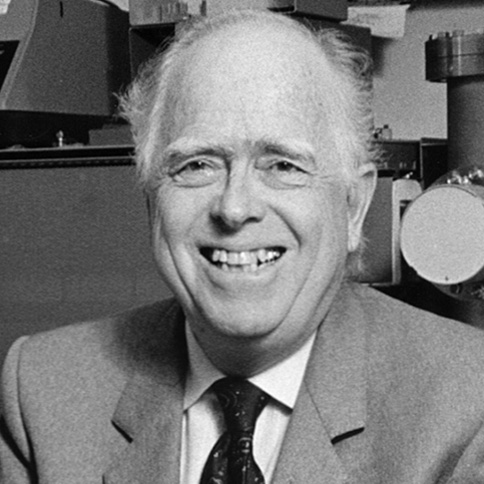
Peter G. Schultz

Wolf Prize Laureate in Chemistry 1994/5

Peter G. Schultz


Affiliation at the time of the award:

University of California, USA


Award citation:

“for converting antibodies into enzymes, thus permitting the catalysis of chemical reactions considered impossible to achieve by classical chemical procedures”.


Prize share:

Peter G. Schultz 

Richard Lerner


Peter G. Schultz (born in 1956, USA) earned his undergraduate degree at Caltech in 1979, where he continued for his doctoral degree in 1984 under the guidance of Peter Dervan. Following this, Schultz spent a year at the Massachusetts Institute of Technology under Christopher Walsh before joining the chemistry faculty at the University of California, Berkeley. In 1985, he became a Principal Investigator at Lawrence Berkeley National Laboratory and, in 1994, an investigator of the Howard Hughes Medical Institute.

Dr. Richard A. Lerner and Professor Peter G. Schultz independently and almost simultaneously in 1986, conceived and demonstrated the idea that antibodies could selectively catalyze chemical reactions. Lerner´s research group raised antibodies against negatively charged phosphate transition-state analogues, and showed that these selectively catalyzed the hydrolysis of carbonates. Schultz´s group did likewise with phosphonates, thereby hydrolysing esters. Their recognition of the importance of the transition state in the thermodynamics and kinetics of enzyme reactions, and the understanding of the diversity of the immune system, were essential to the development of this advance.

The earliest experiments involved simple reactions with well-studied mechanisms. Since that pioneering event antibodies have been developed that catalyze a wide range of chemical and biological reactions. Recent work, under the separate leadership of Lerner and of Schultz, has focused on selective chemical transformations that are difficult to achieve by existing chemical methods. These include “disfavoured” chemical reactions, reactions along one of many nearly equivalent reaction coordinates, and reactions in which the inherent reactivity or molarity of the reactants is reversed. In each case the binding energy of the immunogen and the antibody was used to accelerate and control the reaction. The specificity, and in some cases the rates, of these antibody catalyzed reactions rival those of natural enzymatic reactions, which have only reached their high efficiency through the slow processes of evolution.

This work is of high importance for the future of synthetic organic chemistry. It is a marvellous illustration of how a deep knowledge of biological processes, combined with very sophisticated chemistry, produced a result which practitioners in only one of these two disciplines would have been unlikely to reach.
Perry L. Adkisson

Wolf Prize Laureate in Agriculture 1994/5

Perry L. Adkisson


Affiliation at the time of the award:

Texas A&M University, USA


Award citation:

“for their contributions to the development and implementation of environmentally beneficial integrated pest management systems for the protection of agricultural crops”.


Prize share:

Perry L. Adkisson 

Carl B. Huffaker


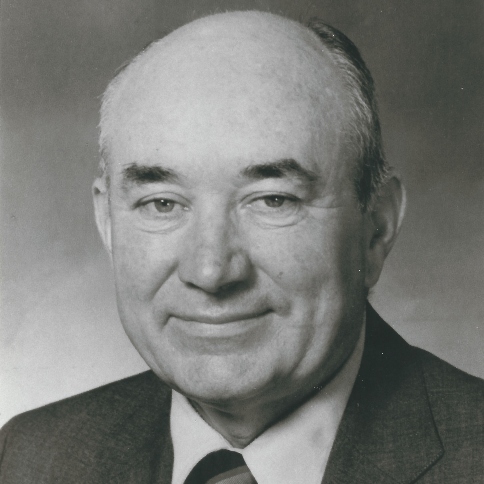
Perry L. Adkisson (born in 1929, USA) is Chancellor Emeritus of Texas A&M University, and Regents Professor of Entomology. He recently served as Executive Director of the George Bush Presidential Library Center. He received his M.Sc. degree from the University of Arkansas and Ph.D. from Kansas State Univeristy.

Professors Carl B. Huffaker and Perry L. Adkisson performed basic research on crop pests, and subsequently broadened their work to develop biologically-based systems for pest control. Both were major contributors to the development and implementation of integrated pest anagement, or IPM, systems for crop production. Huffaker successfully demonstrated the efficacy of biological control agents for the control of weeds and insects. Adkisson studied the life cycles and seasonal dormancy of cotton insect pests.

Both Huffaker and Adkisson were leaders in large-scale programs that demonstrated the effectiveness of IPM systems for crop protection, and that led to the establishment of IPM as an environmentally beneficial and economically favorable system for crop production that is today used throughout the world.

Jurgen K. Moser

Wolf Prize Laureate in Mathematics 1994/5

Jurgen K. Moser


Affiliation at the time of the award:

Swiss Federal Institute of Technology (ETH), Switzerland


Award citation:

“for his fundamental work on stability in Hamiltonian and his profound and influential contributions to nonlinear differential equations”.


Prize share:

None


Professor Jurgen K. Moser’s achievements include:

His role in the development of “KAM” (Kolmogorov-Arnold-Moser) theory. This celebrated theory describes the structure and stability of dynamical systems which are close to being completely integrable. It has shaped the modern theory of Hamiltonian mechanics and has wide applications in science.

His proof of the so called “Harnack inequality” in elliptic and parabolic differential equations, which has become a standard tool in nonlinear partial differential equations.

His fundamental works in analysis related to complex, symplectic and differential geometry, in particular the classification of local invariants of complex manifolds, nonlinear Sobolev inequalities, deformation techniques for symplectic structures and stability of foliations.

Gerhard Richter

Wolf Prize Laureate in Arts 1994/5

Gerhard Richter


Award citation:

“for his vast artistic activity, which has influenced the contemporary art scene of the past three decades”.


Prize share:

None


Despite History and in conjunction with it, Gerhard Richter (born in 1932, Germany) is reinventing Painting for today, transcending its very laws in order to dare to impose Beauty. Painting Situated between denial and challenge, forcing analysis to transcend the supposed contradictions (representation/abstraction), and the ever repeated paradoxes (neutrality/expression), focusing on the straightforward visual evidence of an utterly resolute dialectic, in Richter´s case painting imposes its unanswerable presence. Its “impact” and the “truth” of the images claimed by the artist are grounded in the
magnitude of the stakes and a particularly clear-sighted vision.

The force of this work renders obsolete the constant references to the “end of Painting”, its inability to represent. Calling on history and art history, painting, here sovereign, imposes itself, with the requisite distance to appreciate properly the mastery of an artist who is hyperaware of where he is and what he is doing, of his subject and his object.

The character of Gerhard Richter´s work is continuously ambivalent: at the same time demonstrative and retentive, open and closed, ebullient and restrained, where chance and necessity, rigour and effect, dullness and chromatic exuberance, coldness and emotion alternate in the permanent reinvention of a solution.

We must dare to talk of Beauty gained over indifference, of Painting as an act of faith. By doing so, Gerhard Richter introduces the problem of representation and the representable, of history and politics, in the specific context of post-Auschwitz Germany, of Germany beyond the Wall.

Reflection, in both senses of the term – mirror and analysis – is one of the key words of this work, where distance itself acts as the safest of all guarantees of an emotional language for today.

Carl B. Huffaker

Wolf Prize Laureate in Agriculture 1994/5

Carl B. Huffaker


Affiliation at the time of the award:

University of California, USA


Award citation:

“for their contributions to the development and implementation of environmentally beneficial integrated pest management systems for the protection of agricultural crops”.


Prize share:

Carl B. Huffaker

Perry L. Adkisson 


Carl B. Huffaker (born in 1914, USA) received his M.Sc. degree from the University of Tennessee and Ph.D form Ohio State University, and has been associated with the University of California, Berkley, since 1946. He is a past president of the Entomological Society of America.

Professors Carl B. Huffaker and Perry L. Adkisson performed basic research on crop pests, and subsequently broadened their work to develop biologically-based systems for pest control. Both were major contributors to the development and implementation of integrated pest management, or IPM, systems for crop production. Huffaker successfully demonstrated the efficacy of biological control agents for the control of weeds and insects. Adkisson studied the life cycles and seasonal dormancy of cotton insect pests.

Both Huffaker and Adkisson were leaders in large-scale programs that demonstrated the effectiveness of IPM systems for crop protection, and that led to the establishment of IPM as an environmentally beneficial and economically favorable system for crop production that is today used throughout the world.

Mikhael Gromov

Wolf Prize Laureate in Mathematics 1993

Mikhael Gromov


Affiliation at the time of the award:

IHES – Institut des Hautes Etudes Scientifiques, France


Award citation:

“for his revolutionary contributions to global Riemannian and symplectic geometry, algebraic topology, geometric group theory and the theory of partial differential equations”.


Prize share:

Mikhael Gromov

Jacques Tits 


Professor Mikhael Gromov has introduced a large number of very original new concepts into the classical field of differential geometry which have led to the solution of a large number of important and apparently unsolvable problems. He has introduced new invariants linking the differential geometric structures with those of algebraic topology which have proved their value both in Gromov´s hands and in the hands of others. He succeeded, for example, in estimating the Betti numbers of Riemannian manifolds solely in terms of a lower bound on the sectional curvature. Much of his work makes use of concepts of the convergence of Riemannian manifolds. These daring ideas are also at the heart of his remarkable solution of the problem of groups of polynomial growth. This geometric approach together with an idea of E. Rips led him to the construction of the theory of hyperbolic groups which has revolutionized the theory of discrete groups. He has also made profound contributions to the global theory of partial differential equations and to the theory of symplectic manifolds, constructing invariants which, for the first time, give a description of the degree of symplectic rigidity. His works are characterized by their incomparable depth and startling originality and will continue to be an inspiration for geometers for many years to come.


John E. Casida

Wolf Prize Laureate in Agriculture 1993

John E. Casida


Affiliation at the time of the award:

University of California, USA


Award citation:

“for pioneering studies on the mode of action of insecticides, design of safer pesticides and contributions to the understanding of nerve and muscle function in insects”.


Prize share:

None


John E. Casida (born in 1929, USA) obtained his Bachelor of Science degree from the University of Wisconsin–Madison in 1951. He continued his academic pursuits at the same university, completing his Master of Science in 1951 and earning his PhD in 1954. His research serves as the basis of evaluating the benefits and risks of established pesticides and for the rational design and use of safer and more effective replacements. the success of pest control practices and pesticide resistance management depends on fundamental knowledge of chemical-organismal interactions at the molecular level. Prof. Casida and he’s research team, combining the fields of biology, biochemistry and chemistry focuses on the mode of action, metabolism and structure-activity relationships of highly potent agrochemicals. The knowledge gained on enzyme and receptor targents and on metabolic activation or de-toxification is used to devise better methods for control of pests and protection of crops and livestock. 

Professor Casida has pioneered research on almost all the major insecticides and is directly or indirectly through his students responsible for most of the basic knowledge of the mode of action of the various pesticides and their synergists. His laboratory not only investigates fundamental aspects of the action, metabolism, interactions and fate of pesticides and toxicants, but the research also has provided a rational basis for the evaluation of their risks and benefits. 

In about 530 publications and 26 patents, he describes his discoveries that span much of the history of organic pesticides and account for several of the fundamental breakthroughs in the fields of entomology, neurobiology, toxicology and biochemistry. He continues to work closely with students and colleagues to discover better agrochemicals and safer ways of using the current compounds. 

John Casida is an inspiring teacher and eminent leader of research teams. All his co-workers and students have benefited immensely from his wide experience and sagacity, and many of them have become leading figures in pesticide sciences in various parts of the world. His books and reviews are the basis of pesticide teaching and research at numerous universities and institutes. 

Bruce Nauman

Wolf Prize Laureate in Arts 1993

Bruce Nauman


Award citation:

“for distinguished work as a sculptor and his extraordinary contribution to twentieth century art”.


Prize share:

None


The Wolf Prize is awarded to Bruce Nauman in recognition of the range and quality of his art evident in his work as a sculptor of great originality, imagination, wit, and moral power.

Bruce Nauman (born in 1941, USA)  expanded his artistic horizons under the guidance of William T. Wiley and Robert Arneson while studying art at the University of California, Davis, from 1965 to 1966. Nauman initially engaged in painting but shifted his focus to sculpture, performance art, and cinema collaborations with William Allan and Robert Nelson in 1964.Throughout his career, Nauman worked as an assistant to Wayne Thiebaud and held teaching positions at the San Francisco Art Institute from 1966 to 1968 and the University of California at Irvine in 1970, following the completion of his Master of Fine Arts degree in 1966.

Starting with his ground-breaking sculptural installations of the late 1960s and continuing up to his current work, Nauman has been an audacious artist, exploring complex human emotional and psychological states while examining the very premises of art-making itself. Using media as varied as paper, steel, cast bronze, industrial machine elements, video, film, neon signage, holography, and standard photography, Nauman has never settled into the false comfort of signature style or a standard working methodology. His consistent investigation of language and ideas has always meshed with his unorthodox relation to materials and a strong sense of humor. While Nauman seriously examines issues of art´s ontological structures, his art has always retained its distinct power as an immediate experience.

Clearly acknowledged as one of the leading sculptors of his generation, he remains uniquely important to younger artists, and unaffected by his centrality. Even though his vocabulary is now firmly established, his new work remains as fresh and undaunted as the first works which brought him to the attention of American and European artists, collectors, curators and critics in the 1960s.

Benoit B. Mandelbrot

Wolf Prize Laureate in Physics 1993

Benoit B. Mandelbrot


Affiliation at the time of the award:

IBM Thomas J. Watson Research Center, USA


Award citation:

“by recognizing the widespread occurrence of fractals and developing mathematical tools for describing them, he has changed our view of nature”.


Prize share:

None


Benoit B. Mandelbrot (born in 1924, Poland) studied mathematics, earning degrees from universities in Paris and the United States. He furthered his academic pursuits by obtaining a master’s degree in aeronautics from the California Institute of Technology. Throughout his illustrious career, Mandelbrot split his professional endeavors between the United States and France. In 1958, Mandelbrot a long career at IBM, eventually attaining the esteemed position of IBM Fellow. Concurrently, he took periodic leaves of absence to share his knowledge as a teacher at Harvard University. At Harvard, he delved into economics and applied sciences, contributing significantly to these fields, particularly with his noteworthy study on U.S. commodity markets in connection to cotton futures.

Dr. Benoit B. Mandelbrot’s work has opened up an entirely new field of scientific endeavour. Starting with his classic 1967 paper, “How Long is the Coast of Britain? Self Similarity and Fractional Dimension”, Mandelbrot has concerned himself with complex structures that appear to repeat themselves when examined on successively finer and finer scales. He has extensively developed the concept of non-integral dimensions, earlier considered a mathematical abstraction, and has shown that they can have real physical meaning and practical application. His research has opened up quantitative methods for the study of intricate realistic geometries and has transformed our view of nature.

The idea of statistical self-similarity, involving structures that Mandelbrot has termed “fractals”, has been successfully applied to diverse fields of research including aggregates and amorphous materials, fluid turbulence, percolation, clouds, galaxies, computer color graphics, maps and landscapes, white noise and random notion, catalysts, complex proteins, and even economics.

For his single-handed initiation of a new field of science, for recognizing the implications and applications to physics and to other scientific disciplines, and for developing the mathematical tools appropriate to these studies, Benoit B. Mandelbrot is awarded the Physics Prize for 1993.

Ahmed H. Zewail

Wolf Prize Laureate in Chemistry 1993

Ahmed H. Zewail


Affiliation at the time of the award:

California institute of Technology, USA


Award citation:

“for using ultrafast lasers in femtosecond time resolved measurements of the evolution of chemical reactions – thus obtaining the first direct observation of bond breakage in a molecule”.


Prize share:

None


Ahmed H. Zewail (born in 1946, Egypt) earned Bachelor of Science and Master of Science degrees in chemistry from Alexandria University. He then pursued his PhD at the University of Pennsylvania under the guidance of Robin M. Hochstrasser. After completing his doctoral studies, Zewail conducted postdoctoral research at the University of California, Berkeley, under the supervision of Charles B. Harris. Subsequently, in 1976, he secured a faculty appointment at the California Institute of Technology (Caltech) and later attained the distinction of becoming the first Linus Pauling Chair in Chemical Physics at Caltech.

Professor Ahmed H. Zewail has pioneered the development of femtosecond chemistry in molecular beams. With ultrafast lasers and molecular beam technology, Zewail´s landmark research is uncovering the real-time dynamics of chemical reactions at their most fundamental level. Quantum state-to-state rates, energy redistribution in molecules, and femtosecond spectroscopy, can now be observed directly. With these techniques, Zewail has made major contributions to chemical physics in the following research areas:

Femtochemistry and transition states. With an ingenious time/wavelength technique for recording the femtosecond dynamics of a molecule in the process of falling apart, Zewail and coworkers have followed the transition region from reagent to products in a variety of reactions. For the first time, femtosecond real-time observations of wave-packet dynamics were made directly for bound, quasibound, repulsive, and saddle-point potentials; Bimolecular reactions. Using real-time clocking of a bimolecular reaction initiated within a van der Waals complex, his studies provided a direct measurement of the lifetime of a collision complex; Unimolecular reactions. His work on picosecond photofragment spectroscopy and state-to-state measurements of reaction rates in a variety of systems has provided critical tests of statistical and dynamical theories; Intramolecular energy redistribution. Novel methods have been conceived and used by lewail for probing vibrational and rotational energy redistribution in molecules. This work has established the presence of coherence and selectivity of vibrational energy flow in large polyatomic molecules; The development of femtosecond molecular beam chemistry by Zewail and his group has initiated the new field of real-time molecular reaction dynamics in this time regime. He has aptly coined the name “femtochemistry’ to this new field.